
Where to place an accumulator in Great Britain 2026: licences, payouts and what each bookie's own terms actually say
 Available in US
Accumulators are the bet the industry hands out most freely. A £10 stake can return four figures, a £2 each-way Trixie can pay for a takeaway. That is the marketing side. The arithmetic side is quieter: every extra leg multiplies the odds, and the margin baked into each one multiplies with them. This guide covers what an accumulator actually is, how UK bookmakers settle and price one, what their own terms say on acca-specific free bets and boosts, and which operators hold a Gambling Commission licence to take the bet in the first place. The reader who finishes it should know what an acca costs, when the headline number stops mattering, and which bookie’s rule book fits the way they actually bet.
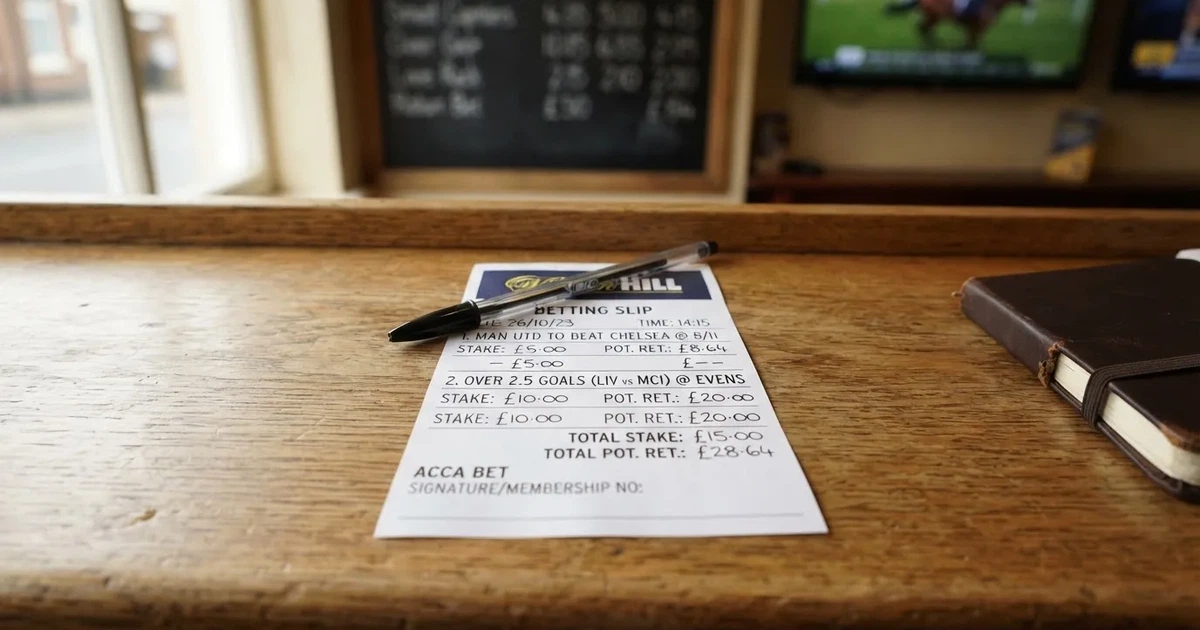
The figures and licence numbers below were checked against the Gambling Commission’s public register on 27 October 2026.
How accumulator free bets and acca promos work
An accumulator (an acca) is a single bet that links two or more selections: every leg must win for the bet to pay out, and a losing leg voids the whole stake. That structure is what makes the marketing work. It also makes the rules matter more than they do on a single. Four acca-shaped promotions recur across UK bookmakers, and each one trades the headline number for a condition that costs the bettor something.

Acca free bets. A free bet credited after a qualifying wager is the most common welcome offer on this list. The stake is rarely returned with the win. A £10 free bet at 5/1 returns £50 profit on a winning leg, not £60. That distinction is what the “free” in the name quietly buys the bookmaker, and it is the same distinction that turns a £10 free bet into something worth calculating rather than something worth grabbing. Some operators split their free-bet bundle into single-leg and acca tokens — a £5 sports bet, a £5 acca token, a £5 Sub-Cover token — to push the bettor toward a bet type they would not otherwise place. The split rewards acca behaviour the house prefers because the margin stacks with the odds.
Acca insurance. A stake refunded (usually as a free bet, not cash) if exactly one leg of a multi loses. One-leg refunds are cheap for the bookmaker because the refund triggers only when the bet would have lost anyway; the marginal cost of the policy is the one-leg-loser rate, not the stake. Insurance often excludes enhanced-price legs, certain sports and free-bet stakes. The refund’s expiry is short — seven days is common — and the refund itself is a free bet whose stake is not returned. “Insurance” is the brand’s word; the contract is closer to a one-leg-loser free bet token.
Acca boosts. A percentage uplift on winning accumulator payouts, sometimes tiered (10% on trebles, 25% on four-folds, 50% on five-folds and up). The boost applies to profit, not to a returned stake, and it usually caps the bonus at a fixed ceiling. The cap is the figure worth checking: a 50% boost on a £500 profit is the marketing line; a 50% boost capped at £250 is the contract. Boosts also exclude legs whose odds sit below a minimum threshold — 1/2 or evens is standard — so a short-priced favourite in the coupon quietly disqualifies the boost even when the bet wins.
Bet Builder / same-game accas. Markets from one match combined into one betslip. The win condition is the same as any acca — every market must land — but the legs come from one event, so correlation is real. A Bookings & Goals market and a Tottenham-Win market are not independent when a Tottenham lead draws fouls late. Operators price that correlation in, and the margin on a Bet Builder tends to sit above the margin on a same-match single because the correlation has to be paid for. The product is a way to back a narrative — “Tottenham win and Over 2.5” — but it is not a way to find an edge, because the edge the narrative suggests is the edge the price already removes.
What a free bet is worth on a four-fold
A £10 free bet at combined odds of 20/1 (decimal 21.00) and a market payout share of, say, 90% is worth roughly £9. That figure is the expected return after the margin the bookmaker takes, and it is the only honest answer to “what is the free bet worth?” — not £200, which is what a winning bet returns, and not £10, which is what the stake would have been. The headline number on the welcome page is the gross; the £9 is the net. Where the free bet is acca-shaped (accand tokens on multiples only), the same calculation applies once the odds of the chosen legs are known.
Turnover and minimum odds
Every acca-shaped bonus carries a turnover clause when the bonus is paid in cash rather than as a free bet. Wagering requirements on bonuses are capped at 10× the bonus amount at Commission-licensed operators — a £10 bonus at 10× requires £100 of qualifying bets before withdrawal. Qualifying bets usually must be at minimum odds (1/2 is common) and on specified markets. A cap of £100 on the bonus’s wagering-plus-qualifying-bet conversion exists too: a £10 bonus cannot be cleared into more than £100 of withdrawable cash under the cap. Where the offer is a free bet rather than a cash bonus, turnover rules often do not apply, but expiry and stake-not-returned do.

Expiry and the clock
Free-bet tokens expire. Seven days is the standard expiry on welcome offers from the operators in this guide, though some go to fourteen and some to thirty. An expired token is worth zero, and a token written into a seven-day expiry turns a deliberate Saturday-afternoon bettor into a Wednesday-night bettor when life intervenes. The expiry matters more than the headline value once the headline is below £20: a £10 token with seven days to clear is worth roughly its free-bet-value times the probability of being used inside seven days, which for low-frequency bettors is below half.
The verdict on acca promos
Acca promotions are marketed aggressively because they pull the bettor toward high-margin multi-leg bets, and the house’s edge is largest on exactly those bets. The promotions are not gifts; they are steering. A reader who values the boost should value the underlying bet more carefully, because the bet is what carries the margin that the boost cannot undo.
Acca predictions, tips and the honest framing
“Acca tips” and “best acca bets today” sit at the top of every prediction site’s search terms. They also sit at the bottom of what a tipster can actually know. No model can price a Premier League fixture better than the bookmaker’s margin already prices it for, and no tipster can guarantee that a six-fold of short-priced favourites will not lose on the last leg. That is the framing a tip section needs before any tip is named.
Why tips age badly
A tip that ages past kickoff is a tip that has been replaced by the live market. The price on a tip published twelve hours before a match has moved by kickoff; the price on a tip published at kickoff has moved by half-time. The market adjusts to information faster than any tipster can publish, and the value of a tip at publication is therefore the value of a stale price. Some tipsters beat the closing price across a season. Most do not. The honest framing is: a tip is one person’s bet, at one moment, on one selection, and the reader who follows it is following a stranger’s stake with their own.
Bankroll management
Bankroll management is the dull half of betting and the half that decides whether a reader is solvent at the end of the season. Three to five per cent of a bankroll per bet is the band most staking guides converge on. A £200 bank means a £6-£10 stake. An accumulator that costs a tenth of the bank is a stake a reader cannot afford on a bet that will lose nineteen times in twenty. Staking plans do not change the mark of winning; they change whether the reader is still betting when a winning streak arrives.
What “best acca” actually means
“Best acca” in a tipster’s column means the tipster’s preferred combination. “Best acca” in a bookmaker’s column means the accumulator with the highest margin and the most legs. Neither is the best accumulator for a particular reader. The best accumulator for a reader is the one whose stake they can afford to lose, whose legs they have a view on, and whose margin is the lowest available combination of those legs. The book’s “popular accas” tab is not that combination; it is the combination that pays the house the most for the smallest stake.
The verdict on tips
A reader looking for tips is a reader looking for someone to blame when the bet loses. That is not the framing the betting industry prefers, but it is the framing a season’s P&L statement will confirm. The honest read is: take a tip as a starting point for the reader’s own research, not as a substitute for it, and never stake more than the bankroll plan permits on a single tip.
Acca bets explained: bet types, odds and settlement
An accumulator is the umbrella term; the products the umbrella covers are where the pricing and the staking sit.
Singles, doubles, trebles and accumulators
A single is one selection. A double is two. A treble is three. An accumulator is four or more. Each additional leg multiplies the odds — 5/1, 3/1 and 2/1 combined return roughly 41/1 — and each additional leg multiplies the margin baked into those odds. A treble can carry a margin of 8-12%; a six-fold can carry 15-20% once the legs are short-priced. Decimal odds suit accumulators because the combined price is the simple product of the leg prices. A 1.50, a 2.00 and a 2.50 multiply into 7.50. The fractional equivalent of 7.50 is 13/2 (six-and-a-half to one), and the arithmetic of converting each leg and re-multiplying is the reason the betting slip defaults to decimal.
Each-way accumulators
An each-way accumulator is two bets of equal stake: a win accumulator on every leg to win, and a place accumulator on every leg to place. The stake doubles. Place terms vary by sport and by bookmaker — a horse race may pay 1/4 odds for finishing in the first three; a football match may pay at a fraction of the odds for a draw. The place leg softens the all-or-nothing structure of the acca at the cost of doubling the stake and halving the headline return.
Full-cover bets: Trixie, Yankee, Heinz and beyond
A full-cover bet is an accumulator with insurance built in through combination bets. A Trixie on three selections is four bets: three doubles and a treble. A Yankee on four selections is eleven bets. A Heinz on six selections is fifty-seven. A Super Heinz on seven selections is one hundred and twenty. A Lucky 15 on four selections is fifteen bets (four singles, six doubles, four trebles and a four-fold accumulator) and is the full-cover bet that pays out on a single winner. The total stake is the unit stake times the number of bets, and the headline “£1 Lucky 15 returns £X” assumes every leg wins. A reader who backs three winners and a loser on a Lucky 15 still collects on the singles and the doubles the winners formed — a soft landing a straight accumulator does not offer.
Bet Builder / same-game acca
A Bet Builder combines markets from one event into a single bet. Goals, corners, bookings, player shots, match result — any markets the operator lists for that match can be added to the slip. The combined price is the product of the individual prices adjusted for correlation. A reader building “Tottenham to win and Over 1.5 goals” is pricing two markets that correlate — a Tottenham win tends to come with more goals than a Tottenham loss. The bookmaker’s price reflects that correlation, and the margin on the combined bet tends to sit above the margin on either single market.
Cash out and acca freeze
Cash out settles a bet before the final leg. The offered amount is the book’s current estimate of the bet’s value at the live prices, less the book’s own spread. Cash out on a winning five-fold before the last leg is rarely a fair settlement of the bet’s expected value; it is a price the book is willing to pay to remove its own exposure to the last leg. Acca freeze is a variant that locks in current profit but lets the reader add further legs to the slip — a partial cash-out plus an extension. Both features are useful when the last leg is a banker the reader does not trust, and both features carry a price the book has already taken from the offered amount.
Push / void rules
A leg that ties — a football match that ends level when the bet was on the home win, a horse that is declared a non-runner — is removed from the accumulator rather than voiding the whole bet. The payout odds are recalculated on the remaining legs. An accumulator with one voided leg of four becomes a treble on three legs at the recalculated odds. The rule applies at almost every UK bookmaker, and it is the one rule that makes a multi-leg bet survivable in a sport where non-runners and dead heats are normal.
Worked payout on a four-fold
A £10 accumulator on four selections at decimal odds 1.50, 2.00, 2.50 and 3.00 returns £10 × 27.00 = £270 (£260 profit). Each leg must win. Replace one leg with a non-runner and the bet becomes a treble on 1.50, 2.00 and 2.50, returning £10 × 7.50 = £75. This example shows how accumulators settle: every leg must land, and a single leg failure costs the entire bet. The difference between the £270 return and the £75 treble is the cost of the voided leg.
The verdict on bet types
The bet type a reader should pick is the one whose structure matches the reader’s view. A confident four-fold is an accumulator. A confident four-fold where one leg is shaky is a Lucky 15 or a Trixie, depending on how many legs the shaky view concerns. A Bet Builder is a way to back a narrative on one match, and the margin on it is the cost of that narrative. The structure of the bet is part of the price; the reader who understands both pays less for the same win.
UK-licensed bookmakers with acca bets: the shortlist
Ten operators hold a Gambling Commission remote licence and offer accumulator betting to customers in Great Britain. Each is reviewed below on what its own terms state on acca-shaped products and what its licence record says on the day the page was written. The order is not a ranking. The verdict at the end of each block is the page’s call.
| Brand | Licence number and holder | Acca terms per operator |
|---|---|---|
| bet365 | 055148-R-331498-002 · Hillside (UK Sports) ENC | Bet Builder+ on singles and in-play, Super Boosts, daily Bet Boosts, Winnings Boosts on Bet Builders and selected singles |
| Geoff Banks | 054095-R-330366-010 · GB Sports Advisors Limited | Live in-play prices and ante-post bets; acca market not separately advertised in the app listing |
| Kwiff | 044448-R-323408-017 · Eaton Gate Gaming Limited | Supercharge odds boosts apply to singles and multis on any sport; stake limits are shown in-app |
| Fitzwilliam Sports | 048760-R-335434-009 · SBKI Limited | Prices pegged to Oddschecker’s average per selection; mobile apps for iOS and Android |
| Dabble | 065677-R-340363-005 · Dabble Sports UK Ltd | Welcome bundle of £10 in free bets after a £10 first deposit; 7-day expiry; stake not returned; min odds apply |
| Swifty Sports | 058957-R-334734-006 · Swifty Global (UK) Ltd | Best Odds Guaranteed, Cash Out, daily price boosts, live streaming, in-play; Bet Builder listed as coming soon |
| Octobet | 062545-R-337248-006 · Octopus Game Limited | Best Odds Guaranteed on UK and Irish racing; up to £150 per customer per race |
| BetGoodwin | 002927-R-327985-008 · Goodwin Racing Limited | Welcome offer of £15 in free bets split into a £5 sports single, a £5 acca and a £5 Sub-Cover bet |
| Betfred | 039544-R-319290-010 · Petfre (Gibraltar) Limited | Bet Builder, Sub Switch, Extra Places on selected racing markets, live in-play pricing |
| BetUK | 039198-R-319450-029 · LeoVegas Gaming PLC | Free bets exclude virtual sports, esports and non-UK/IE racing; minimum odds apply |
The table is the licence data the reader needs to check a brand against the Commission’s public register and the operator’s own headline features on acca-related products. It is not a verdict; the verdict is in the paragraphs that follow.
bet365 — the widest acca product set
Bet365’s licence (account 55148) covers remote general betting standard on real events, and the app listing confirms a Bet Builder+ feature that combines markets from one event into a single bet pre-match and in-play, Super Boosts and daily Bet Boosts, and Winnings Boosts on Bet Builders and selected singles. That is the deepest acca product set on this list: a Bet Builder for same-game multis, Super Boosts for selected prices, and a daily Bet Boost coupon for singles. A reader who places a wide range of acca types — same-game multi, boosted singles, multi-leg accumulators — has the most surface area here. The verdict: best for the high-volume bettor who uses Bet Builders and boosts as a routine rather than a novelty.
Geoff Banks — racing-shaped with in-play
Geoff Banks’ licence (account 54095) is held by GB Sports Advisors Limited, the same publisher named on the App Store listing. The app offers live in-play prices and ante-post bets on future events. Ante-post is the racing term for a bet placed before the final declarations, and the pricing on those markets is the bookmaker’s call once non-runners are removed. A reader whose accumulator is a weekend racing multi has a bookmaker whose app is built around that market; a reader whose accumulator is a Saturday football multi has thinner coverage. The verdict: Geoff Banks fits the bettor who wants both ante-post and in-play on the same slip, a combination that works for the specialist but misses the broader markets.
Kwiff — surprise boosts on singles and multis
Kwiff’s licence (account 44448) sits with Eaton Gate Gaming Limited, and the Supercharge feature is the brand’s signature. The app description names a Supercharge that can lift odds from 2/1 to 20/1 instantly and applies to singles or multi bets on any sport. The boost is randomised in timing, which means a reader’s slip can be upgraded mid-build without warning; the upside is a better price, the downside is that the slip the reader confirmed is not always the slip that gets placed. Stake limits on boosted bets are stated in-app and worth checking before staking. The verdict: Kwiff is for the bettor who welcomes a random odds-boost and values the potential upside over the ability to place a predictable bet.
Fitzwilliam Sports — average-price racing
Fitzwilliam Sports’ licence (account 48760) is held by SBKI Limited, and the pricing model is the brand’s distinguishing feature: each selection is priced at Oddschecker’s average price at the time of bet. For a racing bettor that means a price that tracks the market rather than the bookmaker’s own line, and an accumulator built from those selections should track the market too. The product is narrower than the multi-sport operators on this list — Fitzwilliam is built around racing — and the acca coverage beyond racing is not what a bet365 or a Betfred offers. The verdict: Fitzwilliam Sports suits the racing specialist who prefers market-average pricing to a bookmaker’s own line, provided the product’s focus on racing fits their needs.
Dabble — social-shaped welcome bundle
Dabble’s licence (account 65677) is held by Dabble Sports UK Ltd, and the welcome offer is a £10 free-bet bundle credited after a first-deposit qualifying bet of £10. The free bets carry a 7-day expiry and the stake is not returned on winning free bets, so the headline £10 in free bets is worth roughly its free-bet value at the odds the reader backs. Dabble’s product leans social — the app is built around following tipsters and copying their bets — and the welcome offer is structured to push the reader toward the social feed. The verdict: Dabble is for the social bettor who enjoys following and copying other tipsters, rather than for the reader seeking an independent, deep-market bookmaker.
Swifty Sports — feature-led, Bet Builder on the way
Swifty Sports’ licence (account 58957) is held by Swifty Global (UK) Ltd, and the app listing names Best Odds Guaranteed, Cash Out on horse racing and football, daily price boosts, live streaming and in-play betting. Bet Builder is listed as coming soon. The product set is broad for a newer app, and the absence of a Bet Builder at the time of writing is a gap a same-game-multi bettor will notice. The verdict: Swifty Sports offers a solid feature set for a newer brand, but the bettor who relies on Bet Builder will need to look elsewhere while the feature remains unavailable.
Octobet — racing BOG with a per-race cap
Octobet’s licence (account 62545) is held by Octopus Game Limited, and the named feature in the app listing is Best Odds Guaranteed on UK and Irish racing, capped at £150 per customer per race. The cap is unusual: most BOG offers are uncapped on the per-race level, with overall settlement rules applying. A reader staking under £150 per race on UK and Irish racing gets the full benefit; a reader staking over is paid only up to £150. The verdict: Octobet is worth considering for the small-to-mid stakes racing bettor, though the £150 cap on BOG returns is a constraint that a larger bettor should note.
BetGoodwin — racing-led with a split welcome offer
BetGoodwin’s licence (account 2927) is held by Goodwin Racing Limited, and the sports welcome offer is £15 in free bets split into three £5 tokens: a £5 sports single, a £5 acca and a £5 Sub-Cover bet. The split is the brand’s call to push the reader into each bet type, and the Sub-Cover token is a novelty the bigger bookmakers do not offer. The product leans racing. The verdict: BetGoodwin appeals to the racing bettor who wants to try multiple bet types—including the Sub-Cover bet—with a single qualifying stake.
Betfred — established bookmaker with a wide feature set
Betfred’s licence (account 39544) is held by Petfre (Gibraltar) Limited, and the app feature set is the deepest in the high-street heritage brands: Bet Builder, Sub Switch, Racing Post data integrated, Extra Places on selected racing markets, live in-play pricing, plus casino and bingo on the same account. The acca product is a Bet Builder plus the standard accumulator, and the brand’s heritage is the differentiator for a reader who wants an established name. The verdict: Betfred works for the bettor who values a deep-market heritage brand that integrates Bet Builder with racing data.
BetUK — LeoVegas-backed with a clear exclusion list
BetUK’s licence (account 39198) is held by LeoVegas Gaming PLC, and the free-bet terms exclude virtual sports, esports and non-UK/IE racing. Minimum odds apply to qualifying bets. The exclusions are a clean signal: a reader who bets on UK and Irish racing and mainstream football is unaffected; a reader who bets on esports or virtuals is steered toward other brands. The verdict: best for the bettor who bets on UK and Irish racing and mainstream football and is happy to read the exclusion list before claiming.
What an accumulator is and how the betting market works
An accumulator is a single bet linking two or more individual wagers, where every leg must win for the bet to pay out, and where the odds of each leg multiply into the combined price. A losing leg voids the whole stake. A leg that ties (a non-runner, a void market) is removed and the bet is recalculated on what remains. The structure is what gives the bet its longshot appeal — four legs at 2/1 each combine to roughly 41/1 — and the structure is what gives the bookmaker its largest margin.
The margin (sometimes called the overround) is the percentage of every pound staked the bookmaker keeps on average. It is built into the odds: a market priced at 90% payout share holds a 10% margin. On a single the margin might be 5-7%; on a Premier League match-result market it might be 4-6%; on a same-game Bet Builder it can sit above 10%. The accumulator multiplies the margins with the odds, and a six-fold of 1.50, 1.80, 2.00, 2.20, 2.50 and 3.00 selections carries a compounded margin that is meaningfully higher than the margin on any single leg. That is the cost the marketing does not print, and it is the reason a winning accumulator pays less than the product of “true” odds would suggest.
The page’s framing for accumulators is plain: the bet is a way to back a multi-event narrative at a high combined price, and the cost of that high combined price is a margin that grows with each leg. A reader who treats the accumulator as a small-stake lottery ticket — £2 on a six-fold once a week — is paying the right price for the product. A reader who treats the accumulator as a serious staking plan is paying more margin than the same selections would cost as singles.
How a bet is settled
A winning bet pays stake × decimal odds. A £10 bet at 5.00 returns £50 (£40 profit). The decimal price is the multiplier; the profit is the return less the stake. That calculation is the single most useful arithmetic in betting, and it is the calculation a betting slip performs automatically. The reader who can perform it in their head before confirming the slip is the reader who knows what they are risking for what they are buying.
Payout share versus margin
The payout share and the margin are two views of the same market. A market with a 95% payout share has a 5% margin. The two figures always sum to 100%. The payout share is what the bettor receives, on average, for every pound staked; the margin is what the bookmaker retains. A reader comparing two bookmakers on the same fixture is comparing payout shares — a 96% line is better than a 94% line by 2p in the pound, every bet, forever.
Decimal versus fractional odds
UK bookmakers offer fractional odds by tradition and decimal odds by default on the betting slip. The conversion is exact: 5/1 = 6.00 decimal, 11/4 = 3.75 decimal, evens = 2.00 decimal. A reader who thinks in fractions and bets in decimals converts once and stops paying the conversion tax. The fractional form is what the betting page quotes; the decimal form is what the slip multiplies.
Betting law in Great Britain: who is licensed and who is not
The Gambling Commission licenses the commercial gambling market in Great Britain under the Gambling Act 2005. Northern Ireland is outside the Act and operates under earlier legislation, so a Great Britain licence is a GB licence and not a UK-wide one. Since the Gambling (Licensing and Advertising) Act 2014 any operator whose remote facilities are used in Great Britain needs a Commission licence wherever the operator is based; a Curaçao, Maltese or Gibraltar licence is not a substitute for a GB licence at the point of consumption. Betting without the licence the Act requires is an offence under section 33 of the 2005 Act.
Licences come in categories. A remote general betting standard (real events) licence is the licence an online sports book holds; a remote betting intermediary licence is the licence a betting exchange holds; a remote pool betting licence is the licence a pool operator holds. The Commission’s public register can be searched by business name, trading name, domain or account number and is the whole test of who holds a licence and for what. A reader who wants to check a brand searches the register; a brand that does not appear on the register is not licensed.
Minimum age is 18. Identity verification (name, address, date of birth) has been a licence condition since 7 May 2019 and is performed before the first deposit or the first bet, including when the first bet is a free bet. Anonymous play is not available at a licensed site. Debit cards and bank-based payments are accepted; credit cards have been banned for gambling in Great Britain since 14 April 2020, including credit-card-funded e-wallet deposits.
There is no statutory list of permitted bets or markets. An operator holds a licence for a category and offers markets under its own rules and the Commission’s Licence Conditions and Codes of Practice (LCCP). In-play betting is permitted; esports are treated like other events; politics, TV and novelty markets are offered by GB bookmakers. No statutory cap on stakes in sports betting exists; operators set their own maximum stakes and may restrict individual customers. There is no state-set deposit or loss ceiling for betting: limits are the customer’s choice, and the Commission’s deposit-limit rules are a customer-protection setting rather than a state cap.
Financial spread betting is regulated by the Financial Conduct Authority, not the Commission. A brand that offers spread betting alongside fixed-odds betting falls under two regulators, and a reader using the spread-betting product is using a product whose losses can exceed the deposit. Spreadex, for example, falls under both the FCA for its spread-betting activities and the Commission for its fixed-odds activities, and the firm’s own site states that spread betting losses can exceed deposits.
The Commission’s public register is the test. Quoting no count of licensed operators without an access date.
Responsible gambling: GAMSTOP, deposit limits and vulnerability checks
GAMSTOP is the national multi-operator online self-exclusion scheme and a mandatory licence condition for online operators since 31 March 2020. Self-exclusion periods are six months, one year, five years, or five years with auto-renewal, and after the minimum period the exclusion stays in place for a further seven years unless the customer asks GAMSTOP to remove it. GAMSTOP covers online sites and apps; the high-street betting shops use a separate service. A reader who self-excludes through GAMSTOP is excluded from every licensed online operator at once, not from one brand at a time.
A financial vulnerability check (LCCP condition 3.4.4, in force since 30 August 2024) applies to licensed remote betting when a customer’s net deposits exceed £150 in a rolling 30 days. The check is a public-record search (bankruptcy, county court judgments) — not an income check, not a credit reference check. Net deposit means deposits minus withdrawals. A reader who deposits £200 and withdraws £60 in a 30-day window has net deposits of £140 and is below the trigger; a reader who deposits £300 and withdraws £50 has net deposits of £250 and is above. The check is run by the operator, not by the customer, and the reader does not need to apply for it.
Financial risk assessments (the “affordability checks” of the press) have been announced in a staged plan (Commission article of 7 July 2026), with no start date as of the date of writing. The plan is not in force and operators are not yet running it. A reader who sees an “affordability check” framed as a current requirement is reading marketing copy rather than the Commission’s policy.
Deposit limits are a customer-protection setting operators must offer. The Commission’s Remote Technical Standards (RTS 12) require operators to offer a gross deposit limit on a fixed time frame, and the first phase of the rules has applied since 31 October 2025; a second phase has been postponed to 30 September 2026, and whether that second phase is live is not established as of the date of writing. A reader who wants a hard ceiling sets one in the account settings; a reader who does not set one has no ceiling beyond the operator’s own stake limits.
Help lines exist for readers who want them. GamCare runs the National Gambling Helpline. GambleAware funds treatment and research. The NHS runs gambling clinics in several regions. Gamblers Anonymous runs peer-support meetings. The names are the same as the names a reader will find on every licensed operator’s safer-gambling page.
The honest framing is plain: licensed operators offer protection tools and have to offer them; unlicensed operators offer none of them. A reader who wants protection chooses a licensed operator; a reader who bets on an unlicensed site has no GAMSTOP coverage, no Commission complaints route, no approved dispute-resolution service, no British consumer redress if funds are withheld, and is not covered by the 10× bonus cap or the £150 vulnerability check.
The verdict on player protection
A licensed operator’s protection tools are not optional and not advisory; they are conditions of holding the licence. A reader who chooses a licensed operator is choosing a brand that has to offer GAMSTOP, deposit limits, vulnerability checks, and a Commission complaints route. A reader who chooses an unlicensed operator is choosing a brand that has to offer none of those things. The choice is not between “safe” and “unsafe” as marketing copy frames it; the choice is between two different sets of obligations the operator has taken on.
Bonuses, promotions and the 10x cap
UK-licensed operators advertise heavily, and the advertising is governed by the CAP Code (non-broadcast, enforced by the ASA) and BCAP Code (broadcast, enforced by the ASA), alongside the Commission’s LCCP marketing conditions. The headline rules for 2026:
Wagering requirements on bonuses are capped at 10× the bonus amount. A £10 bonus at 10× needs £100 of qualifying bets before the bonus converts to withdrawable cash. The cap also limits the bonus’s converted value: a £10 bonus cannot clear into more than £100 of withdrawable cash under the current rule. The cap applies to cash bonuses; whether it applies to free bets with no wagering condition is not established as a settled reading, and operators’ own terms govern each offer.
Mixed-product promotions are banned. An offer that requires gambling on two or more product types — “bet on football to get free spins”, “deposit for bingo bonus and casino spins” — is not permitted. Single-product promotions remain allowed.
Marketing is socially responsible. CAP Code section 16 requires that marketing not be of strong appeal to under-18s, that no one who is or seems to be under 25 may be featured gambling or play a significant role in the advertisement (with an exception for marketing placed where a bet can be made directly). The rule is about who may appear in the advertisement, not who may bet.
“Whistle-to-whistle” advertising (betting advertisements not shown on TV from five minutes before a live sporting event to five minutes after it, before the 9pm watershed, horse and greyhound racing excluded) has been in force since 1 August 2019 as an industry code rather than statute.
The Premier League clubs’ voluntary withdrawal of gambling sponsorship from the front of matchday shirts (from the 2026/27 season; sleeves and hoardings remain) is a club-level decision, not a legal change.
Operators are responsible for marketing by their affiliates. A reader who signs up through an affiliate link is signed up under the operator’s licence, and the operator’s terms govern the offer, not the affiliate’s.
A promo code, a bonus code or a voucher code is never printed in this guide. The offers are described qualitatively; the code, where one exists, is on the operator’s own site or in the operator’s own app.
The verdict on promotions
The 10× cap is the most important number on a UK welcome offer. A £10 bonus at 10× is a £100 qualifying-bet bill. A £100 bonus at 10× is a £1,000 qualifying-bet bill. The cap means the largest welcome offer on a licensed site is bounded by what the reader is prepared to bet through; the marketing headline is bounded by what the rules permit. A reader who treats the bonus as the reason to sign up is paying a higher price than the headline shows.
Tax, duty and what the player actually pays
Players pay no tax on betting winnings in Great Britain. That is the general rule; a professional gambler — someone whose betting is a trade rather than a hobby — should ask HMRC or an adviser, because the line between hobby and trade is a line the tax code draws rather than the bettor.
General Betting Duty is the operator’s tax on gross profits from betting. The current rate is 15%. From 1 April 2027 a new remote betting rate of 25% applies within General Betting Duty; bets on UK horse racing, bets on self-service betting terminals in licensed premises, pool betting and in-person betting stay at 15%. Until 1 April 2027 the remote rate remains at 15%. Whether operators pass duty on through their odds is not established, and it would be wrong to write that the player is charged duty; the duty is on the operator’s gross profit.
Spread betting has its own rates. Financial spread betting is taxed at 3%; non-financial spread betting is taxed at 10%. A reader using a spread-betting product is using a product that is taxed differently from fixed-odds betting, and the spread-betting product’s losses can exceed the deposit.
The Commission’s statutory levy is a separate charge paid by operators to fund the regulator. It is not a tax on the player.
The reader’s tax position on winnings: no tax, in the general case. The reader’s tax position on losses: gambling losses cannot be offset against other income. A reader whose betting is a hobby pays no tax and gets no relief; a reader whose betting is a trade pays tax on the profits and may have different treatment of the losses. The general information here is not tax advice, and a reader whose betting is significant should ask an adviser.
The verdict on tax
The reader pays no tax on betting winnings in the general case. That is the cleanest sentence on this page and the one the betting industry does not advertise, because the headline it would puncture is the headline that says betting is expensive. It is not expensive at the tax line; it is expensive at the margin line.
Offshore brands and what a reader gives up by using one
Providing gambling facilities in Great Britain without the licence the Act requires is an offence under section 33 of the Gambling Act 2005. The offence is aimed at the operator, not at the customer who merely bets on an unlicensed site. No offence targets the customer; the framing is the loss of protection, not the criminality of betting.
A reader who bets on an unlicensed site gives up GAMSTOP coverage, the Commission complaints route, an approved dispute-resolution service, British consumer redress if funds are held, the 10× bonus cap (the operator’s own wagering rules apply), the £150 vulnerability check, the customer-protection setting of a deposit limit under RTS 12, and the LCCP marketing rules. The reader also gives up the operator’s obligation to verify identity before the first deposit — which means the unlicensed site may not verify at all, which means an underage reader is harder to keep out.
Enforcement against unlicensed operators is disruption rather than blocking. The Commission issues cease-and-desist notices, refers sites to search engines, works with registrars, hosts and payment providers, and has been given or is about to receive court-order DNS blocking powers. ISP-level blocking is not in operation; the framing is “disruption, with court-order DNS blocking powers available”, not “blocking is in force”.
The honest framing is symmetric. Licensed operators offer protection tools and have to; unlicensed operators offer none of them and do not have to. A reader who chooses licensed chooses the protection; a reader who chooses unlicensed chooses the absence.
The verdict on offshore
The reader who bets on an unlicensed site is not breaking the law. The reader who bets on an unlicensed site is betting without the consumer protections a GB licence provides, and is betting on a brand whose only obligation to the customer is the brand’s own terms. That is the trade. It is not a trade the marketing either side likes to name plainly.
How the page’s worked numbers are calculated
Calculating an accumulator return relies on three figures: the stake, the decimal odds, and the product of the legs. The return is the stake multiplied by the combined odds; the profit is the return minus the stake. Three illustrative selections at 1/2 (1.50), evens (2.00) and 6/4 (2.50) and a stake of £10 return £10 × 7.50 = £75 (£65 net), assuming every leg wins. Add a fourth leg at 2/1 (3.00) and the accumulator returns £10 × 22.50 = £225 (£215 net). Replace the 2.00 leg with a non-runner and the accumulator becomes a treble on 1.50, 2.50 and 3.00, returning £10 × 11.25 = £112.50 (£102.50 net). The band the page reports is the band of those returns; the condition is “every leg wins” and the alternative is “every leg wins except the voided leg”.
For a full-cover bet the unit stake is per line, not per bet. A Trixie at £2 per line on three selections at 1.50, 2.00 and 2.50 stakes £8 across four bets and returns, if all three win, the product of the three doubles and the treble: 2 × (1.50×2.00) + 2 × (1.50×2.50) + 2 × (2.00×2.50) + 2 × (1.50×2.00×2.50) = £6.00 + £7.50 + £10.00 + £15.00 = £38.50 return (£30.50 profit). A Lucky 15 on four selections at the same unit stake of £2 stakes £30 across fifteen bets; one winner returns the single at 2 × 1.50 = £3 (£1 profit); two winners return singles and one double; three winners return singles, doubles and a treble; four winners return the full £30-stake coverage.
The arithmetic above is the arithmetic the betting slip performs automatically. The reader who can perform it in their head before confirming the slip is the reader who knows what they are paying for what they are buying. The arithmetic is a statistical estimate — an average over many bets, not a guaranteed outcome for any single one.
Worked example: a £10 treble
A £10 treble on 1/2 (1.50), evens (2.00) and 6/4 (2.50) returns £75 if all three legs win, £65 net of stake. The combined odds are 7.50, and the margin baked into those odds depends on the margin baked into each individual market. A 5% margin on each leg compounded across three legs is roughly a 14% margin on the treble, before any acca-specific margin uplift the operator applies. A reader who treats the treble as a £10 lottery ticket once a week is paying roughly £1.40 of that stake to the house, on average; a reader who treats the treble as a serious staking plan is paying more margin than three singles on the same selections would have cost.
Worked example: a Lucky 15
A £1 Lucky 15 on four selections at 1.50, 2.00, 2.50 and 3.00 stakes £15 across fifteen bets. If all four win, the return is the sum of four singles, six doubles, four trebles and the four-fold accumulator: £1×1.50 + £1×2.00 + £1×2.50 + £1×3.00 (singles, £9.00) + six doubles at the pairwise products + four trebles at the triple products + the four-fold at 22.50. The arithmetic is the same as the betting slip’s. The point of the Lucky 15 is what happens when not all four win: one winner returns the single, two winners return singles plus one double, three winners return singles plus doubles plus one treble. A straight accumulator on the same four legs would return zero on any losing result.
The verdict on the arithmetic
The arithmetic is the part of the page the marketing never quotes. The reader who has it has a tool the bookmaker would rather they did not.
Choosing the right bookmaker for the way you bet
The ten operators on this list are not interchangeable, and the right bookmaker for a reader depends on what the reader actually bets on. A reader whose accumulator is a Saturday football multi has different needs from a reader whose accumulator is a weekend racing multi, and a reader who treats accumulators as a small-stake lottery has different needs from a reader who builds Bet Builders on the same match.
For the football-led bettor who wants a Bet Builder, bet365 is the broadest product set on the list: Bet Builder+ on singles and in-play, Super Boosts, daily Bet Boosts, Winnings Boosts on Bet Builders. For the racing-led bettor who wants Best Odds Guaranteed, Octobet and Swifty Sports both offer BOG; Octobet’s per-race cap of £150 is the rule worth checking. For the racing bettor who wants a price benchmark rather than a bookmaker’s margin, Fitzwilliam Sports’ Oddschecker-average pricing is the differentiator. For the high-street heritage bettor who wants an established name with a Bet Builder and integrated Racing Post data, Betfred is the brand. For the bettor who wants a low-cost trial of a social-led app, Dabble’s £10 welcome bundle is the entry point. For the bettor who values a surprise odds boost, Kwiff’s Supercharge applies to singles and multis on any sport. For the bettor who wants to try three bet types with one qualifying bet, BetGoodwin’s £15 split welcome offer is the structure. For the bettor who bets on UK and Irish racing and mainstream football and is happy to read the exclusion list, BetUK’s clean terms are the fit. For the bettor who wants a fresh brand with the standard features in place, Swifty Sports is the option, with Bet Builder listed as coming soon. For the racing bettor who wants ante-post and in-play on the same slip, Geoff Banks is the app.
The verdict on the choice: pick on what you bet on and how often you bet, not on the welcome offer’s headline. The welcome offer is the cheapest of the things that move the cost around; the margin is what matters.
What a reader should check before signing up
Three checks before any reader signs up to a UK-licensed bookmaker.
The first check is the Commission’s public register. A reader who types the brand name, the trading name or the domain into the register should see a remote betting licence that covers the product the reader wants to bet on. A brand that does not appear on the register is not licensed; a brand that appears with the wrong licence category is licensed but not for the product the reader wants. The register is the whole test.
The second check is the operator’s own terms on the offer the reader wants to claim. Wagering requirements, minimum odds, expiry, market exclusions, stake-not-returned clauses, payment-method exclusions — the offer’s headline is the cheapest of the things the reader should read. The 10x cap is the rule the industry works under, but the operator’s own minimum-odds threshold, expiry window and excluded-market list are what determines whether the offer is claimable for the reader’s bet.
The third check is the GAMSTOP register. A reader who has self-excluded through GAMSTOP cannot bet at a licensed operator; a reader who is considering self-excluding should consider it before signing up, not after. Self-exclusion is for the reader who has decided to stop, and the decision is easier outside the app than inside it.
The verdict on the checks
The Commission’s public register is the test of whether a brand is licensed. The operator’s own terms are the test of whether an offer is what the reader thinks it is. GAMSTOP is the test of whether a reader’s own self-exclusion is in force. Three checks, all free, all under fifteen minutes.
Summary of what this page covers
The page covers accumulators from four angles. The mechanic: how an acca is built, settled and paid out, and what bet types sit under the umbrella (singles, doubles, trebles, full-cover bets, Bet Builders). The promotion: what acca-shaped offers the operators run and what each one costs the reader in turnover, minimum odds, expiry and stake-not-returned. The licence: who is licensed in Great Britain, what each licence covers, what the reader gives up by betting on an unlicensed site. The protection: GAMSTOP, deposit limits, vulnerability checks, and the help lines a reader can use.
The verdict the page reaches: accumulators are a high-margin product the marketing makes sound free. The protection tools are real at licensed operators; the margin is real at every operator; the offer is what its terms say it is. A reader who knows the arithmetic and reads the terms bets on a level field; a reader who does not subsidises the one who does.
Frequently asked questions about accumulator betting in the UK
What are acca bets?
An accumulator is a single bet that links two or more selections, where every leg must win for the bet to pay out, and where a losing leg voids the whole stake. A leg that ties or is voided (a non-runner, a void market) is removed and the bet recalculates on what remains. Two-leg and three-leg accumulators are usually called doubles and trebles; four-leg and longer are accumulators proper. The combined price is the product of each leg’s decimal odds.
How do accumulator acca bets work?
Each leg’s price multiplies into the next, so three legs at decimal 1.50, 2.00 and 2.50 combine to 7.50. A £10 stake returns £75 if all three win. The bookmaker’s margin is baked into each leg’s price, and the compounded margin is what the bettor pays on average. Cash out and acca freeze settle the bet early, less the book’s spread, or lock in current profit and let further legs be added. Settlement rules for non-runners, dead heats and void markets vary by operator and are stated in each bookmaker’s own terms.
Can you use acca freeze on free bets?
Acca freeze locks in current profit on an active accumulator and lets the reader add further legs; it is a cash-out variant and is offered as a feature, not a bonus. Whether acca freeze can be applied to a bet built from a free-bet stake depends on the operator’s own terms; some operators exclude free-bet stakes from acca freeze, others allow it. The reader should check the feature’s terms in the operator’s app before relying on it, because the rule is operator-specific rather than universal.
How can it be checked that a bookmaker holds a Gambling Commission licence?
The Commission’s public register can be searched by business name, trading name, domain or account number, and a brand that appears with a remote general betting standard (real events) licence is licensed for online sports betting in Great Britain. A brand that does not appear is not licensed. The register is the whole test; the licence number and the licence holder are stated on the register entry, and the licence holder is the legal entity the reader is signing a contract with when opening an account.
How is the return on a bet worked out from the stake and the odds?
Return = stake × decimal odds; profit = return − stake. A £10 bet at decimal 5.00 returns £50 (£40 profit). On an accumulator the combined decimal odds are the product of the leg odds, and the same formula applies to the combined price. A £10 accumulator on legs at 1.50, 2.00 and 2.50 has combined odds of 7.50 and returns £75 (£65 profit) if all three legs win. The arithmetic is the same arithmetic the betting slip performs automatically.
What is the bookmaker’s margin and how can it be seen in the odds?
The margin is the percentage of every pound staked the bookmaker keeps on average. It is built into the odds: a market priced at 95% payout share has a 5% margin. The two figures always sum to 100%. The margin on an accumulator is the compounded margin of each leg, plus any acca-specific uplift the operator applies; a six-fold of short-priced favourites can carry a margin meaningfully above the margin on any single leg. A reader comparing two bookmakers on the same fixture is comparing payout shares — a 96% line is 2p better than a 94% line, per pound, every bet.
Bet types & in-play – Free bets
Content created by the «Free bets» team
