
Where to bet on greyhounds online in 2026 — and which licensed bookmaker fits your style
 Available in US
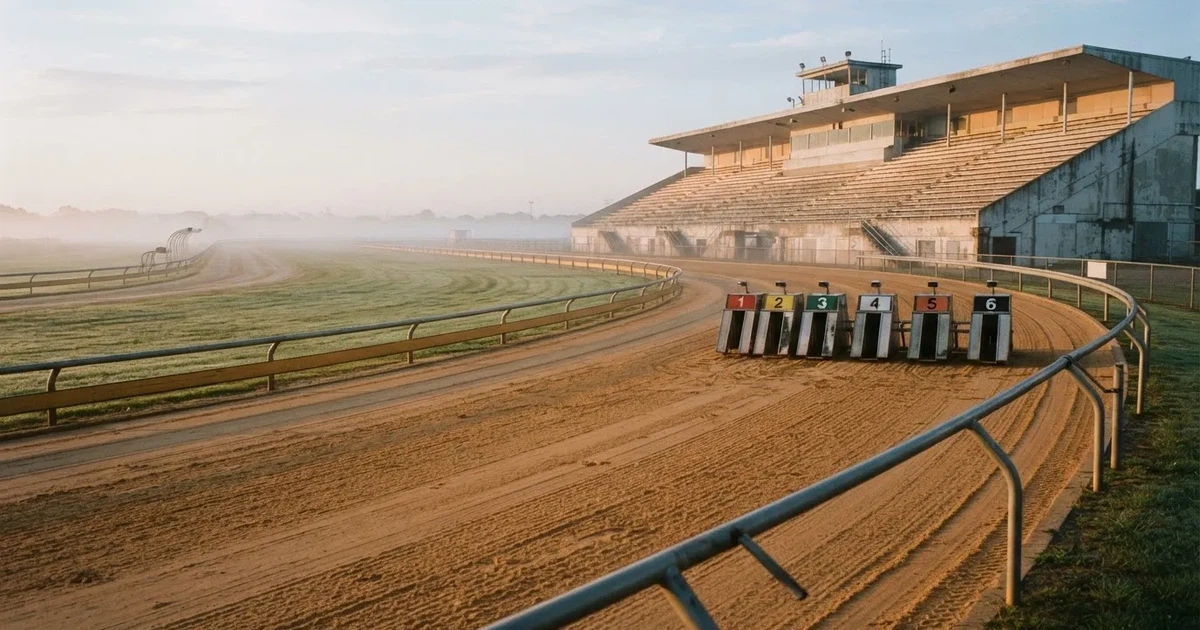
Greyhound racing sits oddly within British betting. There is no statutory list of permitted sports, no quota of bookmakers, no government “title race” for the sport’s TV rights — yet almost every UK-licensed sportsbook carries a greyhound card every day, meetings from Romford to Towcester, from Yarmouth to Central Park. The puzzle this page sets out to answer is the one a first-time punter actually has: which of those licensed brands does what well, what the odds on a six-dog race actually mean in pounds, and where the opportunity cost of a welcome offer sits once the terms are read. A starting price, an each-way calculation, a free-bet refund that is not what it sounds like, a bet that becomes a different bet the moment a dog is withdrawn — each of those small things decides whether a greyhound account makes money or just spends it.
*Data current as of 27 October 2026 and verified against the Gambling Commission’s public register of remote operating licences.*
Bet types and odds on greyhound racing
A greyhound race settles in seconds and pays out the moment the photo finishes are called. The markets that bookmakers build around those few seconds are what a punter is really choosing between.
Win and each-way. A win bet pays if the dog finishes first; an each-way bet pairs two equal-stake bets — one on the win, one on the place — so the total stake doubles. Place terms in greyhound racing are typically one-quarter of the win odds for two places in fields of five or six runners, one-quarter for three places in fields of seven or more, and one-fifth in larger fields; these vary by operator and meeting. A £10 each-way bet at 5/1 in a six-dog race costs £20: £10 win at 5/1 returns £60 profit, £10 place at a quarter the odds (5/4) returns £22.50 profit if the dog finishes first or second. The fraction turns a short-priced favourite into a place-only proposition, which is the way small-stake punters tend to use it.
Forecast and tricast. A forecast picks the first two in order; a tricast picks the first three. Both are perms underneath — a tricast in a six-runner race is 120 bets at unit stake, in an eight-runner race 336. The payout on a winning combination is high because the probability is low; the margin is also higher. Forecast and tricast dividends are declared on-course and matched by off-course bookmakers with a small deduction, typically 5%, before payout.
Ante-post. Ante-post is the market opened weeks or months before a major race, such as the English Greyhound Derby or the Scottish Greyhound Derby, with no Rule 4 deduction if a runner is withdrawn — because the bet was struck on the future, not the field. The trade-off is that an ante-post stake is lost entirely if the dog does not run: no non-runner no-bet refund as you would get on the day. For this reason, ante-post is treated as longer-term punting, not singles staking.
Starting price (SP). Where a bookmaker offers best-odds-guaranteed (BOG) on greyhounds, the payout is whichever is higher of the SP at the off and the price taken when the bet was placed. SP is the on-course fixed-odds market price at race start; in greyhound racing it follows the same convention as on the Flat. BOG catches the moments when a dog drifts from 3/1 to 5/1 in the paddock and your early bet was already on.
Spread betting versus fixed odds. A spread bet on the winning distances in a race works differently from a fixed-odds win bet. The bookmaker quotes a range — make the favourite 1.5 lengths, the layer 1.7 — and the punter’s profit or loss is the difference between that quote and the actual winning margin, multiplied by the stake. Spreadex, the one UK brand that runs greyhound spread betting alongside fixed odds, states plainly on its site that spread betting losses can exceed deposits. Fixed-odds betting, by contrast, never costs a punter more than the stake. The two products feel similar at the betting slip and are different products underneath, and that difference matters for the question of how much a single bad afternoon can cost.
Combination bets. The familiar multiples — double, treble, accumulator — multiply the prices together. A treble at 3/1, 4/1 and 5/1 returns 60/1; place a £10 stake and a winning treble returns £610. A Lucky 15 (four selections, 15 bets including four singles, six doubles, four trebles and one fourfold) is the typical each-way combination; a Heinz (six selections, 57 bets) and a Goliath (eight selections, 247 bets) sit at the heavy end. Total stake is unit stake times number of bets: a 50p Goliath costs £123.50. Most online slips calculate the stake for you; what they cannot calculate is whether the combination earns its keep, because the more legs, the more the book’s margin compounds.
Decimal versus fractional. British bookmakers display fractional odds by default and decimal odds at one toggle. The conversions are: fractional a/b = a ÷ b + 1 in decimal; a 5/1 shot is 6.00, evens is 2.00, 4/6 is 1.67. Decimal shows what a winning £1 stake returns, including the stake; fractional shows only the profit. For very short-priced favourites the decimal form is the easier one to read: 1.20, 1.10, 1.05 are all clear at a glance; 1/5, 1/10, 1/20 are not.
Payout, return and margin in two lines
Two numbers decide everything else on this page: what a winning bet returns, and what the bookmaker keeps from every unit bet on the market.

Return on a win bet. A win bet returns stake × decimal odds. A £10 bet at 3/1 (decimal 4.00) returns £40; the profit is £30. The implied probability (1 ÷ decimal odds) is the punter’s rough sense of what the price means: 4.00 implies 25%, so a “fair” bet at 25% probability returns £10 for every £10 risked and the bookmaker takes nothing. Every actual bookmaker price underestimates probability slightly to keep a margin — that small underestimate is what pays for the licence, the shop, the staff and the adverts.
The margin built into the prices. The margin of a greyhound race with six runners is the gap between 100% and the sum of all implied probabilities on the win market. The illustrative example is a two-way market priced at 1.90 / 1.90 (9/10 each), which sums to 105.3% implied and leaves a margin of about 5.3%; the same exercise at 1.80 / 1.80 (4/5 each) leaves about 11%; at 1.95 / 1.95 it leaves about 2.6%. The margin sits between roughly 2% and 15% on a real greyhound card, depending on the race, the operator and the proximity to the off. A six-dog race priced with implied probabilities adding to 118% has a 18-point gap the bookmaker has to win before the punter breaks even.
Understanding betting margins is key to calculating potential returns. Any advertised “best odds” on a greyhound race are only as good as the sum of the implied probabilities the bookmaker has set for the event. A £10 bet simply pays back what the odds promise, as the bookmaker’s margin is effectively built into the market pricing itself. The payout is calculated as stake × decimal odds, while the margin is the percentage over 100% that the total implied probabilities add up to.
The greyhound calendar and where meetings come from
Greyhound racing in Great Britain is regulated by the Greyhound Board of Great Britain (GBGB), which lists 18 licensed stadia on its register. The dozen-or-so tracks that take weekday and evening meetings — Romford, Perry Barr, Henley, Sunderland, Yarmouth, Sittingbourne, Towcester, Doncaster, Crayford, Central Park, Hove, Newcastle, Kinsley, Sheffield, Swindon — rotate across the calendar with evening fixtures most days and afternoon cards at the larger tracks at weekends. Irish meetings (Shelbourne, Limerick, Clonmel, Thurles, Kilkenny) run in parallel and many UK books price both pools. The pattern a punter sees is racing almost every evening between about 6 pm and 10 pm, with a Saturday afternoon card at one stadium and a Sunday afternoon card at another.

What form you can read
Form on greyhounds is shorter than on horses but follows the same logic: recent finishing positions, trap draw, grade of race, trainer and kennelling, time since last run. The trap number is more consequential in greyhound racing than in horse racing: a wide seed (traps 5 and 6) is a structural disadvantage at tight tracks like Romford, a smaller one at more sweeping circuits like Towcester. Card times are kept but tend to vary between tracks; the field-level signal is finishing position, not the clock.
The two derbies
Two greyhound races book prices on throughout the year. The English Greyhound Derby, run at Towcester since the 2016 move from Wimbledon, is the blue riband of the British season. The Scottish Greyhound Derby, run at Shawfield, sits at the other end of the calendar. Both attract ante-post markets from late spring, with bookmakers opening each-way terms and forecasting pools weeks before the heats. Major Irish competitions (the Irish Greyhound Derby at Shelbourne, the Irish Oaks at Kilkenny) sit alongside them on the price board at any UK bookmaker that runs a serious ante-post book.
Greyhound racing in New Zealand
Across the Tasman, greyhound racing in New Zealand was ended by the Racing Industry (Closure of Greyhound Racing Industry) Amendment Act 2026, passed on 2 April 2026, with the phase-out set for 1 August 2026. The announcement that the sport would be banned and phased out by 2026 came on 10 December 2024 from Winston Peters. Before the closure Greyhound Racing New Zealand (GRNZ) organised seven affiliated clubs across the country: Auckland, Waikato, Whanganui, Palmerston North, Canterbury, Otago and Southland. The closure is a New Zealand matter and does not change the GB market, but a British punter who travels to or follows meetings on New Zealand accounts sees a sport that is closing, not a sport that is expanding.
How meetings are priced
A British bookmaker’s greyhound page is largely the same product from one operator to the next — win, place, forecast, tricast, ante-post, occasional Match Bets (Trap 1 vs Trap 2 in a race) and a Fastest Time market at the bigger meetings. The differences sit in the depth of the ante-post book, the number of meetings covered and whether each-way terms run to the longer-place fraction (one-fifth) or stop at one-quarter. Coral, Sky Bet and Betfair tend to run the deepest greyhound books among the major UK brands; BetGoodwin and Fitzdares are smaller on volume but personal on customer service for the established customer; the rest sit somewhere in the middle.
The ten reviewed bookmakers, ranked by what each is for
Ranking ten brands against one yardstick produces a single list that nobody wants. What follows is a ranking against ten slightly different yardsticks — the depth of the greyhound book, the depth of the welcome offer, the depth of the live product, the depth of the in-play product — and a verdict on each that names what it is best at. Bet365 and the wider group sit at the top of the greyhound price board but not at the top of the welcome list; Coral is the reverse. The aim is to send each punter to the brand that fits their style rather than the brand with the loudest advert.
The comparison below lists the brand, the licence number and licence holder as they appear on the Gambling Commission’s public register, and a one-line summary of what each operator’s own terms state on its greyhound card and welcome.
| Brand | Gambling Commission remote licence | Licence holder | Greyhound offer |
|---|---|---|---|
| Bar One Racing | 056516-R-332750-007 (account 56516) | Bar-One Racing Limited | Irish independent with limited UK greyhound pricing |
| BetGoodwin | 002927-R-327985-008 (account 2927) | Goodwin Racing Limited | Modest UK greyhound book, personal service |
| Fitzdares | 000400-R-103839-030 (account 400) | Fitzdares Limited | In-play cover, ante-post on the classics |
| Coral | 054743-R-330863-014 (account 54743) | LC International Limited | Deep greyhound book, generous sign-up free bets |
| Kalooki Sportsbook | 057730-R-333396-005 (account 57730) | Kalooki Sportsbook Limited | Gambling Commission account 57730, GAMSTOP member |
| Betmaster | 065699-R-339929-002 (account 65699) | BM Solutions GB Ltd | Football-led, narrower greyhound book |
| Sky Bet | 067370-R-341330-005 (account 67370) | SBG Sports Limited | Strong greyhound book, acca-friendly free bets |
| 10bet | 043173-R-322899-023 (account 43173) | Blue Star Planet Limited | Football-led with greyhound alongside |
| NetBet | 039170-R-319343-032 (account 39170) | Netbet Enterprises Limited | Boosts, Bet Builder, modest greyhound depth |
| Fitzwilliam Sports | 048760-R-335434-009 (account 48760) | SBKI Limited | Capped membership, high-stakes welcome |
What the table cannot tell you is which one fits. The sections below each draw a verdict from the brand’s own terms; together they replace a league table with ten different doors, each one leading to a different kind of punter.
Core overview: who bets on greyhounds and what they get
Greyhound racing in Great Britain is a small sport by turnover and a large one by reach. The 18 licensed stadia of the GBGB provide the calendar; the licensed UK bookmakers provide the access. A greyhound race pays out within minutes of a click of “place bet”, and the card is published by lunchtime for evening racing — that speed is the reason a punter who would not dream of betting on a horse at 5/1 will put a fiver on a dog at the same price from the sofa.
The simple version of “how to bet on greyhound racing” runs in five steps: open a UK-licensed account, deposit by debit card or bank transfer, find the greyhound tab in the sportsbook, pick a meeting and a market (win, place, forecast, each-way), and place the bet before the SP market closes. Verification is required before any first deposit — that is the law under section 33 of the Gambling Act 2005 — and a free bet is treated as a deposit for verification purposes. No GB-licensed site accepts anonymous play; this is also why opening a new account is faster from a mobile app than from a desktop browser, because the camera flow is built in.
The deeper version of the question runs into trap draws and trainer form, into whether a six-dog race ever offers real value or whether the margin has eaten it, and into what a welcome offer actually pays once the rollover and minimum price are read. The next five sections cover the bits the simple version skips.
Who this sport is for and who it isn’t
A greyhound race settles fast and pays out fast, with a small field. For a small-stake punter who likes to bet on evening sport and watch the result within minutes, greyhounds is a clean choice. For a serious form reader it is also clean — fewer variables than horse racing, a clear trap draw, fast returns on ante-post research. For a casual accumulator-builder, greyhounds fit neatly into a Saturday acca, particularly as a leg alongside football and horse racing. Where greyhounds are a worse fit is the same place every small-market sport is: on the punter who wants derivatives, in-play markets with depth, or the live-streaming coverage that horse racing now gets. Most UK books carry live greyhound streaming on at least the bigger meetings; none cover it as thickly as the football or horse product.
Where greyhound betting is legal in Great Britain
The legal status of online greyhound betting in Great Britain is settled: any operator serving customers in Great Britain needs a Gambling Commission licence wherever it is based, and the Commission’s public register is the entire test of who holds one. That framework has been in force since the Gambling (Licensing and Advertising) Act 2014, which amended sections 33 and 36 of the Gambling Act 2005 so that the point of consumption — not the seat of the company — decides whether a licence is needed. A Curaçao, Malta or Gibraltar licence alone is not enough; a brand based outside the UK but trading into Britain needs a Commission licence on top of any home jurisdiction’s.
The Commission licenses several categories of remote betting: general betting standard (real events), general betting standard (virtual events), general betting limited, pool betting, and betting intermediary. Most of the ten brands below hold a remote general betting standard (real events) licence — one, Coral, also holds the betting intermediary licence for the exchange side of its operation. The licence number and the trading name sit on the Commission’s register next to a domain; a brand may run .com or .co.uk, and the domain proves nothing by itself. What proves it is the entry: business name, account number, site address, licence categories, status.
What is forbidden
Credit cards are banned for gambling in Great Britain since 14 April 2020, including credit-card-funded payments through e-wallets. Cryptocurrency deposits are not banned by statute but are not covered by the same complaints route; the operator’s own terms decide. Northern Ireland sits outside the Gambling Act 2005 and runs its own older regime; a GB licence does not, by itself, legalise gambling in Northern Ireland, and the brands here are framed as GB-licensed, not UK-wide. There is no statutory minimum stake, no statutory cap on winnings, and no permitted-markets list; the operator’s licence categories, the LCCP and the operator’s own terms decide what may be bet on.
What is permitted
Betting on greyhound races at GBGB-licensed stadia is permitted at any Commission-licensed bookmaker. Markets offered are win, each-way, forecast, tricast, ante-post, Match Bets between traps, occasional distance and time markets, and any combination product on the operator’s slip. Spread betting on racing is regulated differently: financial spread betting is under the Financial Conduct Authority, non-financial spread betting on dogs is within General Betting Duty. Spreadex, which offers both, is the only UK brand that pairs financial spread betting and greyhound spread betting under the same roof.
Enforcement
The Commission enforces through cease-and-desist notices, referrals to search engines, work with payment providers and ISPs, and (newly or imminently) court-ordered DNS blocking. Enforcement aims at the operator providing unlicensed gambling to GB customers; a customer betting on an unlicensed site commits no offence, but loses the protections of licence: no GAMSTOP, no Commission complaints route, no approved dispute-resolution service, no British consumer remedy if funds are withheld, and none of the bonus cap or vulnerability-check rules that hold at licensed sites. The honest framing is that licensing costs both sides — checks, verification, deposit limits, capped bonuses — and unlicensed brands offer none of those protections. Either is a choice; the difference is what each side is buying and what each side is selling.
Safer gambling and player protection
The framework around gambling in Great Britain treats greyhound betting the same as any other licensed betting product: a Commission licensee’s customer-protection duties apply to every market.
GAMSTOP. Since 31 March 2020 GAMSTOP has been a mandatory licence condition for remote operators licensed in Great Britain. A customer who registers with GAMSTOP is excluded from every licensed online betting account they hold and from opening a new one for a chosen period: six months, one year, five years, or five years with auto-renewal. The minimum chosen period runs out, after which the exclusion stays in place for a further seven years unless the customer asks GAMSTOP to remove it. GAMSTOP does not cover betting shops — those use a separate service. A punter who is already on GAMSTOP cannot use the ten brands reviewed here, by licence condition.
Financial vulnerability check. Under LCCP condition 3.4.4, in force since 30 August 2024, a licensed remote operator must run a public-record check on a customer whose deposits minus withdrawals exceed £150 in a rolling 30 days (since 28 February 2025). The check looks at records like bankruptcy orders and county-court judgments; it is not an income check and not a credit-reference check. The deeper affordability check — the press’s “affordability checks” — was announced as a staged plan and has no start date as of the date the data on this page was checked.
Deposit limits. Operators must offer a gross deposit limit on a fixed time frame. The first wave of changes has applied since 31 October 2025; a second phase was postponed to 30 September 2026. Whether that second phase is live has not been confirmed. Either way, there is no state-set ceiling on deposits: limits are the customer’s own choice, set inside the operator’s product.
Age and identity. Minimum age 18, name, address and date of birth verified before any deposit or wager at a licensed site — the verification rule has held since 7 May 2019, and a free-bet or bonus credit counts as a deposit for verification purposes. Identity is checked from a passport or driving licence and an address document, and a proof-of-funds question can follow at higher spend under the money-laundering rules. No GB-licensed operator runs anonymous play.
Help and signposting. GamCare runs the National Gambling Helpline. GambleAware funds treatment. The NHS operates gambling clinics in several English regions, NHS Scotland runs equivalent services, and Gamblers Anonymous runs mutual-help groups. Several reviewed brands link those services directly from the safer-gambling tab of their account pages. The Fitzwilliam Sports site links GambleAware, GAMSTOP and Gamblers Anonymous from its footer. Coral and Sky Bet signpost the National Gambling Helpline from their safer-gambling pages.
Bonuses and free bets on greyhound betting
Welcome offers at UK-licensed bookmakers are described on the page by what each is worth, not how it is claimed. The mechanics fall into a handful of shapes, and each shape has the same arithmetic underneath: deposit a sum, place a bet, receive credit, clear a rollover.
The “Bet £X, Get £Y in Free Bets” shape. Coral’s sports welcome offer is “Get £40 in Free Bets when you bet £20”: a deposit and a sports bet of £20 or more at minimum odds of 2.0 (1/1), with £40 in free bets issued within seven days, expiring seven days after issue, for new GB customers who opt in. BetGoodwin’s sports welcome offer is “Bet £10 & Get £15 in Free Bets”, made up of a £5 sports bet, a £5 acca and a £5 Sub-Cover bet. Sky Bet issues free bets on similar lines. The mechanics are simple: a minimum first bet triggers the free-bet credit; the credit is paid out as free-bet tokens rather than as cash, and the free-bet stake is not returned with winnings.
The “free bet no wagering” shape. Some offers deliver free bets without a turnover condition, but cap winnings from the free bet, or limit the odds at which the free bet may be used. The materials carried by this page do not record a no-wagering offer at the reviewed brands; where one exists it is the kind of offer a punter should read terms for before activating.
Each-way and free-bet combinations. Where a free bet is paid out as a token, it cannot be used as a stake on each-way markets in the same way cash can; each operator states this in its terms. Sky Bet’s free bets can be used only on single or each-way markets, not multiples, excluding virtuals, and are non-withdrawable; the stake does not return with winnings; they expire 30 days after crediting.
Rollover caps. Wagering requirements on bonuses are capped at 10x under promotion rules in force since 19 January 2026 — a £10 bonus at 50x wagering was £500 of betting; under the cap no more than £100. Mixed-product promotions — an offer that requires gambling on two or more product types, for example “bet on football to get free spins” — are banned. These rules change the headline numbers but do not change the structure: an offer still requires a stake, a qualifying minimum odds level and a rollover before any of the bonus converts.
The 2026 promotions landscape for greyhounds. The greyhound-specific offering is concentrated in two places: odds boosts on the day’s biggest meetings (Coral and Sky Bet run short-form boosts on selected evening cards) and best-odds-guaranteed on the day. Year-round offers tend to be football-led; the greyhound punter usually clears the rollover on football singles or accas rather than on greyhounds. A practical rule: take the offer for the value of the free bet, not for the value of the headline number, and read each book’s qualifying rules on greyhound singles — odds boosts sometimes exclude greyhound races from the eligible markets.
A worked illustration of a free bet’s value. A £10 free bet used on a single at decimal odds of 4.00 (3/1), at a market with a 5% margin, returns about £30 in profit — three units per unit stake, because the free-bet stake is not returned and the margin takes its cut. The same free bet at decimal odds of 1.50 (1/2) returns about £3.30 in profit. The free bet’s value rises sharply with the odds used, which is why each free bet is worth more at a longer price than at a shorter one, and why books exclude greyhound favourites from many boost tokens. A punter holding a free bet should use it on the longest-priced greyhound on which the book will take it, not on the favourite.
Mobile and app betting on greyhounds
Most UK-licensed greyhound betting now happens on a phone. The ten brands reviewed all offer native apps on iOS and Android, and the greyhound card sits two taps from the home screen of every one of them.
bet365. bet365 is the official global betting partner of the UEFA Champions League and its app is the most downloaded sports betting app in the UK. The greyhound card on the bet365 app sits under a dedicated tab, with racecards on the same screen as the win and place markets. Bet Builder+ lets a punter combine markets from one race (or one meeting) into a single bet, pre-match and in-play. Super Boosts, Winnings Boosts on Bet Builders and selected singles, and daily Bet Boosts sit alongside the standard price. In-play betting and live streaming are integrated, and a Bet Track view follows bets in play. For a greyhound punter who also bets on football, the all-in-one product is hard to match.
Betmaster and the narrower books. Betmaster — published by Bm Solutions Gb Limited and covering football, cricket, horse racing, NFL and eSports (League of Legends, Dota 2) — has a competent greyhound card but one that lives inside a book that is football-led. The greyhound page exists, the markets are there, the layout is the same as the football page; what is different is the depth of the ante-post offering. A punter whose main game is the football coupon will be happy here; one whose main interest is the Towcester ante-post book will not.
Fitzdares and the premium end. The Fitzdares app offers cash out, accumulators, Lucky 15s, specials and antepost markets on horse racing, football, tennis, rugby, cricket, golf and American football, with in-play live odds. The product is high-end, the account management is personal, and the ante-post depth on the English Greyhound Derby and the Scottish Greyhound Derby is real. The everyday greyhound card is smaller than at bet365; the value is at the other end of the calendar.
NetBet and the boost-led apps. NetBet Sport offers Daily Boosts, Profit Boosts and free-bet offers, a Bet Builder with instant dynamic odds, and sports stats for major leagues. The greyhound card covers the daily meetings; the boost cadence is what the book leans on. Useful for a casual punter who likes a price uplift on the evening card; less useful for someone who needs the deep ante-post book.
Mid-range and the everyday card. 10bet’s sportsbook covers football, tennis and horse racing, with cash out, Bet Builder and live streaming. Coral, Sky Bet and the rest of the major UK books all run the same everyday greyhound card on mobile as on desktop. The greyhound punter, like every other punter, eventually settles on whichever app loads fastest with their phone’s network.
App-store housekeeping
Every reviewed brand is on the UK App Store and the Google Play Store. The store listings double as a check on the operator’s UK licence: the developer name, the company number and (for some apps) a footer licence statement confirm the company behind the brand. The store page is not the Gambling Commission’s register, and a brand in the store is not the same as a brand in the register; for the licence itself, the Commission’s public register is the source.
Live greyhound betting and cash out
Live greyhound betting is not as deep as live football betting, but it exists at every reviewed brand. The greyhound race is short — under a minute from the boxes — so the in-play window is the seconds between the trap opening and the photo. The market at that point is mostly cash out: a punter holding a £10 win bet at 5/1 has a winning position from early in the race, the cash-out value reflects that, and the punter either greens up or rides the photo.
Where the in-play product is strongest. bet365 runs the strongest in-play greyhound product among the reviewed brands, with Bet Track and Match Live-style visualisations and in-play single betting on selected meetings. The depth drops sharply when the meeting is a smaller one. The major UK books price greyhound in-play at the bigger meetings every evening; the smaller tracks are in-play in name only.
Cash out. Cash out on greyhound races is universal among the reviewed brands. The mechanic is straightforward: the book offers a value at any point during the race, the punter takes it (settling the bet early) or leaves it (running the bet to the photo). The offered value embeds a margin — the cash-out price is always slightly worse than the position’s true fair value, which is how the book earns the cash-out product. A punter who treats cash out as a hedge has the right idea; one who treats it as a profit-taking tool is usually paying the book a fee for the convenience.
Live streaming. Greyhound live streaming is offered at the major UK books for at least the bigger meetings — Towcester, Romford, the Irish tracks — and at bet365 and Coral for most meetings each evening. Smaller books do not always stream greyhounds even when they price them. A punter who values watching the race live will end up at a brand that streams; a punter who bets on the SP and trusts the result will not care.
Predictions, systems and the limits of greyhound form
The greyhound betting public, like the horse betting public, is offered “systems” and “tips” that promise an edge. Honest framing: no published system has been independently verified to beat a margin of 5–10% on UK greyhound racing over a sample of more than a few months, because the sport has fewer variables than horse racing but more randomness than the systems vendors admit.
Form, trap, trainer. Form is the primary angle: finishing positions in recent runs at the same grade or one grade down. Trap draw is the second: the inside traps (1 and 2) tend to win more often at tight circuits, outside traps (5 and 6) at sweeping ones. Trainer and kennelling matter less than in horse racing; a trainer with two kennel staff and forty dogs will rotate the dog across tracks, diluting the trainer signal. A greyhound that has won two of its last three starts at the same grade is a credible favourite; one that has won at a higher grade then dropped back is a credible improver.
Betting systems published online. A “system” online is almost always a staking plan, not a tip: a way of sizing bets given a sequence of wins and losses. Martingale doubles the stake after each loss; Fibonacci follows the Fibonacci sequence. Neither improves the underlying probability and both lose long-term at the same rate as flat staking at the same prices. A “free greyhound betting system” delivered in exchange for an email address is, by the volume of them in circulation, a lead-generation scheme. Punters who stake one percent of a bank per bet, on bets priced above 3.00 (2/1) at markets with a margin of 5% or less, will lose less per race than punters who stake flat amounts at shorter prices.
Tipsters and paid advice. Tipsters operate legally in Great Britain where they hold the appropriate Commission permission; some are profitable over the long term and most are not. The material on this page does not name any tipster because it cannot carry the kind of track-record disclosure a reader would need to act on it. The same holds for staking plans and betting strategies — they exist, they are cheap to buy, and most fail the test of any actual sample.
A short list of what the punter controls. The punter controls the choice of race, the choice of market, the choice of price and the choice of stake. The odds are quoted by the book; the trap is drawn by the racing office; the form is what it is. What the punter actually decides is whether the price offered is fair given the field, and whether the stake is small enough to survive a losing run at the margin the book carries. The remainder is noise.
The ten reviewed bookmakers, reviewed
Each section below takes a single bookmaker, the position it occupies in the comparison, the licence it holds, the welcome offer or sport product it carries and the verdict that fits what the brand actually does. Brand names link to nothing — the reader checks each on the Commission’s register themselves — and the figures are what the brand’s own terms state.
Bar One Racing
Bar One Racing has rebranded as BAR 1 Betting, an Irish independent bookmaker with shops across Ireland and horse racing sponsorships at Dundalk, Fairyhouse, Navan, The Curragh, Curraheen Park and Cork. Bar-One Racing Limited holds a remote general betting standard (real events) licence (account 56516) from the Gambling Commission, with the trade domain Bar One Racing.
Greyhound coverage reflects the brand’s Irish heritage: Irish meetings priced in depth, ante-post on the Irish Greyhound Derby, a competent everyday UK card. Welcome terms are modest and personal rather than headline-grabbing. The brand suits an Irish-connected punter who values the Irish tracks over the UK card.
Verdict. The Irish card is the point of Bar One Racing; the UK greyhound card exists and is functional, and the licensed, GAMSTOP-covered product is a small but real offering for a punter whose racing week centres on Shelbourne and Kilkenny.
BetGoodwin
BetGoodwin’s sports welcome offer is “Bet £10 & Get £15 in Free Bets”, made up of a £5 sports bet, a £5 acca and a £5 Sub-Cover bet. Goodwin Racing Limited is licensed by the Gambling Commission for remote general betting (real events) under account 2927, trading as betgoodwin.co.uk.
The brand is the smaller cousin of a long-established independent bookmaker, with personal account management and a tighter book than the majors. The greyhound card is modest; ante-post depth is thinner than Coral or bet365; the boost cadence is occasional. Where the brand wins is on service: a punter who likes to know their account manager by name will find it here.
Verdict. BetGoodwin is the customer-service book for greyhound punters. The free-bet structure rewards small stakes across multiple bet types rather than one big bet, and the tenner punters who choose it value the humans over the price.
Fitzdares
The Fitzdares app offers cash out, accumulators, Lucky 15s, specials and antepost markets on horse racing, football, tennis, rugby, cricket, golf and American football, with in-play live odds. Fitzdares Limited operates under Gambling Commission remote general betting (real events) licence 000400-R-103839-030 (account 400), with the trade domain Fitzdares.com.
Fitzdares sits in the premium end of the market. The greyhound card is real and the ante-post book is solid; the live product is competent. Where the brand differs is on the high-roller focus: bigger stake limits, sharper personal account management, a small invited-customer feel. A small-stake punter will not be turned away, but the welcome is pitched at the higher-stake customer.
Verdict. Fitzdares is the premium greyhound book for the customer who wants premium service and is comfortable paying for it through smaller everyday sign-up value. For English Greyhound Derby ante-post, the depth here competes with Coral and bet365.
Coral
Coral’s sports welcome offer is “Get £40 in Free Bets when you bet £20”: a deposit and sports bet of £20 or more at minimum odds of 2.0 (1/1), with £40 in free bets issued within seven days, expiring seven days after issue, for new GB customers who opt in. LC International Limited is licensed by the Gambling Commission under account 54743 for remote general betting (real events) and betting intermediary services, trading as coral.co.uk.
Coral sits at the top of the major UK brands for greyhound volume. The everyday card runs every meeting; the ante-post book runs both derbies; the price boost cadence is one of the highest in the market. The seven-day free-bet expiry is tight, so the value is in using them fast. The exchange licence (inherited from the Betfair side of the group) supports the lay side of the greyhound offering for the few customers who use it.
Verdict. Coral is the deep greyhound book for the daily punter. £40 of free bets for a £20 qualifying bet is the largest accessible welcome among the reviewed brands; the seven-day expiry is the cost.
Kalooki Sportsbook
Kalooki Sportsbook is operated by Kalooki Sports Book Ltd (company number 12938274), licensed by the Gambling Commission under account number 57730, and is a GAMSTOP member. Kalooki Sportsbook Limited holds a Gambling Commission remote general betting (real events) licence (account 57730), trading as kalookisportsbook.co.uk.
The brand is one of the newer UK-licensed operators on the greyhound card. The product is competent: standard markets, a clean app, a modest welcome. Where the brand sits is in the mid-market — not the premium end, not the budget end — and where the everyday UK greyhound card is functionally complete.
Verdict. Kalooki Sportsbook is a competent, fully licensed brand on the everyday greyhound card. The customer who picks it values a small, GAMSTOP-covered product over headline-grabbing sign-up value.
Betmaster
The Betmaster app is published by Bm Solutions Gb Limited and covers football, cricket, horse racing, NFL and eSports (League of Legends, Dota 2) betting. BM Solutions GB Ltd holds a Gambling Commission remote general betting (real events) licence (account 65699), trading as betmaster.co.uk.
Greyhounds sits at the edge of the Betmaster product. The card is there, the ante-post is shallower, the streams are fewer. Where the brand is strongest is football and eSports, with the greyhound offering functioning as a daily-meeting complement.
Verdict. Betmaster is a football-led book with a greyhound card that exists. The customer who lands here is one whose greyhound interest is monthly rather than weekly; the major UK books will fit a daily greyhound punter better.
Sky Bet
Sky Bet free bets expire 30 days after crediting, can be used only on single or each-way markets, not multiples, excluding virtuals, are non-withdrawable and do not return the stake with winnings. SBG Sports Limited is licensed by the Gambling Commission under account 67370 for remote general betting (real events), trading as Sky Bet.
Sky Bet sits alongside Coral at the top of the UK greyhound market on volume and depth. The 30-day free-bet expiry is generous against Coral’s seven; the restriction on multiples means acca-builders have to redeploy the free bet credit as singles. The product and the app are well designed for punters who like a clean slip and a fast cash-out.
Verdict. Sky Bet is the second-largest UK greyhound book, with a longer free-bet life than Coral and a simpler interface. The customer whose priority is a long-lived free-bet and a clean app picks it over Coral.
10bet
10bet’s sportsbook covers football, tennis and horse racing, with cash out, Bet Builder and live streaming. Blue Star Planet Limited is licensed by the Gambling Commission under account 43173 for remote general betting (real events), trading as 10bet.co.uk.
Greyhounds sits inside a football-and-tennis-led product. The card is functional, ante-post is modest, the welcome is geared to football. Where the brand suits is the customer who wants Bet Builder and live streaming across sports rather than depth on greyhounds.
Verdict. 10bet is a multi-sport book with a competent greyhound card that exists. The customer here bets on greyhounds occasionally and on football heavily, and wants Bet Builder and streaming across the calendar.
NetBet
NetBet Sport offers Daily Boosts, Profit Boosts and free bet offers, a Bet Builder with instant dynamic odds, and sports stats for major leagues. The Commission’s register records a remote general betting standard (real events) licence under account 39170 in the name of Netbet Enterprises Limited, with the trade domain netbet.co.uk.
NetBet is the boost-led mid-market book. The greyhound card covers the daily meetings at every reviewed meeting; the boost cadence is what carries the value; the Bet Builder works on football more than on greyhounds. A punter whose greyhound interest is a Tuesday-evening price uplift rather than ante-post depth will find it here.
Verdict. NetBet is the boost-led mid-market book for the daily greyhound customer who wants short-form price uplifts rather than deep ante-post books.
Fitzwilliam Sports
Fitzwilliam Sports describes itself as a Dublin bookmaker with capped membership, and its welcome is a “High Stakes Welcome” subject to compliance criteria. The Commission’s register records a remote general betting standard (real events) licence under account 48760 in the name of SBKI Limited, with the trade domain Fitzwilliam Sports.
Fitzwilliam Sports offers instant deposits, fast withdrawals, timeouts and deposit limits, and links to GambleAware, GamStop and Gamblers Anonymous. The brand is capped-membership, which is the unusual feature: it does not accept every customer who applies; the welcome is a high-stakes package aimed at the higher-end punter. Greyhounds are on the card; ante-post depth is solid; the premium positioning is real.
Verdict. Fitzwilliam Sports is the capped-membership, high-stakes book for the customer whose greyhound interest comes with a serious bank. The small every-day card sits alongside the bigger markets; the welcome structure is built around stakes the average punter will not reach.
How the calculations sit inside the choices above
Two worked numbers carry the analysis of the bet-types section forward. They are illustrative, not quoted prices, and they are stated once on the page so the reader can do their own check at any two-way market they see.
A two-way market at decimal odds of 1.90 / 1.90. The implied probabilities on each side are 1 ÷ 1.90 = 52.6%; the sum across the two outcomes is 105.2%. The margin is (105.2% − 100%) ÷ 105.2% = 5.0%. On a £10 stake at 1.90, the return is £19.00 (£9.00 net profit). The 5.0% margin means the bookmaker keeps about 50p from every £10 staked on this market before any other cost. Across a six-runner greyhound race the sum of implied probabilities is typically higher — 115–125% — and the margin is correspondingly larger, in the order of 15–25%.
The same calculation at 1.80 / 1.80. Implied probability 55.6% each, total 111.1%, margin about 10%. The bookmaker keeps about £1.01 of every £10 staked. At 1.95 / 1.95, the margin drops to 2.5%. The two ends of this band show the bookmaker’s room: at very tight two-way margins the bookmaker wins on volume, at wide two-way margins the bookmaker wins on per-bet margin.
The band is what matters: the margin of any real greyhound card runs between roughly 2% and 15% depending on the race, the operator and the proximity to the off. A punter comparing two bookmakers on the same race sees the comparison as the gap between two implied-probability sums. That gap, in turn, is what a stake at the wrong book costs over a month.
Choosing between the licensed brands
The ten brands divide into four groups once the comparison is read.
The deep greyhound books. bet365 and Coral run the deepest greyhound price boards, the most complete ante-post offering, the most consistent streaming. Punters whose weekly stake goes onto greyhounds five or six nights a week will end up at one of these.
The mid-market everyday books. Sky Bet, NetBet, 10bet and Betmaster carry the daily meetings at a competent depth, with a different feature leading each — Sky Bet on free-bet longevity, NetBet on boosts, 10bet on Bet Builder. The greyhound punter who also bets on football will find the everyday card somewhere in this group.
The niche and premium books. Bar One Racing (Irish card), Fitzdares (premium service and ante-post), Fitzwilliam Sports (capped membership and high-stakes welcome) are for the customer whose priorities sit outside volume. Each one suits a particular kind of punter and is a poor fit for the others.
The customer-led smaller books. BetGoodwin and Kalooki Sportsbook are smaller, personal, fully licensed operators; they suit the punter who values a smaller book with a personal account manager over the major-brand product.
The opening question the page set out to answer — which licensed brand suits your style — is answered by the group above. The punter who values volume, the punter who values boosts, the punter who values service and the punter who values a small book each pick a different group; within each group, the comparison comes down to two or three figures.
Working out what each bet actually pays
A £10 win bet at decimal odds of 3.00 (2/1) returns £30 (£20 net profit). At 6.00 (5/1) it returns £60. At 1.50 (1/2) it returns £15. The stake is included in the return; the profit is the return minus the stake. For each-way bets the stake doubles and the profit carries a place deduction: at 5/1 in a six-dog race, a £10 each-way bet at a quarter the odds for two places returns £60 on the win leg if the dog finishes first and £22.50 on the place leg if it finishes first or second. The decimal form is what most online slips now show; the fractional form is the British default and what an older slip will quote.
For a combination bet the prices multiply: an accumulator at decimal odds 2.00, 3.00 and 4.00 is priced at 24.00. A £5 stake returns £120. Each leg must win for the accumulator to pay; one non-runner, with the operator’s non-runner rule, leaves a leg at a substituted SP rather than voiding the bet, which means the price drops and the accumulator still runs at a lower return.
The worked numbers — payout, return, margin — are not what an offer is worth. They are what the existing market costs. The next question turns to whether any of the offers on the page change the answer.
Frequently asked questions
How do you bet on greyhound racing in the UK?
Open a UK-licensed account with a Gambling Commission licence, verify your identity (passport or driving licence, address document) before any deposit, choose debit card or bank transfer for deposits, navigate to the greyhound tab on the sportsbook, select the meeting and the market (win, place, each-way, forecast, tricast, ante-post), enter your stake, and place the bet before the SP market closes. Payouts to your account balance follow settlement, generally within minutes for win and place bets at smaller meetings and within hours for forecasts and tricasts. Free bets cannot be used on every market at every book; check each book’s free-bet terms before staking.
How do greyhound and dog-racing bets differ?
They do not — the two phrases name the same sport. “Greyhound racing” and “dog racing” are interchangeable at every UK bookmaker. The race uses a mechanically operated artificial lure along a rail ahead of the dogs; tracks in Britain are licensed by the Greyhound Board of Great Britain (GBGB), which lists 18 stadia on its register. The betting products on greyhound meetings are the same at every UK-licensed operator: win, each-way, forecast, tricast, ante-post, occasional Match Bets and time markets.
Is there a way to win at greyhound betting?
No system has been independently verified to beat a 5–10% bookmaker margin over a long sample. Form, trap draw, grade and trainer are real factors; staking plans are not. The honest framing is that greyhound punting, like horse punting, is a paying hobby for most and a paying business for a few; the difference is bank management and discipline, not a system. A punter who stakes 1% of a bank per bet at prices above 3.00 (2/1) at markets with a margin of 5% or less will lose less per race than a punter who stakes flat at shorter prices. Neither will win at the margin the markets carry.
How can a bookmaker’s Gambling Commission licence be checked?
Search the Commission’s public register at its website by business name, trading name, domain or account number. The register lists business name, account number, domain, licence categories, status and any non-active conditions. The Commission account numbers carried on this page — 56516, 2927, 400, 54743, 57730, 65699, 67370, 43173, 39170, 48760 — can be entered directly into the register search; the matching account and licence confirm a brand’s status. The register is the only test of whether a brand is licensed; the App Store listing, the brand’s own footer, an advertiser’s claim are not.
How is the return on a bet calculated from the stake and the odds?
In decimal odds, return on a win bet is stake × decimal odds; net profit is stake × (decimal odds − 1). A £10 stake at decimal odds of 4.00 (3/1) returns £40; the profit is £30. For each-way bets the total stake is doubled and the place leg pays at a fraction of the win odds (one-quarter for two places in five-or-six-runner fields, one-quarter for three places in fields of seven or more, one-fifth in the larger fields at some operators). For accumulator bets the prices multiply: 2.00, 3.00, 4.00 in a treble is priced at 24.00, and a £5 stake returns £120 if all three legs win.
What is the bookmaker’s margin and how is it visible in the odds?
The margin is the sum of the implied probabilities of every outcome on a market, minus one, expressed as a percentage. The implied probability of a decimal price is 1 ÷ price. A two-way market at 1.90 / 1.90 sums to 1.0526, so the margin is about 5.3%; at 1.95 / 1.95 the margin drops to about 2.6%; at 1.80 / 1.80 it rises to about 11.1%. On a six-runner greyhound card the typical total is 115–125% and the margin is correspondingly in the order of 15–25%. The margin is what the bookmaker keeps from every unit bet on the market, before any other cost; it is embedded in the prices and visible to anyone who does the math.
Horse racing & greyhounds – Free bets
Content created by the «Free bets» team
