
Online motorsport betting 2026: where it lives, what it costs, who to trust
 Available in US
Current as of 27 October 2026 and cross-checked against the UK Gambling Commission’s public register of remote operating licences.
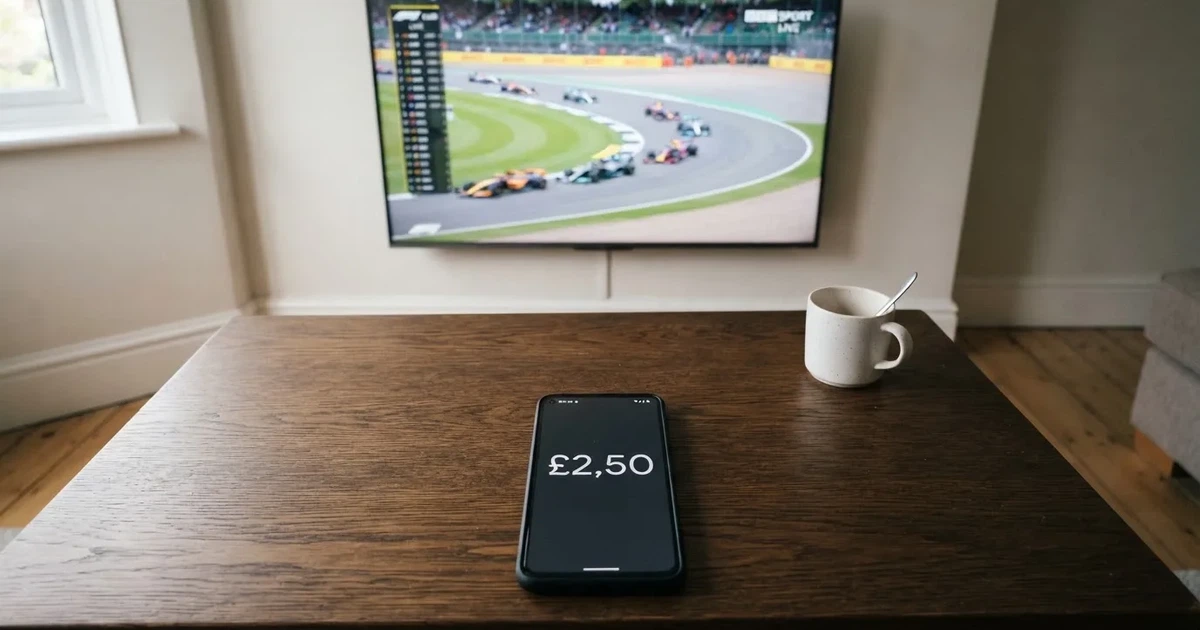
Formula One is back on the road with eleven teams and twenty-three Grands Prix, the World Endurance Championship rolls into Le Mans in June, and across British motorsport a punter has more licensed bookmakers to choose from than races on the calendar. The car is forty places on a betting slip; the rest of this piece is what surrounds those places, and what each option costs.
Bonuses and free bets for motorsport punters
Bookmakers describe their motorsport welcome packages the way they describe every welcome package: in the language of “free” and “boosted” and “risk-free”. Read those words with the scepticism they earn, because the offer you sign up for is rarely the offer you end up clearing, and the gap between the two is where the marketing cost lives. The mechanics are the same across the sport: a deposit match, a free bet for a qualifying wager, a price boost on a named race, or a refund if your first bet loses. What differs is the small print — the minimum odds, the wagering multiplier, the deadline, and the cap on what you can actually win from the bonus balance. Those are the figures that decide whether the offer is worth taking, and they are the figures many promotional pages leave for you to dig out of the terms.

A motorsport welcome tends to look thinner than a football one. F1, Le Mans, Formula E and IndyCar simply move fewer bettors through a betting slip than a Saturday Premier League card, so the headline numbers are smaller. That does not make them worthless; it makes the wagering maths the part that matters. If a bookmaker hands you a free bet whose stake is not returned with a win, the average value of that free bet depends on the odds you take and the margin built into the market. A £10 free bet placed at decimal odds of 4.00 on a market with a 6% margin is worth roughly £21 over many uses, not £40; the ceiling of the offer is set by the price, not the stake.
Price boosts are the motorsport offer that most often delivers on its name. A boosted odds promotion on a qualifying session, or on a podium finish, can be a real edge if the boost is genuinely above the wider market and the stake cap is generous enough to matter. Read the cap first. Some boosts cap qualifying stakes at a fiver; on a market with thin liquidity, that ceiling matters more than the percentage increase in the headline price. Acca insurance on a Formula One race weekend — a refund as a free bet if one leg of an accumulator lets you down — is a partial hedge at best, and it works only on the operator’s named qualifying markets. Outright futures on the Drivers’ Championship are routinely boosted at the start of the season, and the boost is usually framed as “enhanced odds” rather than as a free bet, with the same stake-not-returned maths underneath.
The wagering requirement is the figure that decides whether the offer is honest. Since the 2026 promotion rules, the maximum rollover on a sportsbook bonus in Great Britain sits at 10x the bonus. A £10 bonus at 10x needs £100 of qualifying bets before withdrawal; some promotions now offer 50x or have done in the past, and the older ones are still being closed out by readers who joined under the previous regime. The simpler the rollover — ideally 1x, with no minimum odds — the closer the headline matches the realised value. Anything with a 5x or 10x requirement on a sport you only bet on occasionally is rarely worth chasing, unless the bonus amount itself is large enough that the required turnover comes out under 50 pounds in real bets at realistic odds.
Two conditions to check before claiming anything from a motorsport welcome. First, the qualifying bet minimum odds: anything requiring 1.50 (3/2) or higher qualifies only a narrow band of motorsport markets, because outright winner prices on the front of the grid often start above that and long shots rarely do. Second, the expiry window. Some free bets last seven days; others last thirty. A three-leg acca with selections across two race weekends is hard to assemble inside a week, so an offer with a short window is an offer with a built-in reason to fail. Check both before the deposit goes in.
How motorsport odds and bet types actually pay
A betting market is a contract: you stake an amount, you pick a price, and the bookmaker pays you according to that price if your selection wins. The decimal price carries the whole story in one number. Stake £10 at decimal odds of 3.50 and the bookmaker returns £35 if your bet wins (your £10 stake plus £25 of profit); stake £10 at 1.50 and the return is £15 (£10 stake plus £5 profit). Fractional odds say the same thing in the British house style: 5/2 means a £2 stake returns £5 of profit plus your £2 stake back, so the decimal is 3.50; 5/1 means £5 of profit per £1 staked, decimal 6.00; “evens” or 1/1 is decimal 2.00. To turn any fraction into a decimal, divide the numerator by the denominator and add one. 5/1 becomes 5 ÷ 1 + 1 = 6.00; 11/4 becomes 11 ÷ 4 + 1 = 2.75; 9/2 becomes 9 ÷ 2 + 1 = 5.50.

The bookmaker’s margin is the tax it collects on every market. In a two-way market at decimal odds 1.90 / 1.90, the implied probabilities add up to 1 ÷ 1.90 + 1 ÷ 1.90 = 1.053, or 105.3%. That 5.3 percentage points above 100 is the overround; the margin — the slice the bookmaker keeps of every pound staked — sits at about 5%. Wider margins show up as larger overrounds: 110% overround is roughly a 9% margin, 115% overround is roughly a 13% margin. In motorsport, outright winner markets on the Drivers’ Championship often run with margins of 25–30% because bookmakers cannot balance the books precisely when one driver is heavily favoured; race winner markets sit closer to 5–8% on the major events because liquidity is higher. The narrower the margin, the more of every stake returns to bettors in the long run. Comparing margins between bookmakers before a race weekend is the one technical habit that improves a punter’s long-term position, and it is the one habit that costs nothing to keep.
The same margin maths shows up across motorsport-specific markets. Qualifying sessions are typically priced with a similar margin to race winner markets because the field is small and the bookmaker can balance the book; fastest lap and podium-finish markets often run a touch wider because outcomes are harder to call. Pole-position markets carry margins in the same range as race winner markets on most major Grands Prix. The bookmaker with the lowest margin on the race you want to bet is the bookmaker that gives you the largest expected return for an identical selection — and the difference between a 6% margin and an 8% margin on the same odds is the difference between losing 60 pence and losing 80 pence on every ten pounds bet, in the long run. That is not glamorous arithmetic, but it is the arithmetic that pays the bills.
Motorsport bet types break into three families. Singles are one selection, one outcome, one set of odds; doubles and trebles and accumulators (sometimes called “acca” or “parlay”) string selections together so each leg’s price multiplies into a single larger one. A treble with decimal legs 2.00, 3.00 and 4.00 has combined odds of 24.00; a £10 stake returns £240 if all three win. The catch is that the accumulator inherits the margin of every market it touches, so a four-leg accumulator on four markets at 6% margin each behaves like a single bet with roughly a 24% margin — the bookmaker’s cut rises faster than the apparent price. Each-way bets double the stake (one bet on the win, one on the place), so a £10 each-way bet is £20 down; the place terms on motorsport are set by each bookmaker and vary. Bet builders, sometimes called “same-game multi”, fold several markets from one race into one customised wager: driver to win, fastest lap, and podium finish as a package, priced by the bookmaker as a single combined unit. The convenience is real; the price is typically worse than backing each leg as a single, because the bookmaker is pricing the correlation between selections.
Formula 1 and endurance racing carry a market that has no real equivalent in most other sports: the constructor (or team) market. The same margin logic applies, with one wrinkle — on a Constructor’s Championship outright, public information drives a lot of the price, and bookmakers tend to be sharper than the betting public. Margin in those markets is often lower than in the Drivers’ Championship equivalent because liquidity is split across fewer selections and the book can be balanced more precisely. Live markets during a race are a different beast; in-play margins are wider because the bookmaker is pricing rapidly into a moving picture, and the reader who places in-running bets pays for that speed in the form of a built-in edge to the house.
What to bet on: motorsport categories and fixtures
Motorsport is a broad church, with four-wheel racing governed by the Fédération Internationale de l’Automobile — the FIA, set up in 1904 and the oldest international governing body for cars — and motorcycle racing sitting under a separate body, the FIM. The GB-licensed bookmakers covered below serve all the categories that fall under that umbrella, alongside rallying, truck racing and a long tail of national championships. The four markets that matter for a British punter are Formula One, the World Endurance Championship (WEC) that runs Le Mans, the IndyCar Series in North America, and Formula E, with touring cars and the British Touring Car Championship filling out the calendar at the smaller end.
Formula One in 2026 is a 23-race season starting on 8 March at Albert Park in Melbourne and ending on 6 December 2026 at Yas Marina in Abu Dhabi. The grid sits at eleven teams after Cadillac’s entry as a constructor and Audi’s arrival as a works team via the Sauber acquisition. The technical rules for 2026 are a clean break from 2022–2024 hybrid: the MGU-H has gone, the MGU-K unit now contributes up to roughly 470 brake horsepower (around 350 kilowatts), and the DRS system that defined the last few years has been replaced by active aerodynamics with an overtake mode that becomes available within one second of the car ahead. Those rule changes reset the competitive order in ways even the pre-season testing struggles to settle, which is why outright winner prices tend to move sharply in the early races of any new rules cycle. The team cost cap this year sits at 215 million US dollars per constructor. The reigning champion going into the season is Lando Norris. Race winner, podium finish, points finish, fastest lap, qualifying top ten, head-to-head driver matchups, and the constructor’s championship outright are standard markets at every major bookmaker.
The World Endurance Championship is the second pillar for a serious motorsport punter. Le Mans runs each June at the Circuit de la Sarthe in France, with the rest of the season spread across Bahrain, Spa, Monza, Fuji, Austin and a handful of other circuits. WEC markets break down by class: Hypercar (the top category), LMP2 (the prototype class below), and LMGT3 (the production-based GT class). Each class carries its own winner, podium and finishing-position markets, and the headline race offers race-leader markets at each hour mark and total-stint markets for hardcore punters. A 24-hour race is its own kind of bet: a finishing position on a team that completes 387 laps pays at the price agreed in qualifying, and the long run of attrition is the part the bookmaker has to price in.
IndyCar runs the Indianapolis 500 as its single biggest event, alongside the rest of the oval and road-course calendar in North America. The 500 offers the deepest menu of the year: race winner, podium finish, top-six finish, lead-lap finish, fastest lap and qualifying speed markets are widely available, and British-licensed bookmakers cover the event every May. Formula E runs a winter-to-summer calendar across temporary street circuits, with markets concentrated on race winner and podium finish; the championship is electric-only and the cars are closer on pace than F1, so outright markets are tighter than the equivalent F1 grid. Touring cars — the British Touring Car Championship, the German DTM, the World Touring Car Cup — round out the menu with race winner and championship outright markets on weekends the bigger categories are quiet.
Outside the headline series, rallying carries outright markets on the World Rally Championship and the constructor standings; motorcycle racing (MotoGP, World Superbikes, British Superbikes) sits under the FIM rather than the FIA and is offered by most major bookmakers with race winner, podium and championship outright markets. Truck racing, vintage and historic meetings, and a long tail of national championships fill out the undercard. A reader who cares about a niche series should check the bookmaker’s motorsport hub directly: coverage of, say, the British Truck Racing Championship is not uniform across the ten brands reviewed below, and a quick scan before the season starts tells you which operators will be running price-boost markets on the events you actually want to bet on.
Ten UK-licensed bookmakers reviewed for motorsport in 2026
The comparison below covers ten brands whose names and domains sit on the Gambling Commission’s public register of remote operating licences for Great Britain. Each is licensed for remote general betting standard (real events), and each licences its UK customer base through the Gambling Commission rather than any offshore regime. A place in the comparison is not a licence; it is also not a recommendation. What follows is what each operator’s own terms state about its motorsport offering, what it costs the punter in practical terms, and where it sits relative to the others.
NetBet — strong motorsport market depth
NetBet’s UK arm is operated by Netbet Enterprises Limited under Gambling Commission account 39170, and the site covers race winner, podium and outright markets across Formula One, WEC, IndyCar and Formula E. The sportsbook also runs Daily Boosts and Profit Boosts on selected motorsport markets alongside a Bet Builder with instant dynamic odds and a sports stats section covering the major leagues. The welcome structure for UK players sits in the standard sportsbook range, with wagering requirements that have moved under the 10x cap where regulation applies. For a reader who wants one account covering both race weekend boosts and a same-race bet builder at the same shop, NetBet is the more useful of the smaller brands.
Star Sports — phone-led service with white-glove feel
Star Racing Limited operates Star Sports under Commission account 9177, and the brand is unusual in offering customers a direct line to a trader on 08000 521 321 for opening an account, placing bets or resolving queries, alongside an email support address. That phone service is rare in the modern online market and is the brand’s distinguishing feature for a punter who would rather place a sizeable bet with a human than via a mobile app. Support at the racing and in-play level is correspondingly strong; the motorsport coverage is more limited than the football and racing menus but extends to Formula One winner and podium markets.
DragonBet — Welsh focus with mainstream motorsport on top
DragonBet is run by DragonBet Ltd under Commission account 64908, and its app places strong emphasis on Welsh football and rugby alongside racing, American football, in-play and bet-builder markets. The motorsport offering is mainstream F1, WEC and Formula E coverage rather than depth in niche categories; the value proposition for a GB punter is the local focus and the named-market approach — a smaller, more curated menu than the larger brands, with consistent limits and competitive prices on the headline series.
William Hill — Best Odds Guaranteed across every race meeting
WHG (International) Limited runs William Hill under Commission account 39225. The brand’s Best Odds Guaranteed promotion pays the starting price if the SP is bigger than the price taken when the bet was placed, applying to UK and Irish horse racing from 8 AM on the day of the race on both single and multiple bets, and explicitly excluding ante-post, tote and pari-mutuel bets. For motorsport specifically, the brand carries the full F1 winner, podium, points finish and qualifying markets alongside WEC, IndyCar and touring car coverage, with the same depth of margin on race weekend favourites as the broader sportsbook. The BOG mechanic does not extend to motorsport — it is a horse racing promotion — but the rest of the price discipline is consistent across the sportsbook.
DAZN Bet — low deposit floor with broad payment support
DAZN Bet is operated by DZBT Limited under Commission account 48756, and its deposit minimum sits at £5 across debit card, Apple Pay, Paysafecard, Trustly and Skrill, with a £20 floor for PayPal and no processing fees on any route. The sportsbook coverage extends to the major motorsport categories with both pre-match and in-play markets; the lower deposit floor makes the brand accessible to a punter who wants to bet small across a race weekend rather than committing a larger balance. The payment range itself is the brand’s distinguishing feature, alongside the daily markets menu on F1 weekends.
Fafabet — Best Odds Guaranteed on racing, clean sportsbook
Taichi Tech Limited runs Fafabet under Commission account 57385, and the brand’s Best Odds Guaranteed promotion pays the bigger price between the original wager and the starting price on UK and Irish horse racing win and each-way bets from 9 AM on race days. The motorsport menu is mainstream F1, WEC and IndyCar with race winner, podium and outright markets priced competitively against the larger operators; the brand’s structural distinction in the motorsport space is the breadth of its support articles and the consistency of its weekly price boosts on race weekends.
BoyleSports — sports welcome with a clean motorsport menu
Boylesports Enterprise operates BoyleSports under Commission account 39469, with the UK-facing sports welcome offering £20 in free bets on a £10 qualifying bet (a separate, larger structure for Irish customers). The sportsbook carries race winner, podium and finishing-position markets on Formula One, WEC, IndyCar and Formula E, with both weekly price boosts and acca-friendly markets on race weekends. For a reader who wants a mainstream motorsport menu with a simple welcome, BoyleSports is a comfortable middle-of-the-market option with consistent limits and a clean layout.
BetTom — split-sport welcome with the standard sportsbook
Bet Tom Limited runs BetTom under Commission account 64959. The welcome structure splits 50% of the matched amount into a sportsbook free bet and 50% into a casino free-spins allocation, which is the structural shape of a cross-vertical sign-up rather than a pure sports offer. Motorsports coverage extends across the headline series with race winner, podium and qualifying markets. The dedicated motorsport menu is thinner than the very largest brands; the book is most useful to a GB punter who plans to use both the sportsbook and casino tabs on the same account.
Fitzwilliam Sports — Dublin heritage, capped membership
Fitzwilliam Sports describes itself as a Dublin bookmaker with capped membership and offers its welcome through a “High Stakes Welcome” structure subject to compliance criteria. The sportsbook is operated by SBKI Limited under Commission account 48760 and runs instant deposits, fast withdrawals, deposit limits and timeouts, with links to GambleAware, GAMSTOP and Gamblers Anonymous. The membership cap is the brand’s distinguishing feature: a finite customer base means tighter customer service and more tailored limits, at the cost of instant sign-up. The motorsport menu covers F1, WEC and IndyCar at the headline-market level.
BetGoodwin — token welcome on a racing-led brand
Goodwin Racing Limited runs BetGoodwin under Commission account 2927, with a sports welcome structured as three £5 free bet tokens on a £10 qualifying bet: a £5 sports bet, a £5 acca and a £5 Sub-Cover token. The breakdown makes the welcome a sharp fit for a punter who already builds accumulators and uses markets across racing and motorsport; the underlying sportsbook coverage on motorsport is mainstream F1, WEC and Formula E with the standard race winner and podium markets.
| Operator | Gambling Commission account | What the operator’s own terms say |
|---|---|---|
| NetBet | 39170 | Boosts, Bet Builder and profit boosts with dynamic odds across headline motorsport |
| Star Sports | 9177 | Direct phone line to a trader; mainstream motorsport plus racing focus |
| DragonBet | 64908 | Welsh focus with motorsport at headline level; bet builder and in-play available |
| William Hill | 39225 | Best Odds Guaranteed from 8 AM on UK and Irish racing; full motorsport menu |
| DAZN Bet | 48756 | £5 deposit floor across most rails; mainstream motorsport and in-play markets |
| Fafabet | 57385 | Best Odds Guaranteed from 9 AM on racing; clean weekly boosts on motorsport weekends |
| BoyleSports | 39469 | £20 sports free bet welcome on a £10 qualifying bet; mainstream motorsport menu |
| BetTom | 64959 | 50/50 sports and casino welcome; headline motorsport coverage across F1, WEC and IndyCar |
| Fitzwilliam Sports | 48760 | Capped membership Dublin heritage with compliance-gated welcome; standard motorsport menu |
| BetGoodwin | 2927 | Three £5 token welcome on a £10 qualifying bet; motorsport plus racing dual coverage |
What motorsport betting looks like at the bookmaker’s end
A bookmaker is a counterparty that prices events and accepts bets against its own balance sheet. Every market on every race weekend is built from the bookmaker’s view of the field, the practice data and the public money; the headline price carries the bookmaker’s margin built in. The mechanics of placing a bet are uniform across the ten brands reviewed above: choose an event, choose a market, choose a price, stake an amount, and wait for settlement after the race. The differences between brands sit in the depth of the market menu, the size of the in-play offering, the generosity of the price boosts, and the speed of withdrawal on winnings. A punter comparing two bookmakers on the same Formula One race should be looking at who has the tighter margin on race winner and which one offers the same depth of head-to-head and finishing-position markets they want to bet on.
In-play betting is the part of motorsport betting that has grown fastest. A live Formula One race generates thousands of in-running bets at major brands — race leader markets at the end of each lap, head-to-head markets between specific drivers, fastest-lap markets that move with each pit stop, podium-finish markets that update as cars retire. The maths on in-running is harder for the punter because the overround widens from roughly 5–8% pre-race to nearer 10–15% in-running, and the price moves fast enough that a bet placed at a stale price gets filled at the new one. The bookmaker’s edge on in-play is structural: more margin, faster prices, and the punter pays for the convenience of betting into a moving picture.
Cash out is a separate mechanism that lets a punter settle a bet before the event has finished, at a price the bookmaker sets. The cash-out price reflects the current state of the market plus the bookmaker’s margin on the cash-out itself, which is wider than the original market margin. Used sparingly — to lock in a profit when an accumulator is one leg from landing and the in-running price on the final leg has moved against the punter — cash out is a useful tool. Used routinely, it is a tax: the bookmaker collects the cash-out margin on top of the original market margin, and that double take is the cost of taking the profit early. Motorsport accumulators built across race weekends are the most common use case, because the gap between races lets the bookmaker reset the cash-out price after each leg settles.
A bet builder packages several markets from one race into one customised wager. On Formula One the natural package is “winner and fastest lap”, or “podium finish and lead at end of lap 1”; on Le Mans it is “win class and finish top three overall”. The convenience is real for a punter who wants to combine correlated selections without running the maths on whether two bets as singles would have been cheaper. The structural cost is that the bet builder price is built from the leg prices plus a correlation factor the bookmaker sets, and that correlation factor usually sits at a small but consistent penalty to the punter. Stacking three or four legs multiplies the penalty. Two-leg builders are usually fair against singles; four-leg builders rarely are.
The licence test: who is allowed to take your bet
The Gambling Commission is the regulator for commercial gambling in Great Britain, set up under the Gambling Act 2005 and sponsored by the Department for Culture, Media and Sport. Since the Gambling (Licensing and Advertising) Act 2014, an operator needs a Commission licence wherever it is based in order to take bets from customers in Great Britain. A Malta, Gibraltar or Curaçao licence alone is not sufficient: the section 33 offence under the 2005 Act applies to providing gambling facilities in Great Britain without the licence the Act requires, and is aimed at the operator, not the punter. The Commission’s public register is the whole test of whether a brand holds a GB licence. It is searchable by business name, trading name, domain or account number, and it is the only source that counts. A punter who wants to confirm a licence should look up the brand’s domain in the Commission’s register, confirm the licence holder’s name matches the operator’s stated licensee, and check the licence is in date and covers remote general betting standard (real events).
There is no statutory list of permitted sports or markets; the licence holder offers markets under its own conditions, and the Commission enforces those conditions through the Licence Conditions and Codes of Practice (LCCP). The brands reviewed above are each licensed for remote general betting standard (real events), which is the right category for racing and tournament betting. Betting exchanges (where users back and lay against each other) run under a betting intermediary licence, which is a different category; spread betting on financial instruments is regulated by the Financial Conduct Authority, not the Commission, and is a different product entirely. The minimum age is 18; name, address and date of birth are verified before a customer can deposit or place a bet, including with a free bet or bonus, a rule in force since May 2019. That means no anonymous play at a licensed site, and source-of-funds questions at higher spend are routine under anti-money-laundering rules.
A licensed operator must offer safer-gambling tools: deposit limits on a fixed time frame, timeouts, self-exclusion via GAMSTOP and clear reality checks. The Commission’s article of 7 July 2026 announced a staged plan for financial risk assessments (often called affordability checks in the press); the plan has no start date, so the position at the time of writing is “announced, staged, no start date”, not “in force”. A separate financial vulnerability check applies to licensed remote betting where a customer’s deposits minus withdrawals cross £150 in a rolling 30-day period (since 28 February 2025); it is a public-record check, not an income or credit reference check. National identity verification before the first bet means the customer knows who they are to the bookmaker; that is the trade the British regime makes between access and consumer protection.
An unlicensed operator is a different proposition. A GB licence is compulsory at the point of consumption, and an unlicensed site does not take part in GAMSTOP, is not subject to LCCP safer-gambling conditions, is not bound by the 10x bonus cap or the £150 vulnerability check, has no Commission complaints route and no access to an approved alternative dispute-resolution body. The honest framing is that the licensed product is heavily checked (identity before the first bet, source-of-funds questions at higher spend), while the unlicensed product offers none of those checks. The Government has been given or is about to be given court-order DNS blocking powers against unlicensed sites; the Commission describes its enforcement approach as disruption — cease-and-desist notices, search-engine referrals, registrar and payment-provider work — not blanket blocking. Neither licensed nor unlicensed is “the safe choice” by default; the licensed choice is the one with British consumer protection in place.
Looking after yourself while you bet
The British regime builds safer gambling into the licensed product from the first deposit. GAMSTOP is the national multi-operator online self-exclusion scheme, and joining GAMSTOP at any licensed brand excludes you from every GB-licensed online site and app. Self-exclusion can be set for six months, one year, five years, or five years with auto-renewal; after the minimum period the exclusion stays in place for a further seven years unless the customer asks GAMSTOP to remove it. GAMSTOP covers online only; betting shops use a separate self-exclusion register. A punter who wants a permanent pause should set a five-year exclusion at the top end and use GAMSTOP as the binding step, because the cooling-off periods at individual bookmakers can be set aside without affecting GAMSTOP.
Deposit limits are the most useful daily-life tool for the punter who wants to keep betting inside a budget. Every licensed operator is required to offer a gross deposit limit on a fixed time frame — daily, weekly or monthly — and the first changes under the RTS 12 regime have applied since 31 October 2025; a second phase was postponed to 30 September 2026, and whether it is live is not established at the time of writing. Limits are the customer’s choice, not the regulator’s: there is no state-set deposit or loss ceiling, and the limits you set are the ones the bookmaker enforces. Timeouts are a short pause — twenty-four hours to six weeks — that break the routine without the longer GAMSTOP commitment. Reality checks prompt a screen message at intervals during a session so the punter sees elapsed time and net position.
Help is available whether or not a punter has self-excluded. GamCare runs the National Gambling Helpline. GambleAware funds treatment and education across Great Britain. The NHS runs gambling clinics in several regions for face-to-face support. Gamblers Anonymous runs peer-led meetings. The operators reviewed above all link to at least one of these organisations; Fitzwilliam Sports, for example, links to GambleAware, GamStop and Gamblers Anonymous from its responsible-gambling page. The brand’s links to help services are an indicator of how seriously the operator takes safer gambling, but they are not the test — the test is the GAMSTOP membership and the LCCP conditions the operator must satisfy.
A practical habit for any punter who bets on motorsport regularly is to set a deposit limit on race weekends before the racing starts. Formula One weekends concentrate betting in a single Saturday and Sunday, and a punter who places the limit on Friday finds it easier to stay inside it when the price of a same-race multi feels compelling on Saturday evening. The opposite habit — increasing the limit mid-weekend to chase a losing bet — is the trap the limits are designed to prevent.
How to read a motorsport market in plain money
A worked example shows how the maths sits on a typical bet. Take a £10 single on Lewis Hamilton to win the British Grand Prix at decimal odds of 4.50. The return on a winning bet is stake × odds: £10 × 4.50 = £45. The profit — the bit on top of the stake — is £35. The bookmaker’s margin on this market sits somewhere between 5% and 8%; the implied probability on Hamilton at 4.50 is 1 ÷ 4.50 = 22.2%, and the wider market adds up to roughly 105–108%, the overround that funds the margin. A punter shopping between brands for the best price on this selection should look at the race winner market at each bookmaker an hour before the race, identify the highest decimal price on Hamilton, and back him there; the rest of the bettor’s maths is the same. The same selection at 4.20 returns £42 for £10 staked; the difference of £3 on a £10 stake is the difference between a 5.5% margin and a 7.5% margin on this market, depending on the rest of the field’s prices.
A worked example on an accumulator shows how margin compounds. Take a three-leg F1 acca: Verstappen to win at 2.20, Norris to podium at 1.80, and a fastest lap market on Russell at 4.00. The combined decimal odds are 2.20 × 1.80 × 4.00 = 15.84. A £10 stake returns £158.40 if all three legs win. Each market carries a margin of roughly 6%; the combined margin across three markets is closer to 18% — the bookmaker’s effective take rises with each leg added. The same three selections as three single bets of £10 each (£30 staked total) would have a different expected return against the wider market, because the singles markets are priced independently. The accumulator is a higher-variance product with a similar long-term cost; whether the variance is worth the punt depends entirely on the punter’s appetite for it.
The bookmaker’s margin is what the punter pays for the privilege of betting. A two-way market priced at decimal odds of 1.90 on each side has an implied probability of 1 ÷ 1.90 + 1 ÷ 1.90 = 105.3%, so the margin is 5.3% — and for every £100 staked in aggregate on that market, the bookmaker keeps about £5.30. Tighten the same market to 1.95 on each side and the implied probability is 1 ÷ 1.95 + 1 ÷ 1.95 = 102.6%, so the margin is 2.6% — the bookmaker takes £2.60 of every £100. Over a season of motorsport betting, the difference between a 5% and a 3% margin on the markets a punter uses is the difference between losing £50 and losing £30 for every £1,000 staked; the maths compounds quietly but it compounds. The maths does not make a winning bettor out of a losing one — it changes the size of the loss, which is the part a punter can control.
Practicalities: payments and withdrawals at licensed brands
Each brand above accepts a different range of payment methods, and the deposit and withdrawal minimums vary. DAZN Bet sits at the lower end, with a £5 deposit floor on debit card, Apple Pay, Paysafecard, Trustly and Skrill, and a £20 floor for PayPal. The other brands reviewed settle into a £5–£10 deposit range across debit card and the major e-wallets; the exact minimum and the set of supported methods should be checked directly against the brand’s deposit methods page. Credit cards have been banned for gambling in Great Britain since 14 April 2020, including credit-card-funded payments via an e-wallet — a depositor using a debit card or bank transfer is unaffected, but a credit card primary or a credit-card-funded wallet is not usable.
Identity verification before the first deposit means that even a £5 first deposit triggers a Know Your Customer check. The brand will ask for a photo of a government-issued ID, a proof of address (utility bill or bank statement, typically dated within the last three months) and confirmation of the date of birth. The process is mandatory at every licensed brand; it is not optional, and it is the route by which GAMSTOP self-exclusion is enforced. A punter who has self-excluded via GAMSTOP will not pass the verification checks and cannot open the account. Verification typically completes within minutes for a clean first-time submission; a manual review takes longer when the document quality is poor or the address history is complex. Customers whose deposits minus withdrawals cross £150 in a rolling 30-day period will see a financial vulnerability check, which is a public-record check rather than an income or credit reference check.
Withdrawals return to the same payment method used to deposit where possible. A punter who deposits by debit card will usually see the winnings returned to that card; a punter who deposits by bank transfer will see winnings returned to the bank account. Most brands process withdrawals inside twenty-four to seventy-two hours; some return instantly to e-wallets once the withdrawal is approved. Source-of-funds questions at higher cumulative spend are routine under the anti-money-laundering rules and are a feature of the licensed product, not a friction. The unlicensed product bypasses these checks entirely; that is the convenience on offer, and it is the same convenience that removes every British consumer protection when the operator fails to pay.
What to look for in a motorsport welcome offer
The header section set out the mechanics; this section sets out the read. The welcome offer that is worth taking is the one whose terms you can describe in one sentence. “Bet £10, get £20 in free bets, no wagering requirement, free bets valid for seven days, no minimum odds on the qualifying bet, free bets returned as cash with winnings” is a clean offer and a competitive one. “100% bonus up to £100, with a 10x wagering requirement on the bonus, qualifying bets at minimum odds of 1.80, free bets valid for thirty days” is a more expensive offer that requires £1,000 of qualifying turnover to clear, on markets with margins that compound the cost — and that headline of “100% bonus” quietly costs more than the smaller welcome with no rollover.
A punter who likes a free bet should care about whether the stake is returned with the win. A free bet of £10 at decimal odds of 4.00 with the stake returned is worth £40 if it wins, plus another £10 in stake; one with the stake not returned is worth £30. Over many free bets at the same margin, the no-stake-returned version is worth about 75% of the stake-returned version. The cost of the headline is hidden in that single word. A punter who likes a price boost should care about the stake cap; a 50% boost to decimal 4.50 on a podium finish with a £5 stake cap is a tighter offer than the same boost at a £50 stake cap. The cap is the ceiling on the offer’s value, and it is the figure most often buried.
A punter who likes acca insurance should care about the qualifying markets. Acca insurance that refunds one leg as a free bet if a four-leg accumulator on football lets down is a different product from one on motorsport, and the brand’s terms name the qualifying sports and the minimum number of legs explicitly. Refund as a free bet, not cash, is standard; the refund’s stake-not-returned rule then applies to the refund itself, so the refund is worth roughly the original stake × (odds − 1) ÷ odds × the market’s margin on average. Stated honestly, that is rarely as much as the headline sounds. The offers above vary in structure, not in the underlying maths, and the maths is the part that decides.
Frequently asked questions about motorsport betting in Great Britain
How can it be checked that a bookmaker holds a Gambling Commission licence?
Search the operator’s domain on the Commission’s public register at the regulator’s site; confirm the licence holder’s name matches the trading name, check the licence category covers remote general betting standard (real events), and confirm the licence is in date. The register is the whole test of who holds a British remote licence.
How is the return on a bet worked out from the stake and the odds?
For decimal odds, the return on a winning bet is the stake multiplied by the odds; the profit is the return minus the stake. For fractional odds, the same number is the stake multiplied by the fraction plus the stake, so a £10 bet at 5/1 returns £60 (£50 profit plus £10 stake).
What is the bookmaker’s margin and how can it be seen in the odds?
The margin is the slice of every pound staked the bookmaker keeps. In a two-way market, add the implied probabilities (1 divided by the decimal odds for each outcome); the percentage above 100 is the overround and the margin sits just below it. Tighter odds mean a lower margin and a higher long-run payout to bettors.
How do fractional odds such as 5/1 convert to decimal odds such as 6.00?
Divide the numerator by the denominator and add one. 5/1 becomes 5 ÷ 1 + 1 = 6.00; 11/4 becomes 11 ÷ 4 + 1 = 2.75; 9/2 becomes 9 ÷ 2 + 1 = 5.50. The decimal carries the whole story in one number for any stake.
Which tools for controlling play does a licensed bookmaker have to offer?
Deposit limits on a fixed time frame, timeouts, reality checks and GAMSTOP self-exclusion are mandatory at every GB-licensed online operator. Help organisations include GamCare, GambleAware, the NHS gambling clinics and Gamblers Anonymous; the brand’s website lists the routes through to each.
Are betting winnings taxed in Great Britain, and who pays General Betting Duty?
The player pays no tax on betting winnings in Great Britain; professional gamblers should ask HMRC or an adviser. General Betting Duty is the operator’s tax, set at 15% of gross profits on the bets that fall inside it, with a new 25% remote betting rate applying from 1 April 2027 within the duty.
Combat & motorsport – Free bets
Content created by the «Free bets» team
