
How to bet on darts online in Great Britain
 Available in US
Data current as of 27 October 2026 · verified against the Gambling Commission’s public register.
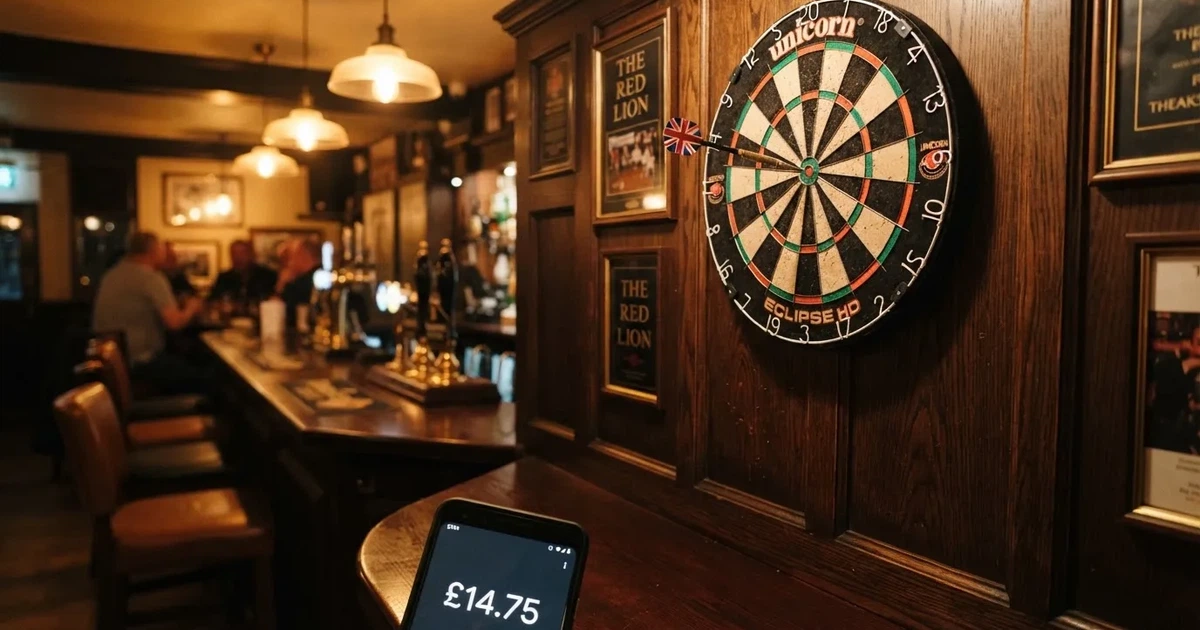
Darts has settled into year-round coverage on British sportsbooks. From the Premier League nights that fill arenas in the UK and Ireland each Thursday to the PDC World Championship that overruns the turn of the year at Alexandra Palace, there is rarely a week without a televised event priced up somewhere. That changes the question from “can I bet on darts?” to “which bookmaker carries the match, the market and the price I want?” This page works through that choice across ten operators licensed to take remote bets in Great Britain, with the smaller‑field sports, the in‑play options and the offer terms as the things that distinguish them.
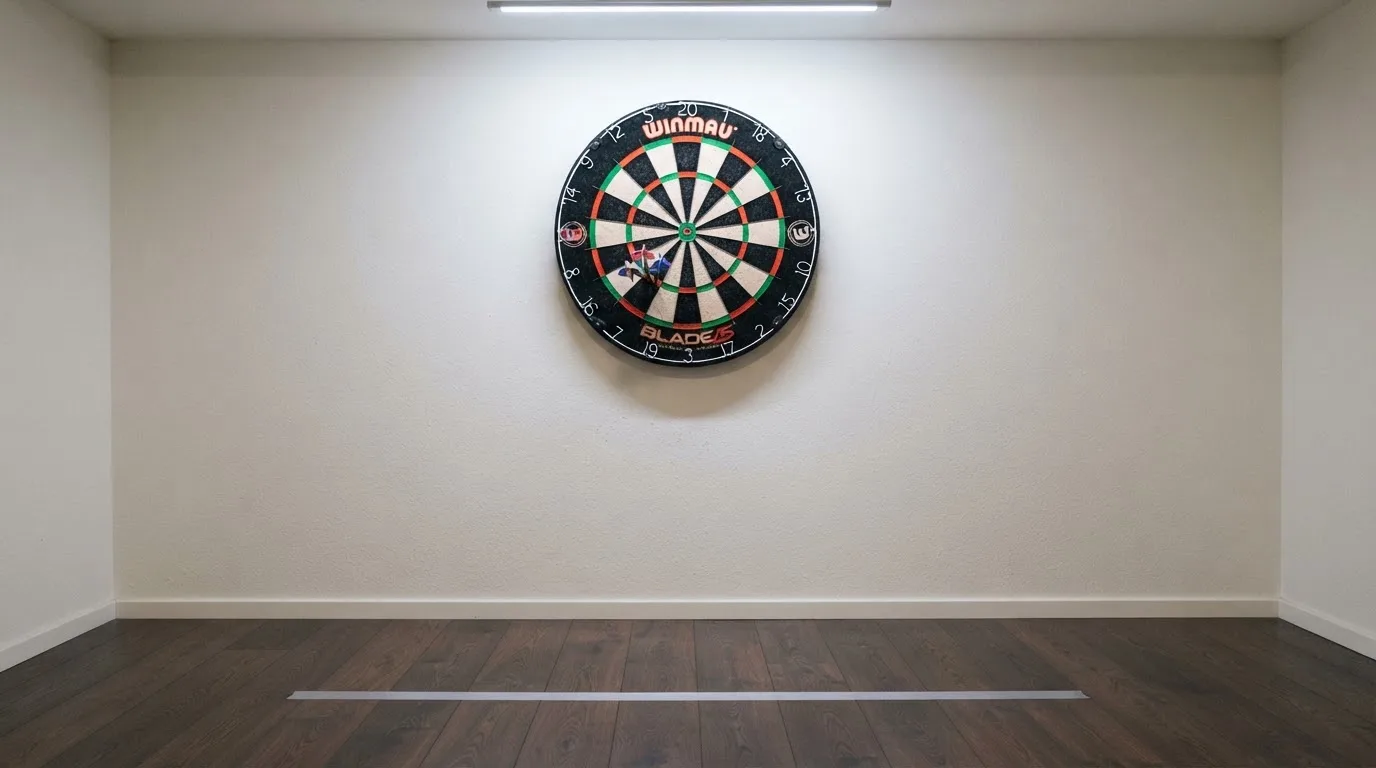
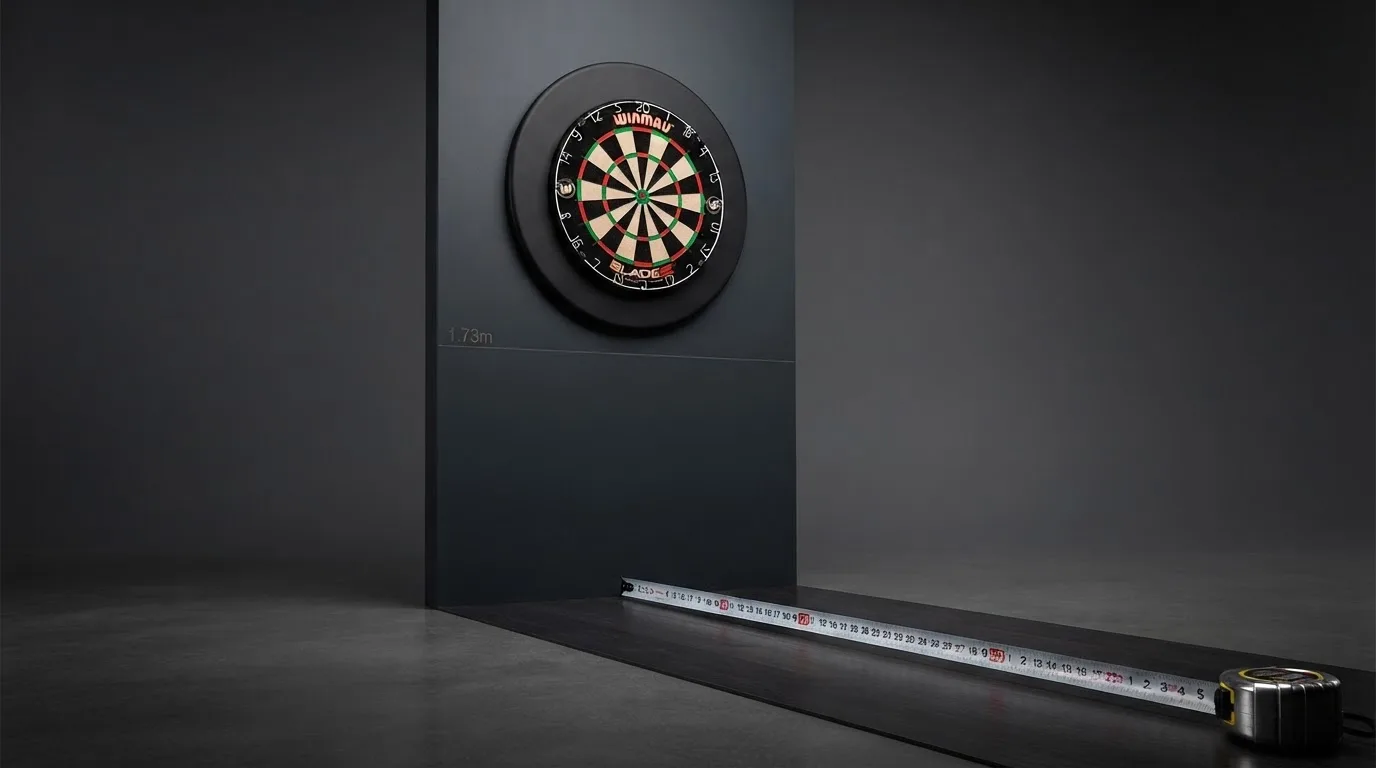
The structural facts behind it are fixed by the sport itself. A standard dartboard has twenty numbered segments, each with single, double and treble areas; the bullseye is worth 50 and the outer bull 25. In 501 darts the player starts at 501 and must finish on a double or the bullseye — the highest possible three-dart finish is 170 (treble 20, treble 20, bull) and the minimum possible leg runs nine darts. The standard throw distance is 2.37 metres from the oche to the face of the board, and the bullseye sits 1.73 metres off the floor. None of those details is a betting market, but together they explain every darts-specific market on offer: any book that prices up “highest checkout”, “180s in the match” or “how many legs on the bull” is pricing the mechanics of this game.
Who actually runs the sport matters to outright pricing. The PDC (Professional Darts Corporation) is the higher-profile governing body alongside the World Darts Federation, and its flagship event, the PDC World Championship, runs each Christmas and New Year. The 2026 PDC World Championship ran from 11 December 2025 to 3 January 2026 at Alexandra Palace with 128 players, an expansion from the 96-player field of recent years. Luke Littler beat Gian van Veen 7–1 in the final; the prize fund was £5,000,000, with £1,000,000 going to the winner. From the 2026 edition the round ladder settled at first-to-three sets for rounds one and two, first-to-four for rounds three and four, first-to-five in the quarter-finals, first-to-six in the semi-finals and first-to-seven in the final. Those round lengths drive every leg-based market: bookmakers frame the handicap and totals lines for each round separately because the formats change.
The ten UK-licensed bookmakers reviewed here
Bookmakers holding a Gambling Commission remote licence are the only operators legally entitled to take remote bets from customers in Great Britain. The Commission’s public register is the whole test of who does, and every detail below — the licence number, the licence holder and what each bookmaker publishes on its own pages — has been checked against it. The ten below all hold such a licence at the time of writing. Several large retail groups run more than one of the brands on the list under the same ultimate licence holder; the ten are presented as distinct betting experiences, and their licences are stated in the table that follows.
Where the choice cuts most sharply is on the sport itself. Football, horse racing and the major US leagues take most of any operator’s pricing effort, and darts can sit anywhere between “fully covered, priced up on the night” and “priced only on televised majors”. Spreadex, for example, is regulated by the FCA for spread betting and the Gambling Commission for fixed-odds betting, and notes that losses on its spread products can exceed the deposit — a different proposition from the standard sportsbook. The remaining nine are fixed-odds operators, but the depth of the darts book on each varies in ways a single welcome page rarely makes clear.
| Brand | Gambling Commission remote licence | What the operator’s own terms state on darts |
|---|---|---|
| 10bet | Account 43173, held by Blue Star Planet Limited | Sportsbook pricing across football, tennis and horse racing, with Cash Out, Bet Builder and Live Streaming noted on its app listing |
| Sky Bet | Account 67370, held by SBG Sports Limited | Free bets expire 30 days after crediting, usable on singles and each-way markets only (multiples excluded), non-withdrawable, and the free-bet stake is not returned with any winnings |
| DragonBet | Account 64908, held by DragonBet Ltd | Welsh football and rugby markets, racing, American football, in-play betting and bet builder markets emphasised on its app listing |
| 888sport | Account 39028, held by 888 UK Limited | Pre-match and in-play betting, Cash Out, Bet Builder, racing streams, BetFinder form tools, a live bet feed and daily boosted odds |
| Fafabet | Account 57385, held by Taichi Tech Limited | Best Odds Guaranteed on UK and Irish horse racing win and each-way bets from 9am on race days; if the starting price exceeds the price taken, the larger odds are paid |
| Star Sports | Account 9177, held by Star Racing Limited | Customers can speak to a trader on 08000 521 321 to open an account, place bets or ask queries, with support also reachable by email |
| Coral | Account 54743, held by LC International Limited | New GB customers who opt in: a £20 sports bet at minimum odds of 2.0 (1/1) returns £40 in free bets within seven days, expiring seven days after issue |
| Betfair | Account 39439, held by PPB Counterparty Services Limited | In-play betting, Bet Builder, free live streaming of UK and Irish racing and football in the app, and a “90 Minute Payout” market on selected football fixtures |
| DAZN Bet | Account 48756, held by DZBT Limited | Deposits from £5 by debit card, Apple Pay, Paysafecard, Trustly or Skrill, and £20 by PayPal, with no processing fees |
| Kalooki Sportsbook | Account 57730, held by Kalooki Sportsbook Limited | Brand-operated sportsbook on a single Gambling Commission licence; GAMSTOP coverage and pre-deposit identity verification both in place |
The choice on offer is wider than that list suggests. Lottoland UK operates a Gambling Commission licence for Great Britain customers and combines sports, casino, lottery and scratchcard products — a hybrid the table does not include. Midnite cites Gambling Commission licence 101839 in its site footer and shows in-play events, an acca builder, popular accas and price boosts with maximum-stake caps. Unibet has operated under the Unibet name since 1999; in Great Britain the site runs under Platinum Gaming Limited, Gibraltar, against Commission account 45322. Fitzwilliam Sports is a smaller specialist site with instant deposits, fast withdrawals, timeouts and deposit limits, alongside links to GambleAware, GamStop and Gamblers Anonymous. And bet365 carries Commission licensing as the official global betting partner of the UEFA Champions League, with Bet Builder+, Super Boosts, Winnings Boosts on Bet Builders and selected singles, plus daily Bet Boosts. None of those five appears in the central comparison, but the wider licensed market is materially larger.
What darts betting looks like at a UK bookmaker
Darts is a low-scoring, head-to-head sport that translates cleanly into betting markets. Most books lead with match winner, sometimes shown as a three-way on the televised events that include a walk-on, set winner and the outright winner of the tournament priced weeks in advance. Handicap lines are framed in sets rather than legs for the majors, which keeps a quarter-final first-to-five matchup in the same shape as a Premier League best-of-eleven night — a handicap is sized by the round, not the leg length, because the round length is what determines the price. Totals on points-per-visit (a “three-dart average” line) and on “180s in the match” are popular on the bigger events. Each-way terms on tournament outrights follow the operator’s house rules on non-runners and dead heats, which is the part of the small print where outright punters get caught.
For the live markets the cycle of a leg creates the unique shape of in-play darts. Betting closes at the throw, opens at the start of the next, and a “next-leg winner” market is updated by the throw. Some operators suspend the entire match markets during a maximum-170 attempt because every checkout lines has a non-trivial chance of moving. That punctuality is a quality marker in itself: a book that prices leg markets in real time is treating the sport as a sport, not as a niche. On the scorecards below this is the row each operator either delivers or doesn’t.
Bet builder markets, increasingly common across the major sports, are also available on darts with restrictions: some books lock the bets to markets from one event, others restrict combinations such as “winner plus over X.5 180s” because the correlation across legs is hard to price. Cash Out is broadly available on pre-match and live singles, and the cash-out price itself is the in-running margin moving against the request.
Betting on darts in Great Britain: what the law expects
There is no statutory list of permitted sports or bets in Great Britain. The Gambling Act 2005 sets the framework — the Gambling Commission, an independent regulator sponsored by the Department for Culture, Media and Sport, issues operating licences and enforces them through the Licence Conditions and Codes of Practice. Northern Ireland sits outside that framework and runs under older legislation, so any reference to a “GB licence” applies to England, Scotland and Wales only. Since the Gambling (Licensing and Advertising) Act 2014, an operator whose remote gambling products are used in Great Britain needs a Commission licence regardless of where it is based — a Curaçao, Maltese or Gibraltar licence is not a substitute. There is no state monopoly and no cap on the number of licences; the Commission’s public register is the canonical list of who holds one, searchable by business name, trading name, domain or account number, and that register is the test of who is licensed.
The minimum age to gamble in Great Britain is 18. Since 7 May 2019 every licensed remote bookmaker has to verify the customer’s name, address and date of birth before they can deposit or place a bet, and that includes claiming a free bet or bonus. The verification uses public records and document checks; Kalooki Sportsbook’s site states the standard flow, and Midnite’s footer carries the licence number the checks attach to. Anonymous betting at a UK-licensed bookmaker is no longer available, which rules out crypto-only routes from this jurisdiction.
A bookmaker licensed in Great Britain can offer sports betting, in-play betting, exchange betting (under a separate betting intermediary licence) and other categories as its licence allows. Pool betting on horse racing and betting on virtual events are separately licensed. Spread betting that is not on a regulated financial market is treated as general betting and taxed accordingly; spread betting on financial markets is regulated by the Financial Conduct Authority, not the Commission, and operators such as Spreadex straddle both regimes. There is no statutory cap on maximum stakes — operators set their own limits and may restrict customers, particularly around major events where exposure is being managed.
Offshore brands without a Commission licence are not legal routes for remote betting from Great Britain. They sit outside the bonus cap, the £150 financial vulnerability check, the deposit-limit regime and GAMSTOP coverage, and a customer has no Commission complaints route and no approved dispute-resolution body to turn to if funds are withheld. The Act provides for enforcement against the operator: cease-and-desist notices, search-engine referrals, registrar and payment-provider work, and forthcoming court-ordered DNS blocking powers. No criminal offence aimed at a customer who merely bets on an unlicensed site has been published, but the practical loss is the loss of every British safeguard. The framing is honest: licensed means checks, limits, GAMSTOP and a bonus cap, with verification before the first bet; unlicensed means none of those.
Safer gambling and darts betting
Every bookmaker licensed in Great Britain is part of GAMSTOP, the national multi-operator online self-exclusion scheme — a licence condition since 31 March 2020. Self-exclusion is for six months, one year, five years, or five years with auto-renewal; once the minimum term passes, the exclusion then stays in place for a further seven years unless the customer asks GAMSTOP to lift it. GAMSTOP covers online sites and apps; betting shops run a separate service. The protection sits over the operator, not the customer, so a self-excluded customer is refused at sign-up across every participating brand.
Two further checks have arrived in stages. A financial vulnerability check under LCCP condition 3.4.4 has applied to remote betting since 30 August 2024, and its roll-out to ordinary customer activity since 28 February 2025: when a customer’s deposits minus withdrawals exceeds £150 in a rolling 30-day window, the operator runs a public-record check (bankruptcy, county court judgments, similar) and may need to step up the monitoring. The check is not the same as a financial risk assessment, the “affordability check” that has been in policy debate: those assessments were announced on 7 July 2026 in a staged plan with no published start date, and that is the line to keep — never “in force”, never “active from”.
Deposit limits themselves sit under the Remote Technical Standards (RTS 12). The first changes have applied since 31 October 2025, with a second phase postponed to 30 September 2026, and whether it is now live has not been independently confirmed. The baseline that does apply is fixed by the operator: a customer can set a limit on deposits over a chosen period, and the operator has to honour it. There is no state-set deposit or loss ceiling for betting in Great Britain. Help lines operate outside any one operator — GamCare runs the National Gambling Helpline, GambleAware funds treatment, NHS gambling clinics exist in several regions, and Gamblers Anonymous runs peer meetings.
Credit cards have been banned for gambling in Great Britain since 14 April 2020 under LCCP condition 6.1.2, including credit-card-funded payments through an e-wallet. Debit cards and bank-based payments are not covered by that ban. There is no state list of permitted payment methods, no official position on cryptocurrency deposits at licensed operators, and no published named-account rule to refer to — the payment story is what each operator says on its own deposit page. DAZN Bet’s own page shows the standard pattern: deposits from £5 by debit card, Apple Pay, Paysafecard, Trustly or Skrill, and £20 by PayPal, with no processing fees.
Bonuses, free bets and what they actually cost
A welcome offer sits at the top of almost every bookmaker’s homepage. The shape is the same across most of them: a first deposit and bet at a minimum price returns a fixed bundle of free bets, valid for a defined window and constrained to certain market types. Coral’s terms, as published on its site, give a representative example: deposit and place a sports bet of £20 or more at minimum odds of 2.0 (1/1), receive £40 in free bets within seven days, free bets expire seven days after issue, available to new GB customers who opt in. Sky Bet’s free-bet terms, published on its support pages, are tighter: free bets expire 30 days after crediting, can be used only on single or each-way markets (multiples excluded, virtuals excluded), are non-withdrawable, and the free-bet stake is not returned with any winnings. Fafabet uses a different mechanism on its racing markets — Best Odds Guaranteed on UK and Irish horse racing win and each-way bets from 9am on race days, paying the bigger of the price taken or the starting price — which doesn’t help a darts bettor directly but signals how the operator handles pricing risk.
The marketing language rarely matches the arithmetic. The cap that landed on the industry on 19 January 2026 puts a ceiling on bonus wagering: 10x the bonus amount. The trade body lobbied against the cap, and £10 at 50x wagering on the old rules required £500 of qualifying bets to clear; under the cap the same £10 bonus can demand no more than £100 of qualifying bets. That lifts the value of small bonuses, lowers the value of large headline packages, and frames how every book now phrases its welcome number. The same rules effectively ban mixed-product promotions, the “bet on football to get free spins” shape where one product funds a bonus in another. Whether the 10x cap applies to a free bet with no wagering condition, and whether any cap binds the cash value of a bonus, were not confirmed.
The bookmaker’s margin sits inside every price, so any “boosted odds” or “best odds” claim is best read against the price of the same selection at a competitor. A boosted price that beats the field is still an offer with the house edge inside it; the boost is real, but the price from which it is boosting was already carrying a margin. The word “free” in “free bet” also has a non-trivial meaning: the stake of a free bet is usually not returned with winnings, so the value is the winnings alone, discounted by the probability of winning and adjusted for the margin of the market. That’s why two operators offering the same headline “£40 in free bets” can offer materially different value depending on the markets the free bet is allowed on, the expiry window and the minimum price for any qualifying bet. Reading the terms matters more than the headline number.
In-play darts and the cash-out option
In-play is where darts looks most distinctive. Because the leg ends every few minutes, the market on a live match is rich with small, frequent price moves. Most of the ten operators offer an in-play product on the televised events, with Sky Bet, 888sport, Betfair, DragonBet and others all stating in-play coverage on their app listings. Betfair’s site adds free live streaming for UK and Irish racing and football inside the app — a darts market is not the same shape as a streamed racing channel, but the streaming infrastructure is the same, so an in-running product with low latency tends to follow. Bet Builder+ at bet365 and the standard bet builders at 888sport, DragonBet and Betfair do similar work: combine markets from one event into a single price where the underlying correlation is benign.
Cash Out suits darts better than it suits football. The match has clean breaks (the throw-change, the leg-end, the set-end), so the cash-out price is asked for at a moment when the match state is unambiguous. Most books settle cash-out on singles pre-match and in-play; on multi-leg accumulators the cash-out price is the running price across all legs, which means the deeper the bet builder, the more the margin compounds as it runs. On a bet that is winning in leg one of two and the second leg is roughly priced, a cash-out locks in a profit roughly equal to the running price minus the second leg’s margin — a small haircut, but a real one. On an in-running football match, a small swing in possession can move the cash-out price by 2 or 3 points; on a darts leg the move is binary in either direction with each throw that lands. Some operators offer partial cash-out, which closes a fraction of the stake at the price quoted; Sky Bet, 888sport and 10bet all list cash-out on their app descriptions.
Watching the live feed matters more than usual here. Without a stream, an in-play market is being priced off a data feed that lags the broadcaster feed; with the stream, the bettor sees a checkout the book is only seeing on the next data refresh. The bookmakers that combine live streaming with in-running on darts — Betfair’s racing and football pipeline is the cleanest example, and the two USA-facing operators (DAZN Bet under its broader streaming brand) carry streaming as part of the wider sportsbook subscription — give the bettor the closest view. On the rest of the ten, the stream is either absent (most venues are not carried live on a UK bookmaker’s video product) or paywalled behind a separate subscription.
Strategy, predictions and “today’s tips”
No tipster can know the outcome of a darts match. That is the first fact to put on the page, because a search for “darts betting tips today” lands on pages that promise more certainty than a sport priced by a tournament-format book can ever support. The honest framing is that a tip — however it is generated — is a probability, priced against another probability on the same selection at a competitor. The bettor’s edge is in the mispricings between two books, in the lines that come off when one book is slower to update, and in the outright and handicap markets where a single book has run the line differently.
There is no shortcut route to “today’s match”. The practical path runs through the form book: three-dart averages over the last six to twelve months, recent opponent history, venue history, break-of-throw patterns in the leg. The PDC runs the Order of Merit and the Players Championship order; these rank players for seeding and are the closest thing darts has to a stable form metric. Player-level changes matter: a player returning from injury, a change of darts weight, a new walk-on music — all of these are small factors but they all act on the player’s mental baseline, which is where most darts matches are lost. Backing favourites blind is a losing strategy on any sport with a margin built into the price; the favourites are favourites for a reason, but only because the book has priced them to win by less than the raw probability. The bet that wins consistently is one where the bettor’s own probability beats the price by enough to clear the margin, repeated across many bets. That is true of darts, football, tennis and horse racing in equal measure.
Strategy pieces on darts betting cluster around three ideas. First, the handicap market: a player short on form can be backed at a +1.5 sets handicap when playing a stronger opponent in a short-format match. Second, the totals market: betting over or under a “180s” line in a match is a price-driven question — both players’ three-dart averages tell you what to expect. Third, outright futures on the majors, priced months in advance, where each-way terms pay a place on the semi-finals. None of these is a system that wins; each is a market with its own margin, its own price decay and its own rules on what happens to a non-runner.
Markets and odds: how a darts book is built
The pricing model on a darts event starts from the match winner. At two players, the book writes 1.85 / 1.85 on the favourite’s win and the underdog’s win, with the actual favourite/underdog split running through the margin. As more events arrive on the same night, the book adds set winner, set handicap, total sets, “next leg winner” and various player props (180s, highest checkout, three-dart average). The depth of that menu and the speed of update are the two things separating a strong darts book from a thin one.
Margin is the book’s built-in edge. For a two-way market at decimal odds 1.90 / 1.90 the calculation is straightforward: the implied probability of each side is 1 ÷ 1.90, which sums to roughly 1.053 — so a £100 bet on each side returns £105.30 across the two outcomes, with the £5.30 above the £100 stake being the bookmaker’s expected take before any operational cost. The result is a margin in the 5–6% band for this example, which is roughly where a competitive darts two-way line sits at the top of the market. A book running the same market at 1.85 / 1.85 is at a higher margin (closer to 8%), and a sharp book in a popular event can run a margin in the high 3s or low 4s. Whatever the exact figure on a given night, the margin is what the bettor is paying to play.
The shape of an each-way bet needs careful reading. An each-way wager is two bets of equal stake: one on the win, one on the place. The stake doubles; the place terms vary by event and by book. On a tournament outright, “each-way, half the odds, place 1/2” means a winning selection returns the win part at full odds and the place part at half odds; the all-up maths is the same arithmetic with a doubled stake and a smaller place payout. The minimum price for the win part of each-way bets is set by the bookmaker’s house rule and is usually a fractional floor of 1/2 or 4/6 depending on the sport — for darts, the same floor as for any other sport on the relevant book.
The smallest bet sizes and the maximum payout are operator-specific. Most UK-licensed books name a minimum stake of between £0.05 and £1 for digital bets, with maximum payouts per market set by the bookmaker’s terms (often capped at £1m or £2m on football and other high-volume sports, and lower on darts). A bet placed when the book has restricted the account — usual during bonus clearing, when stake limits can be reduced — pays at the stated terms; a stake above the cap is rejected at the slip. These aren’t nuisance rules: they are the mechanisms by which the book manages its own exposure, and a bettor who reads them only at the moment a winning bet is flagged for review will not enjoy the reading.
Sports and tournaments on the darts calendar
The darts calendar runs on a year-round cycle. The Premier League is the weekly anchor: 17 consecutive Thursday nights in arenas from Belfast to Berlin, with play-off night on a separate Thursday in May. The World Championship at Alexandra Palace over the Christmas and New Year period is the highest-profile event and the one that drives the spring price moves. The World Matchplay at the Winter Gardens, Blackpool in July is the second of the four majors, with the World Grand Prix on the calendar around the autumn. The Grand Slam of Darts in Wolverhampton closes out November.
Outside the PDC, the World Darts Federation runs its own world championship and the World Masters, and a BDO-style circuit still operates regionalised events in the UK and the Netherlands. The Champions League of Darts, a short-format invite event with eight players, runs alongside the Premier League in some years. Pricing across all of these depends on the betting turnover each event attracts — the Premier League and the Worlds are priced in depth on every major UK book, while the smaller WDF events may appear only as outrights, not as match markets.
Outright darts markets are typically priced 30 to 90 days before the start of an event, evolving through the field as qualifying rounds complete. The number of players in the modern PDC field — 128 at the 2026 Worlds — means the each-way place terms are based on the full draw, not the favourites alone, and the value of an outright is concentrated on the long tail of the market, not the favourite. Reading an outright market well means reading the place terms as carefully as the win price, because the place terms determine the all-up return if the selection reaches the semis or quarters without winning.
How the ten bookmakers compare on darts
The choice between the ten bookmakers is rarely about which one is “best” — every bookmaker on a Commission licence carries darts to some level. It is about which one carries the match, the market and the price the bettor wants for a given bet. The order the brands appear below is not a quality ranking; each review closes on a verdict that names what the brand is best for and where its profile cuts against it.
10bet
10bet holds a Commission remote licence under Blue Star Planet Limited. Its sportsbook covers football, tennis and horse racing with Cash Out, Bet Builder and Live Streaming listed on its app. Darts is on the price feed but the app’s marketing emphasis is elsewhere. For a bettor who wants a familiar mainstream book with a moderate live product and a sturdy football book, 10bet is a competent pick; for a bettor chasing the deepest darts outright board or the most responsive in-play, it sits in the middle of the table.
Sky Bet
Sky Bet, operated under SBG Sports Limited, is one of the British mainstream bookmakers. Its free-bet terms are explicit and tighter than most: free bets expire 30 days after crediting, can be placed on single or each-way markets only (multiples excluded, virtuals excluded), are non-withdrawable, and the stake is not returned with any winnings. That clean language pays off when the bettor reads the small print. The price feed on darts is solid on televised events, with a deep Premier League offering, and the cash-out product is broad across singles. The catch is the expiry window: a free bet sitting unused near day 30 loses, which means the bettor has to plan the calendar rather than react to it. That makes Sky Bet a strong choice for a bettor who bets consistently and uses free bets as part of the routine.
DragonBet
DragonBet is a Welsh-tilted sportsbook operated under DragonBet Ltd, with markets centred on Welsh football and rugby, racing, American football, in-play and bet builder. The darts book runs on the standard PDC calendar, with in-play available. For a Welsh sporting customer the brand is a natural fit; for a bettor looking for the deepest darts menu, the appeal is the standard sportsbook pricing and the bet builder on combinations across a single event. Where DragonBet cuts against the darts page is on outright depth — the brand leans harder on the markets it knows intimately.
888sport
888sport (under 888 UK Limited) brings a broad product: pre-match and in-play betting, Cash Out, Bet Builder, racing streams, BetFinder form tools, a live bet feed and daily boosted odds. The boosted odds are the visible edge — for darts outrights the book often lifts a price on one or two favourites each day, giving a small but real price improvement on a major event. The wider sportsbook framework also helps: a bettor who bets across horse racing, football and darts through the same account finds the live bet feed carries all of them on one page.
Fafabet
Fafabet runs under Taichi Tech Limited, with a strong racing proposition: Best Odds Guaranteed on UK and Irish horse racing win and each-way bets from 9am on race days, paying the bigger of the price taken or the starting price. Darts sits alongside racing with standard pricing; the darts book is not the headline feature but is consistently priced. For a racing-led bettor dipping into darts, Fafabet’s pricing consistency across both sports is the value.
Star Sports
Star Sports operates under Star Racing Limited; its app supports direct trader contact on 08000 521 321 for opening an account, placing a bet or asking queries, alongside email support. That’s the brand’s signature — a phone in the bettor’s hand before a deposit, not a chat widget at the end of a session. The darts book is on the standard calendar and the pricing is competitive, particularly on the televised events. The customer-service-led pitch suits a higher-stake customer who wants a trader’s view on a price; a customer who is happy with the standard digital flow may find that flow at any of the other nine.
Coral
Coral, under LC International Limited (the Entain group also runs Ladbrokes under the same ultimate licence), markets a £40-in-free-bets welcome offer for new GB customers who opt in: deposit and place a £20 sports bet at minimum odds of 2.0 (1/1), receive £40 in free bets within seven days, free bets expire seven days after issue. The offer’s narrow window (seven days) and modest minimum odds are usual for the British welcome-market — a Coral customer has to plan the first week or lose part of the welcome. On darts, the standard sportsbook cover with cash-out holds; for a bettor who plans a weekly multi-sport routine through Coral’s app, the welcome offer works; for a bettor chasing darts outright depth, other books push harder.
Betfair
Betfair Sportsbook, under PPB Counterparty Services Limited, is the product most relevant here — Betfair also runs an exchange and the same licence covers both pieces. The sportsbook carries in-play, Bet Builder, free live streaming of UK and Irish racing and football inside the app, and a “90 Minute Payout” market on selected football fixtures (an early-cash-out mechanism on football, not a darts product). The darts book is solid; the wider sportsbook product is broader than most. For the bettor who wants streaming, a betting exchange and a sportsbook under one roof, Betfair is the natural pick.
DAZN Bet
DAZN Bet, under DZBT Limited, sits inside the broader DAZN streaming brand. Deposits start at £5 by debit card, Apple Pay, Paysafecard, Trustly or Skrill, and at £20 by PayPal. The lower PayPal floor matters for customers who prefer the method. The brand’s sportsbook cover of darts runs on the standard calendar. The wider proposition is the streaming-included entertainment bundle; for a bettor who values DAZN’s wider sports coverage and wants a sportsbook alongside, this is the play.
Kalooki Sportsbook
Kalooki Sportsbook, operated by Kalooki Sportsbook Limited (company number 12938274), holds the Commission’s licence against account 57730 and operates as a standalone sportsbook. GAMSTOP membership and pre-deposit identity verification are in place. The value here is in the simplicity — a Commission-licensed sportsbook with a single focus on sports betting, no casino, no lottery overlay, no exchange. For a bettor who wants the lightest possible product on top of a Commission licence, Kalooki is the cleanest entry. The price depth on darts outrights is necessarily thinner than the larger mainstream books.
Comparing what each operator commits to for darts
The brand-by-brand verdicts above name a specific reader each one suits, but several cross-cutting comparisons are worth doing once and referring back to. The welcome offers vary in headline number, in minimum qualifying odds and in the expiry window — a £40-in-free-bets offer that expires in seven days is materially different from a free-bet-credits offer that lasts thirty. The verification flow runs against the same Commission rules at every licensed brand: name, address, date of birth before the first deposit or bet. The free-bet term that recurs on every offer is that the stake of a free bet is usually not returned with the winnings — meaning the value of a £10 free bet placed at 3.0 is the £20 of winnings, not the £30 gross return a cash bet would have produced.
Several wider brands operate more than one licence on the same Commission account. Ladbrokes and Coral share an ultimate licence holder; Paddy Power and Betfair share one too. That is a corporate structure, not a price-sharing arrangement — each brand keeps its own prices and its own customer terms, and the licence is licensed to the holder, not to the brand. Reading the Commission public register gives the answer to which entity holds which licence at any time, and is the only place that answer is fully maintained.
Payment, verification and the everyday flow
The flow at a UK-licensed bookmaker runs in the same order on all ten. A sign-up captures an email, a password and a phone number; identity verification (name, address, date of birth, sometimes a document upload) is then triggered before the first deposit or bet. The verification uses public records and a credit-reference-style check; for higher spend, source-of-funds questions are normal under the money-laundering regime. The whole flow is the same on every licensed brand — that is the point of a GB licence.
Deposit methods are operator-specific. DAZN Bet’s terms show the broad pattern: £5 minimum by debit card, Apple Pay, Paysafecard, Trustly or Skrill; £20 minimum by PayPal; no fees. Credit cards are banned for gambling across the whole licensed market, including credit-card-funded e-wallet deposits. There is no state-published list of permitted payment methods, and no public position on crypto deposits: a customer who wants to deposit with crypto is betting outside the licensed set and loses every British safeguard in doing so.
Withdrawal times vary by method, with most debit-card and bank withdrawals returning to the customer within one to five working days; the e-wallet rails (Skrill, Neteller, PayPal where accepted) return faster, often within hours of approval. The Commission does not set a withdrawal standard, but the licence conditions bind operators to paying out funds in a “fair and open” way, and a withdrawal held without stated cause is a complaint that the Commission can pursue.
The odds, the margin and what they tell the bettor
The margin is the metric a sharp bettor reads first. For any two-way darts market at decimal odds of, say, 1.90 / 1.90 the calculation is direct: the sum of the implied probabilities (1 ÷ 1.90 on each side) is roughly 105.3%, so a one-unit stake on each side returns 105.3 units for a 100-unit outlay — a margin in the 5–6% band. State it as a band, not a single figure: at the same moment on the same match a sharper book may run 1.92 / 1.92 (closer to a 4% margin) and a softer book 1.87 / 1.87 (closer to a 7% margin). Both are within the usual darts range. Above 8% is the territory of a thin book on a niche event; below 3% is rare outside the most popular matchups.
The inverse calculation matters more for an outright. With fifteen or twenty players in a tournament outright, the “overround” — the total implied probability across all selections — runs much higher, often 110% to 130%, because the book is pricing a long tail of names it has very little information on. The favourite alone is often at 3.0 or 4.0 (a 25%–33% implied chance), and the field above that adds up to a fraction over the unit stake. The favourite is rarely the value bet on that calculation; the value tends to sit one, two or three lines below the favourite where the price is wider than the player’s actual chance of reaching the semi-finals.
The honest reading of a “boosted odds” line: a boosted price is the marginal increase above the book’s own price on the same selection. If the book normally prices a player at 3.50 and offers a “boost to 4.0”, the bet is still carrying the book’s margin inside it — the boost is real, the original price from which the boost moves was already loaded. The boost moves the bet from one bookmaker’s price to a slightly better price than that bookmaker was offering; it doesn’t move the line to a sharper competitor’s standard. Read a boost as an existing price lift, never as a free lunch.
Frequently asked questions about darts betting
How does a beginner start betting on darts?
Sign up with one of the ten UK-licensed bookmakers reviewed above, complete the verification (name, address, date of birth and one or two documents), deposit by debit card or e-wallet (credit cards are banned), and place a small single on the match winner of a televised event to start. The Premier League nights and the PDC World Championship are the easiest events to find on the slip.
What does darts betting mean in practice?
It means placing a real-money wager on a darts match or tournament at a licensed bookmaker. The main markets are match winner, set winner, set handicap, total sets, next-leg winner, outright tournament winner and player props such as 180s and highest checkout, with cash-out available on most singles and a bet builder on larger events.
How does handicap betting on darts work?
A handicap on a darts match is set in sets, not legs. A favourite giving 1.5 sets means the underdog is treated as starting 1.5 sets up; a favourite at -1.5 sets must win by two clear sets for the bet to land. The line changes from round to round because the round length is what determines how many sets are played.
How can a customer check a bookmaker’s Gambling Commission licence?
Open the Commission’s public register, search by the operator’s business name or trading name, and verify the licence status, the licence number and the registered domain. A licensed brand’s own site footer usually carries the account number, but the register is the whole test. Midnite’s site footer cites Commission licence 101839; the register is the cross-check.
How is a bet’s payout worked out from a stake and odds?
For a decimal price, the return on a winning bet is the stake multiplied by the odds; the net profit is the stake multiplied by the odds minus one. A £10 bet at 3.0 returns £30 in total (£20 profit plus the £10 stake back). For fractional odds of, say, 5/2 the decimal price is 3.5, and the same £10 stake returns £35 in total (£25 profit plus the £10 stake back).
What is a bookmaker’s margin and how is it visible in the odds?
For a two-way market the margin equals one minus the sum of the implied probabilities of each selection. At 1.90 / 1.90 the implied probabilities of each side are 1 ÷ 1.90 ≈ 0.526, which sum to roughly 1.053 — a margin of about 5.3%. The bettor reads the margin as the built-in edge the book has priced into every unit bet on that market.
Tennis, darts & cue sports – Free bets
Content created by the «Free bets» team
