
Where and how to bet on floorball in 2026
 Available in US
The calendar makes this a floorball year. From 4 to 13 December 2026, the 16th Men’s World Floorball Championships take place in Tampere, Finland, with 16 national teams contesting the title Finland won in 2024. Sweden lifted the trophy in 2022 and has won it ten times across the tournament’s history. For a sport defined on the floor and settled inside the scoreboard, that fortnight is the moment most UK punters will meet a floorball betting market at all — which is exactly why the odds on it matter twice over. A price worth backing is built on something more than a name; a market worth reading is built on something more than a price.

Current as of 27 October 2026 and checked against the Gambling Commission’s public register of Great Britain-licensed remote operators.
What a floorball market looks like in practice
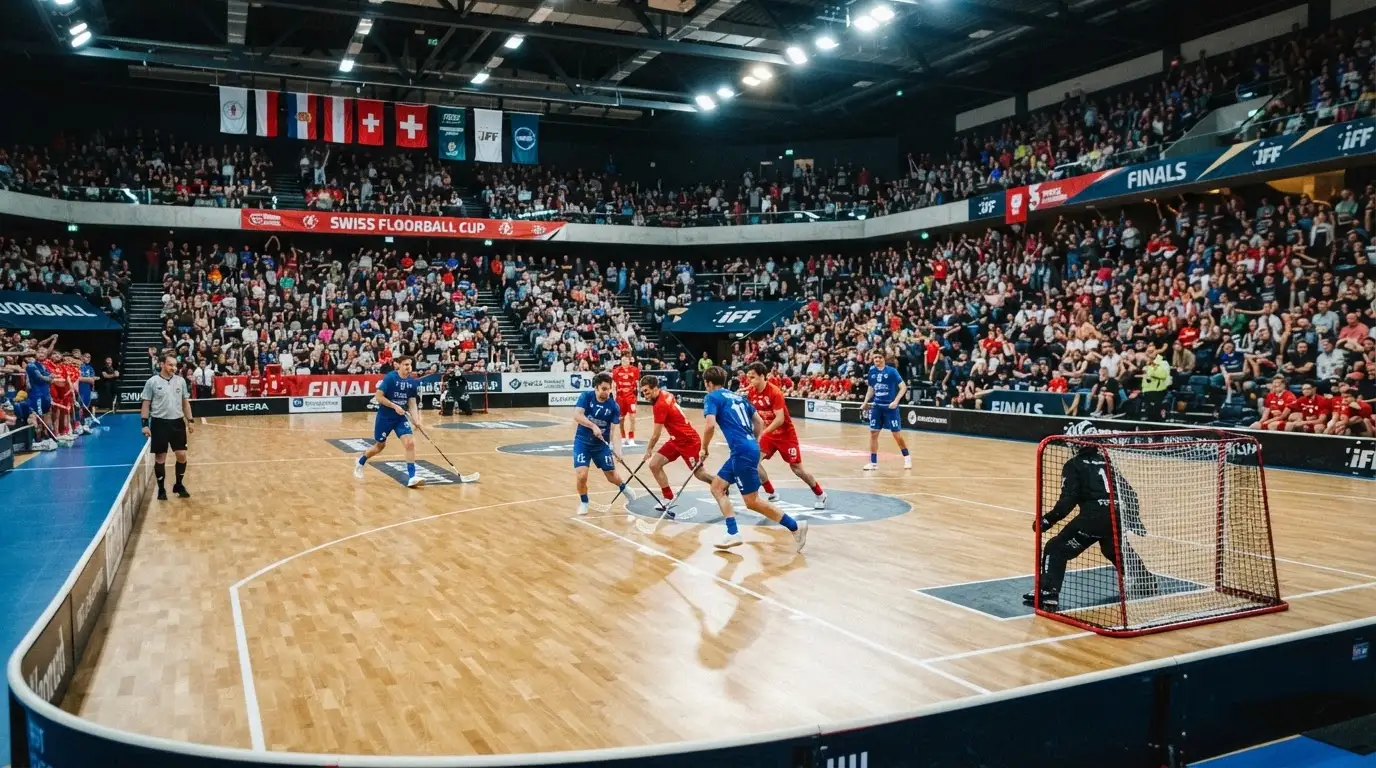
Floorball is a five-a-side indoor stick sport with a goalkeeper, played over three 20-minute periods. Ties go to sudden-death overtime. Matches at the top tier of the sport — the Swedish Superligan, the Finnish Salibandyliiga and the World Championships — settle quickly, with periods running back to back and stoppages measured in seconds rather than minutes. That shape carries into the betting slip. Pre-match markets on floorball at any reasonably stocked bookmaker sit around the standard three-way set: match winner (sometimes called 1X2 in a sport without a draw in regulation), handicap lines, total goals, and at the bigger tournaments a handful of period and player props. In-play betting becomes available once the game is live, which it usually is for anything involving Sweden, Finland, Switzerland or the Czech Republic. For everything below that rung — the domestic cups in smaller federations — coverage thins dramatically.

That thinning is the practical start of betting on floorball. The sport has roughly 80 member federations through the International Floorball Federation and an international calendar built on the December World Championships in even-numbered years. Several of those federations run senior club competition through the club-franchised leagues in Scandinavia and Switzerland, plus a contested third-tier of competitions in places like the Czech Republic, Slovakia and Germany. A bookmaker cannot price what it cannot watch and cannot watch a league it does not carry in its trading feed. The first thing to ask of any floorball odds is therefore a structural one: which competitions does this operator actually list, and at what depth?
Superligan floorball betting — the Swedish top flight — is where most UK-facing books concentrate their floorball coverage. The Finnish league tends to come next. World Championship fixtures get the broadest menu, because each operator’s traders can build a card from a smaller set of fixtures that is being watched by every desk that has any interest in the sport. Lower-tier and women’s competition are patchy and have to be checked at the operator.
The bet types run deeper than the headline 1X2. Three products recur across the bookmakers in this comparison. The single is the simplest thing on the slip — one selection, settled on one outcome. The accumulator (“acca”) is a chain of selections where all must win for the bet to pay, and the prices multiply along the chain; a four-fold at 1.80, 1.80, 1.80, 1.80 returns 10.50 if every leg wins and loses the lot if one fails. The bet builder is a same-game multi assembled from markets on the same match — match winner, total goals, BTTS, period scores — where the bookmaker constructs combined odds; the form of this varies by operator, with some allowing free hand and others restricting which markets can be combined. Each of those carries its own margin and its own risk profile, so it is worth reading how the operator prices its compound products rather than treating them as a single category.
A stake at odds returns stake × odds if it wins. So a £10 stake at 1.80 returns £18: the £10 stake plus £8 of profit. A £10 acca combining four legs each at 1.80, with the prices compounding, returns £10 × (1.80⁴) = £104.98, of which £94.98 is profit. Net profit on the same calculation is stake × (odds − 1), so a £10 stake at 5/1 — decimal 6.00 — returns £70 if it wins, the £10 stake plus £60 in profit.
Fractional odds, which is how British bookmakers present much of the form, convert to decimal by dividing the first number by the second and adding one. So 5/1 → 5 ÷ 1 + 1 = 6.00 decimal, and 11/4 → 11 ÷ 4 + 1 = 3.75. Anything written as “evens” is 1/1 — decimal 2.00, returning the stake plus an equal amount of profit.
How to read the margin inside the price
Every quoted price carries the bookmaker’s margin baked in. On a clean two-way market priced at 1.90 / 1.90, the implied probability totals more than 100%: 1 ÷ 1.90 = 0.5263 for each side, giving 1.0526 in total — an overround of around 5.26% and a margin of 5.0%, which is the operator’s cut per unit staked. On a three-way market like a football 1X2 (or a floorball match winner with overtime included as a third option) at 2.10 / 3.40 / 3.50, the implied probabilities add to 0.4762 + 0.2941 + 0.2857 = 1.0560, an overround of about 5.60% and a margin of 5.3%. The closer the implied probabilities come to one, the bigger the margin and the worse the price the punter is receiving.
The margin is what the bookmaker actually makes per pound staked on that market. Two operators pricing the same World Championship game at 2.10 / 3.40 / 3.50 and 2.05 / 3.50 / 3.50 are not offering similar value: the second set holds about 5.74% margin against the first set’s 5.60%, and the difference adds up across a multi-leg acca. A 1% margin difference on a five-leg bet costs roughly 5% of expected return. That is why a comparison page on odds spends more time on margin than on prices: a price you see is one fixture in time; the margin is the standing charge on every pound you stake.
Two-way floorball match winner after regulation sits close to the 1.90 / 1.90 example, which is a roughly 5% margin and broadly typical for a competition two or three rungs below mainstream football. Three-way with the draw sits closer to 5.5%. As an estimate the page treats these as a band rather than a fixed number, because one bookmaker’s Superligan pricing and another’s World Championship pricing differ, and a price changes through the week. The number to fix in mind is not the 1.90 / 1.90 example but what it implies: even a well-priced market on a niche sport takes 5p of every pound staked as the book’s cut, before any trading mistakes, withdrawal friction or bonus turnover the operator has layered on.
Bonuses, free bets and what they really cost
A floorball betting promotion is just a sports welcome offer with floorball eligible in its qualifying markets. The mechanism is the same whatever the sport: deposit, place a first bet, receive a free bet or bonus, complete any turnover requirement, withdraw. The marketing wraps it in language the page treats carefully.
A “100% bonus” is a matched deposit: deposit £10 and you receive £10 of bonus, normally in one or more free bets or as a bet credit. A “free bet” almost never returns its stake when it wins — the £5 free bet at 5/1 wins £25 of profit but the £5 stake itself vanishes. A “risk-free” bet refunded as a free bet is not a refund in money; it is a route back into the same offer, with the same conditions applied a second time. A “boosted odds” offer wins the boosted price and pays out in cash, but is usually capped at a small maximum stake; “Bet £10 & Get £15 in Free Bets” splits the £15 into named components that each come with their own conditions. None of these structures is unusual; what is unusual is the difference between the marketing line and the conditions that follow it.
The cost of the offer is in the conditions, not the headline. Three numbers do the work: the wagering requirement (how many times the bonus must be staked before it converts to withdrawable cash), the minimum odds on qualifying bets (so nothing on a heavy favourite counts), and the deadline (so most new players lose the bonus by simply failing to use it in time). As a worked example tied to a real sports welcome offer in this set: a £10 bet returns a £15 free-bet pack, with each component separately eligible on its own markets and a 7-day expiry typically applied. If those £15 of free bets are settled at a combined average market margin of 5%, the expected retained value is around £13.40 — close to the headline offer but not the £15 a reader might write down from the marketing.
Compare that with the matched-deposit pattern running through several other welcome offers in this set. A 100% matched free bet of up to £25 with a wagering requirement of between 1x and 5x, on debit-card deposits only and minimum odds of 1.60 per selection across at least three legs, restricts the eligible market sharply. For an acca builder, that floor is meaningful: at 1.60 per leg, a four-fold combines to roughly 6.55, which clears a favourite-or-underdog shape depending on the operator’s minimum-odds rules. The offer still has value; it is just spread across a mechanical hurdle, and that hurdle takes some of it back.
Free bets whose stake is not paid back with a win are worth stake × (odds − 1) ÷ odds × market payout share, which is the formula for what they are worth on average rather than what they might happen to win on any given day. A £10 free bet at 4.00 (3/1) on a market with a 95% payout share is worth 10 × (4.00 − 1) ÷ 4.00 × 0.95 = £7.13 of expected value on average. Two free bets at the same price don’t have the same value if one returns its stake and the other doesn’t, and free-bet offers with a “stake not returned” clause cost the punter 10% to 25% of headline value before they win a single leg.
The audit that matters is on the terms page, not on the offer card. One offer that requires 1x wagering at any price with no minimum-odds gate is closer to free money than an offer that headlines a bigger number but locks behind 6x turnover with a 1.80 minimum. The first wins on simplicity. The second wins on generosity if you are happy to grind through six times the value of the bonus in volume at the right prices. The decision is about how that kind of play fits the punter’s own book and timing, not about which headline is louder.
Sports, tournaments and the calendar that drives the menu
Floorball’s modern international calendar is shaped by the World Floorball Championships, held every December in even-numbered years since 2008. Each tournament is roughly ten days long. Outside it, four club competitions dominate the bookmaker feed: the Swedish Superligan (the highest-rated of the European leagues and the one most British books price most fully), the Finnish Salibandyliiga, the Swiss NLA and the Czech Extraliga. Women’s competition runs a parallel structure and is supplied less consistently.
The Worlds bring the broadest menu because every bookmaker’s floorball traders price the same event, which is how a competition reaches the front of an operator’s slip in the first place. Even then, the market depth stays modest. Most UK bookmakers will carry match winner, totals and handicaps on the bigger games; only the biggest operators extend to period markets and player props, and those tend to appear on the men’s semi-finals and final. Superligan floorball betting is the second pillar of the year-round card, with the Finnish league providing the winter cover as Sweden takes its off-season.
It is worth being honest about floorball’s place in the British betting market. Floorball betting online is positioned as a niche within a niche. A punter who has a strong interest in the sport can find it well-priced at the bigger sportsbooks; a punter whose interest is occasional, say tied to a World Championship year, will find a thinner menu and fewer value lines than they would on Premier League football or a Grade 1 horse race. Best floorball betting odds are usually the ones a major bookmaker offers on World Championship matches, with the Superligan as a year-round backstop; lower-tier competition tends to be limited to whichever book has chosen to feed it.
What a licensed UK bookmaker has to look like
The test for whether a brand is a properly licensed bookmaker in Great Britain is straightforward. The Gambling Commission, the regulator under the Gambling Act 2005, keeps a public register searchable by business name, trading name, domain or account number. Every operator offering remote betting facilities to customers in Great Britain must hold a Commission licence regardless of where the operator is based, since the Gambling (Licensing and Advertising) Act 2014 removed the previous point-of-supply rule. A licence held in Curaçao, Malta or Gibraltar is not a substitute; for the British customer the operative test is what the Commission’s register says.
What the register shows for each licensed operator is the account number, the licence categories in force and the trading names covered. The relevant licence category for fixed-odds online sports betting is “remote general betting standard (real events)”, with separate categories for pool betting, betting exchanges and financial spread betting. A single licensee can carry several brands; a single brand carries only one licence per category. Where two consumer-facing brands (Ladbrokes and Coral, for example) sit under one parent company, the licence line in the register may name the parent and not the brand, which is normal. The point is that the register entry resolves the question; it does not need to be re-derived from the brand’s own marketing.
The other thing the register does is allow the comparison to be apples-to-apples across operators. A licence number on an operator’s homepage or terms page is straightforward to verify; an operator that omits it, lists a different number or carries it under an unrelated company name is not necessarily unlicensed, but it is one whose regulatory line is harder to see. No single brand in the British market holds the only gambling licence; the market has no monopoly and no exclusivity, and statements to the contrary should be treated as marketing. For consumers, the position is straightforward: GB-licensed brands are subject to the Commission’s licence conditions, GAMSTOP enrolment, identity verification before the first deposit, and a number of consumer-facing duties; brands licensed only offshore operate under their home regulator and offer no British route for complaints or dispute resolution.
How the check is done in practice: open the Commission’s register, search by the brand’s trading name, open the licence record, confirm the account number matches the brand’s site and confirm the licence is “active” and not “suspended”, “expired” or “withdrawn”. Two minutes of work, and it is the difference between a brand that is regulated under the Gambling Act 2005 and one that is not.
Responsible gambling, GAMSTOP and the controls a licensed bookmaker must offer
A floorball betting market is a sportsbook product; the safer-gambling controls attached to a sportsbook in Great Britain are the same across the licensed market. Several of them are statutory, several are licence-condition-driven. None of them are an after-thought.
GAMSTOP is the multi-operator self-exclusion scheme and is a mandatory licence condition for online operators. A punter who signs up is barred from opening new accounts at any participating operator for at least six months. The exclusion renews if the punter asks, and after the minimum six-month period a further seven years apply before the record can be removed without an active request from the customer. GAMSTOP is one of the central consumer tools in the British framework.
Customer controls sit with the operator and have moved closer together across the licensed market in recent years. Time-outs, deposit limits, reality checks and product-level blocking are standard. A more significant change is the financial vulnerability check (Licence Conditions and Codes of Practice condition 3.4.4, in force since 30 August 2024), which applies once a customer’s deposits minus withdrawals exceed £150 in a rolling 30-day period — note the date: a full date carrying a precise day and month — and is a public-record check rather than an income check. A separate set of financial risk assessments is announced under a staged plan, with no start date confirmed at the time of writing.
Deposit limits (RTS 12) at licensed operators are required, and the first changes have applied since 31 October 2025. A second phase had been planned for 30 September 2026 — whether it is in force is not established from the published register. That sentence is the careful version of what the field is right now: limits exist, they are operator-led and the regulator’s rules are still being phased in. There is no state-set ceiling on deposits or losses for a betting customer; the cap is the customer’s own choice, set in their account, enforced by the operator and respected across the licensed market.
Customer identity is checked before the first bet, not after it. Since 7 May 2019, bookmakers must verify name, address and date of birth before a customer can deposit or gamble, including with a free bet or bonus. That is a basic anti-money-laundering requirement and the reason anonymity is not a feature at a British-licensed site. Free bets and bonuses count as gambling for this rule, which is the reason a name and address come in before a new customer ever sees a welcome offer.
Credit cards are banned for gambling in Great Britain as of 14 April 2020, including credit-card-funded payments through an e-wallet; debit cards and bank-based payments are not part of that ban. Cryptocurrency deposits at licensed operators are not established as supported by the rules of the market; that is one to check on the operator’s own payments page rather than to assume.
Help is available and disconnected from the operator. GamCare runs the National Gambling Helpline, NHS gambling clinics operate in a small number of regions, GamCare’s wider service includes counselling, and Gamblers Anonymous runs local meetings. A punter whose floorball betting has stopped being a punt can reach those services without going through the bookmaker.
The comparison: ten licensed UK bookmakers and how they line up
The table below sets out the ten GB-licensed remote operators reviewed for this comparison. The licence number against each is the Gambling Commission account number on the public register; the licence holder is the regulated entity (which is not always the same as the brand name a punter sees on the slip); the brand’s own terms are summarised only on the subject of floorball coverage, welcome offers and any feature of the product that distinguishes the brand from its peers. Floorball coverage at the time of writing is treated per the brand’s own site and terms; some are silent on the sport and therefore show no specific floorball programme, which is a precise statement rather than a denial.
| Brand | Gambling Commission licence | Licence holder | What the operator’s own terms state |
|---|---|---|---|
| DragonBet | 64908 | DragonBet Ltd | Welsh football and rugby focus, plus racing, American football, in-play and bet builder markets; floorball coverage not stated on the platform description |
| Betmaster | 65699 | BM Solutions GB Ltd | Football, cricket, horse racing, NFL and eSports (League of Legends, Dota 2) listed in the app description; no specific floorball programme stated |
| Bar One Racing | 56516 | Bar-One Racing Limited | Irish independent bookmaker, shops across Ireland and racing sponsorships at Dundalk, Fairyhouse, Navan, The Curragh, Curraheen Park and Cork; floorball not listed in the published offering |
| BetGoodwin | 2927 | Goodwin Racing Limited | “Bet £10 & Get £15 in Free Bets” welcome offer as a £5 sports bet, a £5 acca and a £5 Sub-Cover bet; floorball-eligible markets not separately stated |
| Dabble | 65677 | Dabble Sports UK Ltd | “Bet £10, Get £10 in Free Bets” welcome offer on first deposit for new customers, minimum odds, 7-day free-bet expiry, stake not returned; floorball coverage not separately disclosed |
| Spreadex | 8835 | Spreadex Limited | Combines fixed-odds and spread betting under one app, with one-click, auto and partial cash out, Bet Builder across fixed odds or spreads, live streaming of UK and Irish racing, greyhounds, tennis, NFL and selected football; FCA-regulated on the spread side; floorball not listed |
| 10bet | 43173 | Blue Star Planet Limited | Football, tennis and horse racing as the published sportsbook base, with Cash out, Bet Builder and Live Streaming; floorball not stated as a feature |
| Betboro | 44181 | Webmedia Development N.V. | 100% matched free bet of up to £25 on first qualifying wager, debit-card deposit of at least £10, first bet £5 to £25 with at least three selections each at 3/5 (1.60) or higher; floorball treated as part of the wider sportsbook |
| London Bet | 66162 | Thistle Bet Limited | Football, tennis, horse racing, greyhounds, darts, golf, cricket, NFL, NBA, MLB, snooker with Pragmatic Play casino slots and live in-play betting; floorball coverage not listed in the description |
| NetBet | 39170 | Netbet Enterprises Limited | Daily Boosts, Profit Boosts and free bet offers, Bet Builder with instant dynamic odds, sports stats for major leagues; floorball pricing not separately described |
Floorball is the subject of every operator in this comparison, but it is not the subject of every licence line and every welcome offer row. That distinction matters: a punter who is comparing on floorball coverage specifically needs to test it on the brand’s own slip, which most of these platforms make possible through the bigger sportsbook menus and the in-play tabs without naming it in their marketing. Two operators stand out as more promising on this sport than the others: 10bet, which carries a broad in-play and bet builder infrastructure that can lift a niche sport from a sliver into a workable menu, and Spreadex, where the combination of fixed-odds and a live-stream-led product has some chance of carrying floorball into a deeper in-play card during the World Championships — provided the brand’s product team has built it in.
No bookmaker in this set is a floorball specialist; the comparison is meant to show how the broader UK licensed sportsbooks handle a niche sport and where a punter who wants floorball should look first.
DragonBet — licence 64908, held by DragonBet Ltd
DragonBet published its app through dragonbet ltd and is a Gambling Commission licensee under account 64908 for remote general betting standard (real events). Its published product description leans into Welsh football and rugby, with horse racing, American football, in-play and bet builder markets all listed. A floorball-specific programme is not stated and that fact is the right framing of it: this is a regional bookmaker with a national licence and a floorball punter will need to check the platform itself.
The welcome offer tied to the brand is not floorball-specific in the way it is described and the brand does not publish a separate floorball menu. For a punter whose interest runs to niche sports broadly — niche rugby, American college, niche winter sports — there is something to look at, and a licence that holds up to the Commission’s register gives the regulatory cover that matters. Verdict: a sensible regional bookmaker with a national licence, but not the place to start if floorball is the sport you want to bet on.
Betmaster — licence 65699, held by BM Solutions GB Ltd
Betmaster’s app is published by Bm Solutions Gb Limited and the published product list runs to football, cricket, horse racing, NFL and an eSports section of League of Legends and Dota 2. The licence is 65699 for remote general betting standard (real events). Floorball does not appear in the product list as published and the brand has a small marketing footprint in the UK retail sports-betting space.
A niche eSports tilt is the feature that distinguishes Betmaster from the rest of this set, and that means a customer whose interest runs to the listed products — mainstream football, racing, NFL, and the eSports line — will find their markets properly covered. For floorball specifically, the platform is not the lead candidate. Verdict: a workable mainstream-and-eSports bookmaker; not the right shape for floorball and the published offering is honest about it.
Bar One Racing — licence 56516, held by Bar-One Racing Limited
Bar One Racing has rebranded as BAR 1 Betting and is the Irish independent bookmaker with shop presence across Ireland and racing sponsorships at Dundalk, Fairyhouse, Navan, The Curragh, Curraheen Park and Cork. The licence is 56516 for remote general betting standard (real events). The published product is racing-led and the floorball menu is not on the list.
A punter whose interest is Irish racing has a reasonable proposition in front of them; the racing sponsorships are a strong tie-in with the sport the brand serves. For a floorball interest, BAR 1 is not the home of the bet. Verdict: an Irish racing bookmaker with a GB licence; not the right shape for floorball betting.
BetGoodwin — licence 2927, held by Goodwin Racing Limited
BetGoodwin’s published sports welcome offer is “Bet £10 & Get £15 in Free Bets”, made up of a £5 sports bet, a £5 acca and a £5 Sub-Cover bet. The licence is 002927-R-327985-008 under account 2927, with categories covering remote general betting standard (real events). The product list leans racing; a floorball programme is not separately stated.
The split-pack welcome offer is the design point. Three named free bet components is a specific shape and each carries its own conditions, so a punter taking the £15 needs to read each line before settling on a market. Verdict: a sportsbook with a structured welcome offer and a GB licence; not the lead for a floorball punter, but a fine second book for someone who values clarity on offer components.
Dabble — licence 65677, held by Dabble Sports UK Ltd
Dabble’s welcome offer is “Bet £10, Get £10 in Free Bets” on a first deposit for new customers, with minimum odds, a 7-day free-bet expiry and a stake-not-returned clause. The licence is 65677 under remote general betting standard (real events). Floorball coverage is not separately disclosed on the published app description, which means a punter has to test the brand’s own slip rather than take it on the marketing.
A clean matched-free-bet welcome offer is a useful shape for the punter who wants a transparent structure and a short expiry. The 7-day clock is the cost: punts need to be in by the deadline or the bet credit goes unused. Verdict: a clean welcome offer and a properly licensed product; a sensible route for punters who already know what bets they want to place, and not a floorball-specific proposition.
Spreadex — licence 8835, held by Spreadex Limited
Spreadex is the only operator in this set that combines fixed-odds and spread betting under one roof. The fixed-odds side is regulated by the Gambling Commission under account 8835; the spread-betting side is regulated by the Financial Conduct Authority and the brand makes clear that spread betting losses can exceed deposits. The published product combines one-click, auto and partial cash out, Bet Builder across fixed odds or spreads, and live streaming of UK and Irish horse racing, greyhounds, tennis, NFL and selected football.
That combination is unusual in this comparison and gives a floorball punter two things to look at. First, the in-play infrastructure is more developed than at most of the other operators in the set, with multiple cash-out modes. Second, the spread-betting side opens an alternative product class on selected floorball markets — the Bet Builder product carries across the fixed-odds/spread boundary — though whether a specific floorball event is priced on both products depends on the brand’s own schedule. Verdict: the operator with the deepest product toolkit in this set, and the one most likely to carry floorball deeper than the headline three-way market during the World Championships; the FCA-side warning is worth taking seriously before any spread bet.
10bet — licence 43173, held by Blue Star Planet Limited
10bet’s published sportsbook covers football, tennis and horse racing, with Cash out, Bet Builder and Live Streaming as the named product features. The licence is 43173 for remote general betting standard (real events). Floorball is not stated as a feature on the published product description.
Cash out and Bet Builder are the design features that distinguish 10bet from a number of the smaller names in this set. For a niche sport like floorball, those tools matter: cash out allows a floorball punter to take a position and settle it mid-game without leaving the slip, and the bet builder is a route into same-game multiples on the bigger matches. Verdict: a sportsbook with the right product toolkit for a niche sport, even if floorball is not given its own marketing line.
Betboro — licence 44181, held by Webmedia Development N.V.
Betboro’s sports welcome offer is a 100% matched free bet of up to £25 on the first qualifying wager, requiring a debit-card deposit of at least £10 and a first bet of £5 to £25 with at least three selections each at 3/5 (1.60) or higher. The licence is 44181 for remote general betting standard (real events). The matched-bet structure is the design point of the welcome offer.
Working through the offer as a floorball punter: the minimum-odds floor of 3/5 (1.60) is fine for a typical floorball acca leg, and the three-selection requirement lines up with a small accumulator. Below 1.60 per leg the bet doesn’t count towards qualifying, which rules out heavy favourites. The matched-bet structure is uncapped at 100% up to £25 and the credit is delivered as a free bet, so the stake-not-returned rule applies on the credit side. Verdict: a meaningful welcome offer with the kind of structure a floorball punter can use, on the assumption that the platform carries the events the offer targets.
London Bet — licence 66162, held by Thistle Bet Limited
London Bet’s app combines a fairly broad sportsbook (football, tennis, horse racing, greyhounds, darts, golf, cricket, NFL, NBA, MLB, snooker) with Pragmatic Play casino slots and live in-play betting. The licence is 66162 for remote general betting standard (real events). The product list skews mainstream North American and European; floorball is not named.
A broad sportsbook menu with a casino component is the design point. For a floorball punter, the question is whether the in-play system extends to a niche sport on the day, which is the harder proposition of the comparison. Verdict: a broad mainstream sportsbook with a casino side; not a lead floorball proposition, but a useful second book for punters who want a single wallet across sports and slots.
NetBet — licence 39170, held by Netbet Enterprises Limited
NetBet Sport offers Daily Boosts, Profit Boosts and free bet offers; a Bet Builder with instant dynamic odds; and sports stats for major leagues. The licence is 39170 for remote general betting standard (real events). The product list is built around a permanent boost architecture, which is what differentiates NetBet from most of the rest of this set.
A permanent boost architecture is a feature for a punter who runs singles rather than accas — the daily boosts lift the price on a curated selection and the profit boost scales winnings on named markets. For a niche sport, the daily boost is unlikely to feature floorball often and the profit boost is targeted at selected bet builders. Verdict: a sportsbook built around ongoing boosts, with a GB licence; for a niche sport, the offering depends on whether the sport is in the boosted list on the day.
The shape of the season and what the 2026 calendar does to the market
The 2026 World Floorball Championships run from 4 to 13 December 2026 in Tampere, Finland, with 16 teams. Finland enters as the holder (2024 winners) and as host, qualifying automatically, with Sweden the most decorated nation in the competition’s history. The tournament is the highest-volume floorball event in the calendar and the one around which most UK bookmakers will price most fully.
Outside the Worlds, the calendar is structured around the European club season. The Swedish Superligan runs roughly from September to April. The Finnish Salibandyliiga runs September to March. The Czech Extraliga runs September to April. Between World Championships and league seasons, club competition in the Czech Republic, Germany and Slovakia fills a modest gap but tends not to feature in UK-facing sportsbooks. Lower-tier and women’s competition is patchy and selective, with the top-flight men’s leagues and the World Championships as the dependable fixtures.
A few practical implications follow. A punter who is interested in year-round floorball action will find the Superligan the best year-round feed. A punter who wants the year’s biggest markets will find them in December, with floorball price discovery at its highest. A punter who wants an in-play product will find it on the bigger games, with most operators running in-play on at least the bigger fixtures and the deepest in-play products on the World Championship games and the bigger Superligan matches.
What a floorball bet at the bookies actually looks like
The slip is the same shape as on any other sport. A 1X2 listing shows three prices for a regulation-time result: home, draw (where the operator offers the third option) or away. Match winner after overtime or shootout is offered by some operators as a separate market, with prices typically tighter on a sport that goes to overtime more often than football does. Handicaps on the favourites are usually given in 0.5 increments and totals in 0.5 increments, with over/under lines most often set around 8.5 total goals.
The bet builder constructs from these markets. Most operators allow combining result, totals and both teams to score in a single price, and the market margin compounds as more legs are added. The acca insurance product is a partly-consolation offer: if one leg of an accumulator of a certain number of legs loses, the stake is refunded as a free bet or bet credit, up to a stated limit. Cash out is the in-play tool that lets a punter lock in profit or limit loss on a bet once the action starts.
In-play on floorball at the bigger books is faster than most punters expect. Three periods running back to back, with stoppages short and substitutions free, mean a position can change inside a minute. A bet on the tournament’s bigger fixtures settles in real time and most of the major bookmakers in this set now offer at least a partial cash out on a smaller proposition. That depth of in-play trading is one practical reason for picking a bigger operator on the World Championships; the niche books in this set do not always have the in-play infrastructure for a sport with a non-standard three-period structure.
The honest short version
Floorball betting in 2026 is a niche sport inside a regulated market, with the year’s biggest event running from 4 to 13 December 2026 in Tampere, Finland. The Worlds bring the broadest price discovery; the Superligan is the year-round route; most bookmakers in the comparison above treat floorball as a slip-extension rather than a headline sport, which is the right framing of what a punter actually sees. The licensed UK market carries a clean ten-operator shortlist, with the Commission’s public register as the arbiter of who is and who is not properly licensed.
For punters interested in floorball, the practical shape is: trade the World Championships and the Superligan through the bigger bookmakers with full in-play and cash out, and use a smaller or specialist book for lower-tier fixtures during the season. The cost of clearing any welcome offer runs through the wagering requirement and the minimum-odds line, both of which are stated on the brand’s own terms, not the offer card. Safer-gambling controls run from the operator in the form of deposit limits and time-outs, and from the regulator in the form of GAMSTOP and the financial vulnerability check; if a punter’s play is no longer a punt, those tools remain available without going through the bookmaker.
Frequently asked questions
How can it be checked that a bookmaker holds a Gambling Commission licence?
Open the Commission’s public register and search by the brand’s trading name, domain or account number. A live licence record shows the account number, the licence categories in force and the trading names covered. A brand whose licence record is missing, suspended or expired is not properly licensed for British customers.
How is the return on a bet worked out from the stake and the odds?
Return on a winning bet equals stake × odds in decimal form; net profit is stake × (odds − 1). So a £10 stake at 1.80 returns £18 total (the £10 stake plus £8 of profit), and a £10 stake at 6.00 returns £70 total (the stake plus £60 of profit). On an accumulator the odds compound, so a four-fold of legs each at 1.80 is priced at 10.50, and a £10 stake pays £105 if every leg wins.
What is the bookmaker’s margin and how can it be seen in the odds?
The margin is the cut the book takes per pound staked on a market and is computed by converting every price to implied probability (1 ÷ decimal odds), adding the implied probabilities together and subtracting from 1. On a clean 1.90 / 1.90 two-way market the implied probabilities total 1.0526 — an overround of around 5.26% and a margin of 5.0%. Larger sums imply a bigger margin and worse value.
How do fractional odds such as 5/1 convert to decimal odds such as 6.00?
Divide the first number by the second and add one. So 5/1 → 5 ÷ 1 + 1 = 6.00 decimal; 11/4 → 11 ÷ 4 + 1 = 3.75 decimal; 1/1 (evens) → 1.00 + 1 = 2.00 decimal. The stake multiplied by the decimal odds gives the total return (stake plus profit) on a winning bet.
Which tools for controlling play does a licensed bookmaker have to offer?
A GB-licensed bookmaker must offer a deposit limit, time-outs, reality checks, product blocking and GAMSTOP enrolment. Identity is verified before the first deposit, and a financial vulnerability check applies once deposits minus withdrawals cross £150 in a 30-day period. Self-exclusion periods run six months to five years, with the exclusion staying on file for seven years after the minimum period.
Are betting winnings taxed in Great Britain, and who pays General Betting Duty?
The punter pays no tax on betting winnings in Great Britain. General Betting Duty is paid by the operator on gross profits and currently stands at 15%; from 1 April 2027 a 25% rate applies within it to remote betting, with bets on UK horse racing, pool betting and in-person betting staying at 15%. A professional gambler should consult HMRC or an adviser — this is general information, not tax advice.
US & other team sports – Free bets
Content created by the «Free bets» team
