
Where to Bet on MMA Online in Great Britain
 Available in US
Mixed martial arts has travelled a long way from the smoky exhibition halls of the early 1990s. The Ultimate Fighting Championship, founded on 12 November 1993 when UFC 1 was held at McNichols Sports Arena in Denver, Colorado, now sits at the centre of a global wagering market, and a British punter with a licensed account can price almost every fight on the card before the bell. The page below walks through how that market works in Great Britain in 2026: which sites hold a Gambling Commission licence, what markets each one carries, how odds are built and how the bookmaker margin is buried inside them, and what a free bet or welcome offer actually costs once the small print is read.
This page is current as of 27 October 2026 and was checked against the Gambling Commission’s public register for every brand named below. Odds, margins and offer terms change faster than licences do; a specific price or margin appears on the page only with the snapshot date the source attaches to it, and anything else is described in words.
Live MMA Betting and the Cash Out Window
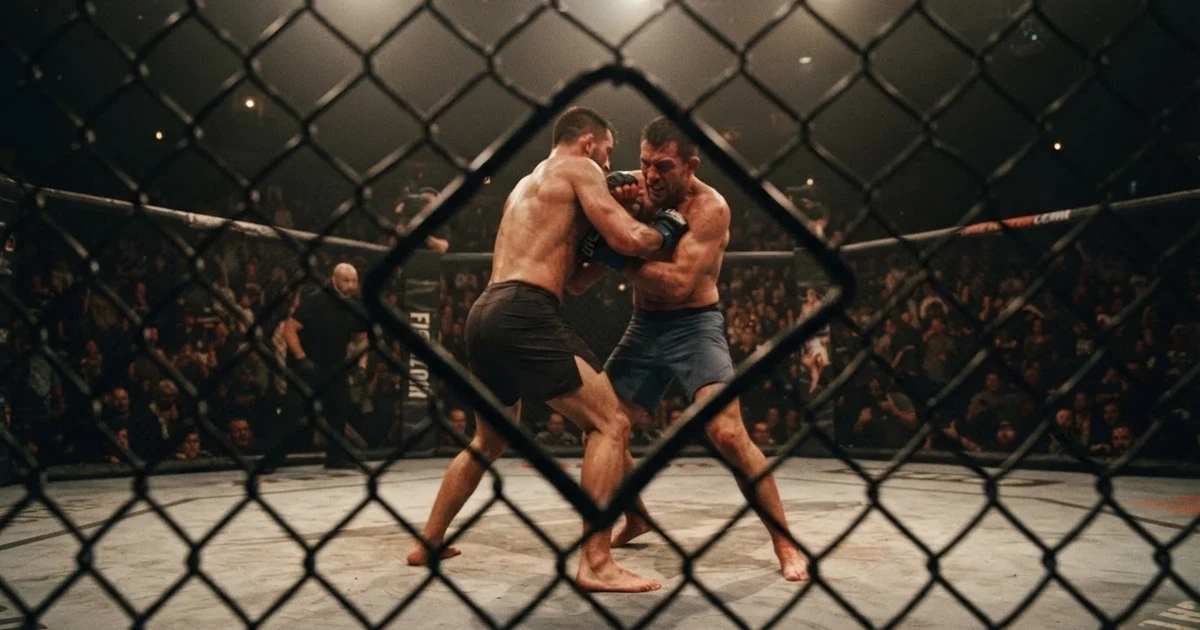
Live MMA betting turns a three-round chess match into a shifting market. The odds respond to a takedown, a cut opened above the eye, a fighter’s corner screaming at them to stay back; in-play books update within a second of an exchange of strikes, and the prices on the betting slip can move three or four times before the round ends.

For the bettor, the practical question is which bookmakers update quickly enough to be useful and which offer a cash out feature that lets them bank a position before the market turns. Cash out is not a free option — the bookmaker is pricing its own willingness to close the bet, and the figure offered is always lower than the true value of the position at that moment, because the overround has to be paid twice, on the original bet and on the cash out.
Live odds on MMA sit inside a licence condition for remote general betting standard (real events). The speed of the screen, the depth of markets in play and the granularity of the cash out figure are products of each operator’s trading team. A bookmaker that handles five Premier League games a weekend with sub-second updates can be sluggish on a regional UFC Fight Night card from a small venue, and that is where the in-play experience is won or lost.
The cash out feature is offered in two flavours. Full cash out closes the bet at the offered figure and pays it back to the balance; partial cash out closes a fraction of the stake and leaves the rest running. Partial cash out is useful when a punter wants to lock in some profit but still believes in the original bet — say, they backed a fighter who has just hurt the opponent badly but who is themselves tired, and they want to bank a third of the stake while keeping two-thirds alive for a finish.
Two things to watch in the live MMA market:
- The latency between a significant strike and the odds adjusting. A bookmaker trading on a half-second delay is offering outdated prices to anyone watching the broadcast.
- The minimum stake allowed in play. Some operators set a higher floor in-running than pre-match, and a small punter can be locked out at the moment the price looks most attractive.
MMA Betting Predictions and the Limits of Forecast
Every punter has a friend who watches the weigh-ins and knows who will win. The reality is that MMA is unusually hard to predict at the sharp end of the sport: a single overhand right or an ill-timed takedown attempt can swing a fight that looked settled. That is the bettor’s market place for value, but it is also why a tipster selling “locks” is selling something that does not exist.
What does work, and what sharp MMA bettors actually do, is closer to bankroll discipline than to picking winners. A unit size of one to two per cent of the bankroll is the standard; it survives the bad nights and lets the variance of the sport even out over hundreds of bets. Staking five per cent of a bank on a single UFC main event is closer to a casino bet than to a betting strategy, and the variance of MMA means even a sharp edge can sit underwater for weeks at a time.
The second thing that works is line shopping. Two bookmakers price the same fighter at different decimal odds, and the difference can be the whole edge. A price of 2.20 at one firm and 2.40 at another on the same fighter is a ten per cent swing in expected return, and on a sport as volatile as MMA it is rarely the case that the prices agree. The bookmakers that publish the deepest markets and the lowest margins tend to give the best prices, but the field is not uniform, and the difference between the best and the worst-priced favourite on a card can be a full point of decimal odds.
The third thing that works is specialisation. Punters who focus on one region of the sport — a particular weight class, a particular organisation, a particular style matchup — accumulate information that a generalist cannot. The cost of specialisation is that the bet frequency drops, and bankroll management has to absorb that.
What does not work, and what the page is happy to say plainly, is a paid tipster. A tipster who sells predictions at a subscription price is selling the access to their picks, not a profit. The historical record of paid tipster services in MMA is no better than the public would be on their own, and the better ones simply quote the line they would have taken on the closing price rather than the price they actually paid, which is the only honest way to track a tip.
MMA Bet Types and How Odds Are Built
The MMA menu runs deeper than the match winner. A typical UFC card at a licensed British bookmaker offers the following:
- Fight winner (moneyline). The simplest bet: pick fighter A or fighter B. The favourite carries odds shorter than evens (decimal below 2.00), the underdog carries odds above evens. A heavy favourite at 1.20 returns £12 on a £10 stake; a long-shot underdog at 6.50 returns £65 on a £10 stake, with the £55 profit being the punter’s net.
- Method of victory. Pick how the fight ends: knockout or technical knockout, submission, or decision. The odds are shorter than the moneyline on the favourite because the method is more specific, and the bookmaker’s edge sits inside that narrowing.
- Round or method combinations. Pick the fighter, the method and the round. The most specific market on the card, and the one where the margin is highest, because the bookmaker is pricing many outcomes at once.
- Over/under on total rounds. Whether the fight ends inside or outside a stated round number. A line of 1.5 rounds means under wins if the fight ends inside a round and a half (i.e. before the second round starts), over wins otherwise.
- Fight to go the distance. A yes/no market on whether the fight reaches the judges’ scorecards. This is essentially a bet on whether either fighter can finish the other.
- Method of victory groupings. Knockout only, submission only, decision only, or any finish — different from the round groupings above.
- Double chance and draw no bet. For three-way markets (the inclusion of a draw at the scorecards) the double chance market lets the punter back two of the three outcomes at shortened odds; draw no bet refunds the stake if the fight is a draw.
Understanding how bookmakers build their odds helps in identifying value.
A two-way market with both outcomes priced at decimal odds of 1.90 (fractional 9/10) has a payout share of one divided by the sum of the inverse odds. The inverse of 1.90 is roughly 0.5263, twice that is roughly 1.0526, and one minus the resulting payout share gives the bookmaker’s margin. The payout share of 0.5263 divided by 1.0526, multiplied by 100, sits at around 95 per cent of stakes returned to bettors over the long run, leaving the bookmaker with a margin in the high single digits of every pound wagered. That margin is the overround: the slice of every pound that does not come back as winnings, kept by the bookmaker as profit regardless of the outcome. The shape of the margin varies by market and by event; the same MMA card can carry a four per cent margin on the main event moneyline and nine per cent on a round-and-method combination, because the deeper market is harder to price and the bookmaker charges for that.
That margin is what the punter is paying for the privilege of betting. It is not a fee, and it is not a commission, and the betting site does not itemise it on the betting slip. It sits inside every price on every market on every event, and the only way to reduce its bite is to find a bookmaker that runs a thinner margin on the market the punter wants to bet on. A bookmaker publishing 1.92 on both sides of a two-way market is keeping roughly two per cent of every pound less than a bookmaker publishing 1.85, and on a long enough run that adds up.
MMA Tournaments and Where to Bet
The MMA calendar runs roughly forty-eight weeks of the year. The peak sits with the Ultimate Fighting Championship, which sanctions eleven weight divisions (eight men’s and three women’s) and runs a pay-per-view card most months. Bellator, PFL and ONE Championship stage their own cards at a smaller scale; regional promotions like Cage Warriors and LFA feed talent into the bigger shows, and KSW runs a sizeable European circuit.
For a British punter the practical menu is UFC + Bellator + PFL + Cage Warriors on most licensed books, with regional MMA available on the deeper platforms. The fight winner market is universal; method of victory, round groupings and fight to go the distance are available on the main events of each card and drop away on the prelims. Live betting is offered on the televised portions of the cards; ante-post markets — bets on a future event placed before the card is finalised — sit on championship bouts and named grudge matches.
The UFC’s eleven-division structure is what gives the sport its depth. From strawweight (115 lb) at the bottom to heavyweight (265 lb) at the top, the men’s side walks eight steps and the women’s three, and each division has its own champion, its own contender list and its own pricing patterns. A punter specialising in one division accumulates the kind of knowledge that does not generalise across the sport — a bantamweight contender’s takedown defence is not the same statistic as a heavyweight’s, and the markets price accordingly.
What the punter watches in 2026 is the schedule of each promotion: a UFC pay-per-view in the small hours of a Sunday morning British time, a Bellator card on a Saturday evening, a PFL playoff bracket over the autumn. The card density is what gives the live betting market its volume, and the bookmakers that price every fight from the same trading team in real time are the ones that keep their live markets open at full depth.
Ranking the Top 10 MMA Betting Sites for Great Britain
The ranking below covers ten brands whose names appear on the Gambling Commission’s public register against a licensee holding a remote general betting standard (real events) licence for Great Britain. The order is not a recommendation: a brand sits in a position because of how its offer, app and market depth compare on the page’s own terms, not because it is ‘the best’ or ‘the safest’. Several of the brands share a parent company and run similar products; the table notes where that is the case.
| Brand | Licence holder and account | What the operator’s own terms state on MMA |
|---|---|---|
| Betfred | Gambling Commission account 39544 (Petfre (Gibraltar) Limited) | A long-standing GB high-street bookmaker with an in-house app covering MMA cards as part of its 21-sport menu. |
| Fitzdares | Gambling Commission account 400 (Fitzdares Limited) | A premium-positioned bookmaker whose app covers cash out, accumulators, Lucky 15s, specials, ante-post and in-play markets. |
| DragonBet | Gambling Commission account 64908 (DragonBet Ltd) | A Wales-facing bookmaker with bet builder and live in-play markets; MMA sits inside a wider sports menu that leans on Welsh football and rugby. |
| BetUK | Gambling Commission account 39198 (LeoVegas Gaming PLC) | A mobile-first bookmaker with a sports welcome of four £10 free bets on multiples and accumulators for new customers depositing £10 and betting within seven days. |
| Spreadex | Gambling Commission account 8835 (Spreadex Limited) | A combined fixed-odds and spread-betting bookmaker, separately regulated by the FCA for spread betting and the Gambling Commission for fixed odds. |
| BetTom | Gambling Commission account 64959 (Bet Tom Limited) | A bookmaker with a 50% back-as-free-bet welcome of up to £50 and a matching slot-funds element; full terms apply. |
| BetVictor | Gambling Commission account 39576 (BV Gaming Limited) | A bookmaker offering Best Odds Guaranteed on UK and Irish horse racing alongside Smart Stats and BetFinder; MMA sits inside its wider sports menu. |
| Unibet | Gambling Commission account 45322 (Platinum Gaming Limited, Gibraltar) | A long-standing European bookmaker operating since 1999, with a £40-in-free-bets welcome for £20 staked at minimum odds of 2.0. |
| Fitzwilliam Sports | Gambling Commission account 48760 (SBKI Limited) | A Dublin-based bookmaker with capped membership and a high-stakes welcome subject to compliance criteria. |
| Geoff Banks | Gambling Commission account 54095 (GB Sports Advisors Limited) | A bookmaker offering live in-play and ante-post prices on future events. |
Several caveats the table leaves implicit. BetUK and BetVictor are part of the same group (LeoVegas Gaming PLC owns the BetUK brand; BV Gaming Limited operates BetVictor). They run on different platforms and offer different welcome packages, but a punter comparing the two is comparing brands within one group, not independent operators. Spreadex sits in a different regulatory position from the other nine because financial spread betting on its platform is regulated by the FCA, not the Gambling Commission, and a punter using the spread side of Spreadex is in a different legal territory from a punter using the fixed-odds side. The Commission’s register is searchable by business name, trading name, domain or account number, and every licence number above can be checked there directly.
The MMA market on every brand above is offered under the standard remote general betting standard (real events) licence category. None of them is licensed under the betting intermediary category that covers betting exchanges; an MMA punter who wants the exchange model needs a separate account at a brand running under that category.
MMA Betting in Great Britain: The Legal Landscape
Great Britain does not publish a list of permitted sports or permitted markets. A bookmaker serving customers in Great Britain needs a Gambling Commission licence wherever it is based, and the Commission’s public register is the whole test of who holds one.
The Gambling Act 2005 is the statute. It covers Great Britain — England, Scotland and Wales. Northern Ireland runs on its own older law, and a GB licence does not regulate the Northern Irish market. The Gambling (Licensing and Advertising) Act 2014 closed the loophole that had let Gibraltar-, Malta- and Isle of Man-licensed operators serve British customers from abroad; since the 2014 Act an operator whose remote facilities are used in Great Britain needs a Commission licence whatever its corporate address. A Curaçao, Maltese or Gibraltar licence is not a substitute, and an operator holding only such a licence is operating in breach of section 33 of the 2005 Act.
The Commission’s register can be searched by business name, trading name, domain or account number. Every licence number on this page can be checked there. The register is the only honest test of whether a brand holds a GB licence; a .co.uk or .uk domain proves nothing, since licensed operators run on .com addresses and unlicensed operators use .co.uk addresses without issue. The single reliable test is the register itself.
Betting on MMA is permitted under a remote general betting standard (real events) licence. The category permits a bookmaker to offer markets on real sporting events; virtual events are a separate category; esports sit inside the real-events category; novelty markets (politics, TV shows) sit inside it as well. There is no statutory prohibition on any particular MMA market.
In-play betting is offered under the same licence. The Commission does not restrict in-play on MMA, and British bookmakers price in-running markets freely. The controls on in-play are licence conditions around customer protection (time-outs, deposit limits, the financial vulnerability check) rather than a statutory cap on in-play staking.
Spread betting is the outlier. Financial spread betting is regulated by the Financial Conduct Authority, not the Commission. Spreadex is the dual-regulated operator on this page: the FCA regulates its spread side, the Commission regulates its fixed-odds side. A punter spreading on MMA at Spreadex is on the FCA-regulated platform and the rules are different. The Commission’s own statement on the matter is that spread betting losses can exceed deposits; that is not a feature, it is a risk warning.
There is no state monopoly and no statutory cap on the number of GB licences. The Commission has issued hundreds of remote licences and ten are named on this page. Naming ten is not naming all of them; the register has far more, and a punter who wants a fuller view should search it.
The minimum age is 18. Identity verification — name, address and date of birth — has to complete before a customer can deposit or gamble at a GB-licensed site, and that requirement applies to free bets and bonuses as well as to cash play. No anonymous betting is possible at a GB-licensed bookmaker. The verification rule has been in force since 7 May 2019 and was confirmed by the Commission as covering every product a licensed operator offers.
Credit cards are banned for gambling in Great Britain (LCCP condition 6.1.2, in force since 14 April 2020), including credit-card-funded payments through an e-wallet. Debit cards and bank-based payments are not covered by the ban. Cryptocurrency deposits are not addressed by statute; the position on whether a GB-licensed operator can accept bitcoin or other cryptocurrency deposits is set by that operator’s terms and by its payment processor. Several of the brands on this page do not list cryptocurrency as a deposit method; a punter who wants that needs to look at each operator’s payments page.
Betting winnings in Great Britain are not taxed at the player level. The player’s tax position is that they keep what they win, with the exception of professional gamblers who should ask HMRC or an adviser. General Betting Duty is the operator’s tax on gross profits, currently 15% under the existing regime; from 1 April 2027 a new remote betting rate of 25% applies within it for bets not on UK horse racing, not on self-service betting terminals in licensed premises, not pool betting, and not in-person betting (HM Government policy paper of 26 November 2025). Whether operators pass the duty through to odds is not established by the Commission’s published material; what is established is that the duty sits on the operator, not on the player.
Responsible Gambling and Player Protection in Great Britain
Every GB-licensed operator is a member of GAMSTOP, the national multi-operator online self-exclusion scheme. Self-exclusion at GAMSTOP covers online sites and apps; betting shops use a separate service. The exclusion periods are six months, one year, five years, or five years with auto-renewal, and after the minimum period the exclusion stays in place for a further seven years unless the customer asks GAMSTOP to remove it. Membership is a mandatory licence condition for online operators since 31 March 2020.
A financial vulnerability check applies to licensed remote betting when a customer’s deposits minus withdrawals exceed £150 in a rolling 30 days. The check is in force since 28 February 2025 (the £150 trigger) and the public-record check component from 30 August 2024. The check is a public-record check (bankruptcy, county court judgments, similar), not an income check and not a credit reference check. A financial risk assessment — the “affordability check” of the press — has been announced in a staged plan, with no start date. The right framing in 2026 is “announced, staged, no start date”, not “in force”.
Deposit limits are an operator requirement: every GB-licensed bookmaker must offer a customer a gross deposit limit on a fixed time frame. The first changes have applied since 31 October 2025; a second phase was postponed to 30 September 2026, and whether that phase is live is not established by the published register. There is no state-set deposit or loss ceiling for betting — limits are the customer’s choice, and the operator’s job is to surface the limit and let the customer set it. No statutory cap on stakes in sports betting exists.
Help is available outside the operators. GamCare runs the National Gambling Helpline; GambleAware funds treatment and education; the NHS runs gambling clinics in several regions; Gamblers Anonymous runs peer-support meetings. Fitzwilliam Sports, on this page’s list, links to GambleAware, GAMSTOP and Gamblers Anonymous from its site footer, and that pattern is common across the licensed bookmakers.
The British punter’s option that does not exist at a GB-licensed bookmaker is anonymity. The verification requirement means the bookmaker holds the customer’s name, address and date of birth; the source-of-funds questions at higher spend are normal under the money-laundering rules; the £150 vulnerability check pulls a public-record check; the deposit-limit prompt asks the customer to set a ceiling. None of these are optional. They sit alongside the protections — GAMSTOP, the £150 check, the bonus wagering cap, the dispute-resolution route through the Commission — that a licensed operator provides.
An unlicensed site does none of this. A punter on an unlicensed site has no GAMSTOP coverage, no Commission complaints route, no approved dispute-resolution body, no British consumer redress if funds are withheld, and is not bound by the 10x bonus cap or the £150 vulnerability check. Honest framing: licensed = checks, limits, GAMSTOP, bonus cap, but also verification before the first bet; unlicensed = none of those protections and possible loss of funds. Neither is “the safe choice” by default.
Crypto and Anonymous MMA Betting at Licensed Sites
Crypto deposits are not addressed by the Gambling Act 2005, the Commission’s LCCP or the published register of payment methods. The position is set by each operator’s payment processor and each operator’s own terms; several of the brands on this page do not list bitcoin, ethereum or other cryptocurrency as a deposit method, and a punter who wants to deposit in crypto at a GB-licensed site has to check the payments page of the operator they intend to use.
Anonymity is not available at a GB-licensed site. The verification requirement — name, address, date of birth — has to clear before a customer can deposit or gamble, and the verification is not optional. A punter who wants pseudonymity is in the same position: the bookmaker holds the verified identity, and any future transaction ties back to it. A crypto deposit at a licensed bookmaker sits on top of a verified identity, not in place of it; the two are not alternatives.
The marketing term “anonymous crypto betting” describes an offshore offer, not a GB-licensed one. Offshore sites do not verify British customers to the standard the Commission requires, do not offer GAMSTOP coverage, do not apply the £150 vulnerability check, do not apply the 10x bonus wagering cap, and do not give the punter a Commission complaints route. A British punter using an offshore crypto book is gambling at the offshore site’s own house rules, with whatever protections (or none) that site chooses to provide. The Commission’s enforcement powers against unlicensed operators are aimed at the operator, not the customer: cease-and-desist notices, search-engine referrals, work with registrars, hosts and payment providers, and court-order DNS blocking powers that have been given or are about to be given to the Commission.
The honest summary is that GB-licensed betting is verified betting. The crypto angle does not change that; it only changes the payment rail.
MMA Betting Offers and Free Bets at GB Bookmakers
A welcome offer is a marketing spend by a bookmaker on a new customer, dressed up as a gift to the punter. The arithmetic is the same as the rest of the betting market: the offer costs the punter something, and the cost sits in the terms.
Two welcome offers on this page’s operator set illustrate the range. BetUK’s sports welcome is four £10 free bets — two football accumulators of 4+ selections and two multiples of 2+ — issued to a new customer who deposits £10 and places a sports bet within seven days of registering, with opt-in required and a seven-day free-bet validity. Unibet’s sports welcome is “Get £40 in Free Bets when you bet £20”: deposit and stake a sports bet of £20 or more at minimum odds of 2.0 (1/1), free bets expiring within seven days, for new GB customers using a debit card or instant bank transfer. BetTom’s sports welcome is 50% back as a free bet of up to £50, with a matching 50% back up to £50 as free slot funds for casino play.
The shape of each offer is different and the cost is different. A free bet is not a refund in money — the stake is usually not paid back with a win. The value of a £10 free bet at decimal odds of 3.00 is the stake times (odds minus 1) divided by the odds, scaled by the payout share of the market the bet is placed on. A £10 free bet at 3.00 on a market with a 95 per cent payout share is worth roughly £6.32 in expected value. The headline “£40 in free bets” on the Unibet offer is a headline of nominal value; the expected value, after the market margin is taken out, is closer to £25. The £10 deposit, the seven-day expiry, the 2.0 minimum odds and the seven-day betting window are the small print that turns the nominal headline into a smaller real number.
The promotion rules that came into force on 19 January 2026 cap bonus wagering requirements at 10x. A £10 bonus with a 50x wagering requirement used to demand £500 of qualifying bets before withdrawal; under the cap no more than £100 of qualifying bets can be required. The cap applies to bonuses with wagering requirements; whether the cap applies to free bets with no wagering condition is not established by the published material. The same rule banned mixed-product promotions — an offer requiring play across two or more product types (betting plus casino, betting plus bingo, betting plus lottery) is no longer permitted. The BetTom offer, which pairs a sports free-bet element with a casino slot-funds element, has to be checked against the operator’s own terms in 2026 to confirm that both elements still stand under the rule.
The bookmaker margin sits inside the offer as it sits inside every other price. The free bet is placed on a market that already carries the margin, and the punter pays the margin twice: once on the free bet itself (because the stake is not returned with a win), once on the qualifying bet the offer requires (because the qualifying bet is priced at the market margin). A punter who reads a “£40 free bet” headline as £40 of value is reading the wrong figure; the £40 is the nominal headline, the expected value is lower, and the cost is the qualifying bet at the market margin.
What the punter does with the offer is the last question. A free bet placed at the shortest odds in the market (1.20 on a heavy favourite) returns £4 of nominal winnings and almost nothing of expected value; a free bet placed at long odds (5.00 or above) carries higher variance and a wider range of outcomes but a higher expected value, because the stake-not-returned haircut matters less at long prices than at short ones.
MMA Betting on Mobile: Apps and Browser Play
Every operator on this page runs an app, and most punters will place MMA bets on a phone. The screen is small, the betting slip is one tap from the price, and a live bet can be placed from a bar stool before the round starts.
The app does several things and a few of them are worth flagging. A bet builder lets the punter combine markets from the same fight into a single bet — pick fighter A to win by knockout in round two, for example, and price it as a single betting line. The combined price multiplies the odds of the legs into one figure. A bet builder is offered on most licensed British bookmakers, and the depth varies.
A live streaming feature on the app is what separates the apps that price MMA seriously from the apps that price it as a token sport. Live streaming of UFC pay-per-view cards is licensed by the promotion, and the streams are usually available inside the app with a funded account or a recent bet. Live streaming on a smaller regional promotion is rarer; Bellator streams are available on some apps, PFL streams on others, and regional MMA rarely streams inside a bookmaker app at all.
In-play odds are the third leg. A punter who wants to bet live on MMA needs an app that updates quickly, that offers a deep enough market to be worth betting on, and that does not lock them out at the moment a price is worth taking. Latency — the delay between a significant strike and the odds adjusting — is the practical measure of an MMA app’s live betting quality.
Two patterns show up across the apps on this page. The first is the dual-purpose app: a bookmaker with a sports side and a casino side bundled into one product, with the casino games visible from the same login. The second is the all-sports app with no casino element, usually from a bookmaker whose business is the betting side only. The pattern tells the punter nothing about the MMA offering, but it tells them what kind of product they are about to install.
How the Bookmaker Margin Sits Inside a Two-Way MMA Market
A worked example shows the math. Take a two-way market with both outcomes priced at decimal odds of 1.90 (fractional 9/10) — an illustrative price, not a quoted one. The payout share of that market is one divided by the sum of the inverse odds. The inverse of 1.90 is approximately 0.5263, the sum of the two inverses is approximately 1.0526, and the payout share is approximately 0.9500. The margin, which is one minus the payout share, is approximately 0.0500, or 5 per cent of every pound staked.
That 5 per cent margin is the bookmaker’s take on this market at this price. It is not a fee; it is the slice of every pound wagered that does not come back to punters as winnings. On a long enough run, a punter betting on a market with a 5 per cent margin loses 5 pence of every pound staked, before considering the price taken, the selection made, or any other variable.
A two-way market with both outcomes priced at decimal odds of 1.85 has a different margin. The inverse of 1.85 is approximately 0.5405, the sum of the two inverses is approximately 1.0811, and the payout share is approximately 0.9250. The margin is approximately 7.5 per cent. A bookmaker publishing 1.85 on both sides of a two-way market is keeping roughly 2.5 percentage points more of every pound than a bookmaker publishing 1.90, and on a long enough run that gap is the difference between a sharp and a soft market.
The margin varies by market. A method-of-victory market on the same fight, with more outcomes and more pricing risk, typically carries a higher margin than the moneyline. A round-and-method combination market carries a higher margin still, because the bookmaker is pricing many outcomes at once and is more likely to misprice one. A bet builder, which combines markets from a single fight, carries a margin higher than the sum of the underlying market margins, because the bookmaker charges for the correlation risk between the legs.
What the margin means for the punter is direct. Lower margins mean more of every pound staked comes back to the punter over time. Higher margins mean less. The bookmaker with the thinnest margin on the market the punter wants to bet on is the cheapest bookmaker to bet with on that market, even if its headline offer or its app polish is less attractive than a competitor’s.
Picking the Right MMA Bookmaker in Great Britain
A punter picking an MMA bookmaker has several questions to ask, and the right answer depends on what the punter is betting on.
For the punter who bets on UFC main events and wants the deepest market, a bookmaker running a thin margin on the moneyline and a bet builder with method and round combinations is the right fit. The bookmakers that publish the deepest UFC markets on this page sit on the long-running side of the market — Unibet, bet365 (named for the comparison though not on the featured list), BetVictor — and a punter whose card is the UFC main event can price the fight across them.
For the punter who bets on Bellator, PFL and regional MMA, the question is whether the bookmaker prices the smaller promotions at all. Several British bookmakers price UFC + Bellator + PFL only, with regional MMA off the menu; a punter whose interest is regional needs an operator whose menu runs deeper.
For the punter who bets live, the question is the latency of the in-play odds and the depth of the live markets. A bookmaker that prices in-play on every televised UFC card with a sub-second update is worth more to the live punter than a bookmaker that prices in-play on a handful of events. Live streaming inside the app, where available, removes the lag of an external broadcast.
For the punter who wants the welcome offer, the question is which welcome is worth the qualifying bet. The qualifying bet on every welcome offer on this page is a bet at the market margin, and the qualifying bet carries no expected value to the punter beyond the offer’s expected value. The offer’s expected value is its nominal value minus the stake-not-returned haircut, scaled by the payout share of the market the free bet is placed on.
For the punter who wants exchange pricing — back and lay on the same selection, with the punter able to act as the bookmaker — the question is whether an exchange account is needed in addition to a fixed-odds account. None of the brands on this page runs as an exchange; an exchange punters uses a betting intermediary licensed under a separate category. The two product types are not the same, and the comparison is not a like-for-like.
For the punter whose interest is the spread side, Spreadex is the brand on this page that runs a spread book. The FCA regulates the spread side, not the Commission, and the rules are different: spread losses can exceed deposits, which is the risk warning Spreadex carries on its homepage. The fixed-odds side at Spreadex sits inside the standard Commission framework, and the verification and identity rules apply there as they do everywhere else on the page.
What to Watch in 2026
The MMA market in 2026 is shaped by several moving pieces. The UFC’s broadcast deal with ESPN in the United States runs through 2026, and the international broadcast arrangements sit on top of that; the British punter’s access to UFC pay-per-view cards depends on those arrangements. Bellator’s transition into the PFL structure is ongoing, and the Bellator brand on a British bookmaker’s menu may shift as that transition continues. The promotion of women’s MMA — strawweight, flyweight, bantamweight — is what fills the three women’s divisions on the UFC roster, and the betting market on women’s MMA has grown with the sport.
The regulator’s published material on affordability checks is the second thing to watch. The financial vulnerability check (the £150 trigger) is in force; the financial risk assessment (the “affordability check”) has been announced in a staged plan with no start date. The right framing in 2026 is “announced, staged, no start date”, and the position could move inside the year. The deposit-limit rule (RTS 12) sits in a second phase postponed to 30 September 2026, and whether it is live is not established. The 25 per cent remote betting duty rate starts on 1 April 2027, which is after this page’s publication year; whether operators pass the duty through to odds is not established by the published material, and a punter watching odds move between 2026 and 2027 should not assume the move is the duty.
The bonus wagering cap (10x) is in force since 19 January 2026; the mixed-product promotion ban is in force from the same date. The Premier League’s voluntary withdrawal of gambling sponsorship from the front of matchday shirts runs from 2026/27, but that is a Premier League matter, not an MMA matter. The advertising rules — CAP Code section 16, the whistle-to-whistle ban — run as they have done since 1 August 2019.
The honest framing for the MMA punter in 2026 is that the market is licensed, the feature set is deep, and the small print is the small print. The bookmaker margin sits inside every price on every market on every fight, and the only way to reduce its bite is to find the bookmaker that runs the thinnest margin on the market the punter wants to bet on. Welcome offers cost the punter their qualifying bet, free bets return the winnings only and not the stake, and the verification requirement applies to every product a licensed operator offers. None of this is hidden; all of it is published; the page above is the reader’s guide to what each piece means.
Frequently Asked Questions
How does MMA betting work in Great Britain?
MMA betting in Great Britain runs through bookmakers licensed by the Gambling Commission under the Gambling Act 2005. A licensed bookmaker prices fight winner, method of victory, round combinations, over/under rounds, fight to go the distance, double chance and draw no bet markets on UFC, Bellator, PFL and regional promotions. The minimum age is 18, identity is verified before the first deposit and credit cards are not accepted. A punter picks a market, places a stake and is paid the stake times the decimal odds on a win; the stake is not returned separately, the return includes it.
Where to find MMA fights priced at high odds?
A high price is a long price, meaning the outcome is judged unlikely by the bookmaker. Long prices sit on underdogs — the fighter outside the favourite on the betting line — and on specific markets like method of victory, round groupings and exact score. Comparing the same fight across several licensed bookmakers shows the price spread; the bookmaker publishing the longest decimal odds on the same selection is the cheapest place to back the outcome. No single bookmaker consistently publishes the longest prices on every fight, and the price spread varies by event.
Is there a way to find top-value MMA bets for this weekend?
“Top value” is the language of paid tipsters and aggregators, and the honest framing is that no service knows in advance which bets will win. What the punter can do is compare prices across licensed bookmakers for the weekend’s card and back the longest available price on each selection they want to take. A punter watching prices through the week sees them move as weigh-ins, press conferences and fighter news shift the market, and the longest available price on a selection is the cheapest price to take it.
How is a Gambling Commission licence checked?
The Commission’s public register is searchable by business name, trading name, domain or account number. The licence number on this page (for example 45322 for Unibet, 39576 for BetVictor, 64908 for DragonBet) is the number to enter. The register shows the licence categories, the licence holder, the trading names and the licence status. A licence that does not appear on the register is not a GB licence. The register is the only honest test; a .co.uk or .com domain proves nothing on its own.
How is the return on a bet worked out from the stake and the odds?
The return is the stake multiplied by the decimal odds. A £10 stake at decimal odds of 3.50 returns £35; the net profit is £25 (return minus stake). For a combination bet (an accumulator) the odds of the legs multiply into one price, and the stake multiplied by the combined price is the return. The bookmaker’s margin sits inside the price on every leg of every bet; a price of 3.50 is not a fair price because the bookmaker has built an overround into it.
What is the bookmaker’s margin and how does it show in the odds?
The bookmaker’s margin is the slice of every pound staked that does not come back to punters as winnings. It shows in the odds as the gap between the “true” price (which would sum to 100 per cent of stakes returned) and the published price (which sums to less). When outcomes are priced at 1.90, the margin is roughly 5 per cent; when priced at 1.85, the margin is roughly 7.5 per cent. The margin is the bookmaker’s edge on the market at that price, and it is paid by every punter on every bet regardless of who wins.
Combat & motorsport – Free bets
Content created by the «Free bets» team
