
Super Heinz bet explained: how 7 selections become 120 bets
 Available in US
Current as of 27 October 2026 · verified against the UK Gambling Commission’s public register.
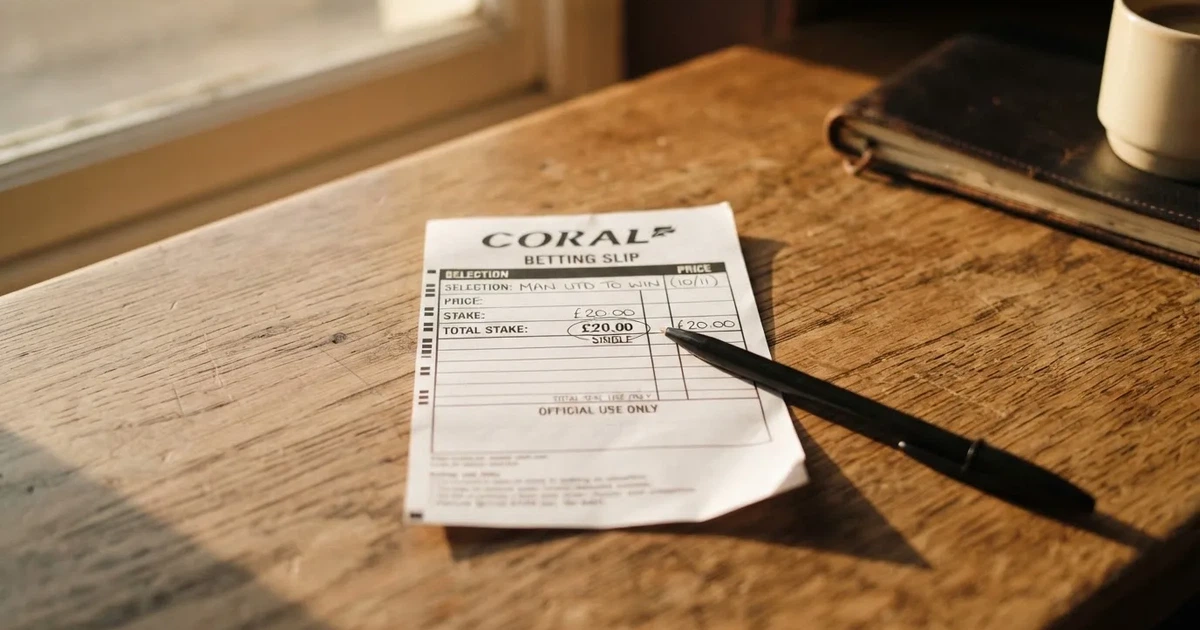
A Super Heinz is a full-cover bet on seven selections, comprising 120 total lines. This includes the full range of combination bets, from 21 doubles through to the single seven-fold accumulator. There are no singles in the structure. Stakes are split equally across every line, so a £2 unit stake costs £240 in total before a single selection runs. It is one step beyond a Heinz (six selections, 57 bets) and one step short of a Goliath (eight selections, 247 bets), and the arithmetic of those neighbours explains what changes when a seventh selection is added to the slip.
The bet is built for punters who want every possible combination covered from a shortlist of picks, and who accept that most of those combinations will lose. A treble wins something; a four-fold wins more. A full 120-line Super Heinz pays out only if at least two selections win, and the return scales sharply as more legs come in. What it costs the punter, and what it pays back when it does, is the substance of the rest of this page.
Why a Super Heinz looks attractive on a betting slip
The structure of a Super Heinz sells itself. Seven picks, every combination of two or more covered, no singles, no guesswork about which doubles to include. For a punter who fancies a shortlist across, say, a Saturday football card, the bet offers something a manual accumulator cannot: exposure to a seven-fold at the combined odds of all seven legs, with a pay-out even if only two of the seven selections win.
That promise is real, but the price is paid in unit stake and in the way bookmakers build a margin into every line. A £2 Super Heinz costs £240. A winning seven-fold at 2.00 (evens) on every leg multiplies to 128.00 on that line, returning £256 on the £2 stake, while a single losing leg collapses the seven-fold, the six-folds that contained it, and every multiple above a double that depended on it. The same £240 stake is still on the table; only the doubles, trebles and other multiples built without the losing leg continue to settle.
The marketing appeal is the long tail. A treble at 2.00, 2.00 and 2.00 returns £16 on a £2 stake. The same three legs as part of a 120-line Super Heinz return the same £16, plus whatever the four-folds, five-folds, six-folds and the seven-fold contribute when the rest of the card cooperates. The question is whether the long tail justifies the £240 outlay for a punter whose bankroll is built for singles and small multiples.
What “free bet” means when the bet is a Super Heinz
Free bets are marketed to punters who already place combination bets, and the Super Heinz sits at the top of that market. The phrase sounds like a stake the bookmaker hands back if the bet loses, but in practice the free bet is a token: a fixed amount credited to the account, usable on a market of the punter’s choice, with rules attached. The stake is usually not returned with a winning free bet. A £10 free bet at odds of 3.00 returns £30, of which £20 is profit; the original £10 is gone whether the bet wins or loses.
QuinnBet’s terms illustrate the shape. Free bets are valid for 7 days from credit, can be used on any market at odds of 1/2 (1.5) or greater, with maximum odds of 50/1, and straight accumulators are allowed but Trixies, Patents and Yankees are not. A Super Heinz sits in the same family of combination bets, and the same minimum-odds rule applies: every leg of a Super Heinz placed with a free bet must be priced at 1/2 or above, or the free bet is forfeit. The cap at 50/1 stops a single leg from carrying a disproportionate share of the combined price.
The wagering requirement that once sat on top of free bets is now regulated. Since 19 January 2026, wagering requirements on bonuses at UK-licensed operators are capped at 10x, so a £10 bonus can require no more than £100 of qualifying bets before withdrawal. Mixed-product promotions, an offer that asks the punter to bet on football to claim free spins, are banned under the same rules. What is and is not a “free bet” is no longer a matter the operator settles alone.
The figure a punter should hold in mind is straightforward: a free bet is worth its face value multiplied by the edge the punter brings. A £10 free bet at 3.00 is worth roughly £20 minus the margin the bookmaker builds into the price. The arithmetic is mechanical; the marketing is not.
The shape of a Super Heinz in a betting strategy
A Super Heinz is a system bet, not a tip. It does not predict outcomes; it manages the cost of being wrong about most of them. The bettor who picks seven selections and asks the bookmaker to cover every combination is buying insurance against the trebles and four-folds that a manual accumulator would have missed, and paying for that insurance with the doubles and six-folds that will almost certainly lose.
The structure rewards accuracy more than boldness. A seven-fold at 2.00 on every leg pays 128.00 on a £2 line, but only if all seven win. A six-fold pays 64.00, and one losing leg removes the seven-fold, every six-fold that contained that leg, and every five-fold that depended on it. The bet survives a single loser; it does not survive two. The 120 lines collapse quickly when the card turns against the punter, and the £240 outlay is the price of the structure rather than a stake the punter can scale back without changing the bet.
Bankroll matters. A punter with a £500 bankroll cannot afford a £240 Super Heinz, and a £2 unit stake on a tenner bankroll is a single losing Saturday from a stop. The bet fits a punter whose bankroll is built around combination staking and who picks a unit size in pence rather than pounds. For the rest, the same seven selections in a smaller structure — a Heinz, a Lucky 15, or a manually chosen set of trebles — covers the obvious cases without the £240 commitment.
The honest framing of a Super Heinz as a strategy is this: it is a bet for the punter who has already decided that seven selections are the right card, and who wants every combination covered. It is not a bet for the punter trying to find a way to make seven picks affordable.
How a Super Heinz is built, line by line
The structure is a combinatorial fact. From seven selections, the number of ways to pick two is 21, three is 35, four is 35, five is 21, six is 7, and all seven is 1. The total is 120, the same as the count of non-empty subsets of a seven-element set minus the seven singletons, which a Super Heinz does not include.
The breakdown is the same on every betting slip:
| Bets in a Super Heinz | Count |
|---|---|
| Doubles (2 selections) | 21 |
| Trebles (3 selections) | 35 |
| Four-folds (4 selections) | 35 |
| Five-folds (5 selections) | 21 |
| Six-folds (6 selections) | 7 |
| Seven-fold (7 selections) | 1 |
| Singles | 0 |
| Total lines | 120 |
A unit stake is the amount placed on each of those 120 lines. A £2 unit stake means £2 on every double, every treble, every four-fold, every five-fold, every six-fold, and the seven-fold. The total stake is unit stake × 120. At £2 a line, that is £240. At £1, £120. At 10p, £12.
A void selection drops to the next multiple down. A treble with a void leg settles as a double on the two remaining selections, at the combined odds of those two. A four-fold with one void and three winners settles as a treble on the three winners. The unit stake on the affected lines is paid out at the new combined price; the rest of the bet is unaffected. This is the bookmaker’s standard treatment of non-runners and is set out in the operator’s own terms.
What a Super Heinz pays back: a worked example
The arithmetic is plain. Take three illustrative selections at odds of 1/2 (1.50), evens (2.00) and 6/4 (2.50), and a stake of £10 for a straight accumulator or £2 per line for a full-cover bet. The accumulator is one line of £10 at the combined odds of 1.50 × 2.00 × 2.50 = 7.50, returning £75 if all three win. The Super Heinz would carry those three legs as part of a seven-selection structure; the same three legs, placed as the only winning selections in a Super Heinz whose other four all lose, return the value of the doubles those three form.
The full seven-fold at unit odds of 1.50, 2.00 and 2.50 and four other legs at illustrative prices would return unit stake × (combined odds of all seven). With illustrative prices, the return on the seven-fold line is the product of the seven leg prices. A punter looking at a Super Heinz on a £2 unit stake needs at least one combination to clear at a price that justifies the £240 outlay, and the seven-fold is the line that does it.
The realistic case is partial. Six winners from seven at £2 a line return the six-fold on those six legs and every five-fold and lower multiple within them, minus the value of the lines that included the loser. A punter who picks five winners and two losers loses every line that depends on a loser, and keeps the lines built from the five winners. The retained value depends on the prices of the five winning legs and on whether the doubles, trebles and four-folds among them pay enough to cover the £240 outlay.
The result is a band, not a single figure. A full house at 1.50, 2.00 and 2.50 on three legs and similar prices on the other four returns a substantial sum; two winners from seven at odds-on prices returns a small profit; one winner returns the doubles that included that winner; zero winners returns nothing. The structure of the bet means the return rises sharply as more legs win, and falls sharply as more lose.
The 10 UK bookmakers reviewed here
The table below lists the ten bookmakers covered in the comparison sections that follow. Every brand holds a remote operating licence from the UK Gambling Commission and is registered for remote general betting standard (real events); the licence numbers and licence holders are taken from the Commission’s public register. Matchbook additionally holds a remote betting intermediary licence, the category that covers betting exchanges. A licence is the entry ticket; the comparison that follows is about what each brand does with it.
The table is a snapshot, not a scorecard. The licence number is the regulatory fact; the operator’s own terms on the Super Heinz and on related features are the practical fact. Those seeking to place a Super Heinz on a Saturday card should look for a bookmaker that offers the structure, settles voids in line with industry practice, and pays out within a reasonable window.
| Brand | Gambling Commission remote licence | What the operator’s own terms state on the Super Heinz |
|---|---|---|
| Ladbrokes | 054743-R-330863-014 (LC International Limited) | Offers odds boosts on horse and greyhound bets, Best Odds Guaranteed on UK and Irish horse races, in-play betting and Acca Boosts; system bets including the Super Heinz are available on the sportsbook. |
| BetMGM | 039198-R-319450-029 (LeoVegas Gaming PLC) | Welcome offer for new UK customers: four £10 free bets (two football accumulators of 4+ selections and two sports multiples of 2+), valid for 7 days with minimum odds and opt-in required; Super Heinz is settable on the sportsbook. |
| NetBet | 039170-R-319343-032 (Netbet Enterprises Limited) | Daily Boosts, Profit Boosts and free bet offers, a Bet Builder with instant dynamic odds, and sports stats for major leagues; combination bets including the Super Heinz are supported. |
| Fitzwilliam Sports | 048760-R-335434-009 (SBKI Limited) | Prices are based on Oddschecker’s average price for each selection; Apple and Google mobile apps are available; full system bets are settable on the slip. |
| Fitzdares | 000400-R-103839-030 (Fitzdares Limited) | Cash out, accumulators, Lucky 15s, specials and antepost markets on horse racing, football, tennis, rugby, cricket, golf and American football, with in-play live odds; Super Heinz is available on the sportsbook. |
| Kwiff | 044448-R-323408-017 (Eaton Gate Gaming Limited) | Supercharge feature can instantly boost the odds on a bet, for example from 2/1 to 20/1, and it can apply to single or multi bets on any sport; system bets are settable. |
| Octobet | 062545-R-337248-006 (Octopus Game Limited) | Best Odds Guaranteed on UK and Irish horse racing, up to £150 per customer per race; combination bets including the Super Heinz are supported on the sportsbook. |
| Matchbook | 039504-R-319407-024 (Triplebet Limited) | A betting exchange where customers bet against other users, with Bet Builder, multiples, in-play betting and live streaming of horse racing and greyhounds; system bets are settable. |
| Betfred | 039544-R-319290-010 (Petfre (Gibraltar) Limited) | Bet Builder, Sub Switch, Racing Post data, Extra Places, live casino and bingo; Super Heinz is among the system bets available on the sportsbook. |
| QuinnBet | 061011-R-335683-004 (QuinnBet (Gibraltar) Limited) | Free bets are valid for 7 days from credit and can be used on any market at odds of 1/2 (1.5) or greater, with maximum odds of 50/1; straight accumulators are allowed but Trixies, Patents and Yankees are not. |
The licence numbers above are the regulatory anchor; the terms column carries what the brand itself states, and is the column a punter checks before placing the bet. A Super Heinz on a Ladbrokes slip, a Betfred slip and a QuinnBet slip settles on the same 120 lines, but the terms around free bets, minimum odds and payout times differ from brand to brand.
What a Super Heinz is, in plain terms
The bet is a fixed structure, not a market. A Super Heinz is a way of asking the bookmaker to cover every combination of two or more selections from a shortlist of seven, in exchange for a unit stake across 120 lines. The bookmaker does not pick the structure; the punter does, by selecting seven outcomes and asking the sportsbook to build the bet.
The structure is identical at every UK-licensed sportsbook. The seven selections, the 120 lines, the 21 doubles, the 35 trebles, the 35 four-folds, the 21 five-folds, the 7 six-folds, the 1 seven-fold, and the absence of singles are the combinatorial fact of seven objects taken two or more at a time. What changes from bookmaker to bookmaker is the price the bookmaker offers on each leg, the margin baked into those prices, the way voids are treated, and the time the payout takes to land.
The punters who use the bet are a particular kind. They have a shortlist of seven they trust, and they want every combination of that shortlist covered without having to build the slip by hand. The cost is the unit stake multiplied by 120; the pay-off is the long tail of partial wins across the 120 lines. The bet rewards accuracy and punishes boldness, because every leg that loses collapses every line that depended on it.
The legal frame for a Super Heinz in Great Britain
There is no statutory list of permitted bets in Great Britain, and the Super Heinz is not named in the Gambling Act 2005 or in the Licence Conditions and Codes of Practice. The Act creates a framework of operating licences and personal licences, and the Commission’s LCCP sets the conditions each licensee must meet. Within that framework, the operator chooses which markets and which bet structures to offer, and the Super Heinz is offered as a system bet on the sportsbook.
A bookmaker serving customers in Great Britain needs a Gambling Commission licence. Since the Gambling (Licensing and Advertising) Act 2014, an operator whose remote facilities are used in Great Britain needs a Commission licence wherever it is based, so a Curaçao, Maltese or Gibraltar licence is not a substitute. Every brand in the table above holds a remote general betting standard (real events) licence on the Commission’s public register, and Matchbook is also licensed as a remote betting intermediary.
The bet itself is settled under the operator’s own rules. The LCCP requires fair and transparent terms, and the operator’s house rules on voids, non-runners and Rule 4 deductions are the terms the bet settles on. A punter who places a Super Heinz on a horse race and a non-runner voids that leg, the affected lines drop to the next multiple, and the rest of the bet is unaffected. The treatment is the same at every UK-licensed bookmaker, because the structure of the bet is the same and the LCCP requires the same standard of transparency.
Identity verification is the other piece of the legal frame. Since 7 May 2019, every UK-licensed remote operator must verify the customer’s name, address and date of birth before the first deposit, including a free bet or bonus. A punter who wants to place a Super Heinz at a UK-licensed bookmaker has already passed that check, and the bet is placed on a verified account. The same check is what makes a Super Heinz at a UK-licensed bookmaker different from the same bet at an unlicensed site, where verification is not a condition of play.
Safer gambling and the Super Heinz
A Super Heinz is a high-line combination bet, and the player-protection framework around it is the same as for any other sports bet at a UK-licensed operator. GAMSTOP is the national multi-operator online self-exclusion scheme and a mandatory licence condition for online operators since 31 March 2020; a punter who has registered with GAMSTOP cannot place a Super Heinz, or any other bet, at any UK-licensed online bookmaker for the chosen exclusion period. The periods are six months, one year, five years, or five years with auto-renewal, and after the minimum period the exclusion stays in place for a further seven years unless the punter asks GAMSTOP to remove it.
The financial vulnerability check is the other piece. Since 28 February 2025, when a customer’s deposits minus withdrawals exceed £150 in a rolling 30 days, the operator runs a public-record check (bankruptcy, county court judgments, similar), not an income check and not a credit reference check. The check is a flag for further conversation, not an automatic block. A punter placing a £240 Super Heinz once a month will not trigger it; a punter running high-volume combination staking across the month can.
Deposit limits are the customer’s tool. Operators must offer a gross deposit limit on a fixed time frame, and the punter sets the ceiling. There is no state-set deposit or loss ceiling for betting, so a punter who wants to cap a Super Heinz staking run sets the limit on the account and lets the operator enforce it. The cap is a number the punter picks, not a number the regulator sets.
Credit cards are banned for gambling in Great Britain since 14 April 2020, including credit-card-funded payments through an e-wallet. Debit cards and bank-based payments are not covered. A punter funding a Super Heinz at a UK-licensed bookmaker uses a debit card, a bank transfer, or an e-wallet loaded from a debit card or bank account. The same ban does not apply at an unlicensed site, and a punter who wants the protection of the ban chooses a UK-licensed bookmaker.
Help is available. GamCare runs the National Gambling Helpline, GambleAware funds treatment and research, the NHS runs gambling clinics, and Gamblers Anonymous runs peer-support meetings. The contact details are on the operator’s safer-gambling page and on the Commission’s site. A punter who feels the betting is no longer under control has a route to help that does not require telling the bookmaker first.
The bookmaker’s margin, and where it sits in a Super Heinz
Every price on a betting slip carries the bookmaker’s margin. The margin is the share of every pound staked that the bookmaker keeps on average across all outcomes of a market; the rest is paid out as winnings. The bookmaker builds the margin into the odds by shortening every price below its “true” probability, and the punter who backs a single outcome at a margin-loaded price is paying the margin on that bet.
A Super Heinz is 120 bets at margin-loaded prices, and the margin compounds across the 120 lines. The bookmaker’s expected return on a Super Heinz is the unit stake × 120 × margin; the punter’s expected loss is the same number. A 5% margin on a £2 unit stake is an expected cost of £12 across the bet, before the punter’s own edge is counted.
The margin is invisible on the slip. The bookmaker does not show the margin next to the odds, and the punter has to back-calculate it from the prices of all outcomes of a market. A 1X2 market on a football match at 1.80, 3.50 and 4.50 has a margin of about 5%; a market at 1.70, 3.20 and 4.20 has a margin closer to 8%. The punter who wants the cheapest Super Heinz is the punter who picks the bookmaker with the lowest margin on the underlying markets, not the bookmaker with the best headline promotion.
The free bet is the same shape. A free bet is settled at the book’s margin-loaded prices, and the punter’s edge on the free bet is the same edge the punter has on a paid bet at the same prices. The marketing word “free” describes the stake, not the edge. The arithmetic is mechanical; the marketing is not.
Ladbrokes
Ladbrokes is a long-established high-street name now run by LC International Limited under Commission account 54743. The brand operates under a remote general betting standard (real events) licence and a remote betting intermediary licence. The brand offers odds boosts on horse and greyhound bets, Best Odds Guaranteed on UK and Irish horse races, in-play betting and Acca Boosts across the sportsbook, and the Super Heinz is among the system bets settable on the slip. The Best Odds Guaranteed rule means a punter who takes an early price on a horse and the starting price is higher settles at the starting price, a small but consistent edge on horse-racing legs of a Super Heinz. The Acca Boosts are paid on winning accumulators of a defined size, and a Super Heinz that lands enough legs to clear a four-fold or five-fold can qualify for a boost on the qualifying lines. This setup makes Ladbrokes a natural home for those seeking to place a Super Heinz on a Saturday horse-racing and football card, with the in-play book available to lay off a leg that drifts in-play.
BetMGM
BetMGM’s UK sportsbook is operated by LeoVegas Gaming PLC under Commission account 39198 and is authorized for remote general betting (real events). The brand’s welcome offer for new UK customers is four £10 free bets (two football accumulators of 4+ selections and two sports multiples of 2+), valid for 7 days with minimum odds and opt-in required. The free bets settle on a paid bet, and a Super Heinz placed with a free bet is settled on the same 120 lines as a paid bet, with the stake not returned on a win. The structure of the offer, four free bets tied to two accumulators and two multiples, fits a punter who wants to spread the free-bet stake across a shortlist rather than commit it to a single line. The 7-day window is the binding constraint: a Super Heinz that takes longer than a week to settle, because of voids or postponements, is settled on the same lines, but the free bet may expire before the bet resolves. The licence and the offer shape make BetMGM a fit for a punter who wants to use a free bet on a combination bet and is willing to plan the staking around the 7-day window.
NetBet
NetBet’s UK sportsbook is operated by Netbet Enterprises Limited under Commission account 39170 and is licensed for remote general betting (real events). The brand offers Daily Boosts, Profit Boosts and free bet offers, a Bet Builder with instant dynamic odds, and sports stats for major leagues. The Bet Builder is the relevant feature for a Super Heinz: it allows a punter to combine markets from a single event into a single price, and the resulting line can be one of the seven selections in a Super Heinz. The Daily Boosts and Profit Boosts are paid on selected markets, and a Super Heinz that includes a boosted leg settles the boost on the underlying single, with the rest of the structure settled at the unboosted price. The sports stats are a research tool, not a betting tool, and a punter who picks a Super Heinz on a major-league card has the stats to hand on the same page. The licence and the feature set make NetBet a fit for a punter who wants to build a Super Heinz around Bet Builder lines on football and basketball, with a Daily Boost on one of the legs as a sweetener.
Fitzwilliam Sports
Fitzwilliam Sports is operated by SBKI Limited under Commission account 48760 and is a holder of a remote general betting standard (real events) licence. The brand bases its prices on Oddschecker’s average price for each selection, and the result is a price sheet that sits close to the market average across UK-licensed bookmakers. Apple and Google mobile apps are available. A Super Heinz on a Fitzwilliam slip settles at the average price on each leg, and a punter who is shopping for the cheapest line on a particular selection has a reference price in the Fitzwilliam price. The average-pricing model is the relevant feature: it removes the headline-grabbing best-odds guarantee and replaces it with consistency. A punter who wants a Super Heinz priced at the market average, rather than at the top or bottom of the range, has a clear home at Fitzwilliam.
Fitzdares
Fitzdares is operated by Fitzdares Limited under Commission account 400 and possesses a remote license for general betting (real events). The brand’s app offers cash out, accumulators, Lucky 15s, specials and antepost markets on horse racing, football, tennis, rugby, cricket, golf and American football, with in-play live odds. The cash-out feature is the relevant one for a Super Heinz: a punter who wants to lock in a partial win before the final leg can cash out the bet at the book’s offer, and a punter who wants to let the bet run can let it run. The antepost markets are the second relevant feature: a Super Heinz on a futures card, with selections across Cheltenham and the Grand National, settles on the same 120-bet structure as a Super Heinz on a Saturday football card, but the lines take months to resolve. The licence and the feature set make Fitzdares a fit for a punter who wants a Super Heinz on horse racing, with the cash-out as a safety valve on a partial win.
Kwiff
Kwiff is operated by Eaton Gate Gaming Limited under Commission account 44448 and is licensed for remote general betting on real events. The brand’s Supercharge feature can instantly boost the odds on a bet, for example from 2/1 to 20/1, and it can apply to single or multi bets on any sport. The boost is the relevant feature for a Super Heinz: a leg that lands a Supercharge settles the affected line at the boosted price, and the rest of the structure settles at the unboosted price. The boost is random in the sense that the punter does not know in advance which bets will be Supercharged, and the punter who wants the boost as a feature places the bet and waits to see whether the leg is boosted. The licence and the feature set make Kwiff a fit for a punter who is happy to take the random boost as a sweetener on a Super Heinz, and who is not relying on the boost for the bet’s edge.
Octobet
Octobet is operated by Octopus Game Limited under Commission account 62545 and carries a remote license for general betting (real events). The brand offers Best Odds Guaranteed on UK and Irish horse racing, up to £150 per customer per race. The cap is the relevant feature for a Super Heinz: a punter who takes an early price on a horse leg and the starting price is higher settles at the starting price, up to £150 above the taken price. A Super Heinz on a horse-racing card with a high-priced winner can clear the £150 cap on a single race. The cap is per customer per race, so a Super Heinz that spans two races clears the cap twice. Users interested in a Super Heinz on a UK and Irish horse-racing card often find Octobet a fit, especially when looking for the Best Odds Guaranteed as an edge on the horse legs.
Matchbook
Matchbook is operated by Triplebet Limited under Commission account 39504, with categories on the register covering remote general betting standard (real events) and remote betting intermediary. The brand is a betting exchange where customers bet against other users, and the prices are set by the market rather than by a bookmaker. The exchange structure means the margin on a Matchbook price is the commission charged on net winnings, not the overround on a traditional sportsbook, and the price on a popular selection is often closer to the “true” probability than the equivalent bookmaker price. The Bet Builder, multiples, in-play betting and live streaming of horse racing and greyhounds are available. A Super Heinz on a Matchbook slip is settled on the same 120 lines as a traditional sportsbook, but the leg prices are exchange prices and the commission is charged on net winnings rather than built into the odds. The licence and the feature set make Matchbook a fit for a punter who is comfortable with the exchange model and who wants the cheapest line on a Super Heinz leg, accepting the commission in lieu of the margin.
Betfred
Betfred is operated by Petfre (Gibraltar) Limited under Commission account 39544 and holds an operating license for remote general betting on real events. The brand’s app features Bet Builder, Sub Switch, Racing Post data, Extra Places, live casino and bingo. The Racing Post data and the Extra Places are the relevant features for a Super Heinz: a punter who picks a horse-racing leg has the form, the going and the market data on the same screen, and a Super Heinz that includes a horse with Extra Places settles the place part of an each-way leg at the enhanced place terms. The Sub Switch is a feature for substituting a selection in a pre-built accumulator, and a punter who wants to swap a leg of a Super Heinz before kick-off has the tool to do so. Those looking for a Super Heinz on a horse-racing and football card may find Betfred a fit, with the Racing Post data and the Extra Places as the practical edge on the horse legs.
QuinnBet
QuinnBet is operated by QuinnBet (Gibraltar) Limited under Commission account 61011, with the remote general betting standard (real events) category on the register. The brand’s free bets are valid for 7 days from credit and can be used on any market at odds of 1/2 (1.5) or greater, with maximum odds of 50/1; straight accumulators are allowed but Trixies, Patents and Yankees are not. A Super Heinz sits in the same family of combination bets, and the same minimum-odds rule applies to every leg of a Super Heinz placed with a QuinnBet free bet. The cap at 50/1 stops a single leg from carrying a disproportionate share of the combined price, and the 7-day window is the binding constraint on the staking. The licence and the terms make QuinnBet a fit for a punter who wants to use a free bet on a Super Heinz and is willing to plan the staking around the 7-day window and the minimum-odds rule.
The arithmetic of a Super Heinz, in plain numbers
Take three illustrative legs at odds of 1/2 (1.50), evens (2.00) and 6/4 (2.50), and a stake of £10 for a straight accumulator or £2 per line for a full-cover bet. The accumulator is one line of £10 at the combined odds of 1.50 × 2.00 × 2.50 = 7.50, returning £75 if all three win, of which £65 is profit. The Super Heinz on a seven-selection card at £2 a line costs £240 in total stake, and the return on the seven-fold at illustrative odds is the unit stake multiplied by the combined odds of all seven legs.
The realistic return sits in a band. Six winners from seven at £2 a line return the six-fold on the six winning legs, every five-fold and lower multiple within them, minus the value of the lines that included the loser. Five winners from seven return the five-folds, four-folds, trebles and doubles built from the five, again minus the value of the lines that depended on a loser. The retained value depends on the prices of the winning legs and on whether the retained lines pay enough to cover the £240 outlay.
A punter looking at a Super Heinz on a £2 unit stake needs at least one combination to clear at a price that justifies the £240 outlay, and the seven-fold is the line that does it. A full house at illustrative prices returns a substantial sum; two winners from seven at odds-on prices returns a small profit; one winner returns the doubles that included that winner; zero winners returns nothing. The structure of the bet means the return rises sharply as more legs win, and falls sharply as more lose.
How a punter places a Super Heinz in practice
The mechanics are the same at every UK-licensed sportsbook. The punter adds seven selections to the slip, opens the system bets menu, picks Super Heinz, sets the unit stake, and confirms. The slip shows the 120 lines, the unit stake, the total stake, and the potential return on a full house. The bet is placed once confirmed, and the lines settle independently as the events resolve.
Voids are settled by the bookmaker’s standard rule. A void leg drops every line that depends on it to the next multiple down, and the unit stake on the affected lines is paid out at the new combined price. A void in a four-fold turns the affected line into a treble; a void in a treble turns it into a double; a void in a double voids the line. The rest of the bet is unaffected. A punter who picks seven selections and one voids has a 120-line bet that settles on 119 lines, with the line that depended on the void settled at the new multiple.
Cash out is the mid-bet option. A punter who wants to lock in a partial win before the final leg can cash out the bet at the book’s offer, and the offer is recalculated as the events resolve. The cash-out price is the book’s price on the remaining lines, and a punter who takes the cash-out is taking the book’s price on those lines rather than waiting for the events to resolve.
The bookmaker’s terms on the Super Heinz, brand by brand
The structure of a Super Heinz is fixed, and the terms that matter are the ones around it. A punter placing a Super Heinz at QuinnBet has to clear the minimum-odds rule on every leg; a punter placing the same bet at BetMGM has to clear the 7-day window on the free bet; a punter placing the same bet at Matchbook is on an exchange and pays commission on net winnings. The terms differ, and the punter who places the bet checks the terms before placing it.
The licence is the regulatory fact. Every brand in the comparison above holds a remote operating licence from the UK Gambling Commission, and the licence number is the entry ticket to the UK market. The terms are the practical fact, and the terms are what the bet settles on. A punter who wants a Super Heinz at a UK-licensed bookmaker checks both, and the table above is the starting point for that check.
The same structure is settable at every brand, and the price is what differs. The punter who wants the cheapest Super Heinz is the punter who picks the bookmaker with the lowest margin on the underlying markets, not the bookmaker with the best headline promotion. The free bet is the sweetener, and the sweetener is the same shape at every brand: a fixed amount credited to the account, usable on a market of the punter’s choice, with the stake not returned on a win.
Where a Super Heinz fits in a punter’s staking plan
A Super Heinz is a high-line combination bet, and the punter who places it is committing £240 at a £2 unit stake. The bankroll has to carry the outlay, and the staking plan has to allow for the bet to lose. A punter with a £500 bankroll cannot afford a £240 Super Heinz without the rest of the staking plan suffering, and a £2 unit stake on a £100 bankroll is a single losing Saturday from a stop.
The structure of the bet rewards a particular punter. The punter who has a shortlist of seven, who trusts the shortlist, and who wants every combination covered is the punter the bet is built for. The punter who is fishing for a longshot is better served by a straight accumulator, and the punter who wants to back a single selection is better served by a single bet. The Super Heinz is a structure for the punter who has already decided that seven selections are the right card.
The honest framing of the bet is that it is a system bet, not a tip. It does not predict outcomes; it manages the cost of being wrong about most of them. The punter who places a Super Heinz is buying insurance against the trebles and four-folds that a manual accumulator would have missed, and paying for that insurance with the doubles and six-folds that will almost certainly lose. The cost is the unit stake multiplied by 120; the pay-off is the long tail of partial wins across the 120 lines.
The arithmetic in one place
The arithmetic of a Super Heinz is the arithmetic of a straight accumulator multiplied by 120. A straight accumulator at combined odds of 7.50 on a £10 stake returns £75. A Super Heinz at £2 a line on the same three legs, plus four more at illustrative prices, costs £240 in total stake, and the return on the seven-fold at the combined odds of all seven is the unit stake multiplied by the combined odds. The other 119 lines settle as the events resolve, and the retained value depends on how many legs win.
The return on a partial win is the sum of the lines that survive. A treble that wins returns the unit stake on the treble at the combined odds of the three. A Super Heinz that lands six winners from seven returns the six-fold on the six, every five-fold within them, every four-fold, every treble, and every double, minus the value of the lines that depended on the loser. The arithmetic is mechanical, and the punter who places the bet knows the unit stake, the total stake, and the potential return on a full house before confirming.
The expected cost of a Super Heinz is the unit stake multiplied by 120 multiplied by the margin on the underlying markets. A 5% margin on a £2 unit stake is £12 of expected cost across the bet, before the punter’s own edge is counted. The punter who has an edge on the underlying markets can overcome that cost; the punter who does not is paying £12 for the privilege of placing the bet.
What a Super Heinz is, in three sentences
A Super Heinz is 120 bets across 7 selections, with no singles. The unit stake is the amount placed on each of the 120 lines, and the total stake is unit stake × 120. The bet is settled line by line as the events resolve, and a void leg drops the affected lines to the next multiple down. The rest is marketing, and the marketing is the part a punter reads with a sceptical eye.
The terms the punter checks before placing the bet
The terms that matter are the terms around the bet, not the bet itself. The minimum-odds rule on a free bet; the 7-day window on a free-bet credit; the cash-out price on a partial win; the Rule 4 deduction on a non-runner; the commission on an exchange. The structure of the bet is fixed, and the terms are the variable. A punter who places a Super Heinz at a UK-licensed bookmaker has already passed the identity check, and the bet is placed on a verified account with the operator’s own terms in force.
The safer-gambling framework is the same at every UK-licensed bookmaker. GAMSTOP is the national self-exclusion scheme, and a punter who has registered with GAMSTOP cannot place the bet. The financial vulnerability check applies when deposits minus withdrawals exceed £150 in a rolling 30 days, and the deposit limit is the punter’s own tool. The framework is the regulator’s, and the operator enforces it.
The bookmaker’s margin is the bookmaker’s edge on every line, and the margin compounds across the 120 lines. The punter who wants the cheapest Super Heinz is the punter who picks the bookmaker with the lowest margin on the underlying markets. The headline promotion is the marketing, and the marketing is the part the punter reads with a sceptical eye. The arithmetic is mechanical; the marketing is not.
Frequently asked questions about the Super Heinz
What is a Super Heinz bet?
A Super Heinz is a system bet covering 120 wagers on 7 selections, with a full spread of combinations, from doubles up to the seven-fold; there are no singles involved. A unit stake is applied to each of the 120 lines, which settle independently as events conclude, with void selections dropping the affected line to the next multiple down.
What is a Heinz bet?
A Heinz is a full-cover bet on 6 selections made up of 57 bets: 15 doubles, 20 trebles, 15 four-folds, 6 five-folds and 1 six-fold. The structure is the same as a Super Heinz, with one fewer selection and the same absence of singles. The total stake on a Heinz at a £2 unit stake is £114.
How many bets are in a Super Heinz?
A Super Heinz consists of 120 wagers across 7 selections. This system encompasses everything from the 21 doubles up to the final seven-fold. The total line count stems from the combinatorial math of 7 items taken 2 or more at a time and remains standard across all UK-licensed sportsbooks.
How can it be checked that a bookmaker holds a Gambling Commission licence?
The Commission’s public register can be searched by business name, trading name, domain or account number. The register is the whole test of whether a brand holds a licence, and a licence number is the regulatory anchor. The register is online, free to search, and lists the licence categories and the licence holder.
How is the return on a bet worked out from the stake and the odds?
For a single bet, the return is stake × odds, and the net profit is stake × (odds − 1). For a combination bet, the odds of the legs multiply into one price, and the return is stake × combined odds. For a Super Heinz, the return is the sum of the returns on the 120 lines, settled independently as the events resolve.
What is the bookmaker’s margin and how can it be seen in the odds?
The margin is the share of every pound staked that the bookmaker keeps on average across all outcomes of a market. The bookmaker builds the margin into the odds by shortening every price below its “true” probability, and the punter who backs a single outcome at a margin-loaded price is paying the margin on that bet. A 1X2 market at 1.80, 3.50 and 4.50 has a margin of about 5%.
Bet types & in-play – Free bets
Content created by the «Free bets» team
