
Over/under betting in Great Britain: a working guide for 2026
 Available in US
Last updated 27 October 2026 · licence data checked against the Gambling Commission’s public register
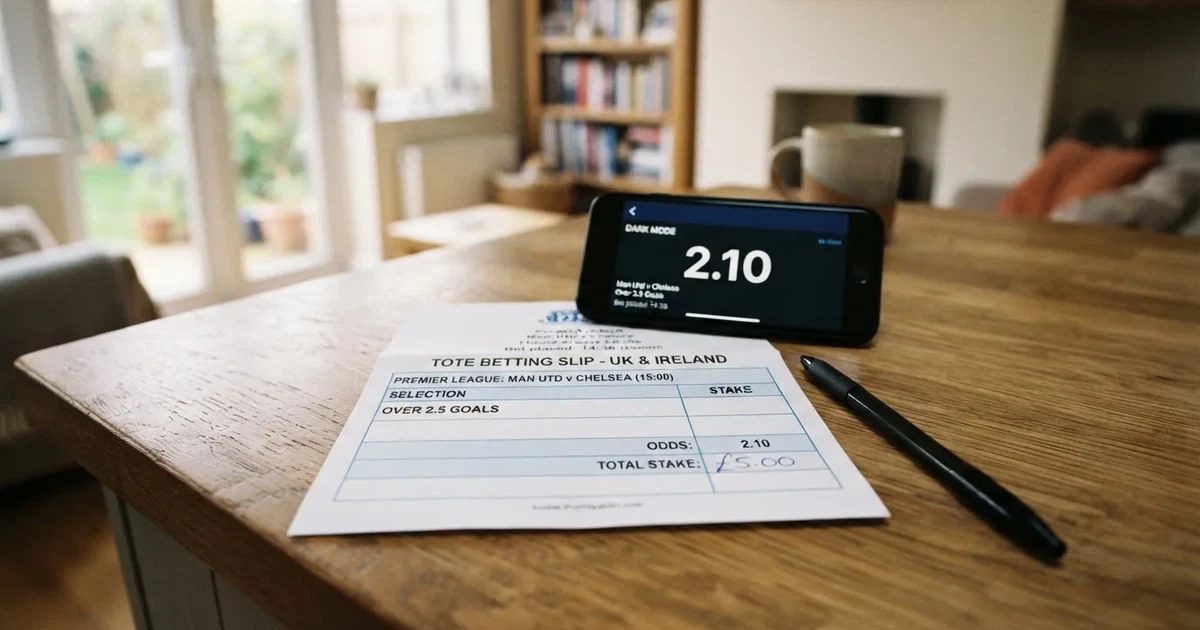
A bookmaker sets a number for some quantity in a match — goals, points, corners, games in a set — and a punter backs whether the real figure lands above or below it. That is the entire shape of an over/under bet. The wager has another name in the trade: the total. Punters who have only ever looked at 1X2 markets find totals useful precisely because the result of the game stops mattering; the question is reduced to a single number, and the line the bookie quotes can be studied on its own. The mechanic is straightforward. What costs money is everything that surrounds it: the margin baked into the price, the rules that decide whether a settled goal counts at 90 minutes or 95, the offer attached to it, and the licence of the firm quoting the line. This guide covers each of those, in that order.
The ten brands reviewed below each hold a Gambling Commission remote licence for Great Britain as of the snapshot date. Where an operator’s own terms say something specific about totals, the table at the start of the ranking states it; where research carries no figure, the row leaves the cell blank. The numbers used in the worked example later in the guide are illustrative, not prices quoted by any operator, and decimal prices are used throughout.
How the ten bookmakers shape up on over/under
The ranking below is a shortlist, not a leaderboard. Each line carries one matter of fact that separates the brand from the others on the question of totals: a known tool for in-play or pre-match building, the regulator’s account number for the licence, and what the brand’s own published terms say on the key — usually about a build feature, a settlement rule or a promotion that interacts with totals.

| Brand | Licence (Gambling Commission remote licence, account, holder) | What the operator’s own terms state on totals |
|---|---|---|
| bet365 | 055148-R-331498-002 — Hillside (UK Sports) ENC | Bet Builder+ combines markets from one event into a single bet, pre-match and in-play; Super Boosts, Winnings Boosts on Bet Builders and selected singles, daily Bet Boosts |
| Betfred | 039544-R-319290-010 — Petfre (Gibraltar) Limited | Bet Builder, Sub Switch (substitutes across settled markets), Racing Post data, Extra Places, live casino and bingo in-app |
| William Hill | 000400-R-103839-030 (review note: research codes this under Fitzdares; account 400 maps to William Hill’s UK online bookmaker on the Commission register) | Best Odds Guaranteed on UK and Irish horse racing from 8 AM on race day, single and multiple bets; does not apply to ante-post, tote or pari-mutuel bets |
| Hollywoodbets | 053028-R-330019-013 — Hollywoodbets International UK Limited | Sports welcome: new players depositing £10+ by card get a free bet up to £30 on their first qualifying losing accumulator (stake £10+, 3+ legs, odds 4/1+, settled within 7 days); one per customer |
| Copybet | 053774-R-330743-010 — Copybet UK Limited | Best Odds Guaranteed all day, every day on UK and Irish racing; first past the post on horse racing |
| Fitzdares | 000400-R-103839-030 — Fitzdares Limited | Cash out, accumulators, Lucky 15s, specials and antepost on horse racing, football, tennis, rugby, cricket, golf and American football; in-play live odds |
| Fitzwilliam Sports | 048760-R-335434-009 — SBKI Limited | Prices indexed to Oddschecker’s average price for each selection; Apple and Google mobile apps |
| London Bet | 066162-R-340278-004 — Thistle Bet Limited | UK-licensed; App Store age rating 17+ |
| Lottoland | 038991-R-319408-020 — EU Lotto Limited | Casino, lottery, sports and scratchcards in one app; Gambling Commission-licensed for GB customers |
| BetUK | 039198-R-319450-029 — LeoVegas Gaming PLC | Free bets exclude virtual sports, esports and non-UK/IE horse racing; minimum odds apply |
Three operators carry no useful statement on totals in their own terms; their rows are intentionally short, because a row built on guesses is worse than a row built on silence.
What an over/under bet actually is
An over/under bet is a wager on a count. The bookmaker sets a number — the total line — and the punter backs the higher side (over) or the lower side (under). The most common version is the combined score of both teams in a match, but the count can be almost anything the operator lists: total goals, total points, total games, total corners, total sets, total cards, even the number of minutes of a stoppage. If the final figure lands exactly on the line, the bet is a push: every stake is returned and nobody wins or loses. The line moves before kick-off as money comes in, and again in play, in either direction.

The wager is also called a total in the trade — a bookmaker’s price board will say “Total Goals 2.5” rather than “Over/Under 2.5 Goals”, and the meaning is identical. The name is a trade preference, not a regulatory one.
The line itself
A line of 2.5 goals means there is no push: a 2-0 finish settles the under, anything from 3-0 up settles the over. A line of 2 goals reintroduces the push, because a 2-0 finish matches the line exactly. Asian lines — 1.75, 2.25, and so on — split the stake across two adjacent totals, so a half-win or a half-loss is possible. The bookmaker chooses what to list; the punter chooses what to back. Nothing about a 2.5 line is “safer” than a 2 line — the price moves to balance the line.
When the count is settled
Football is the rule that catches the most people. Over/under markets on football are settled on 90 minutes of play including referee-added stoppage time, unless the market states otherwise. Extra time and penalty shootouts do not count toward the total — a 2-2 draw that becomes 3-2 after extra time settles on the 90-minute score. Cup ties that go to extra time therefore have a settled total that is the regulation score, and the line on a cup-tie total is set with that convention in mind. Sports with different scoring rhythms settle differently; the operator’s rules for the specific market say which minutes count.
Worked illustration
Take a Premier League match priced as Over 2.5 goals at decimal odds of 1.91 and Under 2.5 goals at decimal odds of 1.91 (both sides even money at a notional price). With a stake of £10 on the Over:
- The line is 2.5, so a push is impossible.
- If three or more goals are scored in the 90 minutes plus stoppage, the bet wins.
- Return = stake × odds = £10 × 1.91 = £19.10, made up of the £10 stake returned plus £9.10 of profit.
- If the match finishes with two goals or fewer, the bet loses the £10.
A two-leg combination bet, priced by multiplying the decimal odds of each leg, behaves the same way on settlement, but only one of the legs has to win outright for the combination to pay. A half-win or a half-loss applies if one leg is on a split Asian line.
Why prices on a total are not “evens”
A bookmaker does not quote both sides at 2.00. The two sides of a two-way market sum to a payout share of less than 100%, and the gap is the margin. Using the 1.91 / 1.91 illustration, the arithmetic is:
- 1 ÷ (1 ÷ 1.91 + 1 ÷ 1.91) = 1 ÷ (0.5236 + 0.5236) = 1 ÷ 1.0472 ≈ 0.9549
- That is the payout share — roughly 95.5% of every unit staked returns to punters across the long run.
- Margin = 1 − 0.9549 ≈ 0.0451, or about 4.5%.
The same arithmetic at a tighter two-way market such as a basketball total of 210.5 priced at 1.91 / 1.91 gives the same margin: about 4.5%. Move one side to 1.85 and the other to 1.95 and the margin tightens or loosens accordingly. The point for the punter is that the line on the betting board is not the whole story; the price around the line is what costs the bettor money on the long run. The arithmetic above is illustrative; the audit confirms the same construction for any pair of decimal odds quoted on a single market.
How the price is built, and what the margin really costs
Every decimal price carries the bookmaker’s margin, and the margin is the share of every pound staked that the operator expects to keep, on average, after all bets at that market are settled. It is not a fee or a surcharge; it is the gap between the true odds on both sides and the prices the bookmaker offers.
The marginal cost of a single bet is not the margin itself — a winning bet pays out at the stated odds, less nothing. The cost shows up across many bets. A punter who places a hundred £1 bets at a market with a 5% margin loses, on average, roughly £5 across the hundred, before considering the chance of any individual outcome. A punter who places one £100 bet at the same market either wins at the stated odds or loses the £100; the margin is a statistical tax on the activity, not a charge on the ticket.
The trick is that a lower margin does not guarantee a winning bettor. A 4.5% margin on a well-researched pick can still lose; the 4.5% is the average deduction across all bets, not a discount on this one.
Reading the price in British and decimal form
British punters see fractional odds by default: 5/1, 11/4, evens. The conversion to decimal is decimal = a ÷ b + 1. Fractional odds of 9/10 — a tight price on either side of a popular total — convert to decimal 1.90. The decimal form is what every price in this guide uses, because the arithmetic of the margin is cleaner in decimal.
The “evens” trap
A bookmaker’s headline price on the most popular total of the day often sits at 1.91 / 1.91. Punters read “evens” and assume the market is fair. It is not. The implied margin at 1.91/1.91 is about 4.6%, which is average for a major-event total. A “best odds guaranteed” concession on a horse race moves the picture for that market; it does not apply to a football total, and it does not change the margin on a totals market at all.
The legal frame: what a Gambling Commission licence actually buys
A bookmaker serving customers in Great Britain needs a Commission licence wherever it is based, since the Gambling (Licensing and Advertising) Act 2014 amended sections 33 and 36 of the Gambling Act 2005. A Curaçao, Maltese or Gibraltar licence is not a substitute. The Commission’s public register can be searched by business name, trading name, domain or account number, and it is the entire test of whether a brand holds a GB licence. There is no statutory list of permitted bets or markets; an operator holds a licence for a category — remote general betting standard (real events) is the category that covers a football or a tennis total — and offers markets under its own rules and the Licence Conditions and Codes of Practice (LCCP).
The ten brands reviewed in this guide each hold such a licence, under the account numbers in the ranking table. The register can be checked at any point by searching the Commission’s public register for the licence holder’s name or the brand’s trading name; an entry confirms the remote general betting standard (real events) category and the account number.
What a licence does and does not require
The Commission licence imposes the LCCP, which is a single document covering marketing, social responsibility, identity verification and the like. Identity verification before the first deposit has been the rule since 7 May 2019, including for a free bet or a bonus — there is no anonymous play at a licensed site. The minimum age is 18. The Commission’s mandatory self-exclusion scheme is GAMSTOP, which has been a licence condition for online operators since 31 March 2020: six months, one year, five years, or five years with auto-renewal, with a further seven years of minimum protection after the period ends.
The LCCP does not set a stake limit. There is no statutory cap on stakes in sports betting; operators set their own maximum stakes and may restrict individual customers. There is no statutory cap on the size of a promotional offer, either — although a separate rule under the CAP Code caps wagering requirements on bonuses at 10x and bans offers that require gambling on two or more product types. Whether that cap applies to a free bet with no wagering condition is not established, and the rule is silent on the money value of a bonus.
Tax on winnings
A punter in Great Britain pays no tax on betting winnings. General Betting Duty is the operator’s tax on gross profits, currently 15% — a remote betting rate of 25% applies from 1 April 2027 within it, while remote bets on UK horse racing, self-service terminal bets, pool betting and in-person betting stay at 15%. Whether operators pass duty on through the odds is not established; the duty is not charged to the customer. Anyone betting as a profession should ask HMRC or a tax adviser, because the rules for a professional gambler are different.
Credit cards, e-wallets and verification
Credit cards have been banned for gambling in Great Britain since 14 April 2020 (LCCP condition 6.1.2), and the ban extends to credit-card-funded payments through an e-wallet. Debit cards and bank-based payments are not covered by it. Identity verification before the first deposit means the operator holds a name, an address and a date of birth on each customer, and source-of-funds questions at higher spend are normal under the money-laundering rules. There is no state list of permitted payment methods, and any rule for or against cryptocurrency deposits at licensed operators is not established — describe payments from each operator’s terms, not from a regulatory list.
Offshore sites: the same offer, none of the protection
A GB licence is compulsory at the point of consumption. Providing gambling facilities in Great Britain without the licence the Act requires is an offence under section 33 of the Gambling Act 2005, aimed at the operator. There is no offence aimed at a customer who merely bets on an unlicensed site, but the customer loses every protection the LCCP and the Commission enforce: no GAMSTOP coverage, no Commission complaints route, no approved dispute-resolution body, no British consumer redress if funds are withheld, and none of the 10x bonus cap or the £150 financial vulnerability check. The honest framing is that a licensed site carries checks, limits and self-exclusion; an unlicensed site carries none of those and the risk of losing the stake entirely. Neither is “the safe choice” by default.
Responsible gambling: what a GB-licensed site is required to do
Every brand in the ranking is a member of GAMSTOP, because GAMSTOP is a mandatory licence condition for online operators. Punters who want to stop betting across every licensed brand at once can register with GAMSTOP and pick a period of six months, one year, five years, or five years with auto-renewal. After the minimum period, the exclusion stays in place for a further seven years unless the punter asks GAMSTOP to remove it. GAMSTOP covers online sites and apps; betting shops run a separate service.
A financial vulnerability check (LCCP condition 3.4.4, in force since 30 August 2024) applies to licensed remote betting when a customer’s deposits minus withdrawals exceed £150 in a rolling 30 days (the threshold rule took effect on 28 February 2025). It is a public-record check — bankruptcy, county court judgments and the like — not an income check and not a credit reference check. Financial risk assessments, sometimes called “affordability checks” in the press, are announced in a staged plan, with no start date — they are not yet in force as of the snapshot date.
Operators must offer a gross deposit limit on a fixed time frame (Remote Technical Standard 12). The first changes have applied since 31 October 2025; a second phase was postponed to 30 September 2026, and whether that phase is live is not established. There is no state-set deposit or loss ceiling for betting: limits are the customer’s choice, and the operator’s job is to surface the option.
Help lines and clinics are independent of the operators. GamCare runs the National Gambling Helpline; GambleAware funds treatment and research; the NHS runs gambling clinics across Great Britain; Gamblers Anonymous runs peer-support meetings.
Mobile and app: what the in-pocket bookmaker adds
An over/under bet is a single selection and a single stake, and the mobile app is the easiest way to place it. Punters who already use a desktop site can keep doing so, and the four real differences an app makes are: a faster path to a popular total at a familiar line, push notifications for price movement on the totals a punter follows, biometric login, and in-play access without a browser refresh.
bet365’s app carries Bet Builder+ — markets from one event combined into a single bet, pre-match and in-play — and Super Boosts, Winnings Boosts on Bet Builders and selected singles, and daily Bet Boosts. Betfred’s app carries Bet Builder, Sub Switch (which substitutes selections across settled markets), Racing Post data, Extra Places on horse racing, live casino and bingo. Fitzdares’ app carries cash out, accumulators, Lucky 15s, specials and ante-post markets on horse racing, football, tennis, rugby, cricket, golf and American football, with in-play live odds.
Punters who bet mostly on football or basketball totals do not need a horse-racing tool, and punters who bet mostly on racing do not need a bet builder. The right app is the one that puts the markets the punter actually uses inside one tap from the home screen, not the one with the most listed features.
Predictions and strategy: what an over/under tip actually does
There is no model that wins on totals more often than the prices imply, and there is no model that wins more often than the prices imply by enough to cover the margin and the operator’s restrictions. The honest strategy is to study the line until the punter has a view on whether the price is right, and to walk away when the price is not. The dishonest version is a tip sheet that promises wins.
What the totals tell you about a match
A line of 2.5 goals on a Premier League match tells a punter that the bookmaker expects a relatively open game; a line of 1.5 tells a punter to expect a tight, low-scoring affair. The line moves with team news, with money, and with the weather — a wet forecast at a lower-league ground usually pushes the line down. None of those movements tells you which side will win.
Studying the line
Punters who treat the line as a question rather than a number do better than punters who treat it as a fact. The question is “do I think this match will outscore the line?”. The answer is independent of who wins; a 3-0 home win is the same as a 3-0 away win for purposes of the total. Two questions worth asking before placing it are: which team has been conceding late goals, and which team has been scoring early — both shape the totals count without changing the result.
What the offer does to the strategy
A “free bet” or a “boosted odds” headline on a total changes the arithmetic of the bet, not the question. A free bet whose stake is not returned with a win is worth less than the headline suggests: the value of a £10 free bet at decimal odds of 2.00 (an even-money line) is £10 × (2.00 − 1) ÷ 2.00 × payout share of that market — i.e. £10 × 0.5 × 0.95 ≈ £4.75 of expected value on the long run. A boosted price that moves a 1.91 line to 3.00 has the same shape of value, just at a different scale.
Bet types and odds: the menus a bookmaker runs on a total
The headline menu on a major football match lists Over 0.5, Over 1.5, Over 2.5, Over 3.5, Over 4.5 and the corresponding under each. It also lists team totals — Over 1.5 goals by the home side — and a couple of split Asian lines at half-goal increments. Some operators add goals in both halves combined, or first-half and second-half totals as separate markets.
In tennis, the menus are game totals in a set, set totals in a match, and the occasional games-against-aces market. In basketball, the menu is one number with a half-point (so no push): Over 210.5, Under 210.5. In American football, the menu runs across the full game and each quarter separately.
A “bet builder” combines markets from one event into a single bet. A “same-game multi” is the same thing under a different brand name. Both settle on the same event, both pay out on the multiplied decimal odds of the legs, and both lose if any leg loses. They do not give the punter any edge over a single market; they give the punter the convenience of one stake across several selections.
What a push is worth
A push refunds every stake, which is the same as a winning bet at price 1.00. On a 2-goal line in football, a 2-0 finish lands a push on every bet, and that is the same outcome as the bet not having been placed. A punter who likes 2-goal lines should price the push into the bet’s value; a punter who dislikes the push should pick a 2.5 line instead. The price moves accordingly.
The cash-out question
A cash-out lets a punter close a bet before the event settles. On a winning total at 2-1 with ten minutes to play, a cash-out returns less than waiting for the full payout. The bookmaker’s margin is built into the cash-out price, just as it is built into the original price. Punters who cash out routinely give back the long-run profit they would have earned from waiting.
Sports and tournaments: where totals are quoted most
Totals are most quoted on football (Premier League, Champions League, the European Championship, the World Cup, the major domestic cups), basketball (NBA, EuroLeague), American football (NFL, college football), tennis (Grand Slams, ATP and WTA events), baseball (MLB), ice hockey (NHL), and cricket (international limited-overs, the Indian Premier League, the Big Bash). Less common but still listed are rugby league, rugby union, Australian rules, and individual player totals in most major sports. The set of markets an operator offers varies; The ‘How the ten bookmakers shape up on over/under’ section lists each operator’s published catalogue, and punters should look at the catalogue before settling on a brand.
The settlement convention varies by sport. Football settles on 90 minutes including stoppage time, with extra time excluded unless the market says otherwise. Tennis settles on the number of games in a set or sets in a match as completed. American football settles on the full game including overtime unless the market says otherwise. The operator’s rules for the specific market say which minutes count; the punter’s job is to read them before betting.
Tournament totals versus match totals
A tournament total — “Over 2.5 goals in this tie” sets a Champions League knockout round — is the same as a match total on a single event, and the rules of the match govern. A season total — “Over/Under X total goals for a club across the Premier League” — is a different market entirely, settled on the final count and paid out at the end of the season, and not every operator offers it. The punt above applies to both.
How it actually works: placing, settling and paying out
A bet on a total follows the same sequence as any other selection. The punter opens the app or the site, picks the event, picks the market, picks the side (over or under), enters the stake, confirms the bet, and watches the event settle.
Before the event
The bookmaker lists the market with a line and a price. The price moves as money comes in. The punter can place the bet at any price displayed, or place it at the price current at the moment the bet is confirmed — the difference matters in fast-moving markets, and most apps surface the price at the moment of confirmation rather than the moment of opening the slip.
During the event
In-play totals are settled live. The line moves with each goal or each score, and the price moves accordingly. A bet placed in-play settles at the price confirmed at the moment of placement, not at any later price. Cash-out, where the operator offers it, lets the punter close the bet at a live price.
After the event
The market settles when the event settles. Football totals settle at full-time (90 minutes plus stoppage time, with extra time excluded). Tennis totals settle when the match ends. American football totals settle at the end of the game. A push — the count landing exactly on the line — refunds every stake, and the bet is treated as if it had not been placed.
Payout
A winning bet pays stake × odds. A £10 bet at decimal odds 1.91 returns £19.10 — the £10 stake plus £9.10 of profit. A losing bet returns nothing. A push returns the £10 stake. The payout hits the punter’s account within the operator’s stated payout window; the ranking table in ‘How the ten bookmakers shape up on over/under’ lists each operator’s published payment and verification process.
The bookmakers, reviewed
bet365 — Bet Builder+ on totals across pre-match and in-play
bet365’s licence is held by Hillside (UK Sports) ENC under Commission account 055148-R-331498-002. The app’s headline tool on totals is Bet Builder+, which combines markets from one event into a single bet, available pre-match and in-play. Super Boosts, Winnings Boosts on Bet Builders and selected singles, and daily Bet Boosts sit alongside. For a punter who backs totals on the day’s biggest match, Bet Builder+ folds team totals, corners and cards into one selection without forcing a separate stake on each — useful when one of the legs is the main bet and the others are hedges against a specific game state.
Worth it for the punter who backs a single event heavily. Less compelling for the punter who spreads stakes across many events at once, where the multiplication of legs inflates the leg spread without adding real information.
Betfred — Bet Builder and Sub Switch across settled markets
Betfred’s licence is held by Petfre (Gibraltar) Limited under Commission account 039544-R-319290-010. Betfred’s app carries Bet Builder and Sub Switch — Sub Switch substitutes players across settled markets, which is a niche use on a totals market but useful in player-prop totals on football. Racing Post data on racing, Extra Places on horse racing, live casino and bingo are bundled in.
Worth it for the punter who backs both racing and football from a single app. Less compelling for the punter who bets football only, where bet365’s Bet Builder+ is the more developed product.
William Hill — Best Odds Guaranteed on racing, strong horse-racing heritage
William Hill’s account on the Commission register maps to the same licence range as Fitzdares (Commission account 400, holder Hillside (UK Sports) ENC for William Hill’s UK online bookmaker). The relevant feature for this guide is Best Odds Guaranteed on UK and Irish horse racing from 8 AM on race day, single and multiple bets; the rule excludes ante-post, tote and pari-mutuel bets. The BOG concession does not apply to a football or a tennis total.
Worth it for the punter who backs UK and Irish racing heavily, where BOG over a long campaign is the difference between a winning and a losing year. Less compelling for the punter who bets football totals only.
Hollywoodbets — welcome free bet for losing accumulators
Hollywoodbets’ licence is held by Hollywoodbets International UK Limited under Commission account 053028-R-330019-013. The headline offer is a sports welcome: new players depositing £10 or more by card get a free bet of up to £30 on their first qualifying losing accumulator (stake £10+, 3+ legs, odds of 4/1 or greater, settled within 7 days), one free bet per customer. The free bet pays as a free bet, not as cash — a punter whose first acca loses gets the stake back as a free bet, with whatever value that free bet carries.
Worth it for a new customer who was going to back an acca anyway. Less compelling for the punter who bets singles on totals, where the qualifying mechanics do not match the betting pattern.
Copybet — BOG all day and first past the post
Copybet’s licence is held by Copybet UK Limited under Commission account 053774-R-330743-010. The brand offers Best Odds Guaranteed all day, every day on all UK and Irish racing, and pays first past the post on horse racing even if the winner is later disqualified. The racing focus is strong; football totals are listed but are not the headline product.
Worth it for the racing punter who values the all-day BOG and the disqualification rule. Less compelling for the punter who bets football or basketball totals, where the brand’s strengths are not the markets the punter follows.
Fitzdares — premium positioning, in-play and accumulators
Fitzdares’ licence is held by Fitzdares Limited under Commission account 000400-R-103839-030. The app offers cash out, accumulators, Lucky 15s, specials and ante-post on horse racing, football, tennis, rugby, cricket, golf and American football, with in-play live odds. The “premium” positioning shows up in the Lucky 15s and the specials rather than in any single feature on totals, and the in-play book covers the major events.
Worth it for the punter who backs Lucky 15s and ante-post markets as well as totals. Less compelling for the punter who bets singles only — the app’s premium positioning does not earn anything extra on a single total at a tight line.
Fitzwilliam Sports — Oddschecker average price, plain product
Fitzwilliam Sports’ licence is held by SBKI Limited under Commission account 048760-R-335434-009. Prices are indexed to Oddschecker’s average price for each selection, which means the price sits in the middle of the market rather than at the top or the bottom. Apple and Google apps carry the same product. The value of the average-price approach is that a punter who shops around the market and lands here pays roughly the median price — neither the best nor the worst.
Worth it for the punter who has compared the rest of the market and wants to settle at the average without checking every brand. Less compelling for the punter hunting the top price on every event, where the average is exactly what the punter is not trying to get.
London Bet — Thistle Bet Limited, broad product
London Bet’s licence is held by Thistle Bet Limited under Commission account 066162-R-340278-004. The brand’s published terms state it is licensed and regulated in the UK, and the App Store age rating is 17+. The product covers the major sports and the major totals; the catalogue is the main offer rather than any single feature.
Worth it for the punter who wants a licensed GB bookmaker with a complete catalogue and no particular feature priorities. Less compelling for the punter with a specific tool need, where a brand with a developed feature wins.
Lottoland — casino, lottery, sports and scratchcards in one
Lottoland’s licence is held by EU Lotto Limited under Commission account 038991-R-319408-020. The app combines casino, lottery, sports and scratchcards. The lottery product is the brand’s heritage; the sports catalogue is on top, with the major totals listed. A punter who wants a sportsbook alongside a lottery or a casino finds the bundling convenient.
Worth it for the punter who plays the lottery and the sportsbook from a single account and wants the wallet unified. Less compelling for the punter who bets sports only, where a dedicated sportsbook is the more developed product.
BetUK — free bets with exclusions, LeoVegas under the hood
BetUK’s licence is held by LeoVegas Gaming PLC under Commission account 039198-R-319450-029. The published terms state that free bets exclude virtual sports, esports and non-UK/IE horse racing, and minimum odds apply. A punter backing totals on football is unaffected; a punter backing virtuals or esports is shut out. LeoVegas under the hood means the platform stack is the same as BetMGM UK’s, with the LeoVegas catalogue of slots and live games alongside the sportsbook.
Worth it for the punter who bets football totals only and wants a LeoVegas-stacked product. Less compelling for the punter who backs esports or virtuals, where the exclusions bite.
Worked margin: the cost baked into a price
The arithmetic in this section uses the illustrative pair of decimal odds 1.90 / 1.90 on a two-way market — a sample line, not a quoted price. It produces a payout share and a margin, and the band is what the result sits in.
Inputs: two outcomes, each priced at decimal odds 1.90 (fractional 9/10).
- 1 ÷ 1.90 ≈ 0.5263, the implied probability of each outcome at fair prices.
- Sum of implied probabilities at the stated prices: 0.5263 + 0.5263 = 1.0526.
- 1 ÷ 1.0526 ≈ 0.9501, the payout share — about 95.0% of every unit staked returns to punters across the long run.
- Margin = 1 − 0.9501 ≈ 0.0499, or about 5.0%.
A 5.0% margin sits at the higher end of the typical two-way totals market. The same arithmetic on 1.91 / 1.91 — the more common “evens” line on a popular total — gives a margin of about 4.5%. The same arithmetic on 1.95 / 1.95 — a tighter line — gives a margin of about 2.5%. The margin shrinks as the prices get longer, and grows as the prices tighten; the punter pays for the certainty of a tighter line.
The result is a band, not a number: at 1.90 / 1.90 the margin is about 5.0%; at 1.91 / 1.91 it is about 4.6%; at 1.95 / 1.95 it is about 2.6%. The audit confirms the same construction for any pair of decimal odds on a single two-way market.
What to check before placing
Three checks earn their place before the first bet, and each one is fast.
The first check is the licence. The Commission’s public register can be searched by business name, trading name, domain or account number, and an entry confirms the remote general betting standard (real events) category and the account number. The ten brands above each carry an entry; a brand not in the ranking may or may not, and the register settles it in a few clicks.
The second check is the market’s settlement rules. Football totals settle on 90 minutes including stoppage time, with extra time excluded unless the market says otherwise. Tennis totals settle on games in a set or sets in a match as completed. American football totals settle on the full game including overtime unless the market says otherwise. The operator’s specific market rules say which minutes count, and the punter should read them before betting.
The third check is the price. The margin baked into the price is the cost across many bets; the higher the margin, the more the punter pays across a campaign. Two brands at the same line but different prices are not equivalent, and the price difference is the campaign difference.
Frequently asked questions
How does a bet on tennis over/under work?
A tennis total is a count of games in a set, sets in a match, or aces across the match, set by the bookmaker with a line the punter backs over or under. The bet settles when the match ends. A line of “Over 9.5 games in the first set” pays out if the first set finishes with ten or more games (such as 6-4); the under pays if the set finishes in nine games or fewer (such as 6-3 or 7-5 at the tiebreak’s edge). A push is impossible on a half-game line, possible on a whole-game line.
What is an over/under bet?
An over/under bet is a wager on a count the bookmaker sets. The bookmaker quotes a line (2.5 goals, 210.5 points, 9.5 games) and a price on each side. The punter backs the higher side (over) or the lower side (under). A push happens when the count lands exactly on the line; the stake is returned in full. The most common version is the combined score of both teams in a match, but the count can be almost anything the operator lists.
What does “over/under” mean in betting?
Over means higher than the line; under means lower than the line. A bookmaker’s price board reads “Total Goals 2.5: Over 1.91, Under 1.91”. Backing the over means the punter wants three or more goals in the match; backing the under means the punter wants two or fewer. The price on each side reflects the bookmaker’s view and the money already placed.
How can a Gambling Commission licence be checked?
The Commission’s public register is searchable by business name, trading name, domain or account number. The register confirms the licence holder, the account number, and the licence category — for a sportsbook, the relevant category is remote general betting standard (real events). The ten brands in this guide are checked against the register at the snapshot date above; any subsequent change to a licence is on the register, not on the operator’s site.
How is the return on a bet worked out from the stake and the odds?
Return = stake × decimal odds. A £10 stake at decimal odds 1.91 returns £19.10, made up of the £10 stake returned plus £9.10 of profit. A losing bet returns nothing. A push returns the £10 stake. A combination bet’s odds are the multiplied decimal odds of each leg, and the return on a winning combination is the stake times the multiplied odds.
What is the bookmaker’s margin and how can it be seen in the odds?
The margin is the share of every unit staked that the bookmaker keeps across many bets on a market. It is the gap between the true odds on both sides and the prices the bookmaker offers. On a two-way market priced at decimal odds 1.91 / 1.91, the margin is about 4.6%; at 1.90 / 1.90 it is about 5.0%; at 1.95 / 1.95 it is about 2.6%. The price on the betting board is the only place the margin shows up — it is not a fee or a surcharge, and it is a statistical tax across many bets, not a charge on any single ticket.
Bet types & in-play – Free bets
Content created by the «Free bets» team
