
Basketball Betting Odds in Great Britain — Markets, Value and the Licensed Shortlist
 Available in US
Pricing a basketball game is not the same as pricing football or tennis. Five players a side, four short quarters in the NBA at twelve minutes each, a relentless possession structure and a clock that frequently stops only for dead balls give the bookmaker a different tape to chew on, and the odds reflect that. This guide is built around the practical differences: how a margin is hidden inside a price, which bookmakers quote the deepest line on the NBA, EuroLeague and the British Basketball League, where the live market actually opens up, and which terms on a welcome offer are worth taking seriously before the punt goes in. The intent is choice — the paths that exist and who each one suits — not a verdict on any single match.

As of 27 October 2026, the licence and offer claims below were checked against the Gambling Commission’s public register and the operators’ own UK terms pages.
How a live basketball market moves the moment the tip goes up
Live basketball is the form the sport takes once the ball goes up. The pace of the game — possession every fifteen or twenty seconds in the NBA, a faster shot clock in some European leagues — means the scoreboard moves in runs, and a run is exactly the situation a live market is built to price. A six-point swing in ninety seconds is routine; a single quarter can decide a price more than the whole pre-game line.
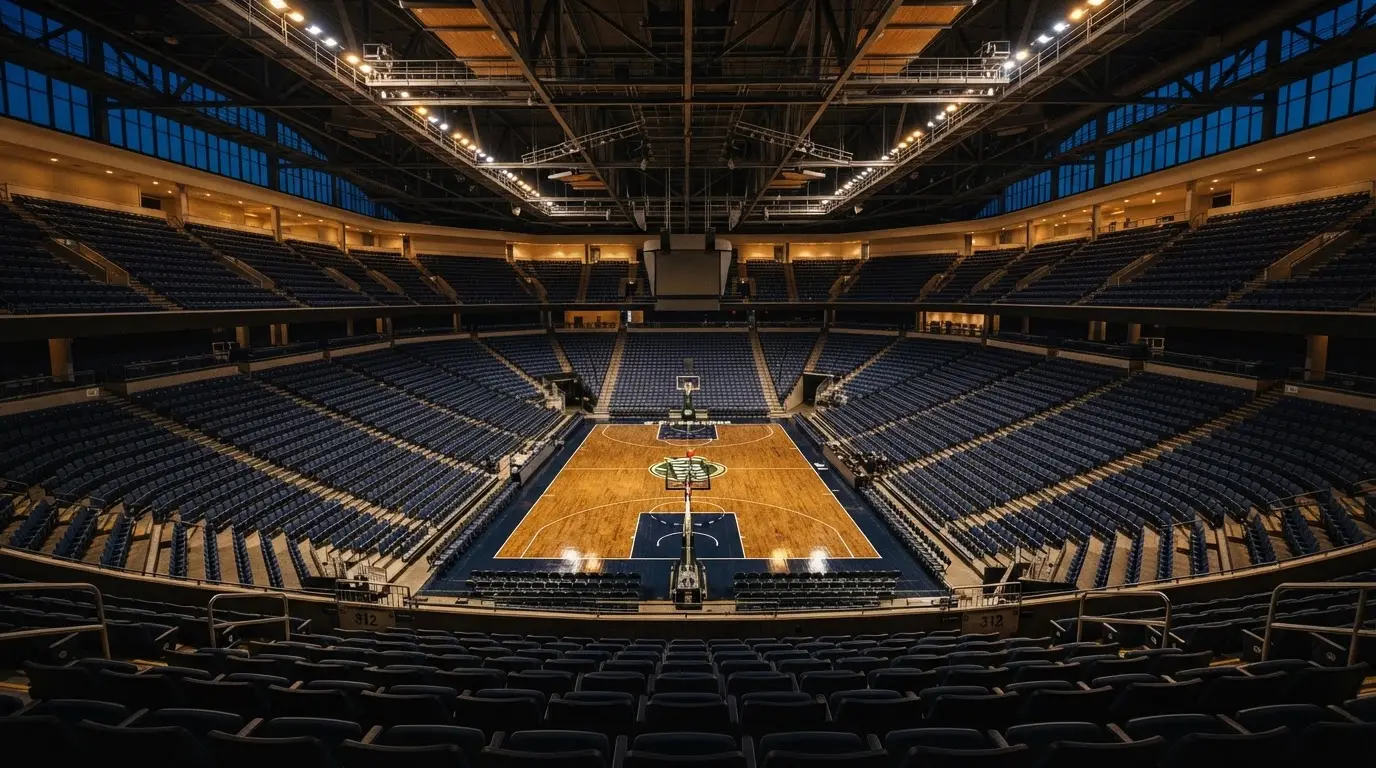
The British bookmaker set treats basketball as a flagship product rather than a side offering, and the in-play coverage reflects that. Markets that settle inside a single quarter, such as the result of the next twelve minutes, the next team to score, or the total points line at a quarter or half boundary, are commonly listed while the game is on. The pace matters because it shrinks the gap between a price being set and a price being stale: a market at the start of the third quarter is a different proposition from the same market with twelve minutes gone. Two structural features follow from that.
The first is suspension. Most operators suspend the spread, the total and the moneyline during a dead ball, a foul sequence or a free throw — the precise windows are stated in each operator’s terms, but the rule of thumb holds across the board. A bet that does not get on at the displayed number is a bet the punter either takes at the next available price or does not place.
The second is cash out. Cash out is the operator’s offer to buy the bet back before the final whistle, at a price the operator sets in real time. One-click, auto and partial cash out are the three usual shapes — one-click settles the whole return at the displayed price; auto lets the bettor set a trigger at which the bet closes itself; partial closes a chosen fraction of the stake. Spreadex, for example, lists all three alongside its fixed-odds and spread lines. The cash-out number is not the same as the live market price: it is the operator’s valuation of the remaining risk, and a price movement against the bettor narrows it, often to zero, well before the end.
The practical question is which bookmaker keeps the most live markets open the most often. The honest answer is that it varies by match: an NBA prime-time game on a Friday night is the deepest in-play window most UK bookmakers run all week, and a Tuesday-night EuroLeague fixture carries a thinner line. The bettor with a strong view on a single quarter will find more quarter-specific markets on a deep NBA game than on a midweek European tie, and that is the shape of the choice before staking.
The momentum question
A run changes the picture faster than a price can follow. That is the trade the in-play market offers: the price lags the scoreboard, sometimes by a possession, often by a quarter. A bettor who reads a run correctly before the operator’s traders do has a window; a bettor who reads it the same way as everyone else pays for the privilege in the margin. The bet is between those two positions, and the difference between them is what the live market costs.

Reading tips, predictions and the strategies that travel
Basketball betting tips are forecasts with a price attached. They are opinions about outcomes the sporting markets then test, and the test is the price the bookmaker is offering, not the confidence of the tipster. A tip that lands at a price shorter than its true chance is a tip that lost its edge before the bet was placed; a tip that lands at a price longer than its true chance is the only one worth taking.
Three things separate a useful tip from noise. The first is the market the tip names — a tip on the result is the cheapest to give and the most exposed to the margin, while a tip on a quarter total, a player prop or a handicap line requires a sharper view. The second is the price the tip records — the same selection at 1.91 and at 1.70 is a different bet, and the price determines whether the bet pays for itself. The third is the bookmaker’s margin on the specific market, which is the cut the operator takes on every unit staked regardless of who wins.
A basketball betting strategy is a plan for which bets to place and at what price. Bankroll management is part of it: a unit size as a small fraction of the betting bank, a stop at the day’s planned loss, and a record of every bet kept honestly so the bankroll can be reviewed. The strategy part — the selection of bets — is a question of where the bettor sees value: the team the market has priced shorter than its chance, the total the line has set wider than the pace suggests, the player prop the betting public has mispriced. None of those edges is automatic, and the margin works against the bettor on every bet. A strategy is the discipline of paying the margin only when the bet is the one worth paying it for.
Predictions travel best when they travel with the price they were placed at. A prediction recorded after the result is a thought experiment; a prediction recorded with the price and the bookmaker it was taken at is a piece of evidence.
The strategy that does not work
Following a tipster without recording the price at which each tip was placed, the bookmaker used and the closing line at kick-off is following a number without seeing what the number cost. The same tip lands at different prices on different books, and the price determines whether the tip paid for the work of finding it.
Bet types, point spreads and the shape of a basketball price
Basketball betting odds are the numbers the bookmaker sets on each market, in fractional form (5/2, 11/10, evens) or decimal form (3.50, 2.10, 2.00), and the conversion a/b to decimal is a ÷ b + 1. The odds carry two facts at once: the implied chance of each outcome and the margin the operator keeps. Reading the first without the second is reading the headline without the small print.
The point spread is the central basketball market. The bookmaker sets a line — Lakers −4.5, Celtics +4.5 — and the bet is on the margin of victory after that line is added. Half-point lines remove the push, so the bet wins or loses on the result. The favourite carries the negative number; the underdog the positive. A spread of −4.5 at 1.91 says the favourite must win by five or more, and the bet pays 1.91 for every pound staked if it does. The same game, eleven minus a half-point in the other direction at the same price, says the underdog must lose by four or fewer.
The moneyline is the straight result. Picking the winner at any price, with no spread applied. The favourite’s price is shorter than evens; the underdog’s is longer. A moneyline bet is the simplest shape the basketball market takes and the one most exposed to the margin, because the favourite–underdog pair at most fixtures concentrates the action on one side.
The total points line is set by the bookmaker as a number close to the combined expected score — somewhere in the 215 to 235 range for most NBA games, lower for some European ties. The bet is whether the actual combined score finishes over or under. The total is a market where the bookmaker’s edge shows clearly, since both sides carry the margin and a line set a point or two away from the true total converts every bet into a small loss on average.
The handicap is the spread reframed for a single bet rather than a matched pair. The underdog is given points at the start; the favourite gives them. The mechanics are the same as the spread.
The bet builder (sometimes called a same-game multi) combines several selections from one match into a single bet whose odds multiply together. A bet on the result, the total and a player prop at 1.80, 1.90 and 2.20 becomes a single bet at 1.80 × 1.90 × 2.20. The catch is that the bookmaker’s margin compounds with each leg, and the same bet taken as three singles costs the bettor less in margin on average. Bet Builder+ on bet365, the same product under a different name on several other books, is the form the product takes on British apps.
The accumulator (the “acca”) is the same multiplication across several matches rather than several selections inside one. A four-fold acca at legs of 1.80, 1.90, 2.10 and 2.20 multiplies the four odds into one price, and the bet wins only if all four legs win. The acca is the bet the public gravitates to because the headline number is long; the arithmetic is that the margin compounds four times and the chance of all four landing is the product of each leg’s chance, which is usually shorter than the headline price suggests.
A worked margin on a two-way market
The margin is what the bookmaker keeps of every unit bet on a market, and the way it shows up is in prices that imply more than 100% of the outcomes between them. Take a two-way market at decimal odds of 1.90 and 1.90 — a hypothetical, not a quoted price, used because the arithmetic is clean. The payout share is 1 ÷ (1/1.90 + 1/1.90), which is 1 ÷ (0.5263 + 0.5263), or 1 ÷ 1.0526, or about 95.0%. The margin is 1 minus the payout share, which is roughly 5.0%. Every pound bet on this market returns, on average, 95 pence; the operator keeps 5 pence. The same calculation on a market where one side is 1.91 and the other 1.91 produces a margin near 4.7%; a market at 1.85 and 1.85 produces a margin of about 8.1%. The shorter the prices, the smaller the margin; the longer the prices, the larger it is.
Two facts follow. First, a margin of 5% on a two-way market is a tight line by the typical of British bookmakers, who sit between roughly 4% and 8% on most basketball markets depending on the bookmaker, the time before tip-off and the shape of the book. Second, the margin is paid on every bet, win or lose, which is why the long-term arithmetic of betting is the arithmetic of finding prices longer than the true chance and avoiding the rest.
Tournaments, fixtures and the basketball calendar
Basketball fixtures follow the leagues that play them. The NBA runs from October to June, with the play-in tournament and the playoffs extending into the summer months. EuroLeague runs from October to May, with the Final Four closing the season. The British Basketball League (BBL) runs from autumn to spring. The NCAA college season runs from November to the Final Four in April. FIBA’s national-team windows sit between the club seasons — the EuroBasket in odd years, the FIBA World Cup every four years, qualifying windows throughout.
Three things follow from the calendar. First, the deepest NBA market runs through the American winter, when British bookmakers put the most traders on the game and the lines tighten; the BBL market thins during the American season and deepens in spring when the domestic play-offs run. Second, a national-team tournament such as the FIBA World Cup produces a temporary expansion in market depth — bookmakers who carried only the NBA and EuroLeague add national-team lines, and the margin on those markets tends to be larger at the start of a tournament than at the end as the books settle. Third, the women’s game — the WNBA in North America, EuroLeague Women, the women’s NCAA tournament — runs on a separate fixture list and carries its own markets at most British books, with the WNBA the deepest.
The tournament question is also a market question. A bettor interested in college basketball finds the deepest lines in March, during the NCAA tournament; a bettor interested in the BBL finds the deepest lines in the play-off window in spring; a bettor interested in the national-team game finds the deepest lines in the weeks after a tournament is announced. The fixtures shape the markets, and the markets shape what is worth betting on.
Why the league matters
A price on the NBA is built by traders pricing a long season of public data, including shot location, pace, injury reports and the daily injury list that American basketball publishes. A price on the BBL is built by traders pricing a shorter league with less public data and more reliance on team news. The depth of the information behind the price is the depth of the price itself, and the difference is visible in the margin and in the time it takes the book to move on news.
The ten licensed British bookmakers, side by side
The comparison below sets the ten featured brands beside each other on the matters that matter most to a basketball bettor: the Gambling Commission account number and licence holder, and the operator’s own terms on the page’s subject. The licence figures come from the Commission’s public register, and the rest is taken from each operator’s UK site or app. A dash means the information was not available for that entry; it does not mean the brand does not offer the feature.
| Brand | Gambling Commission remote licence number and licence holder | What the operator’s own terms state on basketball, live markets and the offer shape |
|---|---|---|
| William Hill | 039225-R-319373-015 — WHG (International) Limited | Best Odds Guaranteed on UK and Irish horse racing from 8 AM on the day, on single and multiple bets, excluding ante-post, tote and pari-mutuel |
| Bet Ahoy | 100094-R-341742-003 — Bet Ahoy Ltd | Welcome offer of a £5 sports bet and a £5 acca for new customers staking £10 |
| Betfair | 039439-R-319330-013 — PPB Counterparty Services Limited | In-play betting, Bet Builder, free live streaming of UK and Irish horse racing and football in the app, and a 90 Minute Payout market |
| Matchbook | 039504-R-319407-024 — Triplebet Limited | Betting exchange where customers bet against each other, with Bet Builder, multiples, in-play betting and live streaming of horse racing and greyhounds |
| Star Sports | 009177-R-104555-019 — Star Racing Limited | Telephone trading line at 08000 521 321 to open accounts, place bets and ask questions, alongside [email protected] |
| Dabble | 065677-R-340363-005 — Dabble Sports UK Ltd | Welcome offer of £10 in free bets on a first £10 stake for new customers, with minimum odds, a 7-day expiry and the stake not returned |
| QuinnBet | 061011-R-335683-004 — QuinnBet (Gibraltar) Limited | Best Odds Guaranteed on UK and Irish horse racing from 10 AM daily on singles, multiples and system bets, capped at £150 per customer per race |
| Spreadex | 008835-R-104580-022 — Spreadex Limited | Combined fixed-odds and spread betting in one app with one-click, auto and partial cash out, Bet Builder and live streaming of horse racing, greyhounds, tennis, NFL and selected football |
| Bar One Racing | 056516-R-332750-007 — Bar-One Racing Limited | Irish independent bookmaker rebranded as BAR 1 Betting, with horse racing sponsorships at Dundalk, Fairyhouse, Navan, The Curragh, Curraheen Park and Cork |
| BetTom | — | Sports welcome offer of 50% back as a free bet of up to £50, with a matching 50% back up to £50 as free slot funds for casino play |
The first column is the brand name as each operator trades under a Commission account; the second is the licence number, the holder and the trading site; the third is the operator’s own published offer or feature line. Several brands sit under one licensee — Ladbrokes and Coral under Entain, Paddy Power and Betfair under Flutter — and the comparison treats each trading brand as it presents itself, since the licence, the offer and the brand on the betting slip are what the punter sees.
A few points the table does not carry. First, the licence category is the same across the ten: remote general betting standard (real events), with Matchbook also holding a remote betting intermediary licence for its exchange operations. The category is the legal envelope the operator works under, and it is the same for the NBA, the BBL and any other basketball match on the site. Second, the welcome offers listed are each operator’s own terms, taken at one moment; bookmakers rotate offers, and the figure the reader sees today may be different from the figure on this page next month. Third, the table does not list margin or in-play depth, because research did not record those figures for most rows, and a column of dashes tells the reader nothing.
The British basketball betting landscape, in plain terms
Basketball betting in Great Britain runs through the same set of operators that take football, horse racing and the rest of the sport: the established high-street names, the online-only challengers, the exchanges, the spread books. The shape of the market is set by the regulator, and the regulator’s offer shapes what the bettor sees at the end of the chain.
A licensed remote operator is one whose name appears on the Gambling Commission’s public register against a remote general betting standard (real events) licence. The Commission is a non-departmental public body sponsored by the Department for Culture, Media and Sport, and it administers the Gambling Act 2005, which covers England, Scotland and Wales. The Act makes it an offence to provide gambling facilities in Great Britain without the licence the Act requires, and the 2014 amendment to the Act brought every remote operator, wherever it is based, inside the regime. A Curaçao, Maltese or Gibraltar licence is not a substitute. The Commission’s public register is the test of who holds one, and every operator named in this guide holds one against the brand and the trading domain.
The market has no statutory ceiling on stakes, no list of permitted sports and no list of permitted markets. What may be bet on is governed by the operator’s licence conditions and codes of practice, the LCCP, and the operator’s own terms. Basketball sits inside that envelope as a real event under the remote general betting standard, the same envelope as football and horse racing. In-play betting on basketball is offered by the licensed books under standard customer-protection duties; it is not “unrestricted” in the legal sense, because every licensed market is restricted by the LCCP. Esports sit inside the same envelope; virtual sports sit inside a separate category. Spread betting on financial markets is regulated by the Financial Conduct Authority, not the Commission; spread betting on sport, where it is offered, is inside General Betting Duty. The point that holds for the bettor is that a Commission licence is the licence that covers the betting in Great Britain, and the register is the test of who holds it.
The numbers that age fast — the welcome offers, the in-play depth, the price of a particular fixture — are not the regulator’s numbers. They are the operator’s, and they move. The numbers that age slowly — the licence account, the licence holder, the licence category, the regulator, the framework — are the ones the page carries forward.
What the licence does for the punter
A Commission licence carries with it the LCCP’s social responsibility code, the GAMSTOP membership that has been a licence condition for online operators since 31 March 2020, the credit-card ban that has applied since 14 April 2020 and the cap on bonus wagering that took effect on 19 January 2026. The cap is the one that has changed the offer shape on the page: bonuses may carry no more than a 10x wagering requirement, and a £10 bonus at 50x turnover is now outside the law; under the cap no more than £100 of qualifying wagering is required to clear a £10 bonus. The cap does not cover free bets with no wagering condition, and the question of whether it does is not settled in this guide.
The gambling site is also where the customer protection benefits are. The bet is not for illegal play; it is for licensed play with a defined route of redress. The Commission’s complaints route, the approved dispute-resolution bodies and the operator’s safer-gambling tools are the safety net the licence installs. An unlicensed operator installs none of it, and the cost of that absence is the loss of the net.
Safer gambling and the tools a licensed book has to offer
Gambling harm is the reason the licence carries obligations, and the obligations are the reason a licensed bookmaker is a different proposition from one that is not. Three tools sit at the centre of the safer-gambling offer on a GB-licensed site.
The first is GAMSTOP. GAMSTOP is the national multi-operator self-exclusion scheme, free to use, that closes a customer’s online account with every participating operator for a chosen period. The minimum period is six months; the longest is five years with auto-renewal. The exclusion extends online and on app; betting shops use a separate service. A bettor who has signed up to GAMSTOP cannot open a new account with a GB-licensed online operator for the period they have chosen, which is the practical force the scheme has.
The second is the financial vulnerability check. Since 30 August 2024, a licensed remote bookmaker must run a public-record check on a customer whose deposits minus withdrawals exceed £150 in a rolling 30-day period; the threshold for the check itself was brought down to that level from £500 on 28 February 2025. The check looks at public records such as bankruptcy registers and county court judgments, not at income. The “financial risk assessment” or “affordability check” of the press is a staged plan announced on 7 July 2026 with no start date, and the rule to take from this guide is that the check is the public-record one at the £150 threshold, not a credit reference check and not an income check.
The third is the deposit limit. Operators must offer a gross deposit limit on a fixed time frame under RTS 12; the first phase applied from 31 October 2025, and a second phase was postponed to 30 September 2026. The state has not set a deposit ceiling; the limit is the customer’s choice within the operator’s controls. A bettor who wants to bound the spend on basketball betting sets the limit and the operator enforces it.
The help lines sit behind those tools. GamCare runs the National Gambling Helpline; GambleAware publishes information and funds treatment; the NHS runs gambling clinics in parts of the country; Gamblers Anonymous runs peer-support meetings. Fitzwilliam Sports, for one, links its customers directly to GambleAware, GAMSTOP and Gamblers Anonymous from the safer-gambling pages of its site. The links are not the substance — the substance is that a licensed book carries them as a condition of the licence, and a customer who needs them has a route to them.
The check that matters
The financial vulnerability check at the £150 threshold is the one the punter is most likely to meet first. It is a public-record check, not an income check, and it is run by the operator against the data the operator holds. The check is a sign that the bet has crossed a line the regulator has drawn, and the response from the operator is the response the operator’s licence conditions require.
Crypto, anonymity and the point of identity verification
A licensed remote bookmaker in Great Britain verifies a customer’s name, address and date of birth before the first deposit and before the first bet — including with a free bet or bonus. The rule has applied since 7 May 2019, and it is the rule that closes the door on anonymous play at a licensed site. Cryptocurrency deposits do not change the rule, because the rule is on identity, not on the payment method.
The question of whether a GB-licensed operator accepts cryptocurrency at all is not settled in this guide. No published British rule requires a named account for payment methods, no state-maintained list of permitted methods exists, and no rule either permits or forbids cryptocurrency deposits at licensed operators. What applies regardless is the identity rule and the source-of-funds questions that arise at higher spend under the money-laundering rules. A bettor paying in bitcoin is a bettor who still has to verify the name and the address, and the rules are still the rules.
The honest framing is two-sided. The licensed book gives the bettor the LCCP’s customer-protection duties, the GAMSTOP cover and the bonus cap, but it also requires identity verification before the first deposit. The unlicensed book asks neither — and installs none of the protection. The choice is not between safe and unsafe; the licensed book is the one with the safety net, and the verification is the price of admission to it. The unlicensed book is the one without the net, and the bet is between those two propositions.
The verification cost
Identity verification before the first deposit is the trade a punter makes for the licensed market. The trade is not optional at a GB-licensed book, and the bettor who wants the cover has to accept the check.
Bonuses, free bets and the offer behind the headline
A basketball welcome offer is the headline the operator puts on the page, and the headline is the first thing to read carefully. A “£10 free bet” is a token of value, not a £10 credit; the stake is not paid back with a win, so a £10 free bet at 3.00 returns £20 in profit, not £30. A “£10 bonus” is a credit that requires turnover, and turnover is the small print.
The promotion rules in force since 19 January 2026 cap wagering requirements at 10x, which means a £10 bonus needs at most £100 of qualifying bets to clear. The cap covers the wagering requirement, not the money value of the bonus and not the free bets with no wagering condition; both questions are not settled in this guide. A mixed-product promotion — an offer that requires gambling on two or more product types, for example “bet on basketball to get free spins” — is banned, and a punter who sees such an offer on a GB-licensed site is seeing an offer the licence does not allow.
The terms that matter on a free bet are three. The first is the minimum odds: a free bet usable only at odds of 1.50 or longer is a free bet the operator has steered toward the longer shots, where the margin is largest. The second is the expiry: a free bet that expires in seven days is a free bet the punter is meant to use this weekend, and the value of the bet is the time it takes to clear at the prices the operator offers. The third is whether the stake is returned: most free bets do not return it, and the difference between a free bet at 3.00 and the same selection paid in cash is £10 of stake the punter did not put down.
The terms that matter on a deposit bonus are the wagering multiple, the minimum odds on each qualifying bet, the eligible markets, the expiry and the cap on the bonus. A casino bonus and a sports bonus are different products with different rules, and the matched promotion that BetTom runs — 50% back as a free bet of up to £50 on sports and a matching 50% back up to £50 as free slot funds on casino — is two offers, not one, and the turnover on each is the turnover on its product.
The best-odds-guaranteed concession on William Hill and QuinnBet is a separate beast. It is not a bonus; it is a rule that pays out the price of a horse at the starting price if the starting price is longer than the price the punter took. It applies to UK and Irish racing, it applies from a set hour on the day of the race, it applies to single and multiple bets, and it is capped at £150 per customer per race at QuinnBet. It is not a basketball concession. A punter looking for value on the NBA should not confuse the two offers, and a punter looking for value on the racing should not confuse the basketball offer with the racing one.
The arithmetic of a free bet
A free bet whose stake is not returned is worth the free-bet amount times (odds minus one) divided by the odds, multiplied by the payout share of the market. A £10 free bet at odds of 3.00 on a market with a 95% payout share is worth £10 × 2.00 ÷ 3.00 × 0.95, or about £6.33. That is the average value of the free bet across many uses; a single use lands on one side of that average and the other. The headline of “£10 free bet” is the amount, not the value, and the difference is the stake the punter did not pay down.
Mobile apps, in-app live and the touchscreen version of the book
A basketball betting app is the same book as the desktop site, recast for a handset. The recasting is more than cosmetic: the live market is where the handset earns its place, because the live market is the one the punter wants when the game is on the television and the betting slip is on the sofa.
Three features separate a good basketball app from a mediocre one. The first is in-play coverage: the depth of live markets, the speed at which the price refreshes and the suspension windows during dead balls. The second is cash out: one-click, auto and partial cash out, with a price that reflects the remaining risk rather than the margin the operator would like to charge. The third is the bet builder: same-game multiples built from markets within a single match, with the odds compounding into a single return. Spreadex carries all three on one app; bet365 carries Bet Builder+ alongside its Super Boosts and Winnings Boosts; Betfair carries in-play, Bet Builder and live streaming in the app.
The general terms of the apps are the operator’s general terms. The age check, the identity verification, the GAMSTOP cover and the safer-gambling tools are the same on the app as on the site, because the regulator and the licence are the same. The credit-card ban applies on the app as on the site, and the deposit-limit controls apply on the app as on the site. The only difference is the surface.
Why the app matters on game night
The live market on a Tuesday evening NBA game is the test the apps are set against. A book with a thin in-play book and a slow price refresh on the app is a book the punter leaves open on the desktop and checks after the game. A book with deep markets and a fast refresh is the one that earns the home-screen slot, and that is the choice the app comparison turns on.
The shape of the choice
The page has walked the choices that exist for a British basketball bettor, from the live markets that open at the whistle to the licensed bookmaker that quotes the deepest line, from the welcome offer to the safer-gambling tool. The shape that emerges is a market with a regulator, a register and a set of obligations the licence installs. The bettor who wants the safety net takes the verification the licence requires and picks from the licensed set; the bettor who wants the deeper NBA line picks the book with the deepest in-play book on game night; the bettor who wants the racing concession takes the racing book, not the basketball book.
The margin is the constant. Every price carries it; every accumulator compounds it; every bet builder compounds it more. The bettor’s edge is the discipline of paying the margin only when the price is longer than the chance.
FAQ
How does a bettor bet on basketball?
Pick a licensed bookmaker from the Commission’s register, open an account and verify name, address and date of birth before depositing. Choose a market — the moneyline, the spread, the total, a handicap, a player prop or a bet builder across several selections from one match. Enter the stake, confirm the bet at the displayed odds and wait for the result. The book settles the bet at the price taken, or returns the stake if the bet loses.
How does a bettor bet on basketball at a British bookmaker?
The mechanics are the same as anywhere else, but the regulatory frame is the Gambling Act 2005 and the Gambling Commission. Every operator serving customers in Great Britain holds a remote general betting standard licence, and the register is the test. Credit cards are banned for gambling; debit cards, bank transfers and most e-wallets are not. Identity is verified before the first deposit.
How does a bettor win at basketball betting?
A bettor wins at basketball betting by taking prices longer than the true chance of the outcome, paying the margin only on bets where the price compensates for it, and managing a bankroll so a run of variance does not end the staking. No system removes the margin; no tipster beats it on every bet. The edge is in the selection of bets and the discipline of staking.
How can it be checked that a bookmaker holds a Gambling Commission licence?
The Commission’s public register lists every licensed operator by business name, trading name, domain or account number. The licence number, the holder and the category are on the register; the trading domain is on the register; the brand on the betting slip should match. A licence is current or it has lapsed; a domain against a lapsed licence is a domain the register will not confirm.
How is the return on a bet worked out from the stake and the odds?
The return is stake multiplied by the decimal odds, and the net profit is stake multiplied by (odds minus one). A £10 bet at decimal odds of 2.50 returns £25 and pays £15 in profit. The same bet at fractional odds of 6/4 (or 3/2) is a decimal price of 2.50, and the return is the same. A combination bet multiplies the odds of the legs together; a £10 bet on two legs at 2.00 and 3.00 is a £10 bet at 6.00, returning £60 if both legs win.
What is the bookmaker’s margin and how can it be seen in the odds?
The margin is what the bookmaker keeps of every unit staked on a market, and it shows up in prices that imply more than 100% of the outcomes between them. For a two-way market, divide one by the sum of the reciprocals of each price; the result is the payout share, and one minus the payout share is the margin. A market at 1.90 and 1.90 has a payout share near 95% and a margin near 5%. The shorter the prices, the smaller the margin; the longer the prices, the larger it is.
US & other team sports – Free bets
Content created by the «Free bets» team
