
New betting apps UK 2026: what each one is really like to install and use
 Available in US
Current as of 27 October 2026; Gambling Commission public register and operator app-store listings used as the reference for every licence and feature claim below.
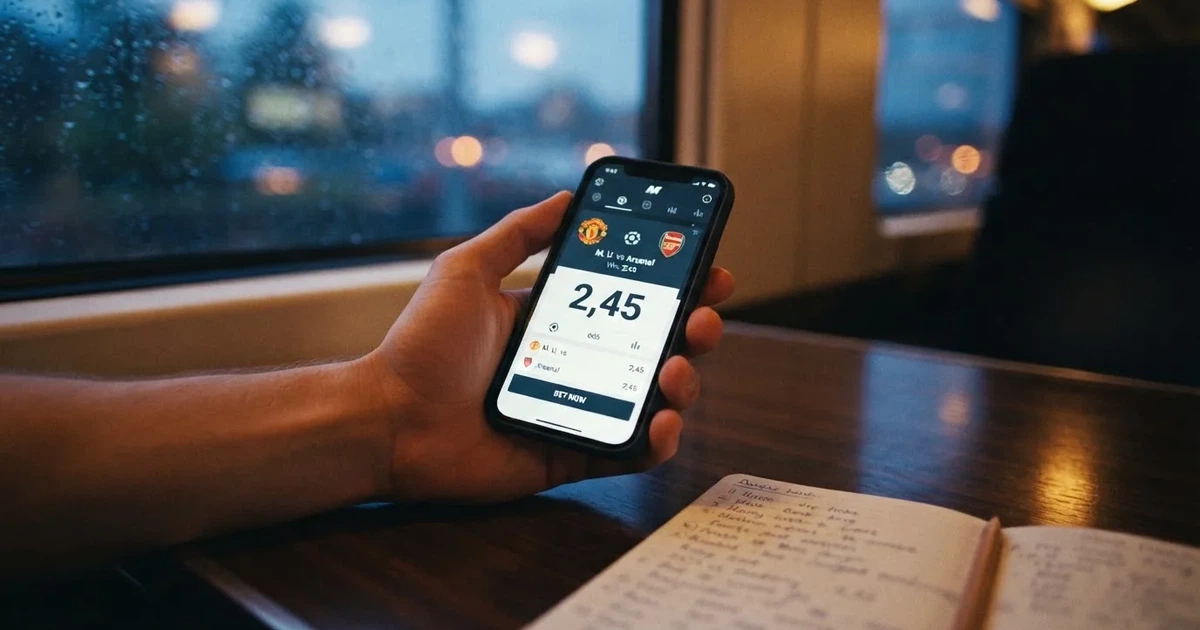
The app on your phone is not a different product from the bookmaker’s website. It is the same product, with the same odds, the same markets, the same safer-gambling tools and the same Gambling Commission licence. What changes is the surface: a touch-first layout, push notifications, a betting slip that builds itself as you tap, a Face ID or fingerprint login, and the steady drip of “boosted odds” alerts that a desktop browser does not push at you. The question this page sets out to answer is which of the apps now available in the UK are worth the space on a home screen, and what each one costs the punter who installs it.
Ten brands sit at the centre of that question below. They are all listed on the Gambling Commission’s public register as remote betting licensees for Great Britain. None of them is “the only” licensed app, and a place in a ranking is not a licence. The comparison reads them in the order the Commission lists them under their respective account numbers, with a verdict on each one at the end of its entry.
The shortlist at a glance
The ten brands below are the ones the public register and the GB App Store listings together confirm as remote-licensed bookmakers with a functioning iPhone app. The table is a check, not a recommendation: it shows who holds what licence and what each operator’s own app-store listing says about the feature the page is about. The verdicts further down take a view.

| Brand | Gambling Commission remote licence number and licence holder | What the operator’s own terms state on the key’s subject |
|---|---|---|
| Matchbook | 039504-R-319407-024; Triplebet Limited | App combines sportsbook with casino (slots, live casino, jackpots, table games); 18+ with GambleAware information; betting exchange with back and lay markets |
| Fitzdares | 000400-R-103839-030; Fitzdares Limited | Cash out, accumulators, Lucky 15s, antepost and specials on horse racing, football, tennis, rugby, cricket, golf and American football; in-play live odds inside the app |
| Betway | 039372-R-319367-029; Betway Limited | Live in-play, live streaming, Bet Builder, full and partial Cash Out, Betway Boosts, eSports markets; coverage of more than 30 sports |
| Midnite | 101839-R-342850-001; Midnite Limited | Weekly rewards clubs, rapid payouts, in-play events, acca builder, popular accas, price boosts with maximum-stake limits; published by Dribble Media Limited |
| BetTom | 064959-R-339314-003; Bet Tom Limited | Multilingual sportsbook (English, Croatian, Dutch, French, German, Turkish); 17+ App Store age rating; published by Bet Tom Ltd |
| 888sport | 039028-R-319297-014; 888 UK Limited | Push notifications for promotions; responsible-gambling resources listed inside the app; 18+ with safer-gambling controls |
| Tote | 054779-R-331321-008; TDCO Limited | Placepot, Jackpot, Scoop6 and Quadpot bets; World Pool and international pools (French PMU, US, Hong Kong); pool-betting operator |
| Smarkets | 039173-R-319366-011; Smarkets (Malta) Limited | Betting exchange with two-factor authentication, live charts, order-book view, quick trade-out, 24/7 live chat support |
| London Bet | 066162-R-340278-004; Thistle Bet Limited | Sports markets (football, tennis, horse racing, greyhounds, darts, golf, cricket, NFL, NBA, MLB, snooker) with Pragmatic Play casino slots; live in-play |
| Ladbrokes | 054743-R-330863-014; LC International Limited | Major operator with both sportsbook and betting intermediary; published by Entain Operations Limited; 4.66/5 from 101,255 GB App Store ratings |
The licence numbers are the figures to copy into the Commission’s search page if you want to confirm them yourself — see the section on how a Gambling Commission licence is checked. The third column reproduces what each operator’s own listing claims; it is not an audit of those features.
How this list was put together
A “new” betting app in the UK is one that, as of the snapshot taken for this page, holds a current remote betting licence from the Gambling Commission and operates a live iPhone app on the GB App Store. The Commission does not keep a separate “newness” register, so “new” here means current: the licence is active, the app is published, and the brand has not been parked.
The list deliberately mixes three flavours. Two of the ten are betting exchanges (Matchbook and Smarkets), where the back-and-lay model gives a different return profile from a fixed-odds book. One is a pool-betting operator (Tote) and lives by Placepot, Scoop6 and the World Pool rather than a margin on individual prices. The remaining seven are conventional fixed-odds sportsbooks, and they are what most readers installing an app will be looking at.
There is no statutory “newness” date and there is no public list of “newly licensed” operators. Two brands here are recent enough that the public register shows their account numbers in the 64,000 to 102,000 range; others are old names in newer clothes. The Commission’s register is searchable by business name, trading name, domain or account number and is the only place where a licence is confirmed; if a brand is not on the register, it is not covered by what follows in the legality section. The register lists many more brands than the ten this page can review, and the rest of the licensed market is open to a reader who wants to look further.
What a licensed UK betting app has to do
The Gambling Act 2005 and the Licence Conditions and Codes of Practice (LCCP) that the Commission publishes alongside it set the floor. A licensed app cannot be anonymous, cannot accept credit cards, cannot market to under-25s on the front of a poster, and cannot run a bonus whose wagering requirement exceeds ten times the bonus value. These are not “best practice” lines; they are licence conditions, and a breach is a regulatory matter, not a marketing complaint.
Age and identity come first. The minimum age is 18, and a remote operator has to verify name, address and date of birth before a customer can deposit or place a bet. A free bet or a no-deposit offer does not get a customer around the check; the verification sits in front of the wallet, not in front of the withdrawal. A reader who installs a licensed app and tries to register will hit this in the first five minutes, and that friction is the test of the licence working.
Payments are next. Credit cards have been banned for gambling in Great Britain since 14 April 2020, and that ban covers credit-card-funded payments through an e-wallet as well. Debit cards, bank transfers and bank-based instant payments are not covered by that ban. There is no state list of “approved” payment methods, no rule on cryptocurrency deposits at licensed operators, and no British named-account rule: each operator’s terms set the methods, and the methods a reader sees are the operator’s choices rather than a Commission whitelist.
The bonus rules changed in January 2026. Any wagering requirement on a bonus is now capped at ten times the bonus value, and mixed-product promotions — offers that require the customer to gamble on more than one product type, for example “bet on football to get free spins” — are banned. Free bets with no wagering condition, and any cap on the money value of a bonus, are not in the published rules, so what is on offer is a matter of each operator’s terms and the Commission’s enforcement of them.
The player pays no tax on betting winnings in Great Britain. That is general information, not tax advice; a professional gambler is a different conversation with HMRC. General Betting Duty is the operator’s tax on gross profits, currently 15%, with a higher remote rate scheduled from 1 April 2027 that applies to most online bets while pool betting, retail betting and bets on UK horse racing stay at 15%. Whether an operator passes duty on through shorter odds is not established and is not the reader’s problem to solve; what the reader sees is a price, and the price has whatever margin the operator has set on top of duty.
Safer gambling inside a licensed app
GAMSTOP is the national multi-operator online self-exclusion scheme and a mandatory licence condition for every online operator; a punter who signs up to GAMSTOP cannot open a new account at any GB-licensed bookmaker until the exclusion ends. Periods are six months, one year, five years, or five years with auto-renewal, and the minimum period is followed by a further seven years unless the customer asks GAMSTOP to remove the registration. GAMSTOP covers online sites and apps; betting shops use a separate service, and the app of a licensed operator is bound by the same registration as its website. Spreadex’s spread-betting arm, regulated by the FCA, runs outside the Commission’s gambling licence, and that is the rare case where a registered GAMSTOP exclusion does not reach every product a brand sells.
Deposit limits are mandatory under the LCCP and the Remote Technical Standards, and the operator has to offer a gross deposit limit on a fixed time frame. The first phase of new rules has applied since 31 October 2025, and a second phase was postponed to 30 September 2026; whether the second phase is live at the moment a punter is reading this is not something the public register confirms. The headline number to remember is that there is no state-set deposit or loss ceiling for betting: the limits a punter can set are the punter’s own choice, and an operator cannot lower them on the punter’s behalf.
A financial vulnerability check applies to remote betting when a customer’s deposits minus withdrawals exceed £150 in a rolling 30 days. It is a public-record check (bankruptcy, county court judgments and the like), not an income check and not a credit reference check. A separate tier of “financial risk assessments” has been announced in stages, with no start date, and a punter should not be asked for payslips at the £150 line.
Help is built into the safer-gambling pages of every licensed app. GamCare runs the National Gambling Helpline. GambleAware funds treatment and research. The NHS runs gambling clinics in several cities. Gamblers Anonymous runs peer-support meetings. None of these is an operator, and none of them is paid by an operator to direct a customer back; the page they sit on is independent of the betting slip.
The reader’s check on all of this is simple: the Commission’s public register confirms a licence; GAMSTOP covers the app; the safer-gambling page inside the app is the place to set limits. The product around those controls is what the rest of this page judges.
Bonuses, free bets and the price the punter pays
Every brand in this list will offer a “welcome offer”, a “free bet” or a “boosted odds” headline inside the first few minutes of opening the app. The headline is the part to be sceptical of, and the terms behind it are the part to read.
A “free bet” is a token, not a credit. The stake is usually not paid back with a win, so a £10 free bet at odds of 4/1 returns £40 in profit and £0 of stake, against a £10 cash bet at the same odds which returns £50. That difference is the first cost of the offer and the easiest one to miss. A “boosted odds” headline looks like a gift: a 5/1 shot becomes a 10/1 shot for new customers only. The price of the boost is the wagering requirement, the minimum odds, the expiry, and the cap on what the boost pays out.
The 10x wagering cap from January 2026 is the single biggest change to how a UK welcome offer reads. A £10 bonus used to carry a 50x wagering requirement, meaning £500 of qualifying bets before any winnings cleared as cash. Under the cap, the same £10 bonus can carry at most a £100 turnover requirement. That is a real reduction, and a punter who has not installed a new app in the last year will be reading smaller numbers than they remember.
Mixed-product promotions are out. An offer that asked a punter to bet on football in order to unlock free spins on a slot is not allowed at a licensed operator, because the bet and the free spins sit in two different product types. A sportsbook bonus that has to be turned over on sports bets only is in; a sportsbook bonus that has to be turned over on sports, casino and bingo is out.
A cap on the money value of a bonus is not in the published rules. A “100% bonus” up to £1,000 with a 10x turnover is still possible, and the turnover cost of clearing it is £10,000 of qualifying bets. The marketing word is “100%”. The arithmetic on the back is “£10,000”. Read the back.
The minimum price for a qualifying bet is the next thing to look for. Most welcome offers require a first bet at “Evens (2.0) or greater”, meaning a £10 bet at 1.8 does not qualify. The minimum price shrinks the set of bets the punter can place to clear the offer, and the punter who does not check the minimum price will, more than once, place a bet that does not count. The minimum stake and the minimum deposit follow the same rule: the offer does not trigger on a £5 deposit, or on a £5 bet, and the punter who tests the floor is the punter who finds out the floor is higher than they thought.
The expiry is the last thing. Free bets, free spins and bonus credits expire, and a punter who lets them lapse loses the offer in full. Seven days is common, thirty days is common, and the exact figure is in the terms.
The mobile app layer
A new betting app is, before anything else, a piece of software. It loads markets, takes a bet, shows a price, settles a result. The things a punter notices on day one are the loading speed, the betting slip, the login, the live odds and the in-play product.
Loading speed is the least glamorous metric and the one that decides whether a punter uses the app or falls back to a browser. The ten apps here all use the same general pattern: pre-rendered markets with a websocket feed for price changes. What differs is how the app handles a price change while a bet is being placed. The GB App Store ratings are the best public signal: a 4.66 from 101,255 ratings (Ladbrokes) reads differently from a 4.0 from a few dozen. The page is not recommending on the basis of star count, but the difference is the difference between an app that punts the slip back to the slip page on a price change and one that accepts the new price and confirms the bet.
The betting slip is where most apps quietly differentiate. A slip that builds itself from a Bet Builder, an acca and a single in one place is easier to use than three separate slips. A slip that shows the potential return in pounds, in decimal odds and in fractional odds at the same time is friendlier to a punter who thinks in fractions and a friend who thinks in decimals. The Smarkets exchange is the only one in the list that shows an order-book view; everyone else shows a price, an “odds” button, a stake field and a green confirm.
Login is biometrics where the device supports it. Face ID and Touch ID are table stakes: Betway, bet365, NetBet and Fafabet all support one or the other, and a reader who installs any of these on a modern iPhone will land on a Face ID prompt within two taps. The smaller brands in this list vary, and the GB App Store listing is the cleanest place to confirm.
Live odds and the in-play product are where a mobile app has to be at its best, because that is the use case that needs the app: a punter is on a bus, the match has kicked off, the price is moving. A live product with a 2-3 second price update, a green pulse on the price change and a one-tap cash-out is the bar. The brands that publish “in-play” as a category in the App Store listing are the ones that have built the bar; the brands that bury in-play inside the main menu are the ones the punter will not come back to.
The notification layer is the underrated one. A push notification for a price boost is welcome at 11am on a Saturday and a pest at 11pm on a Wednesday. The licensed operators have to honour the LCCP on marketing and the ASA’s CAP Code on promotions, and a punter who turns off notifications in the app settings will not be in breach of anything; the punter who keeps them on and ignores the in-between alerts is the one who finds the live product useful.
The mobile fundamentals that hold across the ten apps
Before the ten reviews, the things that hold across the whole set: every one of these apps is published by a GB-licensed operator and the Commission holds the operator to the LCCP. Every one offers a safer-gambling page inside the app with deposit limits, time-outs and self-exclusion, and every one is a member of GAMSTOP. Every one is rated 17+ in the GB App Store and every one will run an age-and-identity check before a first bet. The differences between them are at the edges: depth of market, depth of live product, the bonus wording, the exchange model, the speed of payout.

Two apps in the set are exchanges and they look different on the inside. Matchbook and Smarkets show an order book, take back and lay bets, and pay out in the same way an investment account pays out, less a commission. The punter on an exchange is the price-maker, not the price-taker, and the result is a market with a thinner margin and a different slip layout. The Tote is a pool-betting operator and the slip is a list of pool bets, not a fixed-odds price. The other seven are conventional fixed-odds bookmakers.
The Commission’s register shows that some of the ten brands sit under a parent group. Ladbrokes is operated by LC International Limited, part of the Entain group. That is not a problem, but it is a fact: a complaint about one of the group’s apps is a complaint to the same parent.
The ten apps, in the order the Commission lists them
The ten reviews below go in the order the Gambling Commission’s register names them by account number: Matchbook, Fitzdares, Betway, Midnite, BetTom, 888sport, Tote, Smarkets, London Bet and Ladbrokes. Each one is a licensed operator, and the licence number, licence holder and the operator’s own claim on the key’s subject are in the table at the top of the page. What follows is the verdict.
Matchbook
Matchbook is a betting exchange with a sportsbook inside the same app, and the Commission lists it as both a remote general betting operator and a remote betting intermediary. The exchange side offers back and lay markets, with a commission on net winnings rather than a margin on price. The sportsbook side is a smaller product, but it is in the app, which is what a punter who only wants one install cares about. The casino games inside the app (slots, live casino, jackpots, table games) are an aside and a reason the app is rated 17+ in the GB App Store. The verdict: Matchbook suits a punter who is comfortable setting their own price and reading an order book, and the value is in the exchange; the sportsbook is a reasonable backup but not the main event.
Fitzdares
Fitzdares is a sportsbook with a horse-racing heritage and a Commission licence that names it for real-event fixed-odds betting. The app covers horse racing, football, tennis, rugby, cricket, golf and American football, with antepost markets, specials, accumulators and Lucky 15s, and live in-play odds. The cash-out feature is built in, and the price-boost surface sits inside the racing product more than the football product. The verdict: Fitzdares fits a racing-led punter who wants an app that does horse racing first, with the other sports present but not central.
Betway
Betway is one of the bigger generalist sportsbooks on the list, with a Commission licence for real-event betting and an app that covers more than 30 sports. The product has live in-play, live streaming, Bet Builder, full and partial Cash Out, Betway Boosts and eSports markets. The app is the workhorse: it loads quickly, it offers a biometrics login, and the live product is well developed. The verdict: Betway is a sensible default for a punter who wants one app that covers most sports and most bet types, and the Boosts and live streaming are the reason to pick it over a smaller sportsbook.
Midnite
Midnite is a Commission-licensed sportsbook with a younger product and a published app from Dribble Media Limited. The in-play, acca builder, popular accas and price boosts are the surface, and the price boosts come with maximum-stake limits that are stated in the listing. The app offers a weekly rewards club and rapid payouts, and the live product is the centre of gravity. The verdict: Midnite suits a punter who bets in-running and wants a fresh, app-first product; the stake caps on price boosts are the constraint to read before locking in.
BetTom
BetTom is a multilingual sportsbook published by Bet Tom Ltd and licensed by the Commission for real-event betting. The app is published in English, Croatian, Dutch, French, German and Turkish, and the GB App Store rate is 17+. The product is a conventional sportsbook, and the multilingual surface is the standout. The verdict: BetTom fits a multilingual punter or a punter who wants a smaller sportsbook without the noise of the bigger brands; the depth of market is the place to check before installing.
888sport
888sport is a long-established sportsbook under 888 UK Limited, with a Commission licence for real-event betting. The app sends push notifications for promotions and lists responsible-gambling resources, and the safer-gambling surface sits in the account area. The product is a generalist sportsbook with the depth and the limits of a brand of its size. The verdict: 888sport is a competent all-rounder, and a punter who values a longer-established brand with a structured safer-gambling section will be comfortable here.
Tote
Tote is the pool-betting operator, with a Commission licence for real-event betting and a long history on British racecourses. The app offers Placepot, Jackpot, Scoop6 and Quadpot bets, plus the World Pool and international pools (French PMU, US, Hong Kong). The slip is a list of pool bets, not a fixed-odds price, and the returns depend on the pool size. The verdict: Tote is the right install for a punter who bets into pools rather than against a margin, and the World Pool product is the reason to keep it; the punter who wants a 1X2 price will be in the wrong place.
Smarkets
Smarkets is a betting exchange with a Commission licence as a remote betting intermediary. The app offers two-factor authentication, live charts, an order-book view, a quick trade-out option and 24/7 live chat support. The product is exchange-only; there is no sportsbook fallback. The verdict: Smarkets is the cleanest exchange app in the set, and a punter who trades prices and reads order flow will find the depth they need; the absence of a sportsbook is the cost.
London Bet
London Bet is a sportsbook with a casino attached, licensed by the Commission for real-event betting and published by Thistle Bet Limited. The app covers football, tennis, horse racing, greyhounds, darts, golf, cricket, NFL, NBA, MLB and snooker, with live in-play and Pragmatic Play casino slots. The verdict: London Bet fits a punter who wants a sportsbook and a slot product in one install, and the sports coverage is the centre of the offer; the casino is an add-on.
Ladbrokes
Ladbrokes is the highest-rated app in the set on the GB App Store measure (4.66 from 101,255 ratings), operated by LC International Limited under a Commission licence for real-event betting and as a remote betting intermediary. The product is a generalist sportsbook plus an exchange, and the brand sits under the Entain group. The verdict: Ladbrokes is the safe install for a punter who wants scale, depth of market and a polished app, and the rating on the App Store is the public signal that the product holds up under heavy use.
How a Gambling Commission licence is checked
Every claim about a licence on this page is a claim a reader can check on the Commission’s public register, which is searchable by business name, trading name, domain or account number. The page names the account number for each brand above, and the steps below are the same for every one.
Open the Commission’s register and enter the account number in the search field. The result page shows the licence holder’s legal name, the licence number, the trading names the licence covers, the licence status, the licence activities (remote general betting standard, real events; remote betting intermediary; remote pool betting; and so on) and the dates the licence was issued and is in force to. The status line is the one to read: “Active” means the licence is in force; “Surrendered” or “Lapsed” means the brand is trading on a different licence or not at all.
If the search does not return a result, the brand is not licensed. A GB-licensed brand may use a .com rather than a .co.uk domain, and the domain proves nothing; the Commission’s register proves the licence.
A reader installing an app and registering an account will see the Commission’s licence number on the operator’s safer-gambling page or in the terms of use. The reader can copy the number into the Commission’s register and check the status, the licence holder and the activities. The check takes a minute, and it is the only check that matters.
The register is the only test of who holds a GB licence. It is not a recommendation, and a brand on the register is not endorsed by the Commission; it is permitted to operate. The Commission does not publish a “newly licensed” list, and there is no separate register of “new” apps. “New” is what the operator’s launch date and the Commission’s account-number range suggest, and that is the working definition this page uses.
What the numbers on a betting slip actually mean
The slip shows a price, a stake and a return. The price is in decimal form (6.00) or fractional form (5/1), and the conversion from fraction a/b to decimal is a ÷ b + 1: 5/1 becomes 6.00, 11/4 becomes 3.75, evens becomes 2.00. A stake of £10 at decimal odds 6.00 returns £60 if the bet wins, made up of the £10 stake and £50 profit. The same stake at fractional odds 5/1 returns £60, made up of the £10 stake and £50 profit; the slip shows the same number in two notations, and the punter who reads fractions is reading the same number as the punter who reads decimals.
A combination bet multiplies the prices of the legs. Two selections at 2.00 and 3.00, multiplied, become a single price of 6.00; a £10 stake returns £60 if both win. Three selections at 2.00, 3.00 and 4.00 become a price of 24.00; a £10 stake returns £240 if all three win. The price of the accumulator is the product of the legs, and the product is the long tail of the marketing word “acca”. One leg failing ends the bet, which is why the marketing word carries the caveat the marketing does not print.
The margin is the slice of every pound bet that the bookmaker keeps on average. A market with a 5% margin returns, in the long run, 95p to the punter for every £1 staked across all outcomes; a market with a 10% margin returns 90p. The price the punter sees is set against that margin, and two operators on the same event will set different prices with different margins. The punter who compares prices on a single event is comparing margins, even if neither app says so.
The bookmaker’s margin sits inside every price, and that fact is the reason the bookmaker is in business. The punter who understands the margin does not stop betting; the punter understands why a 6.00 shot is not a 6.00 shot, and why a price boost on a 6.00 shot is a discount on a price that already had a margin in it.
When the price is missing
Some of the brands in this list do not publish a margin in their app-store listing, and the Commission’s register does not carry a margin figure. The price on a specific event is the only number a punter can compare across apps on a given day, and the price is the only number that actually decides the return. A comparison that prints no prices does not compare; a comparison that prints a margin without naming the event, the market and the date is using the number as a decoration. The cleanest way to read a margin is to open the same market on two apps on the same day, on the same event, and read the difference.
That is the page’s working rule on prices: the price on a specific event is what matters, the price on a general “1X2 market” without a date is not, and the price a reader sees inside the app is the price a reader should compare.
What an unlicensed app does not give a punter
A bookmaker that is not on the Commission’s public register is not a Commission licensee. A punter who installs an unlicensed app gets none of the controls named in the safer-gambling section: no GAMSTOP, no Commission complaints route, no approved dispute-resolution body, no British consumer redress if funds are withheld, and no obligation on the operator to honour the 10x bonus cap or the £150 vulnerability check. The Commission treats providing unlicensed facilities to customers in Great Britain as an offence under section 33 of the Gambling Act 2005; the offence is aimed at the operator, and the customer’s position is the loss of protections rather than a criminal charge. A punter who has signed up to GAMSTOP cannot, in practice, get past the verification of an unlicensed app without using false identity details, which the LCCP and the money-laundering rules aim to stop at the licensed end.
The Commission’s enforcement is disruption rather than blocking. Cease-and-desist notices, search-engine referrals, work with registrars, hosts and payment providers, and the court-order DNS blocking powers the Commission has been given or is about to receive: that is the tool set. A punter who reads “blocking is in operation” is reading a press release; the actual state is a moving set of enforcement actions.
A GB licence is a minimum, not a maximum. A licensed operator has to verify a customer’s identity before a first bet, which is friction; an unlicensed operator does not, and the friction is the licence working. A reader who treats the verification as a cost of using a licensed app is reading the licence the way it is meant to be read.
What to install first
A punter installing one app wants the largest licensed sportsbook in the set: Betway or Ladbrokes, with live streaming, Bet Builder, in-play, price boosts, biometrics login and a heavier app rating. A punter installing two apps wants the second slot to be the product that the first does not cover: an exchange (Smarkets or Matchbook) for back and lay, or the Tote for pool betting. A punter installing a third wants a younger, app-first sportsbook (Midnite) or a racing-led sportsbook (Fitzdares).
A punter who reads this page and decides to install none of the ten is reading the right way. The licensed market is wider than ten brands, the Commission register is the directory, and the app of a licensed bookmaker is the same licence as the website. The next time a bonus headline catches the eye, the right move is to open the terms, read the wagering requirement (capped at 10x), the minimum price (often Evens or 2.0), the expiry (often seven days), the stake return rule (free bets usually do not return the stake) and the eligible markets (the product the offer is restricted to). After that, the install is a real choice.
Frequently asked questions
What should a punter look for in a new sports betting app?
A current Gambling Commission licence, GAMSTOP membership, the safer-gambling tools named in the safer-gambling section, the markets the punter actually bets on, a live product that updates prices in seconds, a betting slip that takes a price change without losing the bet, and a login that uses Face ID or fingerprint. A welcome offer is not on the list; the offer is the marketing, and the licence is the product.
How can a Gambling Commission licence be checked?
Open the Commission’s public register and search by account number, business name, trading name or domain. The result shows the licence holder, the licence activities, the status (Active, Surrendered, Lapsed) and the dates in force. If the result is empty, the brand is not licensed. The licence is the only test that counts.
How is the return on a bet worked out from the stake and the odds?
Return = stake × decimal odds. At decimal odds 6.00 and a £10 stake, the return is £60, made up of the £10 stake and £50 profit. A combination bet multiplies the odds of the legs: two selections at 2.00 and 3.00 produce a combined price of 6.00, and a £10 stake returns £60 if both win.
What is the bookmaker’s margin and how does it show in the odds?
The margin is the slice of every pound staked that the bookmaker keeps on average across all outcomes of a market. A market with a 5% margin returns 95p to the punter for every £1 bet across the outcomes, in the long run. The margin sits inside every price, and a price that looks generous is generous against the margin of the next bookmaker, not against the absence of one.
How do fractional odds such as 5/1 convert to decimal odds such as 6.00?
The conversion is a ÷ b + 1. Fractional odds 5/1 become 6.00 in decimal form, 11/4 become 3.75, and evens (1/1) become 2.00. The decimal price multiplied by the stake gives the return if the bet wins, including the stake.
Payments & apps – Free bets
Content created by the «Free bets» team
