
Bitcoin Betting Sites in the UK: What Changes When You Pay in BTC
 Available in US
Betting with Bitcoin in Great Britain is not a loophole. The licence is the licence, the identity check is the identity check, and the credit-card ban applies whatever coin pays for the stake. The interesting question is therefore narrower than the search term suggests: of the brands that hold a Gambling Commission remote licence, which ones accept Bitcoin at the cashier, and what does paying in BTC actually change for the punter behind the account? That is the page below.
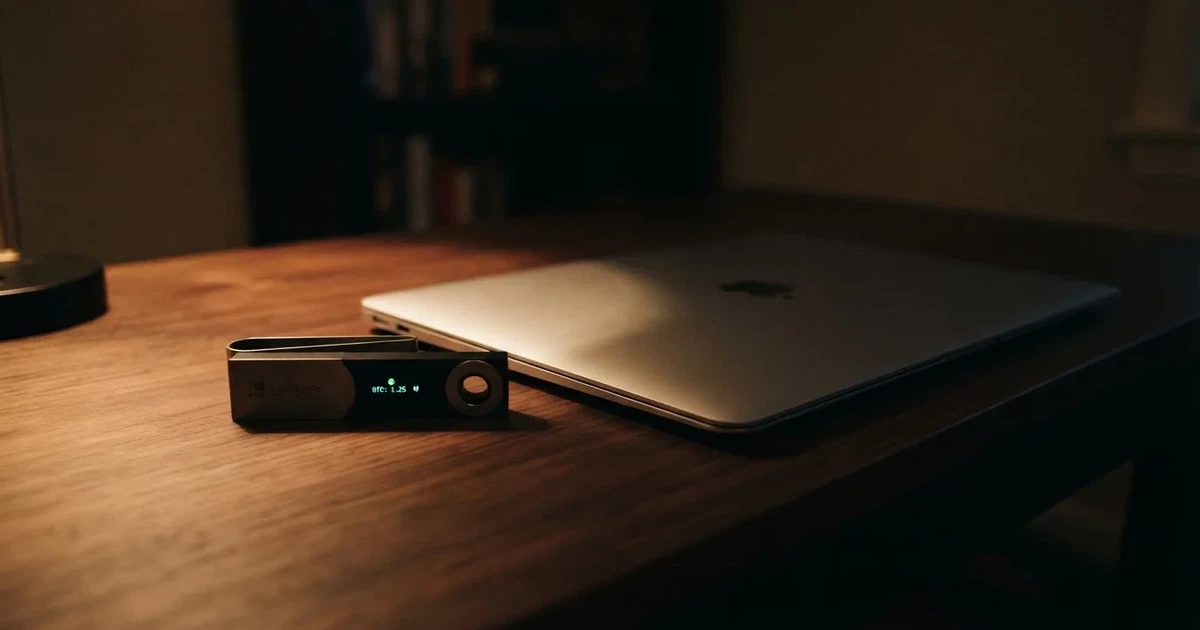
Data current as of 27 October 2026, checked against the Gambling Commission’s public register of remote operating licences.
The Hard Limits Every British Bettor Faces
The frame around a UK bet has very little to do with which currency the deposit arrives in. Three rules sit over every licensed site, and a fourth shapes what the cashier will accept.

The first is the identity check itself. Since 7 May 2019, a Gambling Commission licence condition has required operators to verify name, address and date of birth before a customer can deposit or place a bet, including with a free bet or bonus. “Anonymous betting with Bitcoin” is therefore not a property of a GB-licensed bookmaker — the licence forces the verification, and Bitcoin funded or not, the cashier will not let a stake on without a verified identity. Operators that advertise anonymous play sit outside this regime.
The second is the self-exclusion register. GAMSTOP has been a mandatory licence condition for online operators since 31 March 2020, with exclusion periods of six months, one year, five years, or five years with auto-renewal. After the minimum period the exclusion stays in place for a further seven years unless the customer asks GAMSTOP to remove it. Self-exclusion is a one-account, one-tap action; the next time that customer opens an account at any GB-licensed online bookmaker, the new operator is obliged to refuse it.
The third is the spend-triggered vulnerability check. From 30 August 2024, LCCP condition 3.4.4 has applied to licensed remote betting when a customer’s deposits minus withdrawals exceed £150 in a rolling 30 days — the £150 threshold is itself live since 28 February 2025. The check is a public-record search (bankruptcy, county court judgments), not a payslip review and not a credit-reference file. Higher-touch financial risk assessments have been announced in a staged plan published on the Commission’s site on 7 July 2026, with no start date attached — describe them as announced, not as in force.
The fourth is the credit-card ban. Since 14 April 2020, LCCP condition 6.1.2 has banned credit cards for gambling in Great Britain, including credit-card-funded payments through an e-wallet. Debit cards and bank-based payments are not covered. Buying Bitcoin with a credit card is a separate question that the bank’s own terms settle, not the Commission’s.
These four rules are not the operator’s house style. They are the framework every reviewed brand on this page runs inside, and a Bitcoin deposit does not move any of them.
For help, the National Gambling Helpline (run by GamCare), the NHS gambling-clinic network, GambleAware and Gamblers Anonymous all take calls from anyone in Great Britain, regardless of the operator they bet with. A single number covers them: 0808 8020 133.
What Bitcoin Actually Changes at the Cashier
Nothing about the licence changes when the deposit is in BTC. What changes is the plumbing: the deposit goes from the punter’s wallet to the exchange that converts it, then to the bookmaker’s bank in pounds, and the bettor takes the price of that conversion on top of the price the bookmaker takes on the odds. Two layers of margin, neither one a Gambling Commission matter.

The asset itself has a fixed technical profile that the operator’s site does not alter. A new Bitcoin block is added to the chain roughly every ten minutes on average, validated through a proof-of-work consensus mechanism that uses SHA-256 hashing. The total supply is capped at 21 million coins, with full issuance expected around the year 2140, and the mining reward halves every 210,000 blocks — a mechanism known as halving — having started at 50 BTC per block. Bitcoin’s genesis block was mined on 3 January 2009 by its pseudonymous creator Satoshi Nakamoto, who had published the Bitcoin white paper on 31 October 2008. The creator’s real-world identity has never been verified.
On top of the protocol sits a regulator that does touch British bettors. Since 10 January 2020 the Financial Conduct Authority has been the anti-money-laundering supervisor of UK cryptoasset businesses, including Bitcoin exchanges, under Regulation 8L and Regulation 9 of the Money Laundering Regulations. Cryptoasset exchange providers and custodian wallet providers operating in the UK, including those dealing in Bitcoin, must register with the FCA before starting business. As of the latest published figures, the FCA has received 417 cryptoasset registration applications since January 2020, of which 68 (17 per cent of determined applications) have been registered and 263 (67 per cent) withdrawn. A bookmaker that takes Bitcoin is therefore dealing with a payment source that is itself regulated on the exchange side, but the Commission’s own treatment of crypto-funded play is sharper still: the Commission classes cryptoassets, including Bitcoin, as a high-risk payment method and expects licensed gambling operators to treat crypto-funded play as a high-risk indicator requiring enhanced customer due diligence.
On the tax side, HMRC treats cryptoassets such as Bitcoin held by individuals as subject to Capital Gains Tax on disposal — selling, swapping, spending or gifting them all count. Cryptoassets received as non-cash employment income or as mining and staking rewards are subject to Income Tax and National Insurance. The bet’s outcome is a separate question and, as covered later, the player pays no tax on betting winnings in Great Britain; what the bet was funded with is the part that interacts with HMRC.
A practical reading: paying in Bitcoin at a GB-licensed bookmaker is paying in pounds, with extra steps, an extra exchange-rate spread, and a paper trail that the operator will ask about under the money-laundering rules. The bet itself is settled in pounds. Where the bookmaker’s terms actually accept Bitcoin, this is the shape of the transaction.
The Shortlist: Seven GB-Licensed Sites, Compared
The seven brands below all hold an active Gambling Commission remote licence for general betting on real events, verified against the Commission’s public register. They are not the only licensed brands in Britain — far from it — and being on this list is not a recommendation. It is a comparison of how each of these seven handles the questions a Bitcoin-searching punter tends to ask first: what the licence actually says, what the operator’s own published terms accept at the cashier, and where the brand’s distinctive feature sits. The brands are ordered the way the spec routes them, not by any score.
The columns in the table below are: brand, Gambling Commission remote licence number and licence holder as the register shows it, and what the operator’s own published terms state on the payment-methods question. Where the operator’s published terms do not name Bitcoin, the cell says so plainly — the absence is the answer, and the reader can take it that way.
| Brand | Gambling Commission licence | Operator’s terms on payments |
|---|---|---|
| QuinnBet | Remote 061011-R-335683-004 (account 61011); QuinnBet (Gibraltar) Limited | Free-bet stake limits and odds floors apply to any market; payment-method list published on the site |
| Spreadex | Remote 008835-R-104580-022 (account 8835); Spreadex Limited | FCA-regulated for spread betting; Commission-regulated for fixed-odds; spread losses can exceed deposit |
| Geoff Banks | Remote 054095-R-330366-010 (account 54095); GB Sports Advisors Limited | App published by GB Sports Advisors Ltd; live in-play and ante-post |
| DAZN Bet | Remote 048756-R-327274-019 (account 48756); DZBT Limited | Deposits from £5 by debit card, Apple Pay, Paysafecard, Trustly and Skrill; from £20 by PayPal; no processing fees |
| Fitzdares | Remote 000400-R-103839-030 (account 400); Fitzdares Limited | Apple Pay, Mastercard and Visa accepted; Visa withdrawals usually same-day, Mastercard up to 48 hours |
| LiveScore Bet | Remote 056859-R-332720-005 (account 56859); LiveScore Betting and Gaming (Gibraltar) Limited | Debit cards (Visa and Mastercard), Apple Pay, PayPal, Pay by Bank (Open Banking) and Revolut Pay |
| Kwiff | Remote 044448-R-323408-017 (account 44448); Eaton Gate Gaming Limited | UK Gambling Commission licensed; trademark of Spryme Ltd |
Each of these operators runs inside the framework laid out above. The differences between them are not about whether the framework applies; it does. The differences are about which features the operator chooses to lead with, which payment rails the cashier has actually wired up, and what kind of punter the site was built for.
QuinnBet
QuinnBet’s free-bet terms are unusually clear about what the bet can be placed on: free bets are valid for seven days from credit and can be used on any market at odds of 1/2 (1.50) or greater, with maximum odds of 50/1; straight accumulators are allowed, but the multiple-leg combination bets — Trixies, Patents and Yankees — are not. That is a tighter set of constraints than most British sites set on free bets, and a punter who treats the free bet as a casual stake will find the seven-day window and the 1.50 minimum price working together to limit the menu.
The licence is held by QuinnBet (Gibraltar) Limited under remote general betting standard (real events). The Commission’s register shows account 61011, with the licence number cited at the top of the table. The site is QuinnBet’s own; the licence is the Commission’s.
For a punter who backs singles and short accumulators at short-to-mid prices and reads the bonus small print, QuinnBet’s structure is honest: the terms say what they do, and the cashier settles accordingly. For a punter who builds combination bets across four or more selections, the same terms take the offer off the table before a stake is placed.
Spreadex
Spreadex sits across two regulators, which makes it a different shape of brand from the others on this list. The FCA regulates the spread-betting side, where contracts are leveraged and losses can exceed the original deposit; the Gambling Commission regulates the fixed-odds sportsbook under remote general betting standard (real events). The two products share a brand but not a regulator, and the consumer-protection rules that apply to each are different.
For a punter shopping for a Bitcoin deposit rail, Spreadex’s relevance is that its payment-method set is set by two compliance regimes at once — a tighter fit than the single-regulator brands. The terms page on Spreadex names the rails it accepts for each product line; the spread side and the fixed-odds side do not necessarily share the same set.
For a punter who already understands the spread-betting product and wants both rails under one account, Spreadex is unusual; it is the only brand on this list with a non-gambling regulator in the picture, and the FCA’s own conduct rules apply alongside the Commission’s. For a punter who only wants the fixed-odds sportsbook, the same dual-regulator status does not add anything and the simpler Commission-only brands are easier to read.
Geoff Banks
Geoff Banks’ app is published by GB Sports Advisors Ltd, which is also the licence holder for the Geoff Banks brand. The app offers live in-play prices and ante-post prices on future events — both are Commission-regulated markets under the same licence — and the cashier runs inside the standard GB identity-verification flow.
For a punter who wants an app-first product with ante-post depth, the Geoff Banks site reads as a smaller-catalogue, focused-app proposition rather than a wide-mesh generalist. The brand is narrow on purpose, and the published terms and app description reflect that.
The interesting question for a Bitcoin-searching punter is whether the cashier takes BTC. The app description and the site’s own terms are what settle that; the licence is irrelevant to the answer. The register entry on account 54095 confirms the licence; the payment-method list lives on the site itself.
DAZN Bet
DAZN Bet’s deposit policy is one of the clearest published on a Commission-licensed site: deposits start at £5 by debit card, Apple Pay, Paysafecard, Trustly and Skrill, and at £20 by PayPal, with no processing fees from the operator. The minimums differ by rail, and the no-fee line is explicit. The licence holder is DZBT Limited under account 48756.
For a punter shopping by minimum deposit, the £5 floor on five rails is the friendliest on this list. For a punter who specifically wants to deposit in Bitcoin, the cashier list as published does not include a crypto rail, and the absence is the answer — DAZN Bet does not currently accept BTC at the cashier, and a punter who wants Bitcoin at the deposit step needs to look elsewhere. The licence still applies; the payment-method list just stops at the named five (plus PayPal).
The risk check at DAZN Bet runs the standard Commission flow, including the £150 rolling-30-days vulnerability check and the GAMSTOP cross-reference. A punter who is happy with the named rails and the published minimums has a clean deposit path; a punter who needs BTC will not find one here.
Fitzdares
Fitzdares accepts Apple Pay, Mastercard and Visa. Visa withdrawals are usually same-day, while Mastercard withdrawals can take up to 48 hours. The asymmetry is unusual in the GB market — most sites’ card withdrawals settle on the same rail regardless of brand — and a punter who chooses the rail for its speed rather than its acceptance will pick Visa. The licence holder is Fitzdares Limited under account 400, one of the lower account numbers on the Commission’s register and a long-standing remote licence.
For a punter shopping by withdrawal speed and brand familiarity, Fitzdares’ card-first approach is straightforward. For a punter shopping specifically for a Bitcoin deposit, the published rails do not include crypto, and the answer is the same as DAZN Bet’s: the cashier does not currently accept BTC, and the reader can take the absence at face value.
LiveScore Bet
LiveScore Bet’s published payment list covers debit cards (Visa and Mastercard), Apple Pay, PayPal, Pay by Bank (Open Banking) and Revolut Pay. Five rails, each on a different kind of provider, and the inclusion of Pay by Bank is the stand-out feature on a Commission-licensed site — Open Banking rails tend to be the cleanest path for the source-of-funds questions the Commission’s high-risk-indicator guidance raises on larger deposits. The licence holder is LiveScore Betting and Gaming (Gibraltar) Limited under account 56859.
For a punter who wants the cashier’s payment list to mirror the way money actually moves in their bank account, LiveScore Bet is the brand on this list most likely to match: bank transfer via Open Banking, debit card, an e-wallet and a fintech app all on the same cashier page. For a punter who wants to deposit in BTC, the published rails do not include a crypto option, and the answer is the same as the two brands before it.
Kwiff
Kwiff is licensed by the UK Gambling Commission under remote general betting standard (real events) with licence number 044448-R-323408-017, and the operator describes itself as a trademark of Spryme Ltd. The brand’s signature feature is “supercharged” odds — randomly boosted prices on selected markets — and the app carries a 17+ age rating in the GB App Store, in line with the Commission’s minimum-age rules.
For a punter who values a price boost over a deep market catalogue, Kwiff’s proposition is distinctive on this list; the other six brands lean on catalogue depth or payment breadth rather than price-boost mechanics. For a punter shopping for a Bitcoin deposit, the published payment-method list is what settles the question; the licence is the Commission’s regardless.
The Cost Frame Around Every Bet
What the punter pays is not the headline price. It is the price net of the bookmaker’s margin, plus the currency-conversion spread when the deposit is in Bitcoin and the bet settles in pounds. Three lines are worth separating.
The bookmaker’s margin is built into every price on the site. On a three-outcome market like a 1X2 soccer line, the margin is the slice of every pound staked that the bookmaker keeps on average across all outcomes; on a two-outcome market the same idea, smaller denominator. The Commission does not cap margins and does not publish them; the operator’s site does not always publish them either. What the punter can do is shop across brands for the same fixture and look at the spread — a tighter spread on the same selections means a lower margin. This is a property of the odds, not of the licence.
The currency-conversion spread is the cost of turning Bitcoin into pounds at the deposit and back into Bitcoin at the withdrawal. The exchange sets this, not the bookmaker. A punter who buys Bitcoin with a debit card, deposits it, places a bet and withdraws the winnings back to Bitcoin will pay the exchange’s spread twice — once on the way in, once on the way out — and the bookmaker does not see or charge that spread. Where the bookmaker’s cashier accepts Bitcoin directly, the operator’s own conversion terms sit between those two exchange spreads and add a third layer; published details vary.
The bookmaker’s own bonus terms are the third line, and the Commission has put a hard cap on the wagering-requirement side. From 19 January 2026, wagering requirements on bonuses are capped at 10x — a £10 bonus at 50x wagering needs £500 of qualifying bets, and under the cap no more than £100 of qualifying bets can be required. Mixed-product promotions — offers that require gambling on two or more product types such as betting, casino, bingo and lottery, with “bet on football to get free spins” as the canonical example — are banned. Whether the cap applies to free bets with no wagering condition, and whether there is any cap on the money value of a bonus, are not established and the page does not fill the gap.
A free bet whose stake is not paid back is worth the free-bet amount multiplied by (odds minus 1) divided by the odds, then multiplied by the market’s payout share. The headline is that a free bet is not a refund: at odds of 5.00, a £10 free bet that wins pays out £50 in winnings with the £10 stake not returned; at odds of 2.00, the same £10 free bet pays out £10. The “free” in free bet is not a return of stake. The wagering-requirement cap above applies to bonuses that need to be turned over; a free bet with no wagering condition sits outside that cap by the Commission’s own framing.
What the Licence Buys, and What It Costs
A Gambling Commission licence is a property of the brand, not of the punter. It buys the punter a specific set of protections and obliges the punter to a specific set of checks. Both halves are worth pricing in.
What the licence buys: GAMSTOP self-exclusion across every GB-licensed online operator, with periods of six months, one year, five years, or five years with auto-renewal; a Commission complaints route if the punter cannot resolve a dispute with the operator directly; the named ADR bodies the operator is bound to register with; the 10x cap on bonus wagering requirements; the £150 rolling-30-days financial vulnerability check (a public-record check, not an income check); the safer-gambling controls the LCCP social-responsibility code requires; consumer-redress routes if funds are withheld.
What the licence costs: identity verification before the first deposit or stake (since 7 May 2019), including with a free bet or bonus; source-of-funds questions at higher spend under the money-laundering rules; the credit-card ban at the cashier; bonus terms that are themselves regulated and read tighter than they used to; a cashier whose payment list may not include the rail the punter wanted.
A crypto sportsbook without a Gambling Commission licence has none of the protections above. No GAMSTOP coverage, no Commission complaints route, no approved dispute-resolution body, no British consumer redress if funds are withheld, and not bound by the 10x bonus cap or the £150 vulnerability check. The Commission does not run a “this brand is safe” register and does not publicly name every unlicensed operator; the test is the licence itself. Anyone considering an unlicensed brand trades those protections for whatever feature the unlicensed brand is offering — and the typical feature is anonymous play, which the licensed regime does not allow.
What May and May Not Be Bet On
No statutory list of permitted bets or markets exists in Great Britain. An operator holds a licence for a category — remote general betting standard (real events), remote general betting standard (virtual events), remote general betting limited, remote pool betting, or remote betting intermediary (the licence for betting exchanges) — and offers markets under its own rules and the LCCP.
In-play betting is offered by GB bookmakers and the controls are the operator’s licence conditions and customer-protection duties; it is not “unrestricted” as a legal conclusion. Esports are treated like any other event; virtual events are a separate licence category. Bets on politics, TV shows and novelty markets are offered by GB bookmakers and no statutory prohibition was found. Betting exchanges run under a betting-intermediary licence and the rates and rules specific to exchanges are stated only from each exchange’s terms. Spread betting that is not a financial product is inside General Betting Duty.
Off-course pool betting on horse or dog racing is a separate licence and duty. No statutory cap on stakes in sports betting was found; operators set their own maximum stakes and may restrict customers. The reader who hits a low maximum-stake notice on the betting slip has hit an operator policy, not a Commission rule.
Tax, and What the Bettor Actually Sees
The player pays no tax on betting winnings in Great Britain. General Betting Duty is the operator’s tax on gross profits, currently 15%; from 1 April 2027 a new remote betting rate of 25 per cent applies within it, while remote bets on UK horse racing, bets on self-service betting terminals in licensed premises, pool betting and in-person betting stay at 15 per cent. Until 1 April 2027 the remote rate stays at 15 per cent; whether operators pass duty on through odds is not established, and the player is not charged duty.
Spread betting has its own rates: 3 per cent financial, 10 per cent other. The Commission’s statutory levy is a separate charge, not a tax. A professional gambler should ask HMRC or an adviser; the line above is general information, not tax advice.
What the bettor sees is the price the operator publishes, settled into the punter’s withdrawable balance in pounds. The deposit method does not change the tax treatment of the winnings. Where it changes the tax treatment is on the funding side: Bitcoin is an asset, and selling, swapping, spending or gifting it is a disposal for Capital Gains Tax purposes; receiving Bitcoin as non-cash employment income or as mining and staking rewards is subject to Income Tax and National Insurance. A punter who buys Bitcoin, deposits it, bets, and then withdraws in pounds has crystallised a CGT event on the Bitcoin side at the deposit; a punter who withdraws back into Bitcoin has crystallised a second event at the withdrawal. The bet itself, settled in pounds, is not a taxable event for the punter.
Advertising, and What the Bonus Headline Hides
Advertising is not licensed by the Commission. It runs through the CAP Code (non-broadcast) and the BCAP Code (broadcast), enforced by the ASA, alongside the LCCP marketing conditions. The 10x bonus cap and the mixed-product ban above are the operational bite.
CAP Code section 16 requires marketing to be socially responsible, not of strong appeal to under-18s, and not to feature anyone who is or seems to be under 25 gambling or playing a significant role, with an exception for marketing placed where a bet can be made directly. That rule concerns who may appear in the advertisement, not who may bet — the minimum age for betting remains 18.
The “whistle-to-whistle” rule is an industry code, not law: since 1 August 2019 betting advertisements are not shown on TV from five minutes before a live sporting event to five minutes after it, before the 9 pm watershed, with horse and greyhound racing excluded. The Premier League clubs’ withdrawal of gambling sponsorship from the front of matchday shirts (from the 2026/27 season, with sleeves and hoardings remaining) is voluntary, not law. Operators are responsible for marketing by their affiliates.
What this means for a punter reading a bonus headline: “risk-free” usually means a free bet whose stake is not paid back; “100 per cent bonus” usually means a bonus with a wagering requirement the Commission’s 10x cap now bounds; “best odds guaranteed” is a horse-racing promise the operator makes on a price the SP beats; “acca insurance” refunds a stake as a free bet if one leg lets the punter down, not cash. The headline word is rarely the offer’s whole story, and the small print is where the offer becomes itself.
Checking the Licence
A bookmaker’s status as GB-licensed is verifiable. The Commission’s public register can be searched by business name, trading name, domain or account number, and the register is the whole test of whether a brand holds a licence. The brand’s own marketing is not the test — a brand that says “licensed” can still be wrong about which licence, or about whether it is current.
A licensed operator uses .com as well as .co.uk, so the domain proves nothing. Several brands can run under one licensee — Ladbrokes and Coral, Paddy Power and Betfair — and a single licence can cover more than one trading name. Never call a single brand “the only” licensed one.
The financial-conduct regulator is the FCA, not the Commission; a brand that offers financial spread betting has an FCA authorisation for that product and a Commission licence for the fixed-odds sportsbook, and the two regulators’ protections are different. A punter who bets only on the fixed-odds side is dealing with the Commission regardless of what the spread-betting side does.
The Punter Who Is Best Served by This Page
This page is for the reader who has already decided to bet with a GB-licensed bookmaker and is now asking which one. That decision makes the most of the protections above — GAMSTOP, the Commission’s complaints route, the 10x bonus cap, the £150 vulnerability check — and accepts the cost: identity verification before the first deposit, source-of-funds questions at higher spend, and a cashier whose published rails do not always include the one the punter wanted.
This page is not for the reader looking for anonymous play. Anonymous betting with Bitcoin is not a property of a GB-licensed bookmaker; the identity check is a licence condition, and the cashier enforces it. Operators that advertise anonymous play sit outside the regime, and the protections above do not travel with the punter to those sites.
This page is also not for the reader looking for a tipster’s view. No bookmaker’s odds predict the outcome of a fixture, and the spread of prices across brands is the bookmakers’ disagreement about probabilities, not a forecast. A reader who acts on a “lock” loses real money on the page’s word, and the page does not give the word.
The honest frame for the comparison above: seven GB-licensed brands, seven different shapes, one regulatory regime, and the cost of a Bitcoin deposit sitting on top of the cost of every bet the punter places. The arithmetic of a bet is the operator’s margin plus the exchange’s spread plus the bookmaker’s bonus terms; the arithmetic of a Bitcoin deposit is the same three lines plus the asset’s own price movement between deposit and withdrawal. None of those lines is hidden in a small-print clause no one reads.
Frequently Asked Questions
Can I deposit with Bitcoin at a UK-licensed site?
Yes, but you are depositing into a pound-denominated account. While some operators accept Bitcoin, they convert the funds into pounds at the prevailing exchange rate at the point of deposit. You are essentially betting in pounds, and you are subject to the same betting rules, licence conditions, and identity verification requirements as any other British bettor.
Is it possible to bet anonymously with Bitcoin in the UK?
No. All online bookmakers licensed by the Gambling Commission in Great Britain must verify the name, address, and date of birth of every customer before they can deposit or place a bet. This rule applies regardless of the deposit method used, so anonymous play is not possible at any licensed site.
Does the Gambling Commission regulate Bitcoin directly?
No, the Gambling Commission regulates the gambling operator, not the cryptocurrency itself. The Financial Conduct Authority supervises crypto exchanges for anti-money-laundering compliance. Licensed bookmakers are required to treat crypto-funded play as a high-risk payment method, which necessitates enhanced customer due diligence and source-of-funds checks on larger deposits or spending amounts.
What is the advantage of using Bitcoin for betting?
For most bettors, Bitcoin offers no legal or financial advantage over standard payment methods like debit cards or bank transfers. It is simply a different way to move funds. You still face the same identity checks, betting limits, and operator policies. Furthermore, using Bitcoin may involve additional exchange-rate spreads and fees.
Are my Bitcoin winnings subject to tax?
The bet outcome itself is not taxable for the player in Great Britain; you pay no tax on betting winnings. However, Bitcoin is treated as an asset by HMRC. If you dispose of Bitcoin (by selling, swapping, or spending it) to fund your bet, you may crystallise a Capital Gains Tax event on the cryptocurrency side.
Payments & apps – Free bets
Content created by the «Free bets» team
