
What is a Heinz bet and how does it pay out?
 Available in US
Current as of 27 October 2026 · verified against the Gambling Commission’s public register
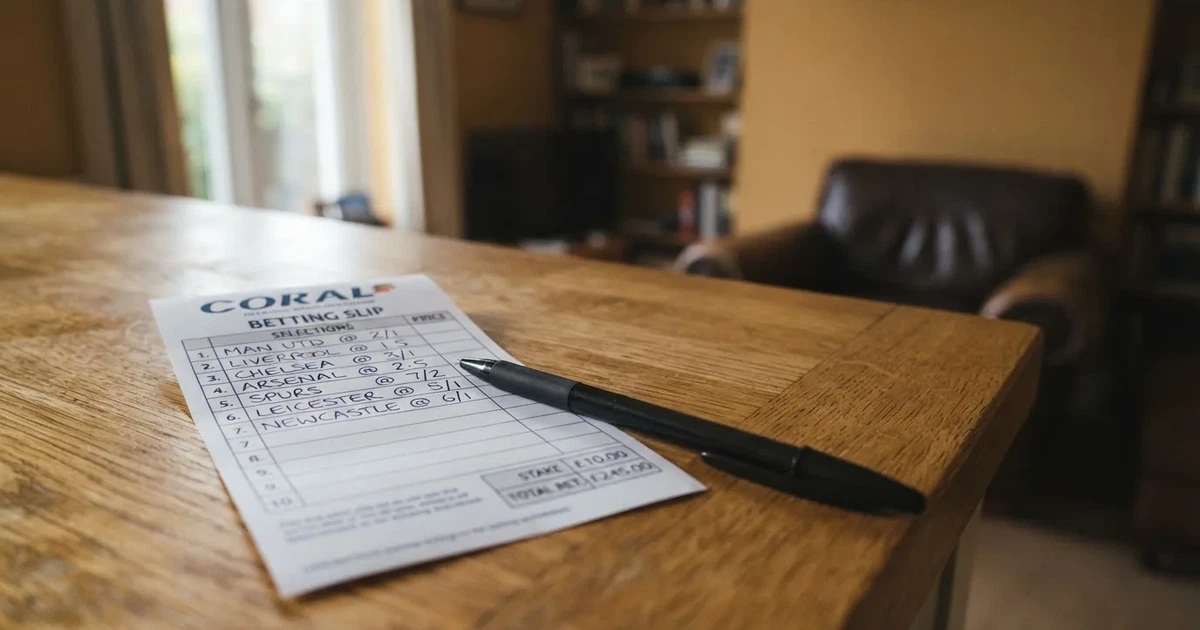
A Heinz looks intimidating because the line count climbs quickly, but the structure is mechanical. Pick six selections, and the bet breaks itself into every possible combination of those picks taken two, three, four, five and six at a time. That gives 15 doubles, 20 trebles, 15 four-folds, 6 five-folds and one six-fold: 57 bets in all, every one of them a multiple, none of them a single. A £1 unit stake costs £57. A £2 unit stake costs £114, and a winning line at combined odds of 12.00 pays £24 back from that line, of which the £2 stake is the bettor’s money and the £22 is profit.
The cost is the part that surprises first-timers, not the maths. The reward side is the same as any other multiple: every leg has to win for the line to pay, and as the number of legs rises so does the price but so does the chance the line collapses. The practical effect of a Heinz is to spread stake across the structure so a couple of winners here and there can return something even when the six-fold, the real prize, fails. That spreading is the reason a Heinz exists, and it is the reason the bettor who likes picking lots of short-priced favourites finds it useful: a chain of 1.40 shots compounds into a long-priced six-fold, and a few of them landing returns money on a run of lines long before the final accumulator needs every leg.
The next sections go deeper on what the bet is, how it compares to similar full-cover bets, what the maths looks like in practice, which UK bookmakers actually offer it, and what the legal and safer-gambling framework around it looks like in Great Britain. The angle throughout is consequence: what follows from picking six legs, and when it shows — at the slip, at settlement, and on the bankroll a few weeks in.
Bonuses, free bets and the Heinz
Why “free bet” and “Heinz” get mentioned in the same breath
Search traffic for the Heinz keeps landing on free-bet calculators because most UK bookmakers that take Heinz bets also offer some kind of sign-up incentive, and a new account is the moment many bettors first see the word “Heinz” on a betting slip. The two things are not the same, but they are connected. A free bet is a token the bookmaker credits to a new or existing customer: it lets the bettor place a bet without spending their own cash, and on a win the stake is usually not returned with the winnings. A Heinz is a structure of 57 bets. Used together, a free bet can fund a small unit stake on the 57 lines, and the “free bet value” — what the token is worth on average — depends entirely on the price the bettor backs.

That link is the practical reason free-bet calculators are searched alongside the Heinz, and it is worth being clear-eyed about what each side costs. A free bet on a Heinz at 6/4 (2.50) per leg is worth roughly its face value multiplied by the margin of the market it is used on, then discounted by the fact that a six-fold line is unlikely to land. A free bet on a single 1.20 shot is worth almost its full face value, because the line is overwhelmingly likely to win, but the reward is correspondingly small. The bettor who treats the free bet as a Heinz stake is paying a hidden cost: the free bet is being spent across 57 lines, and only one of them has to win to recover anything, but the stake on the losing 56 lines is gone, and the lost stake is the real cost of using the token this way.
How UK bookmakers shape their Heinz offers
The relevant rule from the start of 2026 is that wagering requirements on bonuses at GB-licensed operators are capped at 10x, and mixed-product promotions — an offer that ties a sports-bet requirement to a casino bonus — are out. Free bets that carry no turnover condition fall outside that cap, but the bettor who sees “free bet” advertised with a Heinz in the same line of marketing should still read the small print. What matters for the Heinz specifically is the minimum odds per leg, the expiry window, the cap on free-bet winnings, and whether the token is single-use or split across several slips. Those are the conditions that change what a “free bet Heinz” actually costs in practice.
The promotional angle also changes how the Heinz is used at the slip. Some operators push a Heinz button on the betslip: tap the button and the site builds the 57 combinations automatically. Others leave the bettor to select “Heinz” from a dropdown before confirming. Either way, the cost on the slip is the unit stake multiplied by 57, and a unit stake of 50p on a Heinz is £28.50, while a unit stake of £5 is £285. The 50p option is the usual starting point for a bettor exploring the structure, and the £5 option is closer to what a settled Heinz at meaningful odds looks like for a punter who wants the long six-fold leg to matter.
What a free-bet Heinz actually pays
A worked example brings this into focus. Take six Premier League teams all priced at even money (2.00) to win their matches, and a free bet of £10 split as a unit stake across 57 lines. The free bet’s stake is not returned on a win, only the profit. On the six-fold accumulator, the line at combined odds of 64.00 (£10 × 63.00 profit) returns £630 from a free bet where the stake is forfeit; on the 20 trebles, the per-line payout is lower, and across the structure the bettor who lands all six wins pays out the most on the six-fold and progressively less on the lower multiples. The reality is that all six legs landing is rare: even a row of even-money shots has roughly a 1.5% chance of all six winning, because each leg is a coin-flip with a bookmaker’s margin on top. The free bet’s expected value, then, is closer to the weighted payout across all 57 lines, with most of the weight on the doubles and trebles that survive partial wins, and very little on the six-fold that almost never pays.
A bettor who puts real money on a Heinz is in a different position. A £1 unit stake on the same six legs costs £57 and the full stake is at risk. A return from the six-fold alone would be £64, a profit of £63. The doubles and trebles pay smaller amounts but are more likely to land, and the structure as a whole rewards a steady stream of correct picks rather than a heroic six-fold hit. That is the trade-off a Heinz makes, and it is the trade-off a free bet distorts: the free bet’s lost stake on the 56 losing lines still costs the bettor something, even if the cash in their pocket is unchanged.
Predictions, strategy and bankroll thinking
The case for picking six legs at all
The Heinz rewards a particular kind of bettor: one who has identified a handful of strong favourites across a Saturday card and wants exposure to the long-priced accumulator without having to back it as a single bet. Six legs at short prices compound into a six-fold at a price most bettors would not back in isolation, and the 56 other lines mean a couple of upsets do not wipe the slip. The bettor is, in effect, buying 57 different ways to win and asking the structure to do the work of risk management.
The bettor who is uncomfortable with that approach is the one who should not be there. A Heinz is not a way to add certainty to a speculative accumulator; it is a way to express a confident-but-not-certain view across several events. A punter who picks six legs because they fancy a long shot on each one is buying 57 ways to lose, because the structure pays most when the six-fold lands and the structure pays least when only one or two legs win. The punter who picks six legs because they have priced up each one and each one looks value at the offered price is the punter the Heinz is built for.
How the bettor thinks about the stake
Bankroll is the part most guides skip. The unit stake on a Heinz is multiplied by 57, so a unit stake of £1 is a £57 bet, and a £2 unit stake is a £114 bet. Most UK bookmakers set a floor on a Heinz stake to protect the customer from a typo: a unit stake of 1p produces a 57p Heinz, and a bookmaker that lets a customer press “place bet” on that without a prompt is a bookmaker to be cautious of. The bettor who keeps unit stakes at 1p or 2p is treating the Heinz as a lottery ticket: a long-priced accumulator that costs almost nothing to back, with the doubles and trebles as a small consolation. The bettor who runs unit stakes at £1 or £2 is treating it as a structured bet with a real bankroll behind it.
What the bankroll discussion hides is the variance. A Heinz is 57 bets, and 57 bets on a Saturday produce a wide range of outcomes. The same six selections at the same prices can return £0, £20 or £6,000 depending on which legs land, and the bettor who runs the structure every week should expect most weeks to be small losses or small wins and a small number of weeks to be big winners. The Heinz is a long-run bet by design, and the bettor who treats it as a one-off will get a misleading read on how the structure behaves.
Strategy in the small
Three rules the experienced Heinz bettor tends to follow. First, the six legs should not all come from the same match or the same competition: a Heinz that depends on six results from the same fixture is a bet on one event with extra steps, and a single refereeing decision or sending-off can wipe the slip. Second, the legs should be priced so that each one looks value at the offered price, not because the accumulator price is long. A £1 six-fold at combined odds of 64.00 is not value if each leg is a 2.00 shot that the bettor has not priced independently. Third, the stake should be sized so that a losing week does not damage the bankroll: a 10% bankroll Heinz is a high-variance bet, a 2% bankroll Heinz is a structured bet with a long-run edge.
What the rules leave out is the temptation to add a seventh leg. A seven-selection structure is a Super Heinz, and a Super Heinz is 120 bets, with a unit stake of £1 costing £120. The numbers escalate quickly, and the bettor who turns a Heinz into a Super Heinz without a corresponding change in the bankroll is escalating variance as well. A Heinz is the upper end of what a moderate bankroll can sustain as a Saturday habit. Beyond it, the bettor is in long-shot accumulator territory and the structure is doing less work.
Bet types, odds and how a Heinz settles
The anatomy of a full-cover bet
A full-cover bet is one that includes every possible multiple from a set of selections, with no singles. The Heinz is the six-selection version of this family, and the family runs: Trixie (3 selections, 4 bets), Yankee (4, 11), Lucky 15 (4, 15 — this one includes 4 singles), Super Yankee or Canadian (5, 26), Heinz (6, 57), Super Heinz (7, 120), and Goliath (8, 247). Each one is a defined structure, the lines are fixed by the number of selections, and the bettor’s job is to choose the legs and the unit stake. What the family does not include is a singles-only bet: a single is a single, and a full-cover bet is the other side of the same coin.
The fact that a Lucky 15 has singles and a Heinz does not is a meaningful difference. A Lucky 15 on 4 selections pays out on a single winning leg, so a bettor who lands just one of the four still gets something back. A Heinz on 6 selections pays out only when at least two legs have won, because every line is a multiple. The bettor who picks six strong favourites and watches two of them win is, on a Lucky 15, collecting on the two singles and the one double; on a Heinz, the bettor is collecting on the one double only. The Heinz is a structurally tighter bet, and the cost of that tightness is £57 per £1 unit stake instead of £15.
How a Heinz settles in practice
The settlement follows a simple rule. The bookmaker works out which legs have won, which have lost, and which have been made void (a non-runner, an abandonment, a Rule 4 deduction). For every combination of two-or-more winning legs, the corresponding line is settled at the combined odds of those legs. The losing lines are losses, and the void lines drop to the next multiple down: a six-fold with a void leg becomes a five-fold, a four-fold with a void leg becomes a treble, and so on. The bettor who sees one of their six legs voided does not lose the whole slip; the slip adjusts down to the next available multiple, and the stake on the voided leg’s lines is refunded across the remaining combinations.
What settlement hides is the working-out. The bookmaker’s system does the multiplication for every line, applies any Rule 4 deductions, and reports a single total return. The bettor who wants to check the maths can do so with a Heinz calculator: enter six odds, the unit stake and the result of each leg, and the calculator produces a per-line breakdown. A bettor who does not check is trusting the bookmaker’s settlement engine, and that is a fair position to take but not a complete one: a settled Heinz with a single void leg and a missing four-fold line is a slip the bettor should challenge through the operator’s complaints route, and the GB-licensed operator is required to handle that challenge through an approved alternative dispute resolution body.
What a winning and a losing Heinz looks like in numbers
The worked example in the plan uses three illustrative prices: 1/2 (1.50), evens (2.00) and 6/4 (2.50), with a £10 accumulator stake or a £2 per-line full-cover stake. The maths runs as follows. A £10 accumulator on six legs at those prices, in sequence, has combined odds of 1.50 × 1.50 × 2.00 × 2.00 × 2.50 × 2.50 = 22.50. A winning accumulator returns £225, a profit of £215. A £2 per-line Heinz on the same six legs costs £114, and the per-line structure produces 57 different payouts. The most lucrative is the six-fold at 22.50 (£45 return, £43 profit per £2 unit stake), and the least lucrative is the 15 doubles, each at the combined odds of two legs. The band of plausible returns from a Heinz where all six legs land runs from the smallest double’s payout to the six-fold’s, and the total return across all 57 lines is the sum of those individual payouts.
A losing Heinz is harder to model in a single paragraph because the loss depends on which legs win. If five of the six land, the bettor collects on every line that is a combination of those five winners, and the single leg that lost knocks out the lines that depended on it. With one leg down, the six-fold, the five-folds that include the losing leg and the four-folds that include the losing leg are all losses; the lines that survive are the combinations of the five winners, which is a five-selection structure on its own. If only two legs win, the bettor collects on the one double formed by those two legs and nothing else. The “consolation” return on a Heinz is therefore small unless the bettor has landed at least three legs, and the structure rewards a high hit rate on the chosen picks.
The 10 bookmakers, ranked for Heinz bettors
The order below is the order research sets. Each write-up closes on the page’s own judgement, not a marketing line. A licence is the floor for inclusion, not the ceiling for praise.
Midnite: the modern in-play Heinz home
Midnite is licensed by the Gambling Commission under account 101839, with the licence held by Midnite Limited. The site shows in-play events, an acca builder, popular accas and price boosts with maximum-stake limits printed on the boosted lines. The new-customer sports offer gives £25 in free bets and 50 free spins for a £5 qualifying bet at minimum odds of evens (2.0) within 14 days of sign-up, with the free bets valid for 7 days. Midnite is the modern bookmaker in the comparison: clean in-play, an acca builder that lets a bettor string together legs from a single match, and a Heinz button on the betslip that builds the 57 combinations automatically.
The free-bet structure is the part a Heinz bettor should look at closely. The qualifying bet is single, not a Heinz, and a £5 single at 2.0 is the floor for unlocking the £25. The free bets can then be split across a Heinz, but the 7-day window is short for a structure the bettor is still learning. The verdict is that Midnite suits a bettor who already understands the Heinz and wants a modern in-play experience to build the six legs from, with the welcome offer as a small kicker. A first-time Heinz bettor is better served by a bookmaker with a clearer Heinz tutorial on the betslip itself.
Smarkets: the exchange Heinz
Smarkets is a betting exchange, licensed as a remote betting intermediary under Gambling Commission account 39173, with the licence held by Smarkets (Malta) Limited. The exchange applies a standard commission of 2% on eligible bets, and new customers have been offered 0% commission for 60 days with a £10 minimum first deposit. A Heinz on an exchange is structurally the same as a Heinz on a traditional bookmaker — 57 bets on 6 selections — but the price on each leg is set by the back-and-forth of punters laying and backing, and the bookmaker’s margin is much lower than at a fixed-odds firm.
The trade-off is the betslip. Exchanges do not always offer a one-tap Heinz button, and a bettor who wants a Heinz has to build the 57 combinations manually or use a third-party tool. The commission also means the final return on a winning line is reduced by 2%, which is small on a treble but noticeable on the six-fold. The verdict is that Smarkets suits a Heinz bettor who has priced each leg independently and wants the sharpest possible price on each one, and who is comfortable building the structure themselves. A bettor who wants the bookmaker’s Heinz button and the bonus attached to it is on a traditional site, not an exchange.
888sport: the feature-heavy Heinz bookmaker
888sport is licensed by the Gambling Commission under account 39028, with the licence held by 888 UK Limited. The site offers pre-match and in-play betting, Cash Out, Bet Builder, racing streams, BetFinder form tools, a live bet feed and daily boosted odds. A Heinz bettor who values the supporting features around the bet will find a lot to work with at 888sport: Cash Out on a Heinz lets the bettor close the slip mid-event when the structure is winning, the Bet Builder is a separate product, and the boosted odds are a way to add value to one or two of the six legs.
The Heinz button on the betslip allows the bettor to build the 57 lines with one tap. The verdict is that 888sport suits a Heinz bettor who wants the wider product around the bet: live streams to watch the legs land, Cash Out to lock in a partial win, and boosted odds on selected markets. The price on each leg is not the sharpest in the comparison, and a bettor who is price-sensitive should use the boosted-odds markets selectively rather than as a general habit.
BoyleSports: the acca-insurance Heinz
BoyleSports is licensed by the Gambling Commission under account 39469, with the licence held by Boylesports Enterprise. The Acca Insurance product is the relevant feature for Heinz bettors: opt-in is required, the minimum stake is £5, the minimum odds per leg are 1/2, and the maximum refund is £20 paid as a free bet that expires in 7 days. The insurance pays out when exactly one leg of an accumulator lets the bettor down, and the terms require the bet to be placed and settled on the same day. A Heinz is technically 57 accumulators, and the insurance applies per accumulator, so the bettor is in practice insuring a single bet at a time rather than the whole structure.
The terms narrow the product. The minimum odds of 1/2 per leg is the floor, the £5 minimum stake is a per-bet figure, and the £20 cap means a big-unit-stake Heinz on a small number of legs is partially insured at most. The verdict is that BoyleSports suits a Heinz bettor who runs small-stake accumulators on busy days and wants a safety net on the one-leg losses. A bettor who runs a large-stake Heinz is better served by a bookmaker with a higher cap or a different safety net, because the insurance pays only on one leg’s loss and the refund is bounded.
William Hill: the high-street Heinz
William Hill is licensed by the Gambling Commission under account 39225, with the licence held by WHG (International) Limited. The Best Odds Guaranteed promotion pays out at the higher of the taken price and the starting price on UK and Irish horse racing from 8 AM on the day of the race, on both single and multiple bets; it does not apply to ante-post, tote or pari-mutuel bets. A Heinz bettor who builds the six legs around horse racing has a clear edge from the BOG rule, because a leg whose price drifts between selection and race time pays at the higher price.
A Heinz button on the betslip builds the structure automatically. The verdict is that William Hill suits a Heinz bettor whose six legs are mostly horse racing and who values the BOG safety net. A Heinz bettor who is building a six-leg football or tennis structure gets the Heinz button and the standard price, but the BOG does not apply, and other bookmakers with sharper football prices are the better match for that kind of slip.
LiveScore Bet: the bet-builder Heinz
LiveScore Bet is licensed by the Gambling Commission under account 56859, with the licence held by LiveScore Betting and Gaming (Gibraltar) Limited. The Bet Builder allows up to 10 selections from one match and covers match result, both teams to score, corners, total goals, player scoring and card markets. A Heinz built entirely from Bet Builder selections is not a Heinz in the traditional sense, because a Bet Builder is a same-game multi and a Heinz crosses events. What LiveScore Bet does offer is a bettor-friendly betslip with the Heinz button clearly visible, and a structure suited to the bettor who wants to mix Bet Builder legs with selections from other matches.
The Bet Builder is the standout feature. A Heinz bettor who likes picking a player to score, both teams to score and over 2.5 goals from the same match — and then three more selections from elsewhere — has a clear place to build the structure. The verdict is that LiveScore Bet suits a Heinz bettor who wants the Bet Builder for one or two of the six legs and a clean betslip for the rest. A traditional Heinz bettor with no interest in same-game multiples gets the Heinz button and the standard product, and other bookmakers with sharper prices may serve better.
Betboro: the in-play Heinz bookmaker
Betboro is licensed by the Gambling Commission under account 44181, with the licence held by Webmedia Development N.V. The site offers in-play markets and cash-out on football, racing and tennis, boosted odds on selected singles from £10 stakes, and responsible gambling tools including deposit limits, reality checks and self-exclusion. A Heinz bettor who wants to build the slip in-play — picking legs as matches kick off, rather than pre-match — has a use for the live markets, and the Cash Out is a way to close a winning Heinz partway through the day’s action.
The minimum stake of £10 for boosted odds is higher than the Heinz’s typical unit stake, so the boost applies to a single leg rather than the structure. The verdict is that Betboro suits a Heinz bettor who wants in-play leg selection and Cash Out on a winning slip, and who is using the boosted odds as a one-leg enhancement rather than a structural feature. The Heinz button is on the betslip, the in-play markets are deep, and the responsible-gambling tools are visible.
Spreadex: the dual-product Heinz
Spreadex is licensed by the Gambling Commission under account 8835, with the licence held by Spreadex Limited, and is also regulated by the Financial Conduct Authority for spread betting. The dual licence is the distinguishing feature, and the new-customer offer gives £60 in free bets for a £10 fixed-odds bet, with the free bets usable across fixed odds and spread betting and the qualifying bet to be placed within 28 days of opening the account. Spread-betting losses can exceed the deposit, and that risk is the headline caveat for the product.
A Heinz bettor at Spreadex is on the fixed-odds side, where the Heinz button is on the betslip and the structure is built automatically. The free bets can fund a small-stake Heinz across fixed-odds markets, and the 28-day qualifying window is generous compared with the seven-day windows elsewhere. The verdict is that Spreadex suits a Heinz bettor who also has an interest in spread betting, because the dual-product welcome offer rewards both. A bettor with no spread-betting interest is paying for a feature they will not use, and a single-product bookmaker is a cleaner match.
Lottoland: the lottery-and-sports Heinz
Lottoland is licensed by the Gambling Commission under account 38991, with the licence held by EU Lotto Limited. The app combines casino, lottery betting, sports betting and scratchcards, and the product mix is the distinguishing feature. A Heinz bettor at Lottoland is on the sports side, where the Heinz button is on the betslip, and the rest of the app is a different product. The mixed-product welcome offers are constrained by the 2026 rules, and the bettor who sees a Heinz advertised alongside lottery or casino is seeing a product boundary the regulator has now drawn.
The Heinz structure is built automatically when selected. The verdict is that Lottoland suits a Heinz bettor who also plays the lottery side of the product and wants both under one licence, with one account and one verification. A Heinz bettor who wants the sharpest sportsbook product is on a sports-only site, and the lottery side adds little to the Heinz decision.
Paddy Power: the feature-rich Heinz
Paddy Power is licensed by the Gambling Commission under account 39439, with the licence held by PPB Counterparty Services Limited. The app offers Bet Builder+, Popular Bet Builders, Super Sub (a bet rolls over to the replacement if a selected player is substituted), expanded Win More markets and player and ACCA stats. A Heinz bettor who values the supporting features — a stats panel, a popular-builder feed, a Super Sub that protects the slip from a first-half substitution — has a lot to work with.
The Heinz button is on the betslip, and the structure is built automatically. The verdict is that Paddy Power suits a Heinz bettor who values the features around the bet: Super Sub for player-markets, the Popular Bet Builders for inspiration, the stats panel for pricing the legs. A bettor who is price-sensitive and wants the sharpest football lines may find sharper prices elsewhere, and the features are the reason to pick Paddy Power over a sharper bookmaker, not the other way round.
Heinz at a glance: licence and Heinz terms
The table below sets the licence number and licence holder for each bookmaker, and what that operator’s own terms say about Heinz bets. The Heinz terms are taken from each operator’s own help pages or general product description where they are stated; where an operator’s Heinz terms are not stated in research, the cell carries the no-data marker.
| Bookmaker | Gambling Commission licence | Licence holder | Heinz terms |
|---|---|---|---|
| Midnite | 101839 | Midnite Limited | Heinz available on the betslip; structure built automatically when the button is selected |
| Smarkets | 39173 | Smarkets (Malta) Limited | Heinz built manually or with a third-party tool; exchange prices; 2% commission on winning bets |
| 888sport | 39028 | 888 UK Limited | Heinz available on the betslip; Cash Out supported on the structure |
| BoyleSports | 39469 | Boylesports Enterprise | Heinz available; Acca Insurance applies per accumulator with a £20 cap |
| William Hill | 39225 | WHG (International) Limited | Heinz available; Best Odds Guaranteed on UK and Irish racing from 8 AM |
| LiveScore Bet | 56859 | LiveScore Betting and Gaming (Gibraltar) Limited | Heinz available on the betslip; Bet Builder usable for one or more legs |
| Betboro | 44181 | Webmedia Development N.V. | Heinz available on the betslip; in-play markets and Cash Out supported |
| Spreadex | 8835 | Spreadex Limited | Heinz available on the fixed-odds betslip; free bets usable across fixed odds and spread betting |
| Lottoland | 38991 | EU Lotto Limited | Heinz available on the sports betslip |
| Paddy Power | 39439 | PPB Counterparty Services Limited | Heinz available on the betslip; Super Sub protects player-markets legs |
What a Heinz is, and how it fits the wider market
The fundamentals of the bet
A Heinz is a full-cover bet on 6 selections. It is one of a family of pre-defined structures — Trixie, Yankee, Lucky 15, Super Yankee, Super Heinz, Goliath — each one fixed by the number of selections, and each one costing the unit stake multiplied by a fixed number of bets. A Heinz costs the unit stake multiplied by 57. There are no singles, so the bet pays only when at least two legs have won, and a single winning leg returns nothing.

The defining feature of a Heinz is the trade-off it makes between cost and reach. A 6-fold accumulator costs the unit stake and pays the combined odds of all six legs. A Heinz costs 57 times the unit stake and pays on 57 different combinations, with the 6-fold the most lucrative and the 15 doubles the most likely to land. The bet is for the punter who wants exposure to the long-priced 6-fold but also wants some return when only two or three legs have won. The bettor who wants only the 6-fold is on a single accumulator; the bettor who wants singles is on a Lucky 15.
The Heinz in the wider full-cover family
A Trixie on 3 selections costs 4 × unit stake. A Yankee on 4 costs 11. A Lucky 15 on 4 costs 15 and includes 4 singles. A Super Yankee on 5 costs 26. A Super Heinz on 7 costs 120. A Goliath on 8 costs 247. Each step up multiplies the cost, and each step up adds higher-multiple lines. The bettor who picks 4 legs and is uncertain between a Yankee and a Lucky 15 is making a stake-versus-recovery choice: the Lucky 15 returns on a single winning leg, the Yankee does not. The bettor who picks 6 legs is making a similar choice between a Heinz and six singles, but the cost difference at 57 × unit stake versus 6 × unit stake is large, and the singles route is rarely a serious option at the prices Heinz bettors usually take.
The Heinz is the middle of the family in terms of cost. A Super Heinz is the next step, and the jump from 57 to 120 lines is meaningful at small unit stakes and large at big ones. A Goliath is the top of the family at 247 lines, and a bettor who picks 8 legs at the prices Heinz bettors usually take is paying a heavy premium for the long-priced 8-fold. The family is a ladder of variance, and the Heinz is the rung a moderate bankroll can sustain as a regular structure without escalating the cost to the point where the bettor is paying for lines that almost never return.
Legality, regulation and the Gambling Commission
What a Gambling Commission licence actually covers
A bookmaker serving customers in Great Britain needs a Gambling Commission licence wherever it is based, and the Commission’s public register is the whole test of who holds one. The register is searchable by business name, trading name, domain or account number, and the categories on the licence tell the reader what the operator is licensed to offer: remote general betting standard (real events), remote general betting standard (virtual events), remote general betting limited, remote pool betting, and remote betting intermediary for exchanges. A bookmaker offering a Heinz to a customer in Great Britain is offering a remote general betting standard product, and the relevant licence category is on the register.
The licence comes with the Licence Conditions and Codes of Practice, and a bookmaker that holds one is bound by the social responsibility code, the advertising code, the customer-identity checks, the GAMSTOP requirement, the bonus-cap rules, and the financial vulnerability check. A bookmaker that does not hold a Commission licence is operating outside the GB framework, and a customer who places a Heinz at an unlicensed site has none of the GB protections. The most important of those for a Heinz bettor are the dispute-resolution route and the GAMSTOP coverage: an unresolved settlement dispute at a GB-licensed bookmaker goes to an approved alternative dispute resolution body, and a self-excluded customer at a GB-licensed bookmaker is blocked by GAMSTOP. Neither applies offshore.
Why a “licensed” bookmaker is not the same as a “regulated” one
A GB-licensed bookmaker is regulated by the Commission, and the Commission’s enforcement powers include financial penalties, licence suspension and revocation. A bookmaker licensed in another jurisdiction — Malta, Gibraltar, Curaçao — is regulated by that jurisdiction’s regulator, and that regulation does not extend to a customer in Great Britain placing a bet through the offshore site. The point of the GB-licence-at-point-of-consumption rule is that the customer is in GB, the bet is in GB, and the regulator is the one whose protection applies.
A Heinz bettor who sees a bookmaker described as “fully licensed” without a Commission licence behind it is being shown a marketing line that is technically true and practically misleading. The Heinz bettor’s protection — verification before the first bet, GAMSTOP coverage, the dispute-resolution route, the bonus cap, the financial vulnerability check — flows from the GB licence and from nowhere else. The register is the place to check, and a bookmaker whose account number is not on the register is not a bookmaker to bet with, however many licences it holds elsewhere.
What the Heinz itself is regulated by
The Heinz is a structure, not a market, and there is no statutory list of permitted bet types at GB-licensed bookmakers. The bookmaker is licensed to offer remote general betting standard (real events), and the Heinz is built from markets that fall under that category. The Commission does not approve a Heinz, a Yankee or a Lucky 15 individually; the bookmaker offers them as part of its product, and the customer protection rules apply to the bet as a whole.
The closer regulatory question is what happens when a leg of the Heinz is made void. A non-runner, an abandonment or a Rule 4 deduction triggers a settlement adjustment, and the licensed bookmaker’s own rules — published in the terms — apply. The Commission’s view is that the rules should be transparent and applied consistently, and a customer who thinks the rules have been misapplied has a complaints route through the operator and, ultimately, through an approved alternative dispute resolution body. The Heinz bettor who reads the terms before placing the bet is in a stronger position than the one who reads them after a disputed settlement.
Responsible gambling and the Heinz
What a Heinz bettor should know about safer-gambling tools
Every GB-licensed bookmaker offers a set of safer-gambling tools: deposit limits, time-outs, reality checks, self-exclusion through GAMSTOP, and access to support organisations. The deposit limit is the customer’s choice, not a state-set ceiling, and a Heinz bettor who sets a deposit limit on a Saturday-morning slip is in a stronger position than one who does not. A Heinz is 57 bets at a unit stake, and a bettor who sets the deposit limit at the size of one Heinz slip and one Saturday’s other betting is not betting more than they meant to.
GAMSTOP is the national multi-operator online self-exclusion scheme, and it is a mandatory licence condition for online operators. The minimum period is six months, and the maximum is five years with auto-renewal; after the minimum period, the exclusion stays in place for a further seven years unless the customer asks GAMSTOP to remove it. A Heinz bettor who has self-excluded through GAMSTOP is blocked at every GB-licensed online bookmaker, including every bookmaker in this comparison. The bettor who has not self-excluded but wants to take a break can use a time-out, and the bettor who is worried about a single Saturday’s Heinz slip can set a deposit limit before the day starts.
The financial vulnerability check
A financial vulnerability check has been in force since 30 August 2024 for licensed remote betting when a customer’s deposits minus withdrawals exceed £150 in a rolling 30 days; from 28 February 2025 the £150 trigger is the live test. The check is a public-record check — bankruptcy, county court judgments — and it is not an income check and not a credit reference check. A Heinz bettor whose deposit-and-withdrawal history crosses the £150 trigger in a 30-day window will be asked for the public-record check, and a bookmaker that does not run the check is a bookmaker that is not applying the rules. The bettor who is asked should provide the information; the bettor who is not asked at a GB-licensed site is at a bookmaker that has not implemented the rule, and that is a different conversation.
A separate set of financial risk assessments — the “affordability checks” of the press — has been announced in a staged plan with no start date. The plan was published on 7 July 2026, and the bettor who reads about “affordability checks coming in” is reading about an announcement, not a live rule. The live rule today is the £150 vulnerability check, and the bettor should not be asked for payslips or bank statements at a GB-licensed site until the staged plan is in force.
Where to get help
GamCare runs the National Gambling Helpline, GambleAware funds treatment and education, the NHS runs gambling clinics across Great Britain, and Gamblers Anonymous runs peer-support meetings. The numbers and websites are on the GamCare and GambleAware sites, and a Heinz bettor who feels the bet is getting away from them can call any of the four. The bookmaker’s own safer-gambling pages link to these services, and a GB-licensed bookmaker is required to make the link visible. The bettor who sees a licensed bookmaker without a clear link to a support service is seeing a bookmaker that has not met the LCCP marketing conditions, and that is a different conversation.
A Heinz is a structured bet, and a structured bet is the kind of bet a customer should be able to step back from without penalty. The tools are in place; the bettor’s job is to use them before the slip is placed, not after a losing Saturday.
How to check a bookmaker’s licence in 30 seconds
A GB-licensed bookmaker’s account number is on the Commission’s public register, and the register is searchable by business name, trading name, domain or account number. The bettor who sees a “fully licensed” claim and wants to check it enters the trading name in the search box, reads the licence status, and confirms the categories on the licence include remote general betting standard (real events) for a Heinz-betting bookmaker or remote betting intermediary for an exchange. The check takes 30 seconds, and a bookmaker whose account number does not match the trading name is a bookmaker the bettor should ask about before placing a Heinz.
The register is the whole test. A bookmaker with a Curaçao, Maltese or Gibraltar licence and no Commission account number is not licensed to offer a Heinz to a customer in Great Britain, and the protections that flow from the GB licence do not apply. The bet is still placed, the winnings are still paid if the bookmaker chooses to pay them, but the dispute-resolution route, the GAMSTOP coverage, the bonus cap, the financial vulnerability check and the social responsibility code are all absent.
The 2026 tax and bonus landscape for Heinz bettors
What the player pays
The player pays no tax on betting winnings in Great Britain. General Betting Duty is the operator’s tax, currently 15%, and from 1 April 2027 a new remote betting rate of 25% applies within it; until that date, the remote rate stays at 15%. The Heinz bettor’s net return on a winning line is the return published by the bookmaker, and the operator absorbs the duty. The bettor who is unsure whether duty is being passed through in the prices can compare odds across operators, and a remote rate change is the operator’s problem to absorb, not the bettor’s.
A professional gambler is in a different position, and the page does not cover that. A bettor who treats the Heinz as a profession should ask HMRC or an adviser, because the personal tax treatment is outside the scope of a guide written for recreational bettors.
What the bonus cap means for a Heinz
Wagering requirements on bonuses at GB-licensed operators are capped at 10x from 19 January 2026. A £10 bonus at 50x wagering needs £500 of qualifying bets; under the cap, the same £10 bonus carries no more than £100 of qualifying bets. A free bet that carries no wagering condition falls outside the cap, and the bettor who sees a “free bet” without a turnover requirement is seeing an offer that the cap does not constrain. The Heinz bettor who wants to use a welcome bonus on a Heinz should look for a free bet with no turnover condition and a unit stake sized so the total Heinz cost is within the offer’s value, because the cap protects the bettor from offers that take more betting than the bonus is worth.
Mixed-product promotions are out, and a Heinz bettor who sees a “bet on football to get free spins” offer is seeing a product the regulator has closed. The bettor who has been offered a mixed-product promotion at a GB-licensed bookmaker should report it, because the licensed bookmaker is bound by the rule, and a report through the Commission’s contact channels is the appropriate route.
The Heinz on offshore sites and the cost of the unprotected bet
A Heinz at an unlicensed bookmaker is the same structure, with the same 57 lines and the same unit-stake multiplier. What is different is the protection around the bet. A Heinz bettor at an unlicensed site has no GAMSTOP coverage, no Commission complaints route, no approved alternative dispute resolution body, no British consumer redress if funds are withheld, no 10x bonus cap, and no £150 financial vulnerability check. The bet is still a Heinz; the structure is the same. The cost of placing it offshore is the absence of those protections, and a bettor who values them is paying a hidden premium for the licensed bookmaker’s product.
The honest framing is that licensed means checks, limits, GAMSTOP, bonus cap and verification before the first bet, and unlicensed means none of those protections and possible loss of funds. Neither is “the safe choice” by default. A Heinz bettor who wants the structure and the protection pays the licensed-bookmaker price; a Heinz bettor who wants the structure without the protection is on an unlicensed site, and the comparison is theirs to make.
Frequently asked questions
What is a Heinz bet?
A Heinz is a full-cover bet on 6 selections, made up of 57 bets: 15 doubles, 20 trebles, 15 four-folds, 6 five-folds and 1 six-fold. There are no singles, so the bet pays only when at least two legs have won. The unit stake is multiplied by 57, so a £1 unit stake costs £57 and a £2 unit stake costs £114. A winning leg on its own returns nothing, but every combination of two or more winning legs returns at the combined odds of those legs.
What is a Super Heinz bet?
A Super Heinz is the seven-selection version of the same structure, with 120 bets across the combinations: 21 doubles, 35 trebles, 35 four-folds, 21 five-folds, 6 six-folds and 1 seven-fold. The unit stake is multiplied by 120. Like the Heinz, the Super Heinz has no singles, and the bet pays only when at least two legs have won. A Super Heinz bettor is one rung further up the full-cover ladder, and the jump from 57 to 120 lines is meaningful at small unit stakes and large at big ones.
How many bets are in a Super Heinz?
A Super Heinz contains 120 bets on 7 selections: 21 doubles, 35 trebles, 35 four-folds, 21 five-folds, 6 six-folds and 1 seven-fold. A £1 unit stake costs £120, a £2 unit stake costs £240, and the most lucrative line is the seven-fold at the combined odds of all seven legs. A bettor who wants 57 bets picks a Heinz; a bettor who wants 120 picks a Super Heinz; a bettor who wants 247 picks a Goliath on 8 selections.
How can a bookmaker’s Gambling Commission licence be checked?
The Commission’s public register is searchable by business name, trading name, domain or account number, and the check takes 30 seconds. Enter the trading name, read the licence status, and confirm the categories on the licence include remote general betting standard (real events) for a fixed-odds bookmaker or remote betting intermediary for an exchange. A bookmaker whose account number is not on the register is not licensed to offer bets to customers in Great Britain, and the protections that flow from the GB licence do not apply to a bet placed with that bookmaker.
How is a bet’s return worked out from the stake and the odds?
A winning single bet returns the stake multiplied by the decimal odds: a £10 bet at 3.00 returns £30, of which £20 is profit. A winning multiple multiplies the odds of each leg together and then multiplies by the stake: a £10 accumulator on three legs at 2.00, 3.00 and 4.00 returns £10 × (2.00 × 3.00 × 4.00) = £240, of which £230 is profit. A Heinz works the same way per line, with 57 separate multiplications across the 57 combinations and a total return equal to the sum of the winning lines.
What is the bookmaker’s margin and how can it be seen in the odds?
The margin is the share of every pound bet that the bookmaker keeps on average, and it is built into every price. A market with no margin would have all outcomes’ implied probabilities adding to 100%; a market with a 5% margin has them adding to 105%, and the difference is the bookmaker’s edge. On a 1X2 football market priced at 2.10, 3.40 and 3.60, the implied probabilities add to roughly 107%, and the margin is around 7%. The bettor who wants to see the margin adds the implied probabilities, subtracts 100, and the result is the bookmaker’s edge on that market.
Bet types & in-play – Free bets
Content created by the «Free bets» team
