
Best Spread Betting Platforms in the UK: A Pillar Guide for 2026
 Available in US
A spread bet in the UK is not the same instrument a North American reader meets on a Sunday afternoon. In North America, “the spread” usually means a fixed handicap attached to a fixed price. In Britain, “spread betting” more often means a Spreadex-style line where the bookmaker quotes a range — 340 to 350 runs, say — and the bettor buys at the top of the range or sells at the bottom, with winnings or losses scaled by how many units the result moves. The stake is multiplied by the distance; that is the whole machinery, and it is also where the danger lives, because losses can exceed the deposit a punter walked in with. This guide is written from that starting point. The spread is a leverage product, the regulator that touches it most directly depends on which side of the line the wager sits, and the comparison below is built around that, not around a marketing hook.
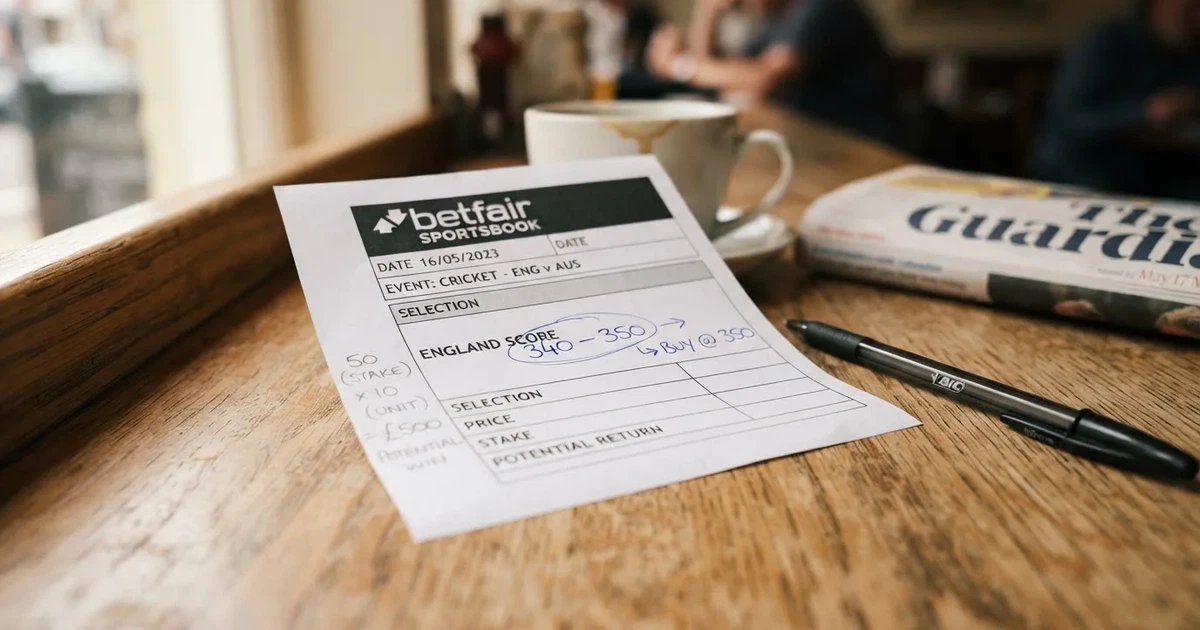
What follows is the page’s own reading of the data: what a Gambling Commission remote licence actually guarantees the bettor, what it does not, how the spread-betting offer stacks up against fixed-odds free bets at the same operator, where losses can run away from a stake, and which platforms the comparison comes out cleanest on. A short statutory section up top, then the responsible-gambling frame, then the way a spread bet actually settles, then the ranked comparison. Offers are described qualitatively — the page judges what a free-bet token is worth in clearing terms, not how to claim it — and the figure that opens the calculation block is an illustrative two-way market at 1.90 / 1.90, not a quoted price from a brand’s live board.
Data current as of 27 October 2026 and verified against the Gambling Commission’s public register of remote licence holders.
The statute behind a UK spread betting platform
UK spread betting sits in a deliberately split frame, and a reader who only meets one half of it ends up with a wrong picture. Fixed-odds bookmaking and sports spread betting offered by a bookmaker are regulated by the Gambling Commission under the Gambling Act 2005. Financial spread betting — bets on indices, FX, shares and commodities quoted as a spread — sits with the Financial Conduct Authority. The two regulators do different jobs: the Commission licenses the operator, sets safer-gambling rules and runs the public register; the FCA writes conduct rules for the firms it authorises and treats financial spread bets as a leveraged product. Spreadex, the longest-running dual-regulated UK firm, holds a Commission licence for fixed odds and sports spread betting and an FCA authorisation for financial spread betting, and states plainly on its homepage that losses can exceed deposits.

Three points that follow from this and that matter when the reader chooses where to bet:
- A “Gambling Commission licence” is not a single thing. The relevant category for a sports or fixed-odds spread betting site is a remote general betting standard (real events) licence. A separate category exists for betting exchanges (the intermediary licence) and another for pool betting. An operator that holds only a casino or lottery licence is not licensed to take a sports bet.
- Since the Gambling (Licensing and Advertising) Act 2014, an operator whose remote facilities are used in Great Britain needs a Commission licence wherever it is based. A Curaçao, Maltese or Gibraltar corporate structure is irrelevant to that test: a Curaçao-only operator serving GB customers is unlicensed here, regardless of the home jurisdiction.
- Northern Ireland is outside the Gambling Act 2005. “GB-licensed” is the right frame; never write that a Commission licence covers Northern Ireland.
Identity checks are part of the licence, not an optional extra. Since 7 May 2019 operators have verified name, address and date of birth before a customer can deposit or gamble, including with a free bet or bonus. The relevant licence and minimum age are part of the registration, not the welcome offer. Two of the brands reviewed here — Kalooki Sportsbook and Midnite — both display their Commission account number on their homepages, the kind of thing a reader can paste into the public register and verify in under a minute.
The Commission has not capped stakes or winnings. There is no statutory ceiling on the size of a single bet, no statutory maximum payout, and no statutory loss limit. Operators set their own house limits and may restrict individual customers. The betting duty is the operator’s, not the player’s: General Betting Duty sits at 15% on gross profits for most remote bets at the moment, with a new 25% remote rate due from 1 April 2027 within the same regime; spread betting has its own duty rates of 3% financial and 10% other. The player pays no tax on betting winnings in Great Britain. Whether operators pass duty on through odds is not established; the page does not claim either way.
What the licence actually buys the bettor
Three rights attach to a Commission licence that an unlicensed site cannot match. The first is GAMSTOP, the national multi-operator self-exclusion scheme, mandatory for online operators since 31 March 2020. The second is access to an approved alternative dispute resolution (ADR) provider when an operator refuses a payout — a route that simply does not exist for a brand outside the register. The third is the financial vulnerability check under LCCP condition 3.4.4, which has applied since 30 August 2024 and which triggers a public-record review (bankruptcy, county court judgments) once a customer’s deposits minus withdrawals exceed £150 in a rolling 30 days, in force since 28 February 2025. None of these are perfect, none of them block the bettor from spending what they can afford to lose, and none of them second-guess a stake the customer has chosen. They are the floor.

What the licence does not do is also worth naming. It does not guarantee that an offer is fair; it does not guarantee that a margin is competitive; it does not guarantee that a payout will be quick. A reader who treats a Commission number as a quality mark is over-reading it. The licence is a permit; the comparison that follows uses it as a starting condition, nothing more.
Where the bonus cap sits
Promotion rules in force since 19 January 2026 cap wagering requirements on bonuses at 10x — a £10 bonus at 50x needs £500 of qualifying bets, and the cap is now £100 of bonus turnover. Mixed-product promotions, an offer that requires gambling on two or more product types (betting plus casino, betting plus bingo, betting plus free lottery entries), are banned. The cap’s treatment of free bets with no wagering condition, and any cap on the money value of a bonus, are not established and the page does not invent a position. None of this is a reason to chase an offer; it is the floor under one.
Responsible gambling and the spread betting frame
Spread betting is the one product on the Commission register where the marketing line and the risk line are loudest together. The wager is leveraged: profit or loss equals the stake multiplied by the number of points by which the result differs from the bet level, and that number is not capped by the stake the bettor paid in. A £10 stake that buys at the top of a 350-run cricket spread and watches the team score 300 has not “lost £10”. It has lost 50 units times the stake — £500, fifty times the original outlay. The marketing word in the small print is “speculative”; the regulator’s framing is “losses can exceed deposits”.
Three controls sit in front of the customer. GAMSTOP is the national multi-operator self-exclusion scheme with six-month, one-year, five-year or five-year auto-renewal periods, and the exclusion stays in place for a further seven years after the minimum period unless the customer asks GAMSTOP to remove it. Deposit limits are a licence condition (Remote Technical Standards 12) under a staged plan: first changes applied on 31 October 2025, a second phase was postponed to 30 September 2026, and whether that phase is live is not established. The financial vulnerability check is the public-record review that triggers once deposits minus withdrawals exceed £150 over a rolling 30 days — a check for insolvency markers, not income. Financial risk assessments (“affordability checks” in the press) have been announced in a staged timetable with no start date, and the page writes them as “announced, staged, no start date”, not as live.
For help, GamCare runs the National Gambling Helpline, GambleAware publishes advice and routes to treatment, NHS gambling clinics operate in several regions, and Gamblers Anonymous runs peer-support meetings. None of these is a recommendation to use one over another; each is the kind of route a bettor with a problem picks for themselves. The point that matters here is that all four are reachable from a UK postcode without the bettor having to register with any of the brands reviewed below, and the page makes that explicit because a reader who needs them will not scroll back to a section heading to find them.
The offshore bracket is not in this comparison, and the comparison does not silently include it. A GB licence is compulsory at the point of consumption, and providing gambling facilities in Great Britain without the licence the Act requires is an offence under section 33 of the Gambling Act 2005. There is no offence aimed at the customer who merely places a bet on an unlicensed site, but the customer also loses the protections listed above — no GAMSTOP coverage, no ADR route, no British consumer redress if funds are withheld, no bonus cap, no vulnerability check — and that is the honest framing. The page does not write “legal to use”, and it does not write “the safe choice”.
Predictions and strategy: what a tipster cannot fix in spread betting
Spread betting tips and tipster spread bets exist, and they are marketed heavily, particularly around football and NFL fixtures. They do not address the structural problem. A spread bet is a leveraged product, and the leverage multiplies both the edge and the variance of any predictive model. A tipster who picks sides at a fixed price runs into a market that already prices their information; a tipster who picks levels on a spread runs into a market where the bookmaker sets the levels and can revise them in play. The tip is the same problem with more numbers attached to it.
Bankroll management is the only strategy the page names without flinching. Two rules, neither original to this guide, both enforced by the operator’s own small print: stake a fixed fraction of the bankroll per trade, and set a stop-loss per session before the session starts. Stop-losses are operator-side risk controls: at Spreadex, for instance, a customer can configure a stop on a given market that closes the position at a defined loss. They do not cap losses in the way a stop-loss on a brokerage account caps equity drawdown on a single stock; they cap a single open position, not the day’s running total. The bettor still loses the difference between the entry level and the level the stop fires at, multiplied by the stake, and that difference can be substantial on a fast-moving spread.
Forecasts and analytics are where the next layer sits, and the layer is honest only when it is named. Form models, expected-goals models, pace data for cricket, drive data for NFL — each of these gives a probabilistic read on a result, and the read is what a spread trader maps onto a quote. The probability is the input to a Kelly-style fraction, not a green light. A model that gives a 60% read on a home win against a market that implies 50% is information; the same model with a 0.5% edge is noise. No tipster, in this market or any other, reliably produces the edge that clears the bookmaker’s margin plus the variance of a leveraged position, and the page does not pretend otherwise.
Bet types and odds: how a spread bet settles
A spread bet on Spreadex or Sporting Index involves three core figures: the quote (the range), the bet level, and the eventual outcome. You buy at the top end or sell at the bottom. Your return is determined by the variation between that initial bet level and the actual event result, scaled by your unit stake. For example, buying at 350 when a team scores 400 yields 50 units of gain for every pound staked. Conversely, if the result is 300, you incur a liability equal to 50 times your unit stake. This mechanic defines the risk profile, distinct from the binary nature of fixed odds.
Fixed-odds betting has the same vocabulary but a different engine. A bet at 5/1 (6.00 decimal) pays six pounds for every pound staked — five pounds of profit plus the pound back. The outcome is binary: the bet wins or loses. The stake is the most the bettor can lose on the match. Spread betting does not have that binary; it has a continuous range of outcomes, and the further the result moves in the unfavourable direction, the larger the loss. The two are not interchangeable products, and the comparison that runs through this page treats them as separate instruments sharing a regulatory frame, not as substitutes within one.
The point-spread market common on North American sportsbooks is its own third category, and the comparison comes back to it because British readers will see it. A point spread is a handicap attached to a fixed price, almost always -110 on either side (decimal 1.91), meaning the bettor risks £110 to win £100. A result that lands exactly on the spread is a push: the stake is refunded, no profit, no loss. That is the standard North American instrument, regulated by state gaming commissions in the United States and by provincial regulators in Canada, and it is not the same product as a UK sports spread bet. The page does not pretend it is.
Three markets most often quoted as spread bets at UK operators: total goals in a football match, winning favourites in a horse race, and total runs in a cricket innings. Each is a number the bettor buys or sells against the bookmaker’s range. Total goals spread of 2.4 to 2.6: buying at 2.6 pays 0.4 units per pound per goal the match lands above the number, selling at 2.4 pays 0.4 units per pound per goal below. The Total Goals free bet at Sporting Index is a five-pound token usable on that market. Winning Favourites is the cumulative distance in lengths the favourites win by at a meeting; the £5 token sits on the same market. A Race Index bet spreads the cumulative performance of a defined set of runners against an index level. These are not the same as the headline football odds a casual bettor sees on Coral’s homepage, and they trade differently from fixed odds.
The margin that sits inside every spread
A bookmaker’s margin is the share of every unit staked that the book keeps on average. For a two-way market at decimal odds 1.90 on each side, the payout share is the reciprocal of the sum of the reciprocals: 1 / (1/1.90 + 1/1.90) = 1 / (0.5263 + 0.5263) = 1 / 1.0526 = 0.950. The margin is 1 minus that, 0.050, or 5%. A 5% margin is the bookmaker’s expected take on a market this balanced; a 5% margin is also the threshold most sharp bettors use to call a book “sharp”, and Spreadex’s two-way sports markets tend to sit close to it. The same arithmetic with a less balanced market (1.50 / 3.00) gives 1 / (0.6667 + 0.3333) = 1 / 1.0000 = 1.000, or a margin of 0% — a market priced at “no vig” — which is the limit case the bookmaker would never offer. The further from even-money a market sits, the higher the margin tends to be, because the book has to widen the spread to protect the side it expects to take more action on.
The spread bet itself embeds the margin in a different way. Instead of a two-way price, the bookmaker quotes a range whose midpoint sits slightly above or below the “true” line in the bookmaker’s favour. A cricket line of 340 to 350, if the bookmaker’s “true” line is 343, has a 3-unit midpoint gap on each side. The bettor buys at 350 (7 units of “true” line on the unfavourable side) or sells at 340 (3 units of “true” line on the unfavourable side). Whichever side the bettor picks, they are entering at a level that gives the bookmaker an expected edge per unit. That edge is the spread-betting version of the margin, and it is harder to read off the screen than a fixed-odds margin because the levels are quoted as a range rather than a price.
Offers in spread betting: what they are and what they cost
A free bet at a spread betting operator works differently from a free bet at a fixed-odds shop, and the page says so plainly. A £5 Total Goals free bet token at Sporting Index pays the stake on the spread, not the stake back with the profit. A winning £5 token at a buy level of 2.6 that lands at 3.0 returns £2 of profit (£5 × 0.4 units); the £5 stake is not returned. The same arithmetic at a fixed-odds bookmaker would be different: a £5 free bet at 5/1 pays £25, stake not returned, which is a £20 profit. The headline token sizes are similar; the clearing arithmetic is different. The offer is a way to back a market without risking a stake; it is not a discount on the bookmaker’s edge.
A “free £60 in free bets” headline at Spreadex, described on the operator’s own New Customer Offers page, is conditioned on a £10 fixed-odds qualifying bet placed within 28 days of account opening; the free bets are usable across fixed odds and spread betting. A “Get £40 in Free Bets when you bet £20” at Coral, with the £40 issued within 7 days and expiring 7 days after issue, is conditioned on minimum odds of 2.0 (1/1) and is for new GB customers who opt in. A £30 free-bet package at Sky Bet is credited as three £10 tokens after a £5 deposit and a first single or each-way bet of at least 5p at odds of 1/1 or greater. The headline sizes are different; the clearing structures are different; the stake-not-returned default at the free-bet level is similar.
Where the page reads these offers as a betting editor rather than as a marketer, the pattern is consistent. A £10 free bet with stake not returned at 5/1 has an expected value, calculated against the margin of the market the bettor lays it on, of roughly £4 of expected return per £10 token at a 5% margin. The token is not “free £10”; the token is “expected £4 of cleared value per £10 nominal, after the margin the bookmaker keeps on the market you bet it on”. Where the operator’s offer requires a £10 fixed-odds qualifying bet at 2.0 to unlock £60 of free-bet tokens, the qualifying bet is itself a stake that returns £20 on a win and £0 on a loss — an expected value of roughly £10 if the bookmaker’s margin on the qualifying market is 5%. The £60 of tokens, at the conservative clearing value, is worth £24 of expected return against the same margin assumption. The total expected value is £34 on a £10 qualifying outlay, and the rest is the bookmaker’s edge plus the variance of a leveraged product.
Sports and tournaments: what a spread bookmaker quotes
A spread bookmaker quotes numbers, not teams. The Spreadex homepage at the time of writing listed sports spread betting markets on football, cricket, horse racing and a handful of other sports; Sporting Index did the same. Total Goals in football, Supremacy (the goal spread between two teams), Total Runs in cricket, Winning Favourites in horse racing, and Race Index are the markets a reader will see most often. None of them is a “team A to win” market, because spread betting does not produce a binary outcome to settle against.
Football fixtures through a Premier League weekend are the densest calendar for spread betting quotes. Total Goals markets typically settle between 2.4 and 2.8 goals depending on the match; Supremacy lines depend on the relative strength of the teams. The £5 Total Goals free bet at Sporting Index is the canonical example of a small-stake spread position. Cricket spread markets tend to open two or three days before a Test match and settle at the close of the innings in question. Horse racing Winning Favourites markets settle after the last race at a meeting; the spread reflects the bookmaker’s read on how dominant the favourites will be across the card.
Tournament-level spread markets are more episodic. A World Cup or a Premier League season can carry season-long markets on goal totals, points totals and finishing positions; a major horse racing meeting (the Cheltenham Festival, the Grand National meeting, Royal Ascot) typically carries a series of meeting-level markets on winning favourites, race-by-race indexes and headline numbers. The bookmaker sets the line and revises it as conditions change; the bettor either buys or sells. The bettor is not betting against other bettors; they are betting against the bookmaker’s number, which is the formulation that explains both the leverage and the margin that sits on top of it.
What a bookmaker does not quote
Two categories of event are conspicuously thin at a spread bookmaker compared with a fixed-odds shop. The first is in-play markets on every fixture: most spread positions are placed pre-event and held to settlement, with limited in-play adjustment. The second is novelty, political and entertainment markets: a Spreadex or Sporting Index customer is not betting on the next prime minister or the next Strictly winner, because the underlying instrument for a spread bet is a numeric outcome, and those markets do not produce a clean numeric outcome the bookmaker can settle against. A reader who wants those markets reads the wrong section of the wrong operator; the page names the gap rather than pretend it does not exist.
How a spread bet actually works, end to end
The process follows a standard path at all Commission-licensed spread bookmakers. You register, verify your identity, and fund your account—noting that credit cards are prohibited for these transactions. Once you select a market, the operator displays a spread quote, and you indicate whether you wish to buy or sell. The trade remains active until the final event settlement, unless you choose to close your position early at current market levels. Once the official result is verified, the financial outcome is calculated by measuring the variance from your entry point, factored by your stake.
Three points where the process stalls in practice. The first is verification: the operator runs name, address and date-of-birth checks before the first deposit and may run source-of-funds checks at higher spend under anti-money-laundering rules. The verification can take 24 to 72 hours, and the customer cannot place a bet until it clears. The second is the stop-loss: Spreadex and similar operators offer a per-position stop that closes the trade at a defined level, but the stop is itself a quoted spread, and the actual fill level on a fast-moving market may be worse than the stop level the customer set. The third is settlement on a close finish: a Total Goals market where the score settles at 2.4 exactly is, on most operators, a push at the midpoint and the stake is returned; a result that lands between two named points pays the proportional fraction.
The walkthrough a beginner needs is short and is worth naming in full:
- Pick the market — Total Goals, Supremacy, Total Runs, Winning Favourites, Race Index are the common ones.
- Read the spread — for example 2.4 to 2.6 goals.
- Decide whether to buy (at 2.6) or sell (at 2.4). Buying pays profit if the result is above 2.6, losses if it is below; selling pays the reverse.
- Decide the stake — the unit-stake that gets multiplied by the difference in units between the bet level and the result.
- Place the trade. The bookmaker confirms the bet level, the stake and the maximum potential loss at the stop level.
- Settlement occurs at the official event outcome. Your final balance is computed by taking the deviation between that result and your entry, multiplied by your chosen unit amount.
The single sentence a beginner should keep from the section is the one in the middle: losses can exceed the deposit. The walkthrough explains how; the risk line is the warning.
UK platform comparison: ten featured operators
The page ranks ten operators against one another rather than picking a single winner, and the reason is structural. A reader looking for a Sports Spread Betting welcome offer wants a different brand from a reader who already trades indices on Spreadex and wants a sportsbook alongside it. The table below lines them up by the licence holder and the category of licence on the register, then notes how each operator’s own terms describe the subject the comparison is built around. Where the operator’s own terms do not state a spread-betting-specific point, the cell notes that. A column that repeats one value down most of its rows tells the reader nothing, so the columns here are the ones where the data actually varies across the ten.
| Operator | Gambling Commission licence | Operator’s own terms on spread betting |
|---|---|---|
| Spreadex | Commission account 8835 (licence holder Spreadex Limited) — remote general betting standard (real events) | Sports spread betting and fixed-odds sports betting offered; FCA-authorised for financial spread betting; spread-betting losses can exceed deposits |
| Sporting Index | Commission account 27343 (licence holder Sporting Index Limited) — remote general betting standard (real events) | Sports spread betting is the headline product; Total Goals, Winning Favourites and Race Index free bets form the new-customer package |
| Coral | Commission account 54743 (licence holder LC International Limited) — remote general betting standard (real events), remote betting intermediary | Fixed-odds sports betting only on the main site; no sports spread betting product surfaced in the welcome offer |
| Sky Bet | Commission account 67370 (licence holder SBG Sports Limited) — remote general betting standard (real events) | Fixed-odds sports betting; no spread betting on the headline offer |
| Dabble | Commission account 65677 (licence holder Dabble Sports UK Ltd) — remote general betting standard (real events) | Fixed-odds sports betting; no sports spread betting product on the headline page |
| Swifty Sports | Commission account 58957 (licence holder Swifty Global (UK) Ltd) — remote general betting standard (real events) | Fixed-odds sports betting with Best Odds Guaranteed, Cash Out, daily price boosts and live streaming; no spread betting on the product list |
| Betfred | Commission account 39544 (licence holder Petfre (Gibraltar) Limited) — remote general betting standard (real events) | Fixed-odds sports betting with Bet Builder, Sub Switch, Racing Post data and Extra Places; no spread betting product |
| Lottoland | Commission account 38991 (licence holder EU Lotto Limited) — remote general betting standard (real events) | Casino, lottery betting, sports betting and scratchcards; no sports spread betting product surfaced |
| 888sport | Commission account 39028 (licence holder 888 UK Limited) — remote general betting standard (real events) | Pre-match, in-play, Cash Out, Bet Builder, racing streams and BetFinder form tools; no spread betting product surfaced |
| VBet | Commission account 44662 (licence holder SCGO Limited) — remote general betting standard (real events) | Pre-match, in-play, Bet Builder and live streaming; no sports spread betting product surfaced |
The spread of licence categories across the ten brands is identical at the Commission level — every one is a remote general betting standard (real events) licence, the standard licence for a Commission-regulated sportsbook — and what differs is the product mix each operator runs under that licence. Two of the ten (Spreadex and Sporting Index) carry a sports spread betting line. Eight of the ten do not. The comparison that follows treats those two as the operators a reader looking specifically for a UK spread betting platform will land on, and treats the remaining eight as the fixed-odds context the reader is comparing against.
How the table reads in plain English
The table above is the licence-and-product map. The page does not repeat it in prose because the table is the page — each row is an operator the reader can verify on the Commission’s public register by account number, and each cell in the right-hand column names what the operator’s own product page says about sports spread betting. The eight fixed-odds-only operators are listed because a reader who searches for “spread betting” often ends up on a fixed-odds sportsbook; the comparison names the gap rather than skipping the brand.
A reader looking specifically for sports spread betting will land on Spreadex or Sporting Index. A reader looking for fixed-odds sports betting, Bet Builder, in-play markets, daily price boosts or a betting exchange has nine of the ten to choose from. The page writes both routes out, because the searcher for “spread betting platform UK” is often closer to the second group than the first.
Spreadex
Spreadex is the only operator in the comparison with both a Commission licence for sports spread betting and an FCA authorisation for financial spread betting, and the only one whose homepage states the spread-betting risk warning directly on the front page. The Commission licence is account 8835, held by Spreadex Limited, with the relevant category remote general betting standard (real events). The FCA authorisation is separate and is the licence under which indices, FX, shares and commodities are quoted.
The product mix runs three lines. Fixed-odds sports betting sits alongside sports spread betting and financial spread betting; the operator’s own New Customer Offers page describes the headline as £60 in free bets for a £10 fixed-odds qualifying bet placed within 28 days of account opening, with the free bets usable across fixed odds and spread betting. The qualifying bet is a fixed-odds bet, not a spread bet, which is a structural choice the operator has made: it lowers the barrier to the £60 token package while keeping the spread-book product accessible on a funded account.
Three numbers worth carrying. The headline £60 figure is the nominal token value at the free-bet level; the expected clearing value, against a 5% margin on the markets the tokens are likely to be laid on, sits closer to £24 of expected return. The £10 qualifying bet is itself a stake, with an expected value of roughly £10 at the same margin. The 28-day qualifying window is the cap on the qualifying bet; a customer who lets it lapse converts the headline into a smaller fixed-odds welcome offer. The page judges the package on those three numbers rather than the £60 token headline.
The Sports Spread offer at Spreadex is not for everyone. A reader who has never placed a spread bet should not start with the £60 tokens on the spread side; the leverage is the same on a free bet as on a cash position, and the educational gap is the risk. A reader who already trades indices on Spreadex and wants to add a sportsbook will find the integrated product sensible — same wallet, same stop-loss controls, same Commission-licensed frame. A reader who came for fixed-odds sports betting only has better matches lower in the list.
Sporting Index
Sporting Index runs sports spread betting as its headline product, with fixed-odds sports betting in support. The Commission licence is account 27343, held by Sporting Index Limited, with the same remote general betting standard (real events) category as the rest of the comparison. Sporting Index does not hold an FCA authorisation for financial spread betting; the financial spread betting side of the market is Spreadex’s territory, and the comparison reads that as a deliberate product split rather than a gap.
The new-customer package on the GB App Store listing is described as a £10 fixed-odds qualifying bet at minimum odds of 1/2 (1.50 decimal), unlocking three £10 fixed-odds free bets, three £5 Total Goals spread bets, three £5 Winning Favourites spread bets and a £1 Race Index spread bet. The qualifying bet cannot be placed in play or cashed out early. The headline token count is ten — three fixed-odds and seven spread — and the total nominal value, weighted by category, sits around £66. Against a 5% margin assumption, the expected clearing value is closer to £27.
Three specific points that follow from the structure. First, the spread tokens are smaller than the fixed-odds tokens by design: a £5 Total Goals bet at the typical 0.4-unit-per-goal increment has a smaller expected value per pound than a £10 fixed-odds bet at 5/1, but it lets the customer actually place a spread position rather than read about one. Second, the Race Index token is a £1 position at a level the book sets — the kind of entry-ticket bet that a beginner uses to read the spread without risking meaningful stake. Third, the qualifying bet restriction (no in-play, no cash-out) is the operator’s anti-abuse filter, and it is standard for a spread welcome offer because spread positions are easier to lay off in-play than fixed-odds positions.
A reader coming for sports spread betting specifically lands on Sporting Index for the Total Goals, Winning Favourites and Race Index markets. A reader who wants the same product alongside financial spread betting lands on Spreadex. A reader who wants fixed-odds sports betting with a Commission licence has nine other names below. The page reads Sporting Index as the more focused of the two spread brands: smaller product mix, sharper welcome offer, lower token headline but clearer spread-betting entry point.
Coral
Coral runs fixed-odds sports betting under Commission account 54743, held by LC International Limited, with both remote general betting standard (real events) and remote betting intermediary categories on the register — the intermediary licence covers the operator’s exchange-adjacent products. Coral is part of the same group as Ladbrokes; the page names them as a single licence holder rather than as independent operators.
The welcome offer is described as “Get £40 in Free Bets when you bet £20”: a deposit and sports bet of £20 or more at minimum odds of 2.0 (1/1), with £40 in free bets issued within 7 days and expiring 7 days after issue, for new GB customers who opt in. The qualifying bet is a fixed-odds sports bet; the £40 tokens are issued as fixed-odds free bets; no spread betting product sits behind the offer. The £40 headline versus a £20 qualifying outlay is a 2:1 nominal token ratio, against an expected clearing value of roughly £16 at a 5% margin.
Three points Coral brings to the comparison. First, the brand has the deepest in-play product of any operator in the list, with hundreds of in-play markets on a Premier League weekend and a well-developed Cash Out feature on the main site. Second, the intermediary licence category means Coral can route bets through an exchange-style layer under the same Commission number — a structural feature a reader comparing products should know exists, even if the retail product on the homepage is fixed-odds. Third, the £40 headline is large by the standard of the comparison; the £20 qualifying outlay is large by the same standard. A reader with the bankroll to clear £20 at 2.0 minimum odds will get the £40 headline; a reader looking for a smaller qualifying outlay reads the names below.
Coral does not offer a sports spread betting product. It is included in this comparison to clarify the scope of the available markets, distinguishing its fixed-odds offer from the specialized spread betting platforms listed elsewhere in this guide.
Sky Bet
Sky Bet is licensed under Commission account 67370, held by SBG Sports Limited, operating under a standard remote general betting licence for real events. The headline offer for new customers is £30 in free bets, credited as three £10 free bet tokens after a deposit of at least £5 and a first single or each-way bet of at least 5p at odds of 1/1 or greater. The £5 deposit and 5p qualifying bet are the lowest qualifying outlay in the comparison — by design, because Sky Bet positions the brand around low-stake entry and a wide product mix rather than a heavy welcome.
Three points Sky Bet brings to the comparison. First, the brand runs the Sky Sports tie-in: live streaming on the Sky Sports calendar, in-play markets across the major sports, and a Bet Builder feature that is competitive with the rest of the comparison. Second, the £5 deposit minimum is the entry-level position in the UK market and is matched by few of the operators above; a reader with a small budget reads Sky Bet as the operator that lets the qualifying bet happen at all. Third, the £30 headline is mid-pack; the £5 deposit and 5p bet are the entry-level, and the comparison reads the operator as best for the reader who wants a low-cost entry rather than a large headline.
Sky Bet is a fixed-odds sportsbook. Its welcome offer consists of fixed-odds free bets only; it does not offer a sports spread betting line, so readers looking for that instrument will not find it here. The comparison includes Sky Bet because its high visibility in sports advertising often attracts searches for spread betting, and it is helpful to clarify that the product gap is intentional.
Dabble
Dabble is licensed under Commission account 65677, held by Dabble Sports UK Ltd, carrying a remote general betting licence for real events. The welcome offer is described as “Bet £10, Get £10 in Free Bets” on a first deposit for new customers, with minimum odds applying, a 7-day free bet expiry and the stake not returned. The headline is small — a 1:1 token ratio — but the qualifying outlay is also small, and the comparison reads the offer as low-commitment entry rather than headline value.
Three points Dabble brings to the comparison. First, the brand’s social feature — the ability to follow and copy other customers’ bets, the origin of the operator’s name — sits behind the same Commission licence as the rest of the product. The copy-bet feature is not a betting tipster service; it is a peer-betting product that runs under the operator’s Commission licence. Second, the £10-for-£10 headline is the smallest in the comparison and is matched by an expiry at 7 days, which is the standard free-bet token life for the smaller operators in the list. Third, the fixed-odds product is the offer; no spread betting product sits behind the welcome.
Dabble is not a spread betting platform. The comparison includes it for completeness, as readers exploring copy-betting features often land here; it is important to note that the spread-betting product is exclusive to Spreadex and Sporting Index.
Swifty Sports
Swifty Sports is licensed under Commission account 58957, held by Swifty Global (UK) Ltd, which covers the remote general betting standard for real events. The product list on the GB App Store includes Best Odds Guaranteed, Cash Out on horse racing and football, daily price boosts, live streaming and in-play betting, with Bet Builder listed as coming soon. The brand positions around the BOG-and-live-streaming combination that has been Sky Bet’s territory for years; the comparison reads Swifty as the challenger on that product mix rather than the headline offer.
The welcome offer is not described on the GB App Store listing in a way the page can transcribe; the comparison treats the brand on its product features rather than a token headline. Three points Swifty Sports brings to the comparison. First, Best Odds Guaranteed is the operator’s headline: if the starting price is bigger than the price the customer took, the operator pays the bigger price. The feature is industry-standard among the larger UK brands; its presence at a smaller operator is the product gap the comparison names. Second, the live streaming feature on the Swifty app covers a smaller fixture list than Sky Bet’s but covers the same sports categories; a reader who wants live streaming on a smaller budget reads Swifty as a reasonable match. Third, the Bet Builder “coming soon” line is a product roadmap signal rather than a current feature; the comparison does not credit the brand with a feature the operator’s own listing says is not yet live.
Unlike the operators mentioned above, Swifty Sports does not run a spread betting book. It specializes in fixed-odds markets, emphasizing Best Odds Guaranteed and live streaming. We include this summary for readers who may have arrived here seeking those specific features, clarifying that the platform does not feature a spread product.
Betfred
Betfred is licensed under Commission account 39544, held by Petfre (Gibraltar) Limited, and offers a remote general betting licence for real events. The brand carries the legacy bookmaker identity: high-street presence, Extra Places on the major horse racing meetings, Bet Builder on football, Sub Switch as a player-prop feature, Racing Post data integrated into the racing product. The app store listing describes Bet Builder, Sub Switch, Racing Post data, Extra Places, live casino and bingo. The welcome offer on the headline sports product is not detailed on the App Store listing at a level the page can transcribe; the comparison treats the brand on its product features.
Three points Betfred brings to the comparison. First, the brand is the most retail-rooted of the ten: the high-street shop network is still part of the customer journey for older or more casual bettors, and the online product sits alongside that network. Second, Extra Places is the headline racing feature: on a major meeting, Betfred pays extra places on each-way bets, often extending the place terms beyond the standard 1/4 odds for three places. The feature is the racing-side analogue of the spread product’s Total Goals market — a value-add on a numeric outcome. Third, the Sub Switch feature on football player-prop markets lets the customer substitute a named player in a bet builder; the comparison reads this as a sharper product feature than the wider Bet Builder category.
Betfred focuses on fixed-odds markets; a sports spread betting line is not part of its current GB offering. Readers interested in Extra Places or Bet Builder markets often encounter this brand, so it is listed here to confirm that the spread-betting product they might be seeking is not present.
Lottoland
Lottoland is licensed under Commission account 38991, held by EU Lotto Limited, authorized for remote general betting on real events. The product combines casino, lottery betting, sports betting and scratchcards under one Commission licence. Lottery betting — a bet on the outcome of a foreign lottery draw, settled by Lottoland rather than by the lottery operator itself — is the brand’s main reason to exist; the sportsbook is a secondary product for many of the brand’s customers.
Three points Lottoland brings to the comparison. First, the brand’s licence is for general betting standard (real events), which covers the sportsbook on a Commission-regulated basis, but the headline product is lottery betting; the sportsbook is the secondary line. A reader searching for “spread betting platform” should read Lottoland as the wrong category: the brand is a lottery-led operator with a sportsbook attached. Second, the sportsbook does not surface a spread betting product on the App Store listing; the comparison reads Lottoland as fixed-odds-only on the sports side. Third, the lottery betting product is the unique line in the comparison: no other brand in the ten operates the same model, and a reader searching specifically for lottery betting lands on Lottoland by category, not by spread.
Lottoland is not a spread betting platform. The comparison includes it for readers who arrive seeking lottery-betting products, ensuring they understand that the sportsbook here is strictly fixed-odds.
888sport
888sport is licensed under Commission account 39028, held by 888 UK Limited, with the same remote general betting standard (real events) category as the rest of the comparison. The product list on the GB App Store includes pre-match and in-play betting, Cash Out, Bet Builder, racing streams, BetFinder form tools, a live bet feed and daily boosted odds. The brand is part of the wider 888 group, with the casino and poker verticals running under the same Commission licence frame.
Three points 888sport brings to the comparison. First, BetFinder form tools are the brand’s specific add — a form-data feature for horse racing integrated into the racing product. The comparison reads this as a product differentiator on the racing side, narrower than Sky Bet’s live streaming or Betfred’s Extra Places but specific to the brand. Second, the daily boosted odds feature is the wider market’s price-boost product: a selected market carries a boosted price, with a maximum stake set by the operator, and the boost is settled at the boosted price if the bet wins. Third, the brand’s UK licence and 888 group backing is the structural frame; the comparison reads 888sport as a Commission-licensed fixed-odds sportsbook with a competent racing product rather than as a category leader.
888sport operates as a fixed-odds sportsbook, offering Bet Builder and racing streams. Sports spread betting is not available on this platform. The comparison features 888sport so that readers looking for these standard sportsbook tools are aware of the operator’s product scope, distinct from spread-betting specialists.
VBet
VBet is licensed under Commission account 44662, held by SCGO Limited, with the same remote general betting standard (real events) category as the rest of the comparison. The product list on the GB App Store includes Bet Builder, pre-match and in-play betting, live streaming and a live calendar with results and stats. The brand is a smaller UK-licensed operator in the comparison; the headline product is the in-play and live-streaming combination.
Three points VBet brings to the comparison. First, the live calendar feature on the app is the brand’s specific product — a fixture-by-fixture calendar that surfaces in-play markets, stats and live streams on the same screen. The comparison reads this as a tighter in-play product than the wider market’s standard, and as a sharper feature for the in-play bettor specifically. Second, the Bet Builder feature on VBet is competitive with the rest of the comparison but not differentiated; the page reads it as table-stakes rather than a feature that sets the brand apart. Third, the brand’s smaller UK footprint means fewer welcome-offer details on the App Store listing than the larger brands; the comparison treats VBet on its product features rather than its offer.
VBet concentrates on fixed-odds in-play markets; it lacks a sports spread book. This brand is mentioned for readers who encounter it while exploring live-streaming and in-play options, providing clarity that the spread betting product they might be searching for is not included here.
The rest of the offer landscape the comparison does not rank
Three brands the searcher will encounter on the way to this page are not in the top-ten ranking above, and the page names them rather than skip them. Kalooki Sportsbook, operated by Kalooki Sports Book Ltd (company number 12938274), is licensed by the Gambling Commission under account 57730 and is a GAMSTOP member; the brand’s specific product is smaller than the ten above and the page treats it as an honourable mention rather than a top-ten slot. Midnite’s site cites Gambling Commission licence 101839 and shows in-play events, an acca builder, popular accas and price boosts with maximum-stake limits; the brand’s product is newer and the comparison does not have the dataset to rank it on the same axes as the ten above. Unibet, operated since 1999 under Platinum Gaming Limited, Gibraltar, under Gambling Commission account 45322, is a top-tier UK-licensed operator by brand history and a brand a reader comparing platforms will encounter, even though its GB App Store listing is not covered here.
The pattern in all three is the same: a Commission-licensed fixed-odds sportsbook without a sports spread betting line on the operator’s own marketing. The reader who searches for “spread betting platform UK” and arrives at one of these brands has reached a Commission-licensed operator, which is the right regulatory frame, but has not reached a brand that runs a sports spread book. The page makes that gap explicit so the reader does not waste the welcome offer on a product the brand does not run.
The calculation: margin on a two-way market at 1.90 / 1.90
The margin on a two-way sports market with decimal odds of 1.90 on each side serves as a benchmark for comparison. This is an illustrative example rather than a live quote from any of the featured operators. A market priced at 1.90 / 1.90 is close to a balanced book, providing a clear reference point for how bookmaker margins function in practice.
The payout share of a two-way market is the reciprocal of the sum of the reciprocals of the two decimal odds. For 1.90 and 1.90, that is 1 / (1/1.90 + 1/1.90), which simplifies to 1 / (0.5263 + 0.5263), which is 1 / 1.0526, which is 0.9500 — a 95.00% payout share. The margin is 1 minus the payout share, which is 0.0500, or 5.00%.
What the figure means to a bettor: in a perfectly balanced book, 95 pence of every pound staked across the market is returned in winnings on average, and 5 pence of every pound is the bookmaker’s take. The same arithmetic with the prices inverted to 1.95 / 1.95 gives 1 / (1/1.95 + 1/1.95) = 1 / 1.0256 = 0.9750, or a 2.50% margin. The same arithmetic with the prices widened to 1.80 / 2.00 gives 1 / (0.5556 + 0.5000) = 1 / 1.0556 = 0.9474, or a 5.26% margin.
The page writes the margin as a band with its condition rather than a single figure. On an illustrative balanced two-way sports market priced 1.90 / 1.90, the bookmaker’s expected margin is in the region of 5.0%, with the assumption that the market is balanced and that the prices are the actual quoted prices rather than a worked example. A 5% margin is the band most sharp bettors use to call a bookmaker “sharp”; a market above that band is wider than the comparison would expect at a top-tier UK sportsbook. The figure is an estimate and does not predict any individual bet’s outcome.
A spread bet sits inside this band in a different way. The bookmaker’s quoted range — 2.4 to 2.6 for a Total Goals market — embeds a margin by being off-centre from the “true” line. If the bookmaker’s true line is 2.45 and the quote is 2.4 to 2.6, the buy side enters 0.15 units of “true” line above the true value, and the sell side enters 0.05 units of “true” line below. The asymmetry is the spread-betting margin; it is harder to read off the screen than a fixed-odds margin, and it is also the reason a beginner should start on small stakes. The same calculation applies: 5% of the customer’s expected exposure on a balanced market is the bookmaker’s expected take.
Choosing the right spread betting platform UK
A reader who has decided to spread bet has narrowed the choice to two: Spreadex and Sporting Index. The other eight in the comparison are fixed-odds sportsbooks without a spread product. Within those two, the question is whether the reader also wants financial spread betting — in which case Spreadex is the only choice — or whether the reader wants a sports-only spread book with a sharper welcome offer — in which case Sporting Index is the focused pick.
A reader who is choosing between a UK spread betting platform and a fixed-odds sportsbook has a different decision in front of them. Spread betting is leveraged: a £10 stake can become a £500 loss. Fixed-odds betting is binary: the stake is the most the bettor can lose on a match. A reader with a small budget and a low appetite for variance reads fixed-odds as the safer instrument by construction. A reader with a bankroll they are willing to risk on a leveraged product, and a stop-loss discipline they will keep, reads spread betting as a different product with a different risk profile. The page does not pick a side; it names the choice.
Three readers the comparison reads differently:
- A reader who trades indices on Spreadex already and wants a sportsbook: Spreadex is the integrated answer; the welcome offer’s £60 in fixed-odds tokens is usable across fixed odds and spread betting, and the FCA authorisation means the indices side is properly regulated.
- A reader who has never placed a spread bet and wants to start small: Sporting Index’s £5 Total Goals tokens and the £1 Race Index token are a deliberately small-stakes entry point; the same reader should not start with the £60 token headline at Spreadex until they have placed a small spread position and understood the leverage.
- A reader who wants fixed-odds sports betting with a Commission licence: any of the other eight. The choice between Sky Bet, Coral, Betfred, 888sport, Dabble, Swifty Sports, VBet and Lottoland is a product choice rather than a regulatory one; all eight hold the same remote general betting standard (real events) licence on the Commission’s public register.
The honest framing: the comparison ranks the ten on the basis available, and that basis is narrow. The licence number is a starting condition, not a verdict. The product mix varies more than the regulatory frame does. A reader who chooses by licence alone has over-read the regulator’s role.
Frequently asked questions
What is sports spread betting?
A sports spread bet is a wager where the bookmaker quotes a range (for example 340 to 350 runs in cricket, or 2.4 to 2.6 total goals in football), the bettor buys at the top of the range or sells at the bottom, and the profit or loss is the stake multiplied by the difference between the result and the bet level. Because the stake is multiplied by the difference in units rather than by a fixed-odds price, losses can exceed the deposit the bettor paid in.
How does spread betting on football work?
A football spread bet is most often placed on Total Goals (the sum of goals scored by both teams) or Supremacy (the goal difference between two teams). The bookmaker quotes a range like 2.4 to 2.6 goals; the bettor buys at 2.6 (profits if the match lands above 2.6) or sells at 2.4 (profits if it lands below 2.4). The stake is multiplied by the difference in goals between the bet level and the result, so a £5 stake at 2.6 that lands at 3.0 returns £2 of profit (£5 × 0.4 units).
What is sport spread betting as a category?
Sport spread betting is the wider category of spread bets placed on sporting events, as opposed to financial spread betting placed on indices, shares, FX and commodities. In the UK, sports spread betting is regulated by the Gambling Commission; financial spread betting is regulated by the Financial Conduct Authority. Spreadex is licensed under both; Sporting Index is licensed under the Commission only.
How can a reader verify a bookmaker holds a Gambling Commission licence?
Every UK-licensed operator’s licence is on the Gambling Commission’s public register, which can be searched by business name, trading name, domain or account number. The register is the test of whether a brand holds a licence; the licence number a brand shows on its homepage should match the register entry. Each row in the comparison above carries the licence number a reader can paste into the register and verify in under a minute.
How is a bet’s return worked out from stake and odds?
For a fixed-odds bet, the return is the stake multiplied by the decimal odds (for example a £10 stake at 5/1, which is 6.00 decimal, returns £60 total — £50 profit plus the £10 stake back). For a free bet at fixed odds, the stake is usually not returned, so a £5 free bet at 5/1 returns £25 of profit with no stake returned. For a spread bet, profit or loss equals the stake multiplied by the difference between the result and the bet level, and the stake itself is not separately returned.
What is the bookmaker’s margin and how does it show in the odds?
The bookmaker’s margin is the share of every pound staked the book keeps on average across a market. It is calculated as 1 minus the payout share, where the payout share is the reciprocal of the sum of the reciprocals of each outcome’s decimal odds. On a balanced two-way market at 1.90 / 1.90, the margin is 5.00%; at 1.95 / 1.95 it is 2.50%; at 1.80 / 2.00 it is 5.26%. A higher margin means a worse price for the bettor over many bets.
Betting sites & exchanges – Free bets
Content created by the «Free bets» team
