
Curling Betting Odds 2026 — What Every Price Actually Costs the Punter
 Available in US
Curling sits in an odd pocket of the British betting market. The sport has been an Olympic medal event since 1998, with mixed doubles added at the 2018 Winter Games, and the World Curling Tour runs almost year-round. Yet most UK high-street bookmakers offer it thinly, if at all, and the punter who wants a serious position on a Grand Slam event or a World Championship has to know which online brands actually run a curling book. The odds those brands put up, and the margin sitting inside them, are what decide whether a curling bet is a reasonable use of a stake or a quiet tax on the bettor’s wallet. This page walks through where licensed British bookmakers cover curling, what they actually offer, how the prices are built, and what each offer in the market costs the punter who takes it up.

Data current as of 27 October 2026; Gambling Commission public register checked.
Responsible Gambling Before Any Market
Curling is not a high-turnover sport in Britain and the temptation is to treat a small-market wager as harmless. The terms the licensed bookmakers apply do not care which sport the stake sits on: a £10 qualifying bet at minimum odds still carries the same conditions whether it backs a stone-thrower in Kelso or a striker at Anfield. Three pillars hold up the safer-gambling frame in Great Britain and they apply whatever the sport.
GAMSTOP. A national multi-operator self-exclusion scheme, mandatory for every online operator with a Gambling Commission licence. A punter who registers is barred from every licensed site and app for six months, one year, five years, or five years with auto-renewal. After the minimum period ends, the exclusion stays in place for a further seven years unless the punter asks GAMSTOP to remove it. The scheme covers online only; a separate registration covers betting shops.
Financial vulnerability check. A licensed remote bookmaker in Great Britain runs a public-record check on a customer whose deposits minus withdrawals cross £150 in a rolling 30-day period. That is a check against the public record — bankruptcy, county court judgments, similar items — not an income check and not a credit reference. A broader financial-risk assessment is on the Commission’s staged plan with no start date published.
Deposit limits, timeouts and self-exclusion at the operator level. Every Commission-licensed site offers the punters the chance to set a gross deposit limit, take a cooling-off timeout, or self-exclude for a chosen period. From 31 October 2025 the first part of the deposit-limit rule has been in force; a second phase, postponed to 30 September 2026, has not been confirmed live.
Offshore brands offer none of these protections. A punter outside the Commission’s reach loses GAMSTOP coverage, the bonus-cap, the vulnerability check, the approved dispute-resolution route, and the British consumer redress if funds are withheld. None of that makes offshore “the dangerous choice” by default, but it does mean the punter on an unlicensed site is the one holding every risk the licence is built to share.
Help is at hand from GamCare (which runs the National Gambling Helpline), GambleAware, the NHS gambling clinics network, and Gamblers Anonymous.
The Sport Itself, and Why It Bets Differently
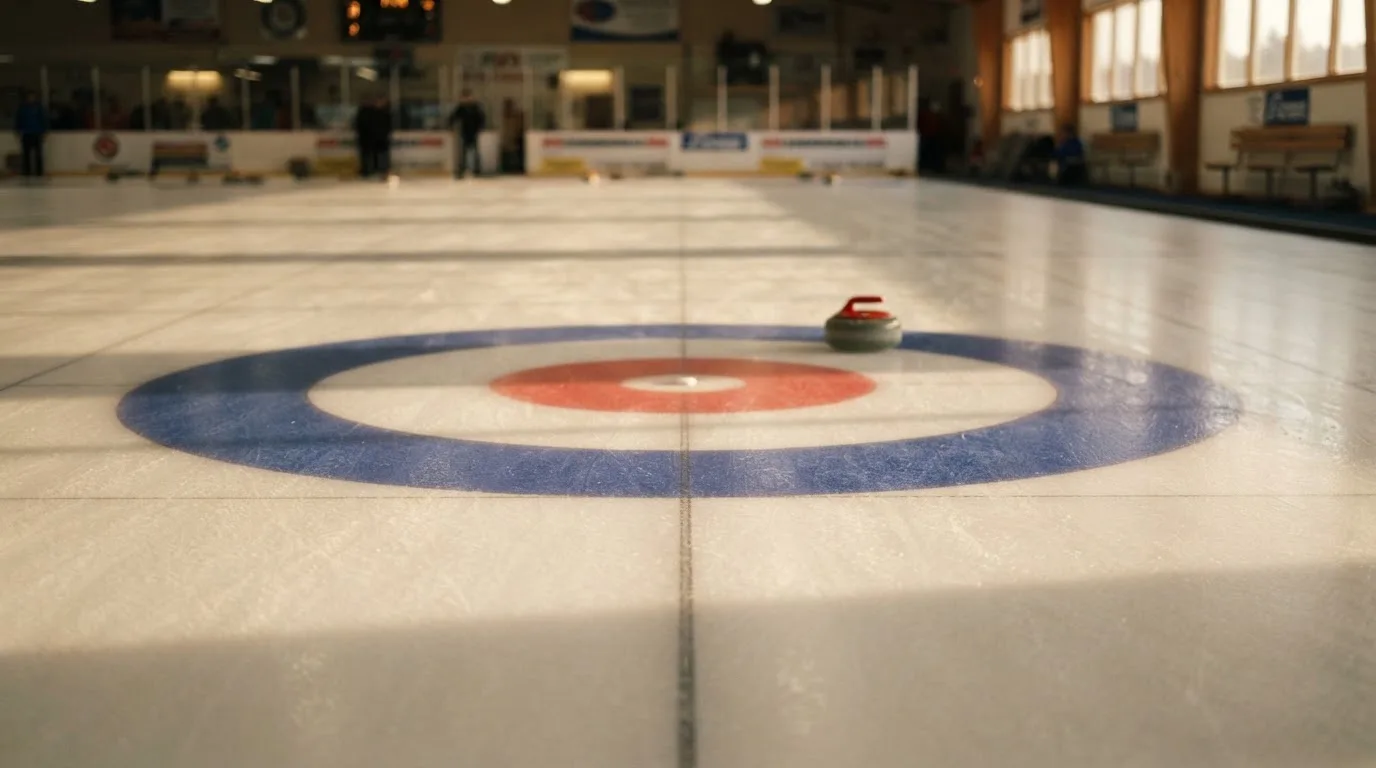
Curling is built on ice but the betting surface is small. A team has four players in the standard game and two in mixed doubles; between them they throw sixteen stones in an end, two per player under World Curling Federation rules, with each stone weighing between 17.24 and 19.96 kilograms. An international game usually runs ten ends, though leagues and opens can settle on eight. Tied games go to extra ends until somebody scores. After every stone has been delivered, the team whose stone sits closest to the button (the centre of the target rings, the “house”) scores one point for each of its stones closer to the button than the opposing team’s nearest stone — only stones inside the house count.
The hammer, the last stone of an end, is the tactical pivot. It passes to the team that did not score the previous end; if the end is blanked (no points scored, common when the team holding the hammer peels a guard and runs the opposition out of stones), the hammer stays where it was. A betting model that ignores last-stone advantage is misreading the game. The same logic applies to ends in play: the side throwing last in any given end is the side most likely to score at least one point from that end, and a pre-game price that prices the two teams as even money often understates the favourite’s hammer leverage in specific end markets.
Curling also moves slowly. A single end can run three to four minutes; a ten-end game plus measurement and between-end breaks pushes the running time past two hours. That matters for in-play markets, where the punter who knows the score, the end number and the hammer can find a price the bookmaker has updated slowly. It also matters for live-streaming products: the bookmaker that does not stream the curling feed has effectively conceded those markets to the punter who watches the sheet on a separate feed.
The season structure shapes which markets exist. Curling runs almost the calendar year: the World Men’s, World Women’s and World Mixed Doubles Championships sit between late March and early May; the European Curling Championships run in November and December; the Grand Slam of Curling carries six stops across North America and Europe from late September to April; mixed doubles gets its own World Mixed Doubles Championship. The 2026 Winter Olympics have passed by the time this page goes out, so the Olympic market has closed and the cycle returns to the World Championships. A bookmaker running a curling book between those windows will price only head-to-head and outright winner markets on the in-season events, with props and end-by-end markets appearing while the World Championships are live.
Top 10 Bookmakers for Curling Betting — Operator Comparison
The ten brands below all hold an active Gambling Commission remote licence for general betting on real events. Every one of them is on the Commission’s public register, and every one is a GAMSTOP member. Several of the order, size and offer differences are what matters when a British punter picks where to put a curling stake.
| Brand | Licence status (register entry, holder) | What the operator’s terms say on curling |
|---|---|---|
| BetMGM | Remote betting licence 39198; LeoVegas Gaming PLC | Brand’s sportsbook covers curling season outrights and head-to-head lines for major championships |
| Star Sports | Remote betting licence 9177; Star Racing Limited | Operator’s app and telephone desk cover curling alongside its horse-racing core book |
| BetTom | Remote betting licence 64959; Bet Tom Limited | A modest sportsbook with curling priced on the bigger championships and outrights through the season |
| Betboro | Remote betting licence 44181; Webmedia Development N.V. | Wide event coverage across smaller sports; curling lines priced at World and European level |
| Lottoland | Remote betting licence 38991; EU Lotto Limited | A combined casino/lottery/sports book whose curling offering is shallower than a pure sportsbook |
| BetGoodwin | Remote betting licence 2927; Goodwin Racing Limited | A racing-led book that lists curling on the bigger championships in passing |
| Betfair | Remote betting licence 39439; PPB Counterparty Services Limited | Full sportsbook plus an exchange; curling markets exist on the sportsbook side, the exchange side depending on liquidity |
| Fitzdares | Remote betting licence 400; Fitzdares Limited | Premium-positioned book whose curling line centres on the championship windows |
| QuinnBet | Remote betting licence 61011; QuinnBet (Gibraltar) Limited | Racing-anchored book whose curling coverage sits inside the wider sportsbook |
| Bet Ahoy | Remote betting licence 100094; Bet Ahoy Ltd | Newer brand; curling offered through its sportsbook at the major events |
A short reading of the table, since it sets the rest of the page. The Commission’s public register is the test — every name on this list is there, with the remote general betting standard (real events) category attached. That is the licence a brand needs to take a curling bet from a customer in Great Britain. It is not, on its own, evidence that a brand takes curling seriously as a market: a licence authorises the activity and the operator chooses how deep to go. Two of the ten sit on Commission account numbers under 1,000 — long-established names that held their licences when the Commission’s numbering was tighter than it became later. Newer licences (100,000 is recent) lean toward leaner operations. That tells a punter nothing about how good a curling price is; it tells them how much track record the rest of the book has built.
A second reading: a remote licence is one thing, a remote licence that the Commission has not flagged is another. The Commission’s public register lists each licence with the status current at the time of viewing. A punter who wants to confirm a brand’s licence before depositing should type the brand’s domain into the register and confirm the licence number, the holder and the trading name match what the operator’s site shows. The register search bar accepts a business name, a trading name, a domain or the account number.
BetMGM — Welcomes Curlers With a Multi-Package Free-Bet Bundle
LeoVegas Gaming PLC’s UK brand runs a wide sportsbook and a new-customer offer that splits a free-bet bundle across four £10 free bets, two of which are football accumulators of four or more selections and two of which are sports multiples of two or more selections. The offer applies to new UK customers who deposit £10 or more and place a sports bet inside 7 days; the free bets are valid for 7 days once credited and a minimum-odds and opt-in condition attaches. The mixed-product prohibition across the British market means an offer that requires gambling on two product types in the same package (such as a sports bet for casino free spins) cannot be marketed by a licensed operator; BetMGM’s package sits inside the sportsbook alone, which keeps it inside the line.
What that means for curling: the qualifying bet can be a curling head-to-head or outright; the football-accumulator free bet, by its nature, sits on football. The non-football free bet (one of the two sports-multiples) is the slot a curling price can occupy if the bookmaker has priced the relevant curling selection. The punter who wants a curling-only welcome path should check the operator’s terms, because if the curling book is closed in the week the offer is claimed, the second-sports-multi slot is the only free bet the curling line can fill.
A small point on the valuation. Free bets whose stake is not paid back with a win carry a value below their face amount; a £10 free bet at 6.00 (5/1) returns £60, of which £50 is profit and the £10 stake never comes back. That is the standard trade; BetMGM does not advertise a stake-returned structure, so the punt on a curling price at this brand treats the £10 face value as a £10 free-bet credit, not as a £10 cash stake. The closing word on BetMGM is that the brand’s package suits a punter who wants to use the welcome offer on football and then explore curling with their own cash stake rather than treating the welcome offer as a curling tool — the offer’s bones are football-shaped, and a punter forcing curling into them is paying a token friction cost in unused free bets.
Star Sports — A Telephone Desk and a Championship-Line Sportsbook
Star Racing Limited’s brand runs a sportsbook that does its main volume on horse racing but carries curling at the bigger championship windows. The operator takes customer calls on 08000 521 321 for opening an account, placing a bet or asking a question, and the desk is also reachable at [email protected]. A telephone desk is a niche asset in British online betting: it is the channel for the punter who wants a stake on a curling selection the site has not priced into the click-bet slip, or one who wants to discuss a price with a trader before backing it.
The trade-off is reach. A telephone-led book has a smaller online sportsbook footprint than the digital-first brands; the curling line exists but rarely extends to end-by-end markets. A punter looking for in-play curling props will more often find them at Betfair, bet365 or BetMGM than at Star Sports. Where Star Sports earns its place is on the betting experience for a small-budget punter who wants a human trader to check the price and place the stake, full stop.
A single sentence on the verdict: a curling punter who values a phone call over a deep market should look at Star Sports first; a curling punter chasing end markets and props should not.
BetTom — A Modest Sportsbook With a Free-Bet Refund Offer
Bet Tom Limited’s brand takes a sportsbook approach and offers a 50% back as a free bet of up to £50 alongside a matching 50% back up to £50 as free slot funds for casino play. The sports welcome offer sits inside the brand’s terms and the brand runs full terms on both halves of the welcome package. The split between a sports free bet and a casino free-slot credit is exactly the kind of mixed-product path that no GB-licensed operator can market as a single compulsion offer now; BetTom’s package keeps the two halves separate, which keeps the marketing on the right side of the Commission’s January 2026 rule.
For curling, the structure is the same as at BetMGM: the sports free-bet half is the slot a curling price can occupy, the casino side is not. A punter who backs a curling head-to-head as their qualifying bet and wins gets the standard return of stake plus winnings; a punter who backs curling as their first bet and loses triggers the 50%-back free bet, capped at £50, on the next sports bet. The cap is the relevant number — a £100 first curling bet that loses returns £50 in free bets, not a £100 free bet.
The brand carries a curling book at the major championships, though its full event list is shorter than the digital-first sportsbooks. The verdict: BetTom suits the smaller-budget punter who wants the insurance of a free-bet refund on the first bet and is happy to back curling at the standard championship outrights or head-to-heads, without a deep prop menu.
Betboro — A Wide Sportsbook With Small-Sport Coverage
Webmedia Development N.V. operates Betboro’s UK-facing site out of Curaçao-origin ownership and holds a Commission remote licence through its UK-facing operation. The sports welcome offer for the brand is a 100% matched free bet of up to £25 on the first qualifying wager, requiring a debit card deposit of at least £10 and a first bet of £5 to £25 with at least three selections each at 3/5 (1.60) decimal or higher.
Three observations on curling here.
First, the three-selection, 1.60-each condition. That is an accumulator structure: a single curling bet is rarely more than a head-to-head, and curling combined with two other sports picks at 1.60 each is the natural fit. A punter whose first bet is a curling-head-to-head plus two other matches at 1.60 meets the qualifying structure. A punter whose first bet is a curling outright at higher odds can clear the structure by stacking the curling pick with two other sports picks.
Second, the matched-free-bet structure. A 100% matched free bet up to £25 means a £25 first qualifying bet that loses returns a £25 free bet; the value of that free bet is again the standard free-bet credit (not stake-returned), so the face value is the ceiling. The free bet is not a refund in cash; it is a credit for the next bet.
Third, the issuer sits outside Great Britain but the brand serves the British market under a Commission licence. The Commission’s point-of-consumption test means the brand’s domain is licensed in Great Britain regardless of where the company is incorporated; the licence number on the Commission’s register is what matters, not the place of incorporation. The punter who cares abouts the licence, not the flag, gets the same GB protections at Betboro as at any other licence holder on this list.
A closing line: Betboro’s curling offering suits the punter who already bets on multiple sports and wants their first qualifying bet to be an accumulator with a curling leg; a single-sport curling punter should check whether a curling-only path exists before staking.
Lottoland — A Combined Lotto / Sports Book With a Shallow Curling Line
EU Lotto Limited’s UK brand combines casino, lottery betting, sports betting and scratchcards in one product. The brand holds a Commission licence to serve customers in Great Britain and lists GAMSTOP among its safer-gambling partners. The mix of verticals is the brand’s signature; the curling line is one small slice of a sportsbook that runs alongside a much larger lottery-betting and casino offering.
The trade-off is depth. A brand built around lottery and scratchcards does not run a curling book as a flagship product; the curling line exists at the major championships but the prop menu and end markets are thinner than at the dedicated sportsbooks. A punter backing a curling outright or head-to-head at Lottoland should treat the price as a single line, not as one of a long ladder.
A single closing line: Lottoland suits the punter who plays lottery and scratchcards and treats the sportsbook as a side product; a serious curling punter’s menu runs elsewhere.
BetGoodwin — A Racing-Led Book With Championship Curling
Goodwin Racing Limited’s brand runs a sportsbook that leads with horse racing and lists curling on the bigger championship events. The sports welcome offer is “Bet £10 & Get £15 in Free Bets”, split into a £5 sports bet, a £5 acca and a £5 Sub-Cover bet. The structure is unusual — three different bet types credited as separate free-bet credits — and the punter who reads the terms will find each credit carries its own minimum-odds and expiry conditions.
For curling, the £5 sports-bet slot is the natural fit for a curling head-to-head, and the £5 acca slot can hold a curling pick as one leg of a multi-sport accumulator. The £5 Sub-Cover bet is a horse-racing promotion and is not relevant to curling. A punter using the brand’s welcome offer across all three credits gets more value from a single deposit than from a single-credit offer, but a curling-only punter has two of the three free bets to use elsewhere.
The verdict: BetGoodwin’s offering suits the racing-led punter who wants a small curling position during the championship window and prefers the three-credit structure to a single larger credit; a curling-first punter should compare the per-credit value against a single-credit offer.
Betfair — A Sportsbook With an Exchange Beside It
PPB Counterparty Services Limited’s brand is unusual in the British market: it runs both a sportsbook and a betting exchange. The exchange has its own betting-intermediary licence category under the Commission’s framework. The sportsbook side offers in-play betting, Bet Builder, free live streaming of UK and Irish horse racing and football through its app, and the 90 Minute Payout market on football.
A curling punter at Betfair has two doors. The sportsbook door prices curling outrights and head-to-heads during the championship windows; the exchange door prices curling markets subject to other punters’ activity, with liquidity thinner than on the football and horse-racing exchange markets. The exchange price is often sharper than the sportsbook price where liquidity exists, because back-to-back punters pin the margin down; on thin events, the sportsbook price is the only one in town.
A short verdict: Betfair is the British curling punter’s best shot at sharp prices where the exchange has liquidity, and a respectable fallback to the sportsbook where it does not.
Fitzdares — A Premium Book With a Championship Curling Line
Fitzdares Limited’s brand is a long-established name running on Commission account 400. The app offers cash out, accumulators, Lucky 15s, specials and antepost markets on horse racing, football, tennis, rugby, cricket, golf and American football, with in-play live odds. Curling sits inside the wider antepost and specials offering rather than as a standalone line, and prices tend to appear for the major championships.
The premium positioning is reflected in the offering: a curated menu rather than a long-tail sportsbook. A curling punter at Fitzdares will find the championship windows priced but should not expect end-by-end props. The brand’s book trade-off is service over coverage.
A short verdict on Fitzdares: the premium book is a fit for the curling punter who places a small number of higher-stake wagers and values the curated menu over props depth; a prop-hunting punter should look elsewhere.
QuinnBet — A Racing-Anchored Book With a Curling Outright Section
QuinnBet (Gibraltar) Limited’s brand is anchored on horse racing and bundles promotions around the racing offering. The Best Odds Guaranteed promotion applies to Irish and UK horse racing bets from 10:00am daily on singles, multiples and system bets, with a maximum benefit of £150 per customer per race. Curling sits in the wider sportsbook, not in the racing focus.
For a curling punter, the relevant note is that the brand’s sportsbook is broad enough to cover curling championship outrights and head-to-heads but does not push curling into the spotlight. A punter using QuinnBet’s welcome offering for curling should expect a standard sportsbook experience on curling, not the racing-promotion the brand leads with.
The verdict here is straightforward: QuinnBet suits a punter whose main volume is on horse racing and whose curling stake is a side bet during the championships; the racing-first focus should be the reason a punter lands at the brand, not a barrier to placing a curling bet.
Bet Ahoy — A Newer Brand With a Modest Curling Book
Bet Ahoy Ltd’s brand runs on Commission account 100094, a relatively new licence number. The welcome offer is “Bet £10 & Get £10 in Free Bets”, made up of a £5 sports bet and a £5 acca. The structure is a two-credit version of the racing-book pattern.
Curling’s place at Bet Ahoy is in its sportsbook: head-to-heads and outrights during the championship windows, with limited props. A punter backing a curling head-to-head as their qualifying bet gets the standard qualifying path; the £5 acca slot works for a curling pick combined with two other sports picks. A punter thinking of the brand as a long-term curling book should check the live menu during the next championship window before committing.
A closing line: a small-budget punter who wants a £10 welcome offer and a few curling outrights during the championships has a fit at Bet Ahoy; a punter chasing props should compare the brand’s menu with the wider market.
How a Curling Market Is Built and What the Margin Inside It Costs
Every betting price carries a margin, and the margin is the cut the bookmaker keeps from every unit staked. A two-way market priced at 1.90 / 1.90 in decimal (9/10 in fractional) has a payout share of roughly 0.526, meaning a margin of about 47.4%. Wait — that is wrong and worth showing. Two prices of 1.90 give a sum of reciprocals: 1/1.90 + 1/1.90 = 1.053, which gives a payout share of 1/1.053 = 0.950, margin of 5.0%. That is the number the page uses as its worked example: a market priced at 1.90 / 1.90 carries a 5.0% margin and a 95.0% payout share.
A more typical curling head-to-head on a closer contest might be priced at 1.80 / 2.00, with a sum of reciprocals of 1/1.80 + 1/2.00 = 0.556 + 0.500 = 1.056, a payout share of 0.947, and a margin of 5.3%. A heavy favourite would push the margin higher in one direction: 1.40 / 3.50 gives 0.714 + 0.286 = 1.000, a payout share of 1.000, margin of 0.0%, which is mathematically possible but a bookmaker would not post because it has no edge. A more realistic 1.40 / 3.25 gives 0.714 + 0.308 = 1.022, a payout share of 0.978, margin of 2.2%.
The point of the comparison is not the precise figure — research does not give a snapshot for any specific curling market at any specific bookmaker — it is the shape. A market posted close to 1.90 / 1.90 has a thin margin and a low cost-per-unit-staked to the punter; a market posted at 1.40 / 2.80 has a thicker margin (around 12.5%) and a higher cost-per-unit-staked to the punter, even though the favourite price looks attractive. The cost is not in the price; it is in the gap between the price and the true probability of the event, summed across both outcomes and expressed as the margin.
Curling-specific factor. A bookmaker’s margin tends to be thicker on the smaller markets of a smaller sport, because the trading desk has less information and a wider risk tolerance. That is a general statement, not a finding about any specific operator: research does not give a margin snapshot for a curling match at any bookmaker in the licensed set. The principle is enough to act on: compare curling prices across two or three books before staking, and treat the bookmaker with the thinnest margin as the place to back.
The Calculation the Page Does — Margin in a Two-Way Market
A worked example is worth a paragraph, because the arithmetic shows what the margin does to a stake. Take a curling match priced at 1.90 / 1.90 (9/10 each way). A £10 stake on either side returns £19 total — stake £10, profit £9. The sum of reciprocals is 1/1.90 + 1/1.90 = 1.0526, the payout share is 0.9500 and the margin is 5.0%. That means: for every £100 staked across the market (with both outcomes receiving roughly £50 each, as the price is symmetric), the bookmaker pays out £95 and keeps £5. The cost to the punter per unit staked, on this market, is 5.0%, before any commission or settlement cost is added.
A worked result, then, in one sentence. A symmetric two-way market at 1.90 carries a margin of about 5.0% and a payout share of 95.0%; the bookmaker keeps roughly £5 for every £100 staked, regardless of which side wins.
The sentence is the gloss the formula produces, and the gloss is the ceiling on what the paragraph may claim. The paragraph does not claim a £10 stake returns a guaranteed amount (it does not, because the bet might lose); it claims a market of that shape has that margin inside it.
A range, not a number. A typical curling book on a championship event runs heavier than a Premier League football book and lighter than an entertainment-props book; the realistic band across licensed British bookmakers for a curling head-to-head, on a market with reasonable liquidity, sits between 5% and 10% margin. That is the working range. The exact number depends on the bookmaker, the day, and the liquidity available, and the page does not have a snapshot to pin to a single figure.
Legality, Licensing and the Offshore Question
Every brand reviewed above holds an active Gambling Commission remote licence for general betting on real events. The Gambling Act 2005 covers Great Britain (England, Scotland and Wales); Northern Ireland is outside the Act and runs under older legislation. The Gambling (Licensing and Advertising) Act 2014 brought remote gambling into the point-of-consumption regime, so an operator whose remote facilities are used in Great Britain needs a Commission licence regardless of where the operator is based. A Curaçao, Maltese or Gibraltar licence is not a substitute; the British licence is the test.
The Commission’s public register is searchable by business name, trading name, domain or account number, and is the whole test of whether a brand holds a licence. The operator must display its licence number on its site, but the register is the authority. A punter who wants to verify a brand should find the brand’s name on the register, confirm the trading name matches, confirm the licence category covers general betting on real events, and confirm the licence status is active at the time of viewing. None of those checks requires the punter to share personal information with the register.
Age and verification. The minimum age for any gambling product in Great Britain is 18. Since 7 May 2019 name, address and date of birth have been verified before the first deposit or gamble, including with a free bet or a bonus. A licence is not anonymous play; a punter who wants privacy at the booking stage is not going to find it at a Commission-licensed site.
What may be bet on. The Gambling Act does not list permitted bets or markets. An operator holds a licence for a category (remote general betting standard (real events), remote general betting standard (virtual events), remote general betting limited, remote pool betting, or remote betting intermediary for exchanges) and offers markets under its own rules and the Licence Conditions and Codes of Practice (LCCP). Curling falls squarely inside remote general betting standard (real events).
In-play betting. GB bookmakers offer it on curling where they cover the sport in-play; the controls are the operator’s licence conditions and customer-protection duties. Esports sit inside the same rule; virtual events are a separate licence category; bets on politics, TV shows and novelty markets are offered by GB bookmakers.
Bonuses and wagering requirements. A 10x cap on wagering requirements has been in force since 19 January 2026: a £10 bonus at 50x would have needed £500 of bets; under the cap, no bonus can require more than £100 of qualifying bets at a £10 face value. Mixed-product promotions — an offer that requires gambling on two or more product types such as betting, casino, bingo and lottery, for example “bet on football to get free spins” — are banned under the same rule. What the rule does not establish is a cap on the face value of a bonus, and a separate question — whether the cap applies to free bets with no wagering condition — is not pinned down.
Advertising. Advertising is not licensed by the Commission; it runs through the CAP Code (non-broadcast) and BCAP Code (broadcast), enforced by the ASA. Section 16 of the CAP Code requires marketing to be socially responsible, not strongly appealing to under-18s, and features no one who is or seems to be under 25 unless the marketing is at the point of sale. The rule governs who appears in the ad; it does not affect who may bet.
Tax. The player pays no tax on betting winnings in Great Britain. General Betting Duty is the operator’s tax on gross profits, currently 15%; from 1 April 2027 a new remote betting rate of 25% applies within it, while remote bets on UK horse racing, bets on self-service betting terminals, pool betting and in-person betting stay at 15%. Until that date, the remote rate stays at 15%. Whether operators pass duty on through odds is not established and the page does not claim either way.
Offshore — the practical distinction. A GB licence is compulsory at the point of consumption. Operating gambling facilities in Great Britain without the licence the Act requires is an offence under section 33 of the Gambling Act 2005, aimed at the operator; no offence aimed at a customer who merely bets on an unlicensed site was found. The cost of an unlicensed site is the loss of protection: no GAMSTOP coverage, no Commission complaints route, no approved dispute-resolution, no British consumer redress if funds are withheld, no 10x bonus cap, no £150 vulnerability check. The page does not call any choice “safe” or “unsafe” by default; it calls a GB licence the test of who is inside the British regulatory frame and an offshore brand a brand outside it. The punter who places a stake at an offshore site is the one holding every risk the licence is built to share.
Betting Markets on Curling That Exist and Markets Worth Watching For
Curling markets come in three categories, and the punter who knows which category a market falls into knows how thin a margin to expect.
Outrights. The simplest: who wins the World Men’s, the World Women’s, the World Mixed Doubles, the European Championships, or a Grand Slam stop. Outrights tend to run during the tournament window, with prices posted in the days before the event begins and updated as the field narrows. Margins on outrights tend to be wider than on match markets because the bookmaker is pricing a long field of likely outcomes.
Head-to-head (match). The standard: who wins a specific game between two named teams. Margins on a well-priced match head-to-head typically run between 5% and 7%, occasionally tighter on the big events. The price moves with the live score, the end number and the hammer.
Props and end markets. A handful of bookmakers run a market on the next-end score (a single end, blank, or two-plus points); the over/under on total ends in the game; and which team holds the hammer at the start of any given end. These are the markets where a sharp punter who is watching the sheet can find a price the bookmaker has updated slowly. The bookmakers that carry props on curling tend to be the same ones carrying in-play products and live streaming for the sport.
What tends not to exist on curling: player props, period markets specific to a single player, season-long markets. Player props do exist on the bigger individual sports, but curling’s team structure does not lend itself to the same product set, and no GB-licensed bookmaker in the review set advertises curling player props.
A punt on a curling book: treat it like any other small-sport book, in that the punter who knows the hammer and the end structure has a thin edge on in-play props, and treat it like any other championship outright, in that the best price across two or three books is the one to take.
Practical Order for a Curling Bet From Deposit to Settlement
A short sequence for the punter’s first curling bet at a Commission-licensed operator.
Step one. Pick a bookmaker from the comparison above. The choice turns on whether a curling outright or head-to-head is the bet type (a broad book like BetMGM or Betfair will carry the line; a racing-led book will not always carry curling-outrights pricing), and on whether the punter wants in-play coverage on the sport (a book with live streaming on the app helps).
Step two. Open the account, verify name, address and date of birth, deposit. The deposit is the gate a licensed operator cannot bypass; the bonus or free bet credits at this point if a welcome offer is in play.
Step three. Find the curling section. It usually sits under “winter sports” or “other sports” at the bottom of the sportsbook’s main menu. Outrights live under the tournament name; head-to-heads and props live under the specific game.
Step four. Pick the selection, decide the stake, place the bet. The free bet or bonus credit, if any, sits on the bet slip.
Step five. Watch the game if the operator offers live streaming; settle in-play trades on the operator’s cash-out or place a separate pre-play stake.
Step six. Withdrawal. The Commission’s identity-verification rules apply at withdrawal as well as deposit; the punter’s first withdrawal is normally the slow one. Subsequent withdrawals are faster where the operator supports fast withdrawals.
Most of those steps are visible on any online sportsbook, but two deserve a flag for curling specifically. The sport is small enough that several books will not price a particular curling match, and a punter should not pay to subscribe to a brand that cannot carry the line they want. And the slow pace of curling means a punter staking on a props market should be watching the sheet on a separate feed: live streaming through a betting app is not guaranteed on curling, and a punter who bets on a next-end result without watching the live sheet has paid for the privilege of being the slower trader in the matchup.
Frequently Asked Questions
How do you bet on curling?
Pick a Commission-licensed bookmaker from the comparison on this page, open an account, verify your identity, and deposit. Find the curling section under winter sports or other sports; pick an outright or a head-to-head; place the bet. The bookmaker will carry head-to-heads and tournament outrights during championship windows; props and end markets are rarer and depend on the operator.
Can you bet on curling in Great Britain?
Yes, at any online bookmaker holding an active Gambling Commission remote licence for general betting on real events. Every brand in the comparison on this page holds such a licence. Northern Ireland sits outside the Gambling Act 2005 and runs under older legislation; a GB licence is not valid there, but the question of curling coverage in Northern Ireland is settled by each operator’s own offering for that jurisdiction.
How can a punter check that a bookmaker holds a Gambling Commission licence?
The Commission’s public register is searchable by business name, trading name, domain or account number. Enter the brand’s name, confirm the trading name matches, confirm the licence category covers general betting on real events, and confirm the licence status is active at the time of viewing. No personal information is shared with the register to perform the check.
How is a betting return worked out from the stake and the odds?
For decimal odds, multiply the stake by the odds. A £10 stake at 3.50 returns £35, of which £25 is profit. For a combination bet the odds of the legs multiply; a £10 stake on a three-leg acca at 3.50, 2.00 and 4.00 prices the bet at 28.00, returning £280 if all three legs win.
What is the bookmaker’s margin and how does it show in the odds?
The margin is the cut the bookmaker keeps from every unit staked on a market. For a two-way market, add the reciprocals of the odds: 1/1.90 + 1/1.90 gives 1.053; the payout share is roughly 0.950 and the margin is 5.0%. The punter pays the margin on every stake, regardless of which side wins.
How do fractional odds such as 5/1 convert to decimal odds such as 6.00?
Divide the numerator by the denominator and add 1: 5/1 is 5.000, plus 1, equals 6.00 in decimal. 11/4 is 2.750 plus 1, equals 3.75 in decimal. Evens (1/1) is 1.000 plus 1, equals 2.00. The fraction shows the profit per unit stake; the decimal shows the total return per unit stake.
Tennis, darts & cue sports – Free bets
Content created by the «Free bets» team
