
Online Handball Betting in Great Britain for 2026
 Available in US
Handball sits in an odd spot among British betting markets. The fixtures run almost year-round, the Champions League pulls reliable TV coverage for a few weeks each autumn and winter, and the Olympics give the sport a short, sharp window every four years, yet most punters reach for it as a side bet when the price looks wrong on a football or basketball coupon. That understates what licensed operators actually offer: ten bookmakers on the Gambling Commission’s remote register carry the sport with full market depth, and at least one exchange lets customers back or lay it directly. The page below covers what those markets look like, how the odds are built, what each welcome offer actually asks of a new customer and where the responsibility rules for British customers draw their lines.

This comparison is current as of 27 October 2026 and was checked against the Gambling Commission’s public register of remote operating licences.
Handball odds and how they are built
A handball odds sheet looks like a football one with the same families of market — match result, handicap, totals, player props — but the maths inside each price works the same way. Three things decide what an odds set is worth: the number of selections it offers, the level of the league it covers, and the margin the bookmaker builds into every line.

The market selection runs deeper at the bigger firms. A full pre-match card on a Champions League night carries the standard 1X2 (home / draw / away, though draws settle less often here than in football), double chance, handicap lines in half-goal and one-goal steps, total goals in half-goal steps from roughly 45.5 to 65.5, half-time and full-time combinations, team totals, and a player props layer covering first goalscorer, anytime goalscorer and shot counts. The lower-tier competitions and women’s competitions get thinner coverage: match result, handicap and totals are reliably there, while props depend on how much data the book feeds its models. The Champions League, the men’s EHF European League and the men’s and women’s World Championships are the four competitions that consistently pull the deepest cards.
The odds themselves are decimal by default on UK-licensed sites, with a fractional toggle on most. A price of 1.91 means a £10 stake returns £19.10 (£10 of stake plus £9.10 of profit). The conversion is mechanical — divide the fractional numerator by the denominator and add one, so 5/2 becomes 3.50, evens becomes 2.00, and 4/6 becomes about 1.67. Handball odds tend to cluster tighter than football odds because score lines bunch up: a Champions League match between two evenly matched sides might trade at 1.91 / 1.91 on the outright market, with the draw at perhaps 7.50.
That last number — the draw price — is what reveals the margin. Bookmakers do not set prices by guessing who wins; they build them so the implied probability of every outcome sums to more than 100 per cent, and the excess is their take. For an illustrative two-way market (one where the draw is removed or treated as a stake), take a Champions League match priced at 1.90 on the home side and 1.90 on the away side. The implied probability of each outcome is 1 ÷ 1.90, or about 52.6 per cent. Two outcomes at 52.6 per cent give a total of 105.3 per cent, so the bookmaker’s margin is roughly 5.3 per cent. That figure is typical for a major pre-match handball market, and it sits inside a fairly narrow band across licensed UK books — the heavier the competition, the narrower the margin tends to run.
Three-way markets carry wider margins because three implied probabilities have to overshoot 100 per cent. A typical home / draw / away line of 1.65 / 7.50 / 2.40 sums to about 1/1.65 + 1/7.50 + 1/2.40, or 60.6 + 13.3 + 41.7 per cent, a total of 115.6 per cent and a margin of 15.6 per cent. The wider a market’s spread, the more the bookmaker keeps per unit staked — which is one reason why handicap and totals lines, where the draw is removed, are usually where disciplined punters spend their money.
Tournaments, fixtures and the calendar
The handball calendar is dense in a way that few casual British punters realise. Men’s and women’s international championships run in odd-numbered years under the International Handball Federation, with the men’s event biennial since 1995; Denmark holds the most recent men’s title and France the most recent women’s. Olympic handball debuted at the 1936 Berlin Games on an outdoor court, returned indoors at Munich 1972 and added women’s handball from Montreal 1976 onwards. The men’s EHF Champions League runs a group stage from September through to the spring, with the knockout phase settled in late spring and early summer; the women’s equivalent follows a similar rhythm. The German Bundesliga, the Spanish Liga ASOBAL, the French Starligue and the Hungarian Nemzeti Bajnokság I round out the club competitions a UK bookmaker is most likely to price.
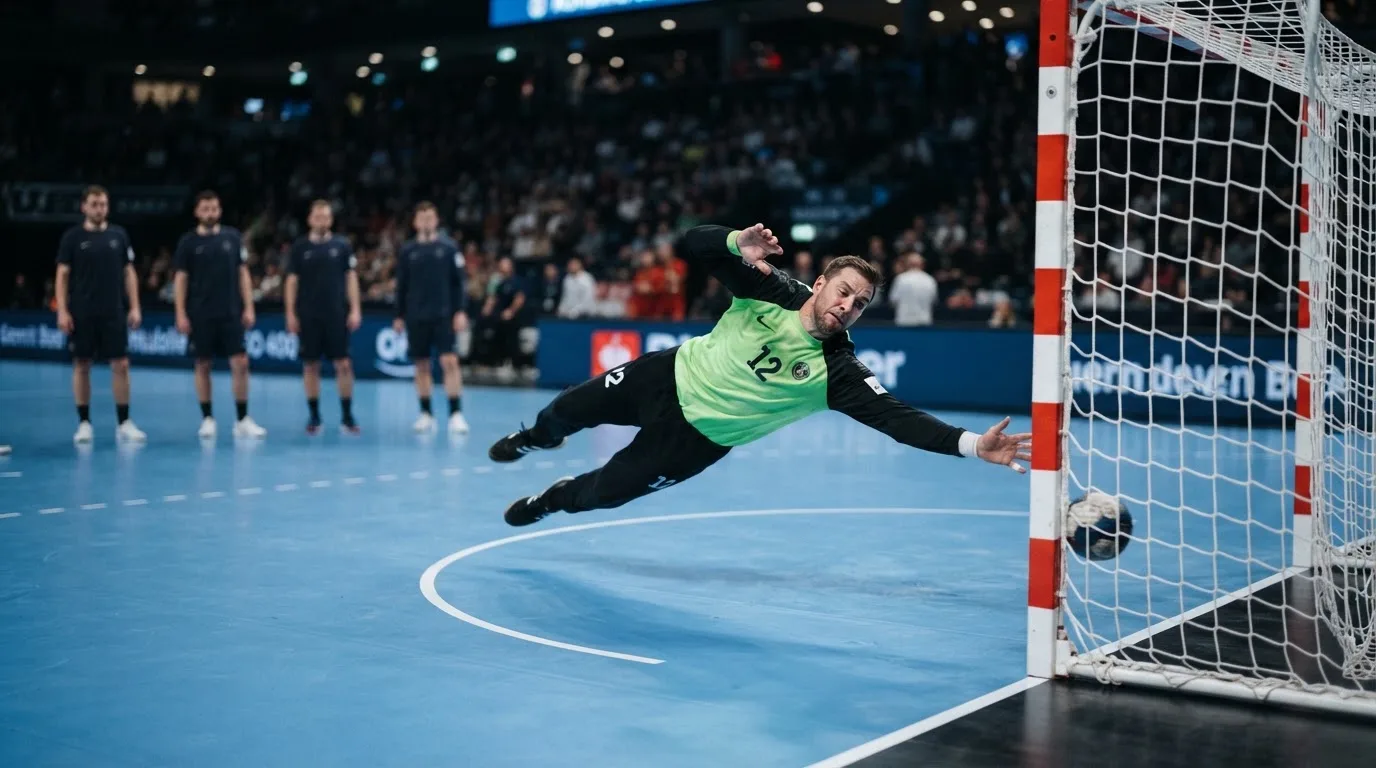
For a bettor in Great Britain, the practical consequence is that the better markets sit where the data is richest. Champions League group-stage nights carry the deepest pre-match cards and the sharpest prices, then the European League and the domestic leagues mentioned above. International tournaments — World Championships, European Championships, the Olympics — pull the heaviest handle but often a narrower margin, because books compete harder for that volume. Friendly tournaments and lower-tier domestic leagues carry the widest margins and the thinnest props: a price on the outright there is usually one bookmaker’s view rather than a market consensus.
Women’s handball deserves its own mention. The women’s Champions League has grown in profile in recent seasons and most UK-licensed books now price its group stage. Women’s World Championships run on the same biennial rhythm as the men’s; the same caveats apply regarding market depth relative to the men’s events.
The ten UK-licensed bookmakers for handball
The list below draws from the Gambling Commission’s public register of remote operating licences and is current as of the register snapshot. Inclusion here is a fact about a licence, not a recommendation: every name on it is licensed to take remote bets from customers in Great Britain, and what makes each one distinct sits beside the licence line. The branding matters — Ladbrokes and Coral run under LC International Limited, Paddy Power and Betfair both sit inside PPB Counterparty Services Limited — so what looks like a longer shortlist on a bookmaker’s own marketing page often traces back to fewer underlying licence holders than the logo count suggests.
| Bookmaker | Gambling Commission remote licence | Position on handball |
|---|---|---|
| Betway | 039372-R-319367-029 (Betway Limited) | Match result, handicaps and totals across major leagues; Free Bet Club runs a recurring weekly incentive for settled account holders. |
| Paddy Power | 039439-R-319330-013 (PPB Counterparty Services Limited) | Coverage runs deep across the football, horse racing and rugby that anchor its app, with handball priced inside its standard menu of sports. |
| BetMGM | 039198-R-319450-029 (LeoVegas Gaming PLC) | New UK customers depositing £10 or more and placing a sports bet within 7 days receive four £10 free bets split across two football accumulators of 4+ selections and two sports multiples of 2+, valid for 7 days. |
| VBet | 044662-R-324273-022 (SCGO Limited) | New verified customers staking £10 or more on a first-ever settling bet that loses receive a £10 free bet; the offer is gated to first-bet losers only. |
| bet365 | 055148-R-331498-002 (Hillside (UK Sports) ENC) | Official global betting partner of the UEFA Champions League; pre-match and in-play Bet Builder combines markets from one event into one bet, Super Boosts and Winnings Boosts layer over singles and Bet Builders. |
| Kwiff | 044448-R-323408-017 (Eaton Gate Gaming Limited) | App carries a 17+ age rating and is registered as a trademark operated by Spryme Limited; the platform’s distinguishing feature is a mechanic that can boost winning payouts on settled bets. |
| Matchbook | 039504-R-319407-024 (Triplebet Limited) | Runs as a betting exchange where customers back and lay against one another rather than against the house; Bet Builder, multiples, in-play and live streaming of horse racing and greyhounds sit on the platform. |
| Hollywoodbets | 053028-R-330019-013 (Hollywoodbets International UK Limited) | New players depositing £10 or more by card who place a qualifying accumulator (3+ legs, odds of 4/1 or greater) that loses receive their stake back as a free bet of up to £30, valid for 7 days from settlement. |
| Ladbrokes | 054743-R-330863-014 (LC International Limited) | High-volume app with racing as its anchor; handball is priced inside its standard sports menu and the same licence also covers Coral as a co-runner. |
| Spreadex | 008835-R-104580-022 (Spreadex Limited) | Combines fixed-odds with FCA-regulated spread betting in a single app; spread betting losses can exceed deposits, which is the central risk of that side of the product. |
The table carries the two columns that matter for an informed choice — licence and what each operator’s own terms say about its place in the market — without padding them with reprints of the registration snapshot. Every brand here is licensed to take remote bets from customers in Great Britain, and the third column is what each operator offers as a feature; where research did not turn up a handball-specific term, none is written.
Betway
Betway sits on the football-heavy side of the UK sportsbook market, with the Free Bet Club as its recurring weekly hook: opt in once, spend £25 or more on sports during the week, and the account credits with two £5 free bets, capped at £10. Handball is priced inside the standard sports menu, with match result and the standard handicaps and totals covered for the bigger leagues.
Worth it for the punter who likes a regular cadence of free-bet credits and is happy to plan a weekly qualifying spend; less compelling for a casual bettor who places only the occasional wager.
Paddy Power
Paddy Power’s app carries a wide sports menu anchored on football, horse racing, boxing, rugby, tennis, golf, darts, snooker and Formula 1, and handball prices sit alongside the more heavily traded sports rather than being a flagship in its own right. The brand runs its promotional cadence through price boosts and money-back specials rather than a flat welcome bonus.
The value here is breadth rather than depth on this particular sport; a bettor who already has a Paddy Power account for horse racing or football will find handball available without opening anything new.
BetMGM
BetMGM’s UK sports welcome offer splits a £10 minimum deposit into four £10 free bets: two tied to football accumulators of four or more selections, two to sports multiples of two or more. The free bets are valid for seven days from credit and require opt-in; the qualifying bet must be placed within seven days of registration and settled.
This structure suits a punter who already places accumulator bets on football and wants the sports-multiples side of the credit to stretch into handball; the football-anchored free bets are wasted value if accumulators are not your thing.
VBet
VBet’s welcome is the narrowest of the ten on the headline figure: a single £10 free bet, contingent on the first ever settled sports bet losing. There is no provision for a winning first bet to trigger anything, and verification is required before the free bet is credited.
It suits a first-time sportsbook customer who is comfortable with a free bet on the losing side; a punter who expects a credit regardless of result will find the structure punitive compared with rivals that pay out on either outcome.
bet365
bet365 occupies a distinctive position as the official global betting partner of the UEFA Champions League and as the most downloaded sports betting app in the UK App Store. The platform layers Super Boosts, Winnings Boosts on Bet Builders and selected singles, daily Bet Boosts, and a pre-match and in-play Bet Builder that combines markets from one event into a single bet. Live streaming covers a wide event range and in-play markets run across most sports.
For a handball-focused bettor, the Champions League pull is the main draw: this is where bet365’s market depth and price competition are sharpest, and the in-play coverage of group-stage nights is broader than most rivals manage.
Kwiff
Kwiff is licensed by the UK Gambling Commission under a remote general betting standard licence held by Eaton Gate Gaming Limited, with the brand registered as a trademark operated by Spryme Limited. The App Store age rating is 17+, reflecting the same gambling age floor as every licensed operator. The platform’s differentiating mechanic is “supercharged” payouts — odds on settled winning bets can be boosted by a randomised factor after settlement.
The brand is built for the punter who likes the surprise of a payout higher than the price on the slip; the randomness cuts both ways and most winning bets still settle at the displayed price.
Matchbook
Matchbook is the only exchange on the list. Customers back and lay selections against one another rather than against a bookmaker’s margin, which means prices are typically sharper, especially on the more liquid handball markets during Champions League nights. The platform carries Bet Builder, multiples, in-play, and live streaming of horse racing and greyhounds.
It suits a more active punter who is comfortable with exchange mechanics and lay betting; a casual customer betting only on weekends will find the interface steeper than a traditional sportsbook.
Hollywoodbets
Hollywoodbets’ sports welcome offer is structured as a stake-back: new players depositing £10 or more by card who place a single qualifying accumulator (stake £10 or more, three or more legs, minimum odds of 4/1) that loses within seven days receive their stake back as a free bet of up to £30. One free bet per customer.
This is a strong structure for an accumulator punter; the requirement of three legs and minimum 4/1 odds means the qualifying bet itself has to be a deliberate multi-selection wager rather than a routine single.
Ladbrokes
Ladbrokes’ app carries a high user rating and a broad sports menu, with horse racing as the central feature. Handball is priced in the standard sports menu but rarely carries the depth of markets that bet365 applies to the Champions League. The same licence under LC International Limited also covers Coral, which means a Ladbrokes customer can often find the same promotional mechanics repackaged under the sister brand.
It is the natural fit for a punter who already has a Ladbrokes or Coral account for racing and wants handball pricing without opening a second brand.
Spreadex
Spreadex is the only operator on the list that spans two regulatory regimes: fixed-odds betting under the Gambling Commission, financial spread betting under the Financial Conduct Authority. One-click, auto and partial cash out is available across both product types, with Bet Builder across fixed odds or spread markets and live streaming of UK and Irish horse racing, greyhounds, tennis, NFL and selected football events.
Spread betting losses can exceed deposits, and the FCA-regulated side of the product is a different risk profile from the fixed-odds half. A punter who has never used spread betting should treat that side of the app as a separate product, not as a familiar sportsbook with extra features.
What a UK handball betting site is, and what it is not
A betting site, in the strict British sense, is a remote operator that holds an operating licence from the Gambling Commission covering remote general betting standard (real events) — or, in the case of exchanges, remote betting intermediary. There is no statutory list of permitted sports or markets anywhere in the Gambling Act 2005 or in the Licence Conditions and Codes of Practice that the Commission enforces. What a bookmaker chooses to offer is a commercial decision, with the constraint that the licence category covers the activity and that the operator’s own house rules and trading team approve each market before it goes live.
This has two practical consequences for a punter. First, the existence of a price is not, by itself, evidence that the operator has a particular opinion on the outcome — it means the trading function has decided to take bets on it, often within a defined liability cap. Second, absence of a price is not, by itself, evidence that the regulator disapproves; it means the operator has not found it commercially viable to trade. The Commission’s job is to license and supervise the conduct of gambling, not to curate the menu.
Why Great Britain licences matter
A Gambling Commission remote operating licence is the only licence that lets a bookmaker lawfully provide facilities for gambling to customers in Great Britain, wherever the operator itself is based. The Gambling (Licensing and Advertising) Act 2014 brought that point home by extending the regime to operators located anywhere in the world, not just within the UK. A Curaçao, Malta or Gibraltar licence does not substitute: those licences authorise the operator in their own jurisdictions, but they do not authorise the operator to take bets from a customer sitting in Manchester or Edinburgh.
What this means at the betting desk:
- Credit card deposits are banned for gambling in Great Britain, including credit-card-funded e-wallet payments; debit cards and bank-based methods are not covered by that ban.
- Identity verification — name, address and date of birth — is a precondition for depositing or gambling at any licensed remote operator, including with a free bet or bonus.
- GAMSTOP is mandatory for every online operator holding a remote licence, with self-exclusion periods of six months, one year, five years, or five years with auto-renewal.
- Wagering requirements on bonuses are capped at 10x.
- Mixed-product promotions — “bet on football to get free spins” — are banned outright.
What it does not mean: the licence guarantees winning bets get paid out instantly, that the operator will not restrict a customer’s account, or that customer service will resolve any dispute in the customer’s favour. The brand entries above are licensed — that part is verifiable on the Commission’s public register. What each brand does with its licence is operational, not regulatory, and that is where the differences between Betway, bet365 and the other eight sit.
Spotting a real licence on the register
The Commission’s public register is searchable by business name, trading name, domain or account number. For any operator on the list above, the relevant search is by the licence-holder name (the corporate entity, not the trading brand) — Betway Limited rather than “Betway”, LC International Limited rather than “Ladbrokes”. Each licence record carries the categories of remote activity it authorises, the trading names registered against it, and any domains the operator has notified.
A brand can run on a .com or .co.uk domain and that does not change anything about whether it holds the licence: domain suffix does not prove anything in either direction. The only test is the register entry itself, and the register is updated as licences change hands, are suspended or are revoked.
Operators frequently market themselves with references to multiple jurisdictions — Malta, Gibraltar, Curaçao — for the business entities underneath. That is normal; what matters for a customer in Leeds is whether the trading name sits against a Gambling Commission remote licence, and that lookup takes a minute on the register.
Responsible gambling in Great Britain
The framework for safer gambling runs through three layers: mandatory customer-protection conditions written into the operator’s licence (the LCCP), the national self-exclusion scheme (GAMSTOP), and the free support services funded by the industry and the NHS. None of this stops a punter from placing a bet they later regret, and none of it removes the responsibility that sits with the person placing the bet.
Self-exclusion via GAMSTOP
GAMSTOP is the national multi-operator self-exclusion scheme and a mandatory licence condition for every online operator licensed in Great Britain. A customer registers once and the exclusion is enforced across every GB-licensed betting site, casino and bingo operator that runs under the scheme; betting shops use a separate, in-shop service.
Self-exclusion periods are six months, one year, five years, or five years with auto-renewal. After the minimum period ends, the exclusion stays in place for a further seven years unless the customer asks GAMSTOP to remove it, which means a six-month exclusion runs for at least six months and seven years from the date of registration if the customer does not actively remove it. The seven-year tail is one of the lesser-known facts about the scheme.
Financial checks and deposit limits
Two distinct layers of financial protection apply on top of GAMSTOP. The financial vulnerability check — in force since 30 August 2024, with the £150 rolling 30-day threshold applied since 28 February 2025 — is a public-record check the operator runs when a customer’s deposits minus withdrawals cross £150 over 30 days. It looks for bankruptcy orders, county court judgments and similar public records; it is not an income check and not a credit reference check, and an unsatisfied county court judgment can trigger deposit restrictions even for a profitable bettor.
The financial risk assessment — what the press has called the “affordability checks” — sits separately. The Commission announced in July 2026 a staged plan for these assessments, with no start date settled. Treat that as “announced, staged, no start date” and check the Commission’s site for the current position if the question matters at the moment of betting.
Deposit limits are a separate product feature rather than a state-set ceiling. RTS 12 sets a framework the operator must implement, with the first changes applied since 31 October 2025 and a second phase postponed to 30 September 2026. Whether that second phase is now live is not settled; check the operator’s safer-gambling page for the current position.
The important point for the punter is that limits are a customer-set number, not a state-set ceiling. No statutory cap on stakes or losses in sports betting exists, and operators set their own maximum stakes and customer restrictions. A £10,000 stake is legal if the operator is willing to take it; the question of whether the operator is willing to take it is a commercial one, not a regulatory one.
Where to get help
GamCare runs the National Gambling Helpline and is the front door for anyone whose betting has crossed the line from entertainment into something else. GambleAware funds a range of treatment and support services and operates as a separate organisation. NHS gambling clinics offer specialist treatment on referral, and Gamblers Anonymous runs peer-support meetings in person and online.
The point to make is simple: every licensed operator on the list above links to one or more of these services from its safer-gambling pages, and the links are not buried by design. They are the routes out of a problem, and the existence of a problem is the only criterion for using them.
Crypto, e-wallets and payment methods
The British legal position on payment methods is short and specific. Credit cards are banned for gambling, including credit-card-funded e-wallet deposits. Everything else — debit cards, bank transfers, open-banking payments, e-wallets funded from a debit card or bank account — is governed by each operator’s own payment terms and by the Commission’s money-laundering rules.
Cryptocurrency deposits sit in a grey area. There is no Commission prohibition on accepting cryptocurrency at a licensed site, and the Commission’s own guidance does not bar it; at the same time, no major UK-licensed sportsbook publicly markets a bitcoin or ethereum deposit route as a flagship feature. The practical effect is that the user experience a casual punter expects — a wide choice of payment methods, fast withdrawals, low fees — maps closely onto the debit-card-and-bank-transfer end of the spectrum rather than onto the cryptocurrency end.
For punters who prefer a degree of payment-method privacy, the lawful routes in Great Britain run through e-wallets and through open-banking payment providers. None of those routes is anonymous: identity verification at the licensed site means the operator knows who is depositing, whatever the payment method. The “anonymous” framing that recurs in marketing for offshore sites trades away exactly the protections that come with a GB licence — dispute resolution, source-of-funds scrutiny, GAMSTOP coverage — in exchange for payment discretion. The trade is rarely worth making, and it is rarely available from a GB-licensed site.
Bonuses and free bets on UK handball offers
A UK welcome bonus is a marketing expense the operator books against the long-term value of a new customer, and the layer of rules underneath the headline number is where the offer lives or dies. The Commission’s promotion rules — in force since 19 January 2026 — cap wagering requirements at 10x and ban mixed-product promotions. Inside that cap, the actual terms vary materially from one operator to the next.
The four most common shapes are these:
- Stake-back free bet. Hollywoodbets’ structure is the clearest example: deposit £10 by card, place a qualifying accumulator of three or more legs at minimum odds of 4/1, and if it loses within seven days the stake returns as a free bet of up to £30.
- Free bet on a losing first bet. VBet is the cleanest version: a £10+ first settled sports bet that loses triggers a single £10 free bet; verification is required before the free bet credits.
- Multi-credit welcome. BetMGM splits a £10 deposit into four £10 free bets — two football accumulators of 4+ selections, two sports multiples of 2+ selections — valid for seven days from credit.
- Recurring weekly credit. Betway’s Free Bet Club runs every week for opted-in customers: £25 or more of settled sports bets during the week earns 2 × £5 free bets, up to £10 weekly.
Two terms apply across every welcome offer at a GB-licensed operator, because they are not operator-set: a 10x cap on wagering requirements, and a ban on mixed-product promotions. The first means that an offer described as “wager the bonus 50 times” cannot be marketed under that wording; the second means an offer that requires gambling on two or more product types — “bet on football to unlock free spins” — is banned outright.
One further term matters for any punter reading the small print: free bets generally do not return the stake with a win. A £10 free bet at 3.00 returns £30 (£20 of profit), not £30 profit on top of a £10 stake returned. Treating the offer as cashback rather than as a fresh stake to be risked is the cleanest way to value it. The wording the audit on this page applies — describe the offer qualitatively, never quote a working code — is itself a guardrail, because promo codes are the surface where terms shift most quickly.
Live betting and cash out on handball
Live betting is the centre of gravity for in-play handball markets. GB-licensed operators offer it across the bigger competitions, with the standard in-play menu running match result, next goal, handicap, total and various combinations. The controls the operator applies — suspension of markets during timeouts, settlement rules during the last five minutes, partial cash out at certain price points — sit inside each operator’s house rules, and the Commission’s rules on in-play are the licence conditions and the social responsibility code rather than a market-by-market restriction.
bet365 is the deepest live-betting platform on the list by a clear margin. In-play betting runs alongside live streaming across a wide event range, with Bet Track, Match Live and a Live Golf Tracker (the last of those for golf rather than handball, but illustrative of the platform’s in-play product depth) sitting alongside the live channels. Bet Builder+ is available both pre-match and in-play, which means a bettor can construct a multi-market wager before the match and then add to it as the action unfolds.
Cash out on handball works the same way as cash out on any other in-play sport: the operator offers to buy back the bet at a price derived from current live odds and the original selection, settled in cash to the customer’s account. Full cash out closes the position in one transaction; partial cash out closes a fraction of the original stake and leaves the rest running. Spreadex layers one-click and auto cash out on top of the standard menu, which is a useful feature for a market where the score moves goal-by-goal and the live price can move several times a minute.
A practical point on in-play: liquidity is thinner than in football or horse racing, especially on the less popular competitions. The price the operator shows in-play is the operator’s view, not a market consensus, and the bettor’s effective margin is wider than the pre-match margin would suggest. That is the price paid for the convenience of in-play access on a sport with a smaller betting public.
Predictions, strategy and what “tipping” actually means
A prediction is a forecast, and a forecast is a probability estimate dressed up as a certainty. The marketer who sells a “lock” of the weekend and the disciplined bettor who builds a model produce forecasts of the same shape — the difference is the discipline of the inputs and the honesty of the claim.
Three principles hold for any sport, and handball is no exception.
First, the odds are the starting point, not the conclusion. A price of 1.91 on a handball favourite implies a probability of about 52.4 per cent (1 ÷ 1.91), and a price of 2.50 implies about 40 per cent. The bookmaker’s margin is what makes the implied probabilities sum to more than 100 per cent across all outcomes, so any edge has to come from finding a price higher than the model’s true probability estimate.
Second, the team-specific data is thin compared with football or basketball. Squad news, injury updates and head-to-head records exist for the top clubs, but they are sparser and less timely than equivalent data for Premier League football, and the discipline applied to a tip is correspondingly lower. Tipsters who specialise in handball are rare in the British market; their track records are hard to verify and harder to compare across vendors.
Third, bankroll discipline matters more than any model. The standard rule — stake no more than 1 to 3 per cent of a defined betting bank on any single selection, with the size scaled to the perceived edge — applies cleanly here, and applies with extra force to a market with thinner liquidity. The difference between a profitable punter and an unprofitable one, over thousands of bets, is usually stake discipline rather than forecasting accuracy.
A note on how to read a “tip”. A tip is somebody’s view of a price, expressed as a selection. It is not a guarantee, because no outcome of a sporting event is certain. Treat any source of tips as a single input among several, weigh it against the model and the price, and never stake more than the edge can justify. The bookmakers whose names appear on the list above operate inside the law; the tipsters who advertise picks on social media are not all licensed, and the regulator does not adjudicate their accuracy.
Frequently asked questions
What is the bookmaker’s margin and how can it be seen in the odds?
A bookmaker’s margin is the share of every pound staked that the bookmaker keeps on average across a market, built into the odds so that the implied probability of every outcome sums to more than 100 per cent. For an illustrative two-way market at decimal odds of 1.90 on each side, the implied probability of each outcome is 1 ÷ 1.90, or 52.6 per cent, giving a total of 105.3 per cent and a margin of roughly 5.3 per cent. Three-way markets like 1X2 carry wider margins because three implied probabilities have to overshoot 100 per cent. The narrower the margin, the better the long-run return for a bettor with a comparable model.
How is the return on a bet worked out from the stake and the odds?
On UK-licensed sites, odds are decimal by default. The total return is stake multiplied by the decimal odds, and the profit is stake multiplied by (odds minus one). A £10 stake at 1.91 returns £19.10 (£10 of stake plus £9.10 of profit); the same stake at 3.50 returns £35 (£10 of stake plus £25 of profit). For a combination bet, the odds of the individual legs multiply into one combined price, and the same formula applies to the result.
How can it be checked that a bookmaker holds a Gambling Commission licence?
The Commission’s public register is searchable by business name, trading name, domain or account number. Search by the licence-holder name — for example LC International Limited rather than the trading brand Ladbrokes — and check that the record carries the category of remote activity relevant to sports betting, which is remote general betting standard (real events). For an exchange, the category is remote betting intermediary. A licence record carrying those categories is the test; the domain suffix (.com or .co.uk) proves nothing in either direction.
Is a handball a foul in betting?
No. In betting, the word “handball” refers to the indoor team sport played seven-a-side on a 40-metre by 20-metre court, with two 30-minute halves and goals 2 metres high and 3 metres wide. The deliberate handling offence in football (using the arm or hand above the shoulder to control the ball) is a separate matter and is settled under each operator’s football rules, not under any handball market. The two concepts share a word and not much else.
Does handball count as a foul in football betting?
It does not, and the same answer applies to the related questions on fouls and handling offences: those are settled under the football-specific rules of the relevant bookmaker, which usually cite the competition’s governing body as the authority for what constitutes a foul. The handball sport is a distinct event with its own markets and its own settlement rules. The shared terminology is the only link between the two, and it is a frequent source of cross-sport confusion in question framing rather than in actual betting lines.
US & other team sports – Free bets
Content created by the «Free bets» team
