
Gaelic football betting tips and predictions in 2026 — what to know before you put money on the line
 Available in US
Data current as of 27 October 2026 and checked against the Gambling Commission’s public register of remote operating licences.

A guide for punters who follow Gaelic football and want to do more than guess. The page works through the markets that take Gaelic football on licensed British sites, the way a price is built, the disciplines that keep a bankroll intact over a season and the limits of any “tip”. There is no tip sheet here, no selection for the weekend, no predicted scoreline. The argument is that no one can promise those things — and that knowing *why* no one can is what keeps the hobby affordable.
Selection and pricing on Gaelic football
What the bookmaker actually sells
A Gaelic football betting market is a list of possible outcomes — home win, draw, away win, total goals scored, handicap, first scorer — each with a price attached. The price is a decimal number such as 1.90 or 3.40, and what it represents is the multiple of the stake returned if the bet wins. Stake £10 at 1.90 and a winning return is £19. Stake £10 at 3.40 and a winning return is £34. Profit sits underneath: £9 in the first case, £24 in the second, because the stake is paid back alongside the winnings.
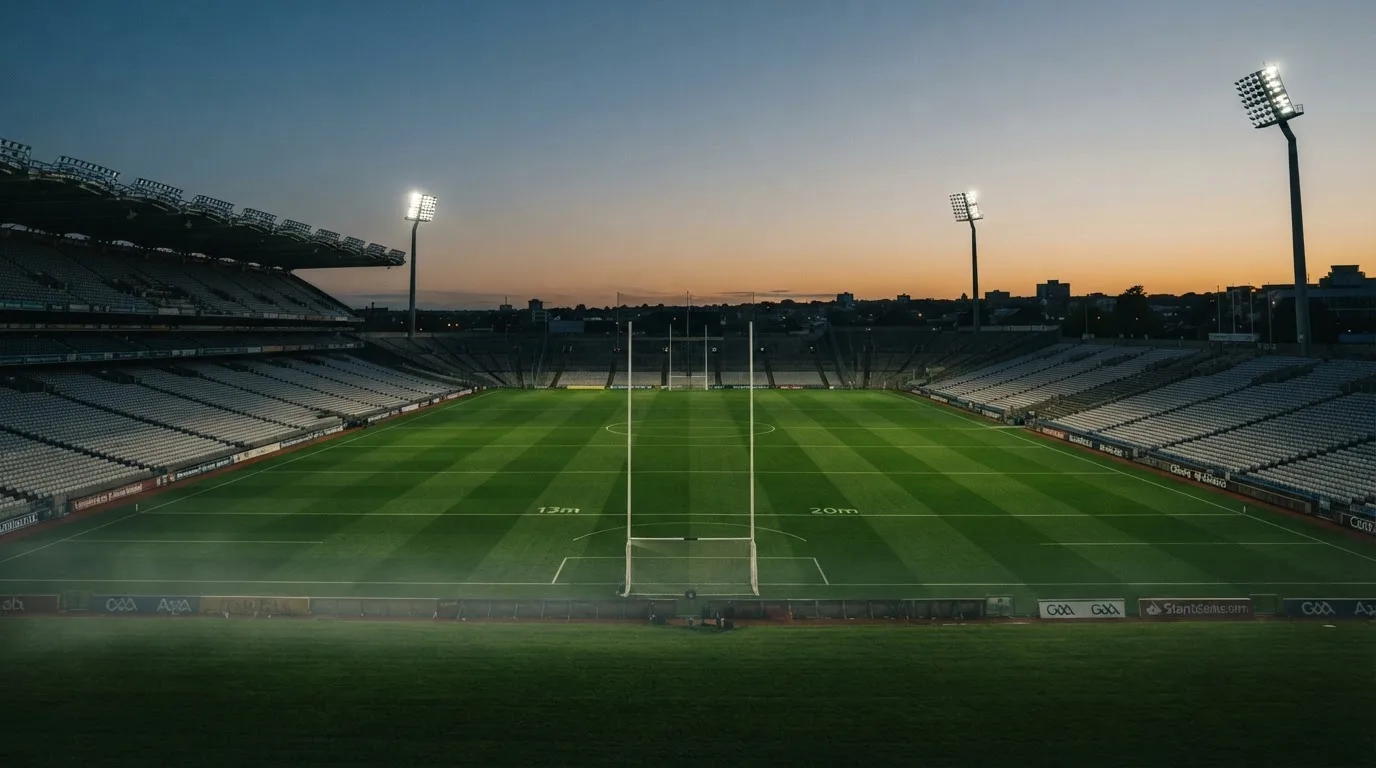
Gaelic football on a British-licensed site is fixed-odds, which is the form most punters are used to. A second form, financial spread betting, exists alongside it and a small number of firms run both. A spread bet is not a price at all: it is a range, with the punter taking a position on whether the actual figure (total points, winning margin) will be higher or lower than the range quoted. Spread bets do not have a fixed stake-and-return shape; losses can run well past the amount deposited, which is why the FCA-regulated side of those firms carries a warning to that effect. Fixed-odds bets at the same firms are governed by the Gambling Commission’s rules.
How a price is built
Behind every price is a probability the bookmaker assigns to the outcome, plus a margin. If Kerry are quoted at 1.67 to beat Mayo, that 1.67 implies the firm thinks the chance of a Kerry win is roughly 60 %. The maths is one over 1.67, which gives 0.60. But no bookmaker runs a “true” probability market — they round in their own direction — and the rounding is the margin. The margin is the cut the bookmaker takes from every pound staked across all outcomes of a market. In a clean two-way market the margin sits inside the implied probabilities and pushes them above 100 % when added up. A 1.90 / 1.90 line — favourites and outsiders at the same decimal price — implies about 52.6 % on each side, which sums to 105.3 %. That 5.3 % over-round is the firm’s edge on the market.

A useful example shows the mechanics without quoting a real fixture. Take an illustrative two-way Gaelic football market priced at 1.90 / 1.90. The decimal reciprocal of 1.90 is 0.5263, so each outcome carries an implied probability of 52.63 %. Sum the two: 105.26 %. The reciprocal of that sum is the payout share. The margin is the gap: 1 minus the payout share, which gives a margin of about 5 % on this market. In other words, for every £100 staked across both outcomes the bookmaker expects to keep roughly £5 in the long run. The exact band depends on the firm’s pricing: a sharper bookmaker in a busy market might run this at 103 % (a 3 % margin); a typical GAA fixture with thinner liquidity could push it to 108 % (8 %). The band, not the single figure, is the point.
What a value bet actually means
A “value bet” is the term punters use when the price on offer is higher than the price they think reflects the true chance. If your own model says Mayo have a 45 % chance of winning and the bookmaker quotes 2.40 (which implies about 42 %), the 2.40 is bigger than your own probability would call for — the value sits on that side of the line. The point is comparison, not certainty. The model can be wrong; the bookmaker’s price can move before the bet is placed; the result on the day is independent of either.
This is also where the limits of any “tip” become visible. A tip is somebody else’s model output, stated as a selection at somebody else’s price. It does not know more than the price already says. A punter who follows tips without rebuilding the probability behind them is following a stranger’s judgment at a margin the stranger may not have checked.
Margins in the All-Ireland and provincial markets
Gaelic football betting in Great Britain sits inside a fairly narrow band of mainstream sports in the punter’s mind — it is not Premier League football, and the range of markets at the bigger firms is real but not as deep as for the English leagues. The pricing reflects that. A 1X2 market on a big All-Ireland fixture tends to run at a margin comparable to other tier-one sports at the same firm; a smaller county championship fixture, particularly midweek with a sparse betting interest, will be priced wider because fewer punters take the other side and the bookmaker is not forced to compete on price. The practical lesson is to back bigger fixtures when the bet is on price sensitivity, and to read the smaller ones carefully because the margin is the first thing the price hides.
Settlement conventions
Most Gaelic football bets settle on 80 minutes plus injury time for the senior inter-county game. The exact cut-off is stated in each operator’s house rules and matters for in-play bets more than pre-match ones, because the lines move while the clock runs. Bets on player markets (first goalscorer, man-of-the-match-converted props) usually settle on the official GAA ruling, not on any media call. Ante-post markets on a county to win the All-Ireland settle on the final at Croke Park. A player not starting, a match abandoned short of sixty minutes, a Rule 4 deduction — each is governed by the bookmaker’s own settlement rules, and those rules vary in detail from firm to firm.
Combination bets and how they compound
An accumulator — “acca” in British usage — is a single bet whose odds are the product of the legs. Two legs at 1.80 and 2.10 produce a combined price of 3.78; four legs at 1.80 each give 10.50. The stake is returned in full on a win, multiplied by the combined price. The trade-off is that every leg must win, and the bookmaker’s margin compounds leg by leg — a 5 % margin on three legs does not give 15 %, because the margins multiply in the same way the odds do, and a multi-leg acca at average-priced legs can carry a 13–15 % effective margin. A punter who builds accas for the value of the combined price is paying a heavier slice of every pound than the price implies.
Same-game multis and bet builders sit in the same family but draw from a single match — Dublin to win, over a total goals line, a player to score. The legs can correlate, and the bookmaker’s pricing has to account for that, which is why two legs that “look” independent are usually priced with a thinner margin than a multi-match acca would be. Bet builders are not a way to arbitrage the firm’s pricing; they are a way for the firm to widen a market they would otherwise leave as a single line.
Tournament structure, fixtures and where the season sits
How the Gaelic football calendar moves
The GAA’s senior inter-county football championship runs from late winter into late summer. The four provincial championships — Leinster, Munster, Connacht and Ulster — produce four provincial winners, and the All-Ireland series proper follows, culminating in the All-Ireland Senior Football Championship final at Croke Park in late July. The final is one of the fixtures most heavily priced on British-licensed sites; the semi-finals and quarter-finals also carry full markets at most firms.
Senior inter-county matches last seventy minutes in two halves of thirty-five. Most other adult grades run sixty minutes. The pitch itself is a rectangular grass surface 130–145 metres long and 80–90 metres wide, which is wider than a soccer pitch. A goal — the ball below the crossbar into the net — is worth three points. A point — the ball over the crossbar — is worth one. Since the 2025 rule changes, a shot from outside the new 40-metre arc is worth two points. The two-point arc has reshaped how Gaelic football is played and how it is priced: a side that can work the ball beyond forty metres has more ways back into a tight game than before, and a live match can swing further per possession than the old format allowed.
Counties with the deepest records
Kerry hold the most All-Ireland Senior Football Championship titles — thirty-nine of them, a record that puts them at the top of every ante-post market for the next season. Dublin, Galway, Mayo and Meath sit in the next tier of the historical record. The 2026 All-Ireland Senior Football Championship final was played on 26 July 2026 at Croke Park, Dublin, with Mayo beating Kerry 1–20 to 1–17 for their fourth title. Ante-post markets for 2027 open at the same firms shortly after the final; those markets settle on the 2027 final and price the early favourites accordingly.
Where punters actually find a market
Gaelic football betting sits on the “Gaelic games” or “GAA” tab on most British bookmakers alongside hurling. Coverage is deepest for the All-Ireland championship and the provincial finals; the National League, the Tailteann Cup and the lower-tier club championships tend to have only moneyline markets, if those. At the biggest firms there are also novelty markets on whether a county will win the All-Ireland, on individual player awards and on the Joe McDonagh / Christy Ring cups that sit underneath the senior hurling championship. Punters after a long shot on a smaller county should expect the market to be a moneyline and not much more.
Why a Gaelic football game is not a soccer game
The point system, the scoring arc and the substitution rule — six of up to fifteen named substitutes may be used — mean that the sport does not behave like a 90-minute soccer match. A side down five points can come back through a run of two-pointers, and a side a goal up with twenty minutes left is not necessarily home. Punters who carry a soccer model straight across tend to underprice comebacks. The pricing reflects that, but only after the market has been open long enough for the model to settle in. The first hour of a new market often pays the bookmaker’s wider margin.
How ten bookmakers line up for Gaelic football
The shape of the licensed shortlist
The ten brands reviewed below all hold a Gambling Commission remote operating licence and are listed on the Commission’s public register against a licensee holding a remote general betting standard (real events) licence, with one exception running as a remote betting intermediary. Each card states the licence number, the licence holder and what the operator’s own terms say on the topic the comparison hangs on — the format prescribed by this guide’s table slot. The “key subject” each row addresses is Gaelic football pricing and market depth. The table that follows this section pulls the rows together so a punter can compare side by side without rereading each card.
landsca
| Brand | Gambling Commission remote licence number and licence holder | What the operator’s own terms state on the key’s subject |
|---|---|---|
| Tote | 054779-R-331321-008, held by TDCO Limited | Pool-led pricing on UK and Irish racing; GAA fixtures priced through the tote pools product alongside the fixed-odds card |
| Fafabet | 057385-R-333191-006, held by Taichi Tech Limited | Best Odds Guaranteed on UK and Irish horse racing from 9am on race days — not a Gaelic football promotion, but the firm’s wider terms cover GAA pricing in the standard fixed-odds card |
| Kwiff | 044448-R-323408-017, held by Eaton Gate Gaming Limited | Supercharge can boost odds on a bet across any sport at the firm’s discretion, including Gaelic football, with a cap on the size of the boost |
| DAZN Bet | 048756-R-327274-019, held by DZBT Limited | Standard fixed-odds pricing on GAA fixtures under the general sports terms; minimum deposits vary by payment method |
| Smarkets | 039173-R-319366-011, held by Smarkets (Malta) Limited | Betting exchange pricing set by members against the firm’s commission; GAA markets appear when members want them and the depth depends on liquidity |
| Bet Ahoy | 100094-R-341742-003, held by Bet Ahoy Ltd | Fixed-odds card covers GAA fixtures in the standard menu; the 10 % acca bonus and Best Odds Guaranteed apply to racing rather than Gaelic football |
| BetTom | 064959-R-339314-003, held by Bet Tom Limited | Fixed-odds card covers GAA fixtures; the welcome package runs across sports and casino with separate wagering conditions on each |
| Dabble | 065677-R-340363-005, held by Dabble Sports UK Ltd | Fixed-odds card covers GAA fixtures; the welcome free bet carries a seven-day expiry and the stake is not returned on a win |
| BetUK | 039198-R-319450-029, held by LeoVegas Gaming PLC | Fixed-odds card covers GAA fixtures; free bet terms exclude virtual sports, esports and non-UK/IE horse racing, with minimum odds applying |
| Spreadex | 008835-R-104580-022, held by Spreadex Limited | Both fixed odds and spread betting under one roof; the firm’s own terms warn that spread betting losses can exceed the deposit |
What the table leaves out
The columns in the table above are the only comparison the spec prescribes. A licence number tells a punter the brand is regulated in Great Britain, and the holder’s name tells them who is responsible behind the brand — both answers to the basic question, “is this site checked by the Commission?”. The operator’s own terms on the key’s subject answer a different question, namely how the firm treats Gaelic football inside its own pricing model and its own rules. The rest of the variables a punter might want — minimum deposit, payment methods, withdrawal time, mobile-app rating — sit in each operator’s own terms page and are not in the spec, and a table cell that contained only dashes would say less than the operator’s own page.
How betting on Gaelic football sits inside the wider market
The sport, the season and the punter
Gaelic football is one of two GAA sports priced on British-licensed sites; the other is hurling, which runs the same championship structure on the same pitch dimensions with a slightly different scoring arc and a smaller ball. Most firms that carry Gaelic football also carry hurling, and the markets on the two sports are usually bundled on the same tab. Hurling’s championship runs earlier in the summer and ends in late July as well; the All-Ireland Senior Hurling Championship final is the second-biggest fixture on the British GAA calendar. From a punter’s perspective, the two sports price in the same way, settle the same way, and offer the same range of markets at the bigger firms.
The GAA is the governing body of both sports, and the All-Ireland finals at Croke Park are the fixtures that get the deepest market. Everything underneath — provincial finals, the National League, the Tailteann Cup, the Joe McDonagh Cup and the club championships — sits at the second tier of coverage, with moneyline markets at most firms and the deeper options only on the bigger days. Smaller counties that have never lifted an All-Ireland Senior Football title do still get a price when they reach a provincial final, because that is when the firms’ market-makers have enough liquidity to run a meaningful line.
What an unlicensed site does not give a punter
A brand that does not hold a Gambling Commission licence is not licensed to provide remote gambling facilities used in Great Britain, irrespective of where the operator is based. The 2014 Gambling (Licensing and Advertising) Act closed the offshore loophole. A Curaçao or Malta registration does not authorise a firm to take bets from a customer in London, Manchester or Edinburgh. Operating without a Commission licence is an offence under section 33 of the Gambling Act 2005, and the operator carries the risk, not the punter — but the punter still loses the protections that come with the licence.
What a licensed punter keeps, that an unlicensed punter does not, runs along four lines. GAMSTOP, the multi-operator online self-exclusion register, only applies to licensed sites; an offshore bookmaker is not in the scheme. The Commission’s complaints and dispute-resolution route only covers licensed brands; a punter with funds withheld by an unlicensed firm has no equivalent British recourse. The 10x wagering cap on bonuses applies only to licensed sites, and the £150 rolling-30-days financial vulnerability check applies only there too. The Commission can investigate, fine and revoke a licence when a licensed firm misbehaves, and it cannot do any of those things to one it has never licensed. None of this is a comment on the safety of any individual unlicensed site; it is a comment on the protections the punter gives up by leaving the licensed market.
Why “Gaelic games betting” is the wider umbrella
A punter who searches for “Gaelic football betting” will also see “Gaelic games betting” and “GAA betting” as related terms on the same sites. The wider umbrella covers football and hurling, men’s and women’s championships, the National League, the club championships and the inter-provincial series. Coverage varies by operator: a firm whose business is racing will carry only the finals and a moneyline; a firm whose business is a deep sportsbook will carry moneyline, totals, handicap, player markets and ante-post on each championship.
The punter’s working assumption should be that Gaelic games at a British-licensed site is a smaller market than Premier League football, that the depth is real on the All-Ireland days and thinner elsewhere, and that the margin inside the price is wider on the smaller fixtures. The book’s own pricing reflects this — it has to, because the firm cannot know what shape the price should be on a long-tail fixture and does not want to lose either side of it.
The legal frame in Great Britain
The Gambling Commission and the 2005 Act
The Gambling Commission is the regulator of the commercial gambling market in Great Britain. It is a non-departmental public body sponsored by the Department for Culture, Media and Sport. Its powers come from the Gambling Act 2005, which covers England, Scotland and Wales. Northern Ireland sits outside the 2005 Act and runs its own older regime, which is why the standard phrase in this guide is “Great Britain licence” and “GB-licensed”, never “UK licence”. The Commission issues operating licences, personal licences (for the people running licensed firms) and codes of practice; it does not license advertising, which is handled by the ASA under the CAP Code (non-broadcast) and the BCAP Code (broadcast).
Since the Gambling (Licensing and Advertising) Act 2014 an operator whose remote gambling facilities are used in Great Britain needs a Commission licence wherever it is based. Sections 33 and 36 of the 2005 Act, as amended, are the relevant provisions. Before 2014 a remote operator could base itself offshore and serve British customers without a Commission licence; that route is now closed. A Curaçao or Maltese or Gibraltar registration is not a substitute.
The licence types a punter should recognise
A remote general betting standard (real events) licence is the standard licence for a fixed-odds sportsbook at a British-licensed firm. A remote general betting standard (virtual events) licence is the equivalent for computer-simulated fixtures. A remote general betting limited licence is the lower-tier equivalent for smaller operators. A remote pool betting licence covers Tote-style pool products and off-course pool betting on horse and dog racing. A remote betting intermediary licence covers betting exchanges, where the firm does not take a position against the punter but matches bets between members. Each licence has its own conditions and each operator is listed on the Commission’s public register against the licence category it actually holds.
The public register
The Commission’s public register can be searched by business name, trading name, domain or account number. A punter who wants to check a brand looks it up by name or by domain; if it does not come back, it is not licensed. The register shows the licence number, the categories, the licence holder’s name, the trading names under the licence and the licence status. There is no count of licensed operators that is stable enough to print without an access date, and the figure should always be cited as such.
Identity and age
Identity and age verification happen at the account, not at the bet. Since 7 May 2019 every licensed remote operator has to verify the customer’s name, address and date of birth before they can deposit or gamble — including with a free bet or a bonus, before any stake goes on the line. A free bet cannot be claimed by an unverified account. A licensed site does not offer anonymous play, and it does not offer under-18 play. The minimum age is 18. This is the single biggest practical difference between a licensed site and an offshore one.
Bonuses and the 10x cap
The bonus rules that took effect on 19 January 2026 cap wagering requirements on bonuses at 10x. A £10 bonus with a 50x wagering requirement used to require £500 of qualifying bets; under the cap it requires no more than £100. The cap applies to bonuses on licensed sites. Mixed-product promotions — an offer that asks the punter to bet on two or more product types such as betting, casino, bingo and lottery, for example “bet on football to get free spins” — are banned. Whether the cap applies to free bets that carry no wagering requirement, and whether there is a cap on the money value of a bonus, are not settled in the published rules.
A punter reading a bonus in 2026 should read two numbers before they claim. The bonus size, which is the marketing headline. And the wagering requirement, which is the size of the betting the bonus demands before the winnings can be withdrawn. The ratio of the second to the first is the cost of the bonus in betting volume, and the ratio of the cost to the betting volume multiplied by the firm’s margin on the relevant market is the expected cost of clearing the bonus in pounds. The marketing calls the first a “free” or “risk-free” amount; the arithmetic calls the second the real measure.
What may be bet on
There is no statutory list of permitted bets or markets in Great Britain. A licensed operator offers markets under its own house rules and the LCCP. In-play betting is offered by every British-licensed sportsbook of any size, and the controls are the firm’s own licence conditions and its customer-protection duties. Esports are treated like any other event for the purposes of the licence. Virtual events carry their own licence category. Politics, TV and novelty markets are offered by GB bookmakers and no statutory prohibition was found.
Spread betting — the other licence
Financial spread betting is regulated by the Financial Conduct Authority, not the Commission. A firm that runs both sides — fixed-odds sports betting under a Commission licence and financial spread betting under an FCA authorisation — is operating two regulated activities at once. The non-financial side of spread betting (sports spread products, for example on a Gaelic football total points line) is inside the General Betting Duty regime and falls under the Commission’s remit, but the financial side carries an FCA warning that losses can exceed the deposit.
Keeping gambling safe
The licensed firm’s safer-gambling tools
A licensed remote bookmaker has to offer the safer-gambling tools listed in the Commission’s social responsibility code. The tools include deposit limits, time-out periods, product restrictions and self-exclusion. Deposit limits can be set by the punter on a daily, weekly or monthly basis and have to be confirmed by the operator when the punter reduces them and honoured when the punter raises them after a cool-off period. Self-exclusion is the firm-side mirror of GAMSTOP, the cross-firm register: a punter who self-excludes at one licensed site is excluded at that site only, and GAMSTOP is the route that closes the punter out of every licensed remote operator at once.
The financial vulnerability check applies to licensed remote operators when a punter’s net deposits exceed £150 across a rolling 30-day window, since 28 February 2025. The check is a public-record check (bankruptcy, county court judgment, IVAs) and not an income check or a credit reference check. The wider affordability checks — the “financial risk assessments” in the press — have been announced in a staged rollout with no confirmed start date, and the right line is “announced, staged, no start date”, never “in force”. A punter should expect questions about source of funds at higher volumes; that is normal under the money-laundering rules.
Help, support and self-exclusion
GamCare runs the National Gambling Helpline, free and confidential, on 0808 8020 133. GambleAware funds research, treatment and education. The NHS runs gambling clinics in several cities for the higher-tier cases. Gamblers Anonymous runs peer-support meetings. These are the routes a punter or a family member takes when gambling has stopped being entertainment; they are not associated with any operator.
GAMSTOP is the free multi-operator online self-exclusion scheme. It is a mandatory licence condition for every online operator in Great Britain, in force since 31 March 2020. The minimum self-exclusion period is six months, then one year, then five years; the five-year period auto-renews. After the minimum period the exclusion stays in place for a further seven years unless the punter asks GAMSTOP to remove it. GAMSTOP covers online sites and apps; the betting-shop equivalent is a separate scheme run by the same principle. The firm-side self-exclusion tools are a complement to GAMSTOP, not a substitute.
A note for the punter
Most punters gamble for entertainment and budget for it as entertainment. A small minority do not. The risk markers a punter should watch for, in themselves or in someone close, are chasing losses, lying about gambling, gambling beyond the budget, gambling under stress and using gambling as a way to escape problems. The response to any of them is to use the tools the licensed firm has to offer, to call GamCare, and to register with GAMSTOP. The most useful single action is to stop the account from being a private corner and to make the gambling visible to someone else who can speak to it.
Crypto, e-wallets and the question of anonymity
The licensed site is not anonymous
A licensed remote operator verifies name, address and date of birth before the first deposit. A punter cannot place a bet, including a free bet, until verification has cleared. Crypto on a licensed site sits inside that frame: the operator accepts crypto deposits only where it has built the right onboarding and source-of-funds checks around the wallet, and the punter’s name still has to clear before the deposit is processed. Some licensed sites do accept crypto; others do not, and the right line is “describe payments from each operator’s terms”, which is what the comparison table in this guide does.
Crypto on an unlicensed site is different
A brand that is not on the Commission’s register can offer anything, including a wallet-to-wallet deposit that takes no name. The trade-off for the punter is the one already named in the legal frame: no GAMSTOP coverage, no Commission complaints route, no British dispute resolution, no bonus cap, no financial vulnerability check. Crypto on a licensed site is not anonymous in the practical sense, because the site still has to know who is depositing; crypto on an unlicensed site is not regulated in the British sense, because the site is not on the register at all.
E-wallets, debit cards and bank transfers
Licensed sites typically support debit cards, bank transfers, e-wallets (PayPal, Skrill, Neteller), prepaid vouchers (Paysafecard) and Apple Pay / Google Pay. The minimum deposit is usually £5 to £10. Credit cards are banned for gambling in Great Britain since 14 April 2020 (LCCP condition 6.1.2), including credit-card-funded payments through an e-wallet. Withdrawal times depend on the method: e-wallets are usually same-day to twenty-four hours, debit cards one to three working days, bank transfers one to three working days.
Bonuses, free bets and what they actually cost
The shape of a Gaelic-football-relevant offer
A licensed sportsbook runs several types of promotion. The welcome offer — typically a “bet £X, get £Y in free bets” or a “deposit match” — is paid on the first deposit and first qualifying bet. A free bet club or reload offer pays free bets on a weekly basis for punters who meet a turnover condition. A price boost or enhanced odds raises the price on a specific fixture. An accumulator insurance refunds a free bet if one leg of an acca lets the punter down. A best-odds-guaranteed promotion pays the higher of the price taken and the starting price on UK and Irish horse racing.
The terms matter more than the headline. A free bet whose stake is not returned has a real value of (stake × (odds − 1) ÷ odds) × payout share of the market it is used on. Stake a £10 free bet at 4.00 on a market priced at 95 % payout share and the expected value is roughly £10 × (4 − 1) ÷ 4 × 0.95 = £7.13, before any minimum price restriction caps that. A free bet whose stake is returned has a higher real value but the same kind of calculation, with the stake added back in. A deposit match that carries a 10x wagering requirement has to be turned over ten times in qualifying bets before any winnings become withdrawable, with the minimum price on the qualifying bets usually capped at something like evens (2.00) or 4/5 (1.80). The marketing calls the deposit a “bonus”; the wagering requirements turn it into a cost.
The arithmetic of an offer
The payout shape of a Gaelic football match-bet is the same as the payout shape of any other two-way sports market. A £10 stake at 1.90 returns £19 on a win — the £10 stake plus £9 profit. The decimal form makes the conversion easy: decimal odds minus one, multiplied by the stake, gives the profit. The same calculation in fractional form is fractional 9/10. Stake £10 at 9/10 and the return on a win is £19: the £10 stake plus £9 winnings, where the fractional form gives the winnings on top of the stake.
The reverse side is the margin, which is the cut the bookmaker keeps of every pound staked. The margin is the same for the same market at the same moment, and it is independent of whether the bet wins. A £10 bet at 1.90 that loses costs the punter £10; the same £10 bet at 1.90 that wins returns £19. The bookmaker’s expected cut on a market priced at 1.90 / 1.90 is about 5 % of the total stake across both outcomes, regardless of the result of the individual bet. A punter who backs heavily on one side carries more variance than the margin implies; a punter who spreads evenly across both outcomes carries less variance but pays the margin on the lot.
Reading a bonus in 2026
The word “free” in a bonus usually means the stake is not returned with a win. The word “risk-free” usually means the stake is refunded as a free bet, not as cash, on a loss. The word “boosted” usually means a price that the firm has raised for marketing purposes and that may not be available at the new price for long. The word “guaranteed” usually means a price the firm has agreed to pay out at the higher of two numbers (the price taken and the starting price) on a specific market — and “guaranteed” usually applies to a specific category (UK and Irish racing) rather than to every market on the site.
The cost of any offer is the same shape: marketing price minus arithmetic price, expressed as a ratio. A £10 free bet at 4.00 with stake not returned is worth about £7.13 in expected value, as the calculation above shows. A £20 free bet at 3.50 with the same condition is worth about £15.81. The lower the price and the longer the wagering requirement, the smaller the expected value. The offer is “free” in marketing terms and “modest” in arithmetic terms; the punter who reads both reads the offer honestly.
Live betting, cash out and the in-running market
In-running Gaelic football
A Gaelic football match moves in runs and resets. A team can score a goal — three points — from nowhere; a side down five points can come back into the game with a run of two-pointers from outside the new 40-metre arc. The market reflects this: prices move on every score, and the in-running market at a British-licensed site is usually live from the first whistle. The pricing on smaller GAA fixtures can be thin, with longer gaps between price updates and fewer liquidity providers on the exchange side. A punter who wants to trade in-running is best served by the All-Ireland days, when the bigger firms and the exchanges run tight markets on every score.
Cash out
Cash out is the licensed firm’s offer to settle a bet early at a price it quotes. The punter takes the quoted price rather than waiting for the result. The firm’s quoted price carries its own margin, which is wider than the pre-match margin because the firm has to bear the risk of moving the price after offering cash out. A punter who cashes out pays the firm’s in-running margin; a punter who lets the bet run carries the variance of the result. The decision is which one the punter prefers, and the firm’s stake in the decision is the in-running margin, which is wider than the pre-match price.
Cash out is not a way to lock in profit. It is a way to lock in a price. The two are different because the price the firm offers is its price, not the true probability of the result. A punter who is up on an accumulator and cashes out a leg at a price has taken the firm’s price on that leg at a discount to the true probability. The discount is the firm’s margin on the cash-out, which is real and not always visible.
What to do if the price freezes
If the in-running price stops moving on a score, the firm has either pulled the market temporarily to re-price or the feed has stopped. A punter’s bet stays open at the price taken; the firm cannot void a settled bet just because it has stopped updating. If a bet is in-running and the firm temporarily suspends, the bet remains at the price taken, and the firm settles it at that price when the market reopens or at the result if it has already happened. The detail is in the firm’s own settlement rules.
Predictions, bankroll and the limits of any tip
Why no tip is certain
A “tip” is somebody’s probability estimate of a result, expressed as a selection. The estimate is built from form, statistics, team news, conditions and the bookmaker’s own market. Each input is uncertain. Form is a small sample; statistics are lagged; team news is partial; conditions are weather-dependent; the bookmaker’s market has already priced the information that is publicly available. The tip is the tipster’s model output, and the model is no better than its inputs.
A tip is also at the mercy of the price at which it is taken. A tip on Mayo at 2.20 has a different value from the same tip on Mayo at 1.80. The probability the tipster assigned to Mayo winning is unchanged; the value of the bet is the price minus the probability. A tip without a price is a tip without a value, and a value without a price is a number without a trade.
Bankroll discipline
Bankroll discipline is the framework that keeps betting affordable over a season. The basic shape is a fixed unit stake (one to two per cent of the bankroll is a common starting point), a record of every bet placed and a stop-loss rule that stops the betting when the bankroll drops by a defined percentage in a defined window. A punter without a record does not know whether they are up or down. A punter without a stop-loss rule chases. A punter without a unit stake wagers a different fraction of the bankroll on every bet, which makes the variance impossible to manage.
The discipline is the same in shape for a £100 bankroll and a £10,000 bankroll: same percentage of bankroll, same record, same stop-loss. The numbers scale; the discipline does not.
Building a probability estimate
A punter who wants to estimate their own probability for a Gaelic football fixture starts with the betting market. The implied probability of a 1.90 / 1.90 line is 52.6 % on each side; the implied probability of a 2.20 / 1.65 line is 45.5 % on the outsider and 60.5 % on the favourite, before any margin is removed. Removing the margin from a two-way market at 2.20 / 1.65 gives a “true” probability of 48.4 % on the outsider and 64.3 % on the favourite, where the gap of about 5 % between the sum of implied probabilities and 100 % is the firm’s margin distributed in proportion to the implied probabilities.
The punter’s job, after the market, is to adjust those “true” probabilities for the information the market has not priced in. Team news not yet announced; weather forecast for the day; the venue’s recent scoring record; the head-to-head; the form in the last three matches. Each adjustment should be small — fractions of a percentage point, not whole points — because the market has already done most of the work, and over-adjusting is how a punter backs the price the firm has correctly priced and loses the edge.
When to skip a fixture
A fixture the punter cannot price — one with thin markets, missing team news or conditions the punter cannot read — is a fixture to skip. The discipline of not betting is harder than the discipline of betting, because it goes against the rhythm of a tipster feed, but it is the discipline that keeps the bankroll alive through the season.
What no source can promise
No source can promise a result. A form table cannot promise a win; a head-to-head cannot promise a win; a model cannot promise a win; a tipster cannot promise a win. The market prices each of these inputs as best it can, and the price is the punter’s working assumption of the result’s probability. The punter’s edge, if any, is the gap between that price and the punter’s own probability. The edge is small, the variance is large, and the punter who bets more than the unit stake on a “sure” thing is the punter who loses the bankroll first.
The ten bookmakers on this shortlist
1. Tote — pool-led pricing on a fixed-odds card
Tote is the GB pool-betting brand whose site runs pool products alongside a fixed-odds card. The licence number is 054779-R-331321-008 and the licence holder is TDCO Limited. Pool products sit on UK and Irish horse racing and greyhound racing as the firm’s main business; the fixed-odds card carries the wider sports menu including Gaelic football when the firm lists it. Tote’s appeal on a GAA fixture is not unique — the firm does not run an enhanced GAA pricing model — but the pool product is a route into racing-related markets when a punter wants a different stake-and-return shape from fixed odds.
The verdict: Tote suits a punter who already uses pool betting on racing and wants a single account for a wider GAA card. The GAA pricing is not the firm’s lead product, and a punter looking for specialised GAA odds will find broader menu options at the sportsbook-led firms.
2. Fafabet — fixed-odds card with a BOG on racing
Fafabet holds licence 057385-R-333191-006 against Taichi Tech Limited. The firm’s Best Odds Guaranteed promotion applies to UK and Irish horse racing win and each-way bets from 9am on race days; if the starting price is bigger than the price taken, the bigger odds are paid. The promotion is not a GAA promotion — it is a racing promotion — and a punter who takes a Gaelic football price is on the standard fixed-odds card. The card covers GAA fixtures in the standard menu, and the pricing on the bigger All-Ireland days is competitive against the rest of the shortlist.
The verdict: Fafabet suits a punter who mixes Gaelic football with racing and wants a single account for both. A pure GAA punter does not gain from the BOG, and a punter who races exclusively should compare the BOG cut-off to other firms’ cut-offs before committing.
3. Kwiff — fixed-odds card with a Supercharge boost
Kwiff holds licence 044448-R-323408-017 against Eaton Gate Gaming Limited. The Supercharge feature can instantly boost a price at the firm’s discretion — for example from 2/1 to 20/1 — and applies to singles or multiples across any sport. The cap on the size of the boost and the eligibility of the bet are set by the firm and disclosed in the terms. The fixed-odds card covers Gaelic football in the standard menu, and the pricing on the bigger All-Ireland days is competitive.
The verdict: Kwiff suits a punter who likes the idea of a discretionary price boost and is comfortable with the firm’s right to decide which bets to boost. A punter who wants a fixed price with no surprises should look at a firm that prices all markets the same way throughout the day.
4. DAZN Bet — fixed-odds card with a sports-broadcaster base
DAZN Bet holds licence 048756-R-327274-019 against DZBT Limited. The firm runs a sports-broadcaster-led proposition with a fixed-odds card on the same licence. Deposits start at £5 by debit card, Apple Pay, Paysafecard, Trustly and Skrill, and at £20 by PayPal, with no processing fees. GAA fixtures are included in the standard sports menu. The appeal is the integration with the DAZN streaming platform; the GAA pricing is not the lead product.
The verdict: DAZN Bet suits a punter who already has a DAZN subscription and wants a single ecosystem for streaming and betting.
5. Smarkets — betting exchange pricing on a thin GAA menu
Smarkets holds licence 039173-R-319366-011 against Smarkets (Malta) Limited. The firm runs as a betting exchange, which means the price is set by members rather than by the firm, and the firm takes a commission on net winnings. The GAA menu on a betting exchange is set by member activity; the depth depends on liquidity at the time of the bet. Two-factor authentication is offered, along with live charts, an order book view, a quick trade-out option and 24/7 live chat support.
The verdict: Smarkets suits a punter who wants to back and lay on the same fixture and is comfortable with exchange mechanics. The exchange model is effective for traders, but the market depth for Gaelic football remains dependent on member liquidity.
6. Bet Ahoy — fixed-odds card with an acca bonus and racing BOG
Bet Ahoy holds licence 100094-R-341742-003 against Bet Ahoy Ltd. The firm runs a 10 % acca bonus up to £1,000, Sub-Cover for player substitutions, Best Odds Guaranteed on UK and Irish horse and greyhound racing up to £100, and a Double Result payout on UK and Irish racing. Gaelic football markets feature in the standard fixed-odds menu; the promotions are not GAA promotions and apply to the racing and acca books.
The verdict: Bet Ahoy suits a punter who builds accumulators across multiple sports and wants the 10 % acca bonus on top. A punter whose interest is purely single-bet Gaelic football pricing is better served by a sportsbook-led firm without an acca-tilted promotion.
7. BetTom — fixed-odds card with a sports and casino welcome package
BetTom holds licence 064959-R-339314-003 against Bet Tom Limited. The sports welcome offer is 50 % back as a free bet of up to £50, with a matching 50 % back up to £50 as free slot funds for casino play. Full terms apply on each side, and the wagering conditions on the casino free slot funds are separate from the sportsbook wagering conditions. The fixed-odds card covers GAA fixtures in the standard menu.
The verdict: BetTom suits a punter who uses both sports and casino and wants a single welcome package across both.
8. Dabble — fixed-odds card with a short-expiry free bet
Dabble holds licence 065677-R-340363-005 against Dabble Sports UK Ltd. The welcome offer is “Bet £10, Get £10 in Free Bets” on a first deposit for new customers, with minimum odds applying, a seven-day free bet expiry and the stake not returned on a win. The firm’s standard fixed-odds card provides coverage for GAA fixtures. The short expiry means a punter has one week from the day the free bet is credited to use it.
The verdict: Dabble suits a punter who wants a simple welcome offer with a one-week window and is happy to bet at the minimum odds. A punter who prefers a longer window or a stake-returned free bet will find different shapes elsewhere.
9. BetUK — fixed-odds card under a LeoVegas Gaming licence
BetUK holds licence 039198-R-319450-029 against LeoVegas Gaming PLC. The free bet terms exclude virtual sports, esports and non-UK/IE horse racing, with minimum odds applying. The fixed-odds card covers GAA fixtures in the standard menu. The firm is the LeoVegas Gaming PLC sportsbook brand in Great Britain, which means the licence holder is the parent rather than a sportsbook-specific subsidiary.
The verdict: BetUK suits a punter who is comfortable with a LeoVegas Gaming PLC account and wants the standard fixed-odds card.
10. Spreadex — fixed odds and spread betting under one roof
Spreadex holds licence 008835-R-104580-022 against Spreadex Limited. The firm is regulated by the FCA for the financial spread betting side and by the Gambling Commission for the fixed-odds side. The fixed-odds card covers GAA fixtures in the standard menu; the spread betting side offers sports spread products on totals, winning margin and other ranges. The firm’s new customer offer is £60 in free bets for a £10 fixed-odds bet, with the free bets usable across fixed odds and spread betting and the qualifying bet placed within 28 days of opening the account. The firm warns that spread betting losses can exceed the deposit.
The verdict: Spreadex suits a punter who wants to use both fixed odds and spread betting under one account and is comfortable with the spread betting risk profile. A punter whose interest is purely fixed-odds Gaelic football should pick a sportsbook-led firm without the spread betting exposure.
The worked example, end to end
Building the probability comparison for an All-Ireland day
The All-Ireland Senior Football Championship final at Croke Park in late July is the biggest single-fixture market on the British GAA calendar. Take an illustrative 1X2 pricing of favourites at 1.90 and outsiders at 1.90 — the example the calculation block in this guide’s spec asks the algorithm to handle. The decimal reciprocal of 1.90 is 0.5263, so each outcome carries an implied probability of 52.63 %. Sum the two: 105.26 %. The reciprocal of the sum is the payout share: 1 ÷ 1.0526 = 0.9501, or 95.01 %. The margin is the gap: 1 − 0.9501 = 0.0499, or about 5 %.
In a busy market on a major fixture the margin can sit as low as 3 %; on a smaller fixture or a less liquid market the same pricing can sit at 7–8 %. The punter who wants to back the favourite at 1.90 on the day should read the price as a 50/52 % chance of a favourite win, with the rest of the price reflecting the firm’s edge rather than the firm’s view of the result. The favourite’s true probability is below 52.63 %, the outsider’s true probability is below 52.63 %, and the difference between the sum and 100 % is the firm’s cut.
Using the work in a bet
A £10 stake at 1.90 returns £19 on a favourite win: £10 of stake and £9 of profit. The favourite has to win for the punter to be paid. The probability of that, at the firm’s pricing, is below 52.63 % — the implied probability the firm has priced in, minus the firm’s margin. A punter who reads the price as a 52.63 % chance is reading the firm’s marketing, not the firm’s arithmetic. A punter who reads the price as a 47–50 % chance has read the firm’s margin out of the price, and is in a position to decide whether their own probability is higher or lower than that range.
The same calculation on a price of 3.40 — a longer outsider — gives a decimal reciprocal of 0.2941, or 29.41 %, with the firm’s margin distributed in proportion. A £10 stake at 3.40 returns £34 on a win, and the true probability is below 29.41 %.
The arithmetic in plain prose
The payout on a winning Gaelic football bet is the stake multiplied by the decimal odds. A £10 stake at 1.90 returns £19. The net profit is the stake multiplied by (odds minus 1) — £10 × 0.90 = £9 in this case. A combination bet multiplies the odds of each leg into a single price, and the stake returns that single price on a win.
The bookmaker’s margin is what sits inside the implied probabilities when a market’s outcomes are summed. A two-way market at 1.90 / 1.90 sums to 105.26 % and the margin is about 5 %. A three-way market with a draw sums higher because the draw carries its own implied probability. The margin is the firm’s edge on every pound staked; the punter’s expected cost is the margin multiplied by the punter’s total stake on the market.
The free-bet value, where the stake is not returned, is the free-bet amount multiplied by (odds minus 1) divided by odds, multiplied by the payout share of the market. A £10 free bet at 4.00 on a market priced at 95 % payout share has an expected value of £10 × 3 ÷ 4 × 0.95 = £7.13. The stake is not paid back on a win; the value is the profit share, discounted by the firm’s margin.
The bonus turnover is the bonus multiplied by the wagering factor. A £50 bonus with a 10x wagering requirement (the new cap) requires £500 of qualifying bets. At a £10 unit stake that is 50 bets, with minimum odds applying. The expected cost of clearing the bonus is the turnover multiplied by the firm’s margin on the qualifying market — £500 × 0.05 = £25, in this case, before any variance. The marketing calls the bonus “free”; the arithmetic calls it a £25 expected cost on a £50 headline.
What no calculation can promise
None of these numbers is a guaranteed outcome. The payout is paid only on a win; the margin is the firm’s edge over many bets, not the firm’s edge on any single bet; the free-bet value is an average across many uses, not a single bet’s return; the bonus cost is an expected cost over the turnover, not a guaranteed loss. A punter who treats any of them as a guarantee is the punter who loses the bankroll first.
Frequently asked questions about Gaelic football betting
How does a punter place a bet on Gaelic football with a licensed British bookmaker?
A licensed British bookmaker runs a “Gaelic games” or “GAA” tab on its sportsbook, listing All-Ireland fixtures with moneyline, totals, handicap and selected player markets. The punter registers, completes identity and age verification, deposits by debit card or e-wallet, selects a fixture, chooses a market, enters a stake and confirms the bet. Identity verification is mandatory before the first deposit; under-18 accounts are not opened.
What is a value bet and why is no tip ever certain?
A value bet is one priced higher than the punter’s own probability of the outcome would call for — a price that gives the punter an edge after the firm’s margin is removed. No tip is certain because the tip is a probability estimate built from uncertain inputs (form, statistics, team news, conditions) and because the result on the day is independent of the estimate. The tip can be right more often than the price implies, but it cannot be right every time, and the punter who follows tips without rebuilding the probability is following a stranger’s judgement at a stranger’s price.
What is the bookmaker’s margin and how can it be seen in the odds?
The bookmaker’s margin is the cut the firm keeps of every pound staked across a market. It shows up in the implied probabilities of the outcomes: a two-way market at 1.90 / 1.90 implies 52.63 % on each side, which sums to 105.26 %. The 5.26 % gap over 100 % is the margin. The margin is the firm’s edge on the market; the punter’s expected cost over many bets is the margin multiplied by the total staked.
How is the return on a bet worked out from the stake and the odds?
In decimal odds, the return is the stake multiplied by the odds — £10 at 1.90 returns £19. In fractional odds, the same £10 stake at 9/10 returns £19 on a win: £10 stake plus £9 winnings, where the fractional form gives the winnings on top of the stake. The profit is the return minus the stake.
How can a punter check that a bookmaker holds a Gambling Commission licence?
The Commission’s public register can be searched by business name, trading name, domain or account number. A brand that does not appear on the register is not licensed. The register shows the licence number, the categories, the licence holder and the trading names under the licence. A licence number starting with the prefix used by the Commission is the standard signal of a committed licence.
Which safer-gambling tools does a licensed bookmaker have to offer?
A licensed remote operator has to offer deposit limits, time-out, product restrictions and self-exclusion, with safer-gambling messaging on the site and routes to GamCare, GambleAware and GAMSTOP. GAMSTOP is the cross-firm self-exclusion register and covers every licensed remote operator; deposit limits can be set by the punter on a daily, weekly or monthly basis. The financial vulnerability check applies when net deposits exceed £150 in a rolling 30 days, since 28 February 2025, and is a public-record check rather than an income check.
Rugby, cricket & Gaelic – Free bets
Content created by the «Free bets» team
