
Darts betting odds 2026: which UK bookies quote the sharpest prices
 Available in US
Verified against the Gambling Commission’s public register on 27 October 2026.
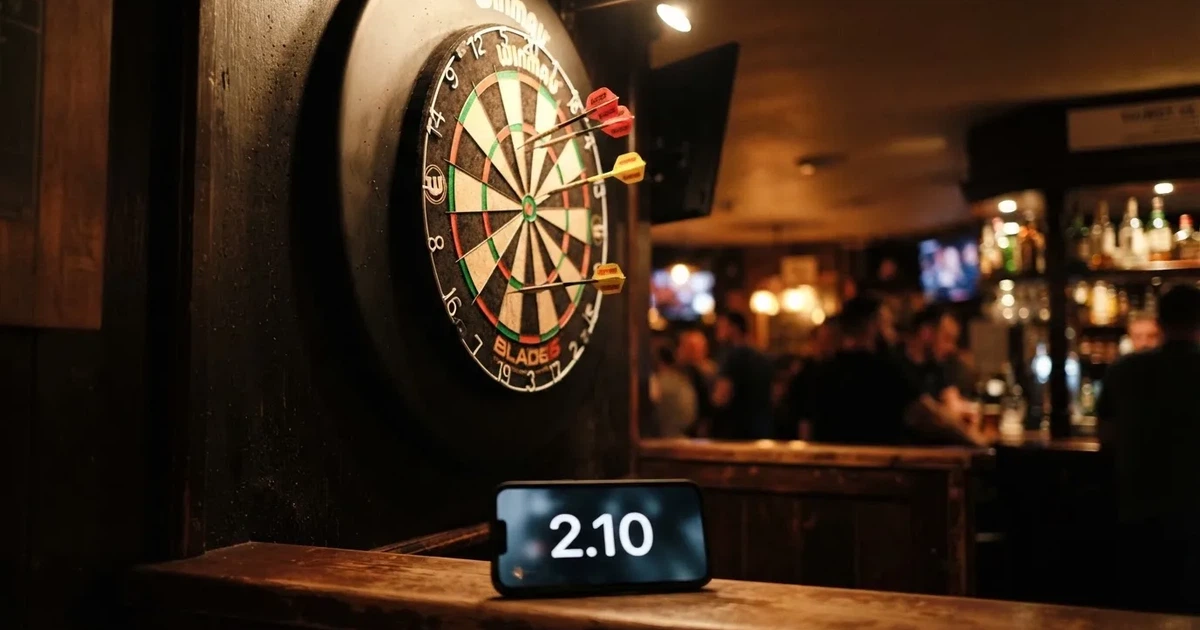
The numbers on a darts betting slip look small, but the shape of the market is set before a single dart leaves the hand. Twenty bookmakers serve the British market at the time of writing, and at least ten of them carry enough darts depth to matter to a regular punter. The headline odds on a Luke Littler match are not the same as the odds the trader keeps, and the two are pulled apart by a number called the margin. This page is about that number, the market that contains it, and the operators that build the slip in the first place.
The shortlist of UK bookmakers for darts
A darts price lives or dies on three things: how thinly the book trades the line, what the in-play product looks like, and which payment routes actually clear a withdrawal. The ten operators below are the ones a darts bettor in Great Britain is most likely to compare in 2026. None of them is “the only” licensed brand — that is a meaningless phrase in a market of twenty-odd Commission accounts — but each of them brings something distinct to the comparison.
| Brand | Gambling Commission remote licence | Holder on the register | What the operator’s own terms state for darts |
|---|---|---|---|
| LiveScore Bet | 056859-R-332720-005 (account 56859) | LiveScore Betting and Gaming (Gibraltar) Limited | Bet Builder takes up to ten selections across match result, total points, player scoring and card-style markets; in-play feed runs alongside the live scores app. |
| Star Sports | 009177-R-104555-019 (account 9177) | Star Racing Limited | Phone-led service on 08000 521 321 for opening an account or placing a bet, with a separate trader desk; darts covered through the main sportsbook. |
| Kwiff | 044448-R-323408-017 (account 44448) | Eaton Gate Gaming Limited | App-led product on a 17+ App Store age rating; surprise-price mechanic on selected markets, including darts in-play legs. |
| Unibet | 045322-R-324275-019 (account 45322) | Platinum Gaming Limited | New GB customer offer of £40 in free bets on a £20 qualifying bet at minimum odds 2.0, with a seven-day expiry; live darts streamed inside the app. |
| Betboro | 044181-R-324363-007 (account 44181) | Webmedia Development N.V. | 100% matched free bet up to £25 on a first wager of £5 to £25, three selections at 3/5 (1.60) or higher, debit-card deposit of £10 or more. |
| Tote | 054779-R-331321-008 (account 54779) | TDCO Limited | Pool-betting heritage carried over to a fixed-odds product; darts priced with the same UK racing depth the brand is known for. |
| Copybet | 053774-R-330743-010 (account 53774) | Copybet UK Limited | Tipster-copy product as a primary mechanic, alongside a standard fixed-odds sportsbook; in-play coverage on the bigger PDC nights. |
| Betway | 039372-R-319367-029 (account 39372) | Betway Limited | Free Bet Club pays up to £10 a week in free bets after a £25 spend on sports, opt-in required. |
| Betfred | 039544-R-319290-010 (account 39544) | Petfre (Gibraltar) Limited | Sports, casino and games combined in one app, covering 21 sports; darts priced inside the standard sportsbook. |
| 888sport | 039028-R-319297-014 (account 39028) | 888 UK Limited | Pre-match and in-play betting, Cash Out, Bet Builder, racing streams, BetFinder form tools, a live bet feed and daily boosted odds. |
A note on what the licence line does and does not say. The number on the register is the test of who holds a Gambling Commission remote licence; it is not a test of who offers the sharpest darts price. The market is a competition on margin and depth, and a small operator with a sharper line beats a large one with a wide menu at almost every level of stake. The table reads as a starting point, not a podium.
How a darts price is actually built
The fundamentals behind the line
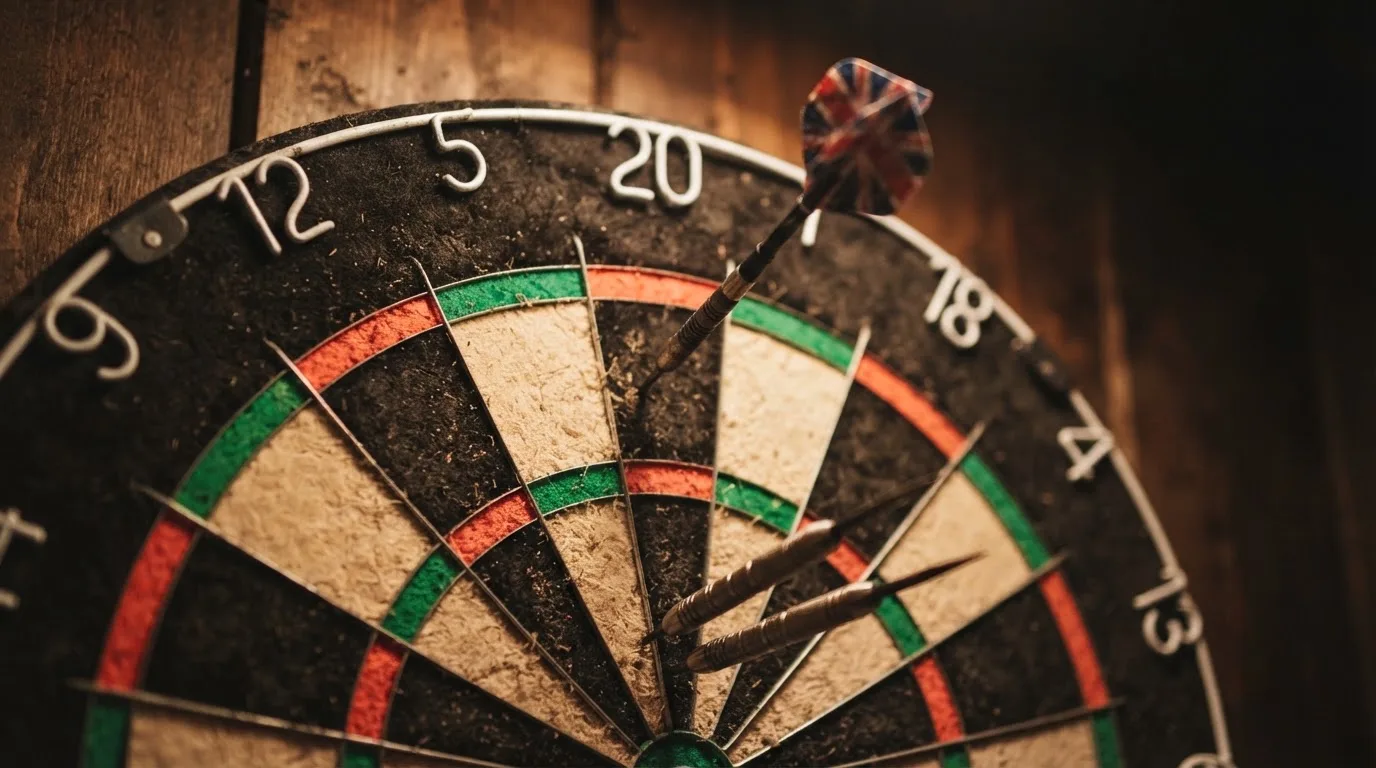
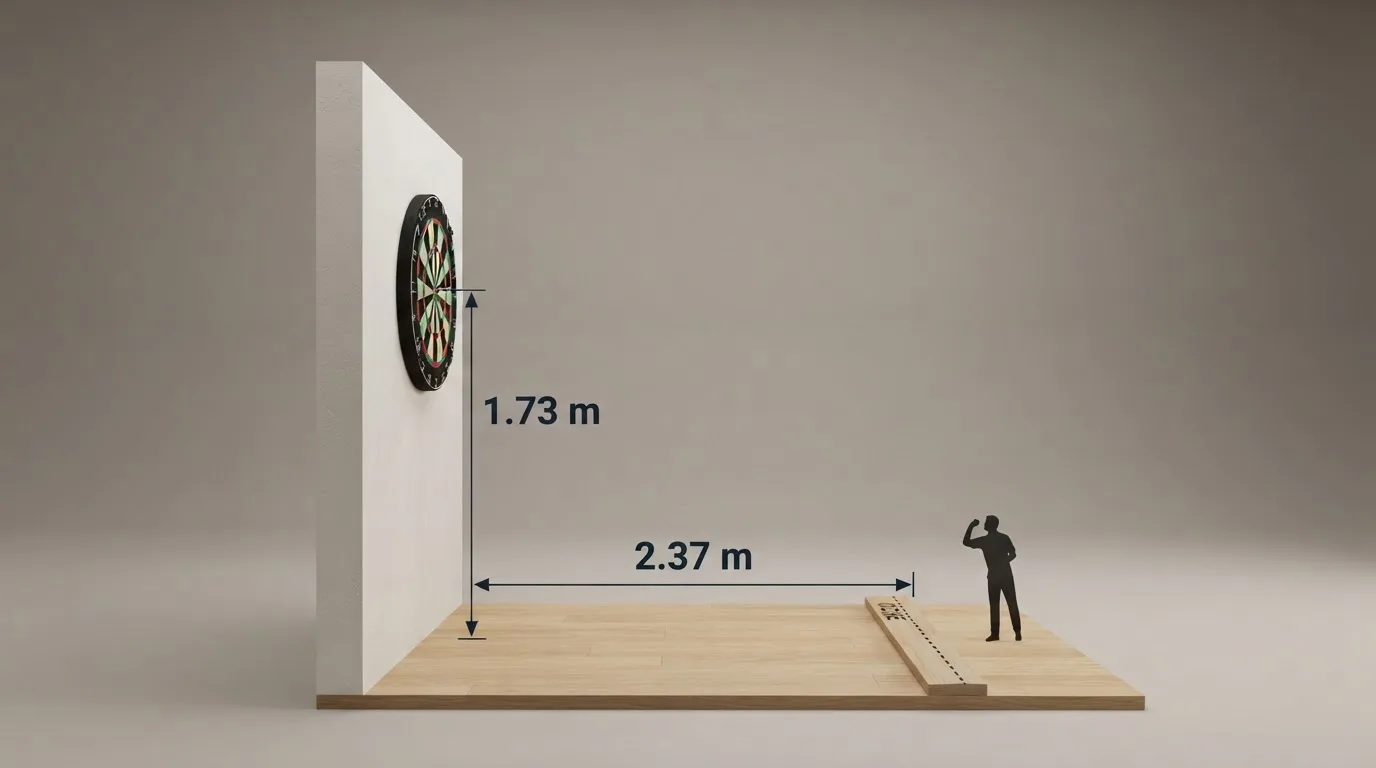
A standard dartboard has 20 numbered segments, each divided into single, double and treble areas. The bullseye is worth 50 and the outer bull 25. Players throw from 2.37 m (7 ft 9 in) and the bullseye sits 1.73 m above the floor. In the dominant 501 format, players start at 501 and must finish on a double or the bullseye. The highest possible three-dart finish is 170 (treble 20, treble 20, bullseye), and the minimum possible leg is nine darts. Those numbers are what a trader’s model leans on: a finish from 170 is a different probability to a finish from 100, and the price of a checkout market reflects that.
The format the player and the public actually bet on is set by the tournament. The 2026 PDC World Darts Championship at Alexandra Palace ran from 11 December 2025 to 3 January 2026, with 128 players, expanded from 96. Rounds one and two were first to three sets, rounds three and four first to four, the quarter-finals first to five, the semi-finals first to six and the final first to seven. The longer the race, the more variance the model gives back, and the sharper the line tends to be in the outright market.
The price the book shows, and the price the book keeps
Decimal odds of 1.90 on each side of a two-way market — what a British punter would call 9/10, or “ten to eleven” at the racecourse — look balanced. They are not. The calculation runs as follows. The payout share, the fraction of every pound bet that comes back to the winning side in the long run, is 1 ÷ (1/1.90 + 1/1.90), which gives 0.95. The margin is 1 minus that, so 0.05, or 5%. Five per cent of every pound wagered on this market is the bookmaker’s take, before any other edge is layered on.
The same arithmetic at decimal odds 1.80 / 1.80 gives a payout share of about 0.947 and a margin near 5.3%. Push the underdog out to 2.10 against a favourite at 1.70 and the margin on that two-way line rises further, because a favourite at 1.70 already embeds a book. A 5% margin is a working band for a competitive pre-match darts market; 7% to 9% is what a thin in-play line on a low-tier event looks like. The two numbers are not the same book.
What the law actually says
The statute behind the licence
The Gambling Act 2005 covers Great Britain — England, Scotland and Wales. Northern Ireland is outside the Act and runs on its own older law, which is why a Great Britain licence regulates a Great Britain customer and nothing else. Since the Gambling (Licensing and Advertising) Act 2014 an operator whose remote facilities are used in Britain needs a Gambling Commission licence wherever it sits: a Curaçao, Maltese or Gibraltar operating company is welcome, but the licence is the Commission’s, not the home regulator’s. Financial spread betting is the one carve-out, regulated by the Financial Conduct Authority rather than the Commission.
There is no statutory list of permitted sports, markets or bet types. An operator holds a licence for a category — remote general betting standard (real events), remote general betting standard (virtual events), remote general betting limited, remote pool betting or remote betting intermediary — and offers what it offers under its own rules and the Licence Conditions and Codes of Practice. In-play betting is not “unrestricted” as a legal conclusion; the controls live in the licence conditions and the operator’s own social responsibility duties. Esports are treated like any other event; virtual events sit on their own licence category; bets on politics, TV shows and novelty markets are offered by GB bookmakers and no statutory prohibition was found.
The Commission’s public register is the whole test of who holds a licence. It is searchable by business name, trading name, domain or account number. Licensed operators use .com as well as .co.uk, so the domain alone proves nothing. A single brand is never “the only” licensed one; the register lists more operators than any review can fit on a page.
Verification and the customer side
The minimum age is 18. Name, address and date of birth are verified before a customer can deposit or gamble at a licensed site, including with a free bet or bonus — a fact the trade calls “no anonymous play”. Credit cards have been banned for gambling in Great Britain since 14 April 2020, including credit-card-funded payments through an e-wallet. Debit cards and bank-based payments are not covered by that ban, and crypto deposits at licensed operators are not a settled question on the register: describe payments from each operator’s own terms, not from a national rule that does not exist.
Staying in control while betting on darts
Safer gambling in plain English
GAMSTOP is the national multi-operator online self-exclusion scheme and a mandatory licence condition for online operators since 31 March 2020. Exclusion periods are six months, one year, five years, or five years with auto-renewal; after the minimum period the exclusion stays in place for a further seven years unless the customer asks GAMSTOP to remove it. Online sites and apps sit inside the scheme; betting shops use a separate service. A financial vulnerability check, in force since 30 August 2024 under LCCP condition 3.4.4, applies to licensed remote betting once a customer’s deposits minus withdrawals exceed £150 in a rolling 30 days. From 28 February 2025 the check is a public-record check — for example a bankruptcy or county court judgment — not an income check and not a credit reference check.
Deposit limits are the customer’s tool. The Commission’s Remote Technical Standards 12 require operators to offer a gross deposit limit on a fixed time frame; the first changes have applied since 31 October 2025, a second phase was postponed to 30 September 2026 and whether that second phase is live has not been established in the register at the time of writing. There is no state-set deposit or loss ceiling: limits are the customer’s choice. Financial risk assessments, the affordability checks the press has been running headlines on, are announced, staged, and carry no start date.
GamCare runs the National Gambling Helpline. GambleAware funds treatment and education. The NHS gambling clinics take referrals in person and remotely. Gamblers Anonymous runs mutual-aid meetings. A darts slip is not worth any of those services not being one tap away.
The bonus terms a punter actually pays
A welcome offer is the most expensive single decision a new account makes. The shape of the cost lives in three numbers: the wagering requirement, the minimum price of a qualifying bet, and the deadline. A £40-in-free-bets offer on a £20 qualifying bet at minimum odds 2.0 with a seven-day expiry is a working example: the £20 leaves the account whether the bet wins or loses, the free bet stake is not paid back with a winning free bet, and seven days is short enough that a tournament with a one-week run will burn the clock without a single bet settled.
Promotion rules in force since 19 January 2026 cap wagering requirements on bonuses at 10x — a £10 bonus at 50x would have needed £500 of qualifying bets; under the cap no more than £100 of qualifying bets is needed for that bonus. Mixed-product promotions, an offer that requires gambling on two or more product types such as betting, casino, bingo and lottery, are banned. Whether the cap applies to a free bet with no wagering condition, and any cap on the money value of a bonus, are not established in the rule. Read the small print before clicking claim.
The marketing itself runs through the CAP Code (non-broadcast) and BCAP Code (broadcast), enforced by the ASA, alongside the LCCP marketing conditions. CAP Code section 16 requires marketing to be socially responsible, not of strong appeal to under-18s, and that no one who is or seems to be under 25 may be featured gambling or play a significant role, with an exception for marketing placed where a bet can be made directly. The rule concerns who may appear in the advertisement, not who may bet. A “whistle-to-whistle” industry code, in force since 1 August 2019, stops betting advertisements on TV from five minutes before a live sporting event to five minutes after it, before the 9pm watershed, with horse and greyhound racing excluded.
Tax on winnings
The player pays no tax on betting winnings in Great Britain. General Betting Duty is the operator’s tax on gross profits, currently 15%, with a new remote betting rate of 25% applying from 1 April 2027 inside the same duty, while remote bets on UK horse racing, bets on self-self-service betting terminals in licensed premises, pool betting and in-person betting stay at 15% — a position set out in an HM Government policy paper of 26 November 2025. Spread betting has its own rates: 3% on financial, 10% on other. Until 1 April 2027 the remote rate stays at 15%; whether operators pass duty through odds is not established. A professional gambler should ask HMRC or an adviser; the position above is general information, not tax advice.
Live darts, in-play and the cash-out button
Momentum markets and how they behave
Live darts is one of the more honest in-play products the book sells. A leg takes between two and seven minutes, the scores are public, and a trader can rebuild the model from the running total without waiting for a stat feed. The product runs on the back of that: most UK bookmakers stream the PDC nights inside the app, price every leg while it is in progress, and offer a cash-out button on the same bet slip.
Cash out is the operator’s offer to settle the bet early at a price the trader sets, rather than waiting for the leg to finish. It is a feature, not a customer right: a bookmaker can suspend cash out on a single bet at any point, and on a volatile leg the offer can be small enough to be a rounding error. The opposite — a punter who likes the live product and wants the bet to ride to the wire — wants a book that does not assume everyone will click the button.
The in-play margin is where the price tells the deepest truth about the operator. A 5% pre-match margin on the outright winner can balloon to 9% or 10% on a leg-by-leg market once the in-play feed takes over, because the trader is rebuilding the model under time pressure. The 5% band and the 9% to 10% band are not the same book; the punter’s job is to know which one is in front of them.
What a tip actually is, and what it isn’t
Predictions, bankroll, and the cost of getting it wrong
Darts tips pages are a market in their own right, and they are honest about the same fraction of the time as the rest of the tipster market. The honest fraction is not zero — there are tipsters who publish a tracked record and stake to a published unit size — but the only test that counts is the public record, in units, over a sample of at least 500 tips, on a tier-one or tier-two PDC event. Anything shorter is a story, not a track record.
Bankroll is the term for the float a punter keeps for betting. A unit is 1% to 2% of that float, never 10%. The reason is the law of variance: even a sharp line on a 1.85 favourite loses 45% of the time, and a sequence of five losers is common. A punter staking 5% of the bank on a single leg is one bad week from half the float, and recovery from half the float is a different sport.
There is no system that wins. Anyone who promises one is selling the same product. The punter’s edge lives in three places: reading the price (knowing when a 2.20 on a player is a value bet and when it is a trap), reading the format (knowing the difference between a best-of-five and a best-of-eleven), and reading the form (knowing a player coming back from injury is a different proposition to the same player fit). Everything else is comment.
The bet types a darts punter actually places
From a single to a checkout double
A single is one bet, one selection, one outcome. A double is two selections, both of which must win, with the odds multiplied together. A treble is three, an accumulator — “acca” — is four or more. The odds multiply, which is what the marketing leans on, and the margin compounds, which is what the marketing does not lean on. A four-fold at 1.80 on each leg carries a margin of around 21% on the combined price, not the 5% the headline suggests. The acca is a worse bet than the singles that built it, every time, and the only honest reason to place one is that the price the singles would have paid is no longer available.
A bet builder takes markets from a single match — match result, total legs, highest checkout, player to hit a 180 — and combines them on one slip. The margin on a bet builder is the operator’s published number, usually in the small print on the bet slip, and it tends to be wider than the margin on a single because the trader has priced each leg with the others in mind. A bet builder at a 7% margin is a working product; a bet builder at 12% is a tax on the punter’s appetite for variety.
Cash out, the early-settlement button, was covered in the live betting section. Each-way, the two-bet structure that pays on a place as well as a win, is mostly a horse racing term; in darts the place terms vary by operator and by tournament, so an each-way bet is a bet on the operator’s table as much as on the player.
The darts calendar in 2026
The fixtures and the tournaments that matter
The PDC sits at the top of the professional game alongside the World Darts Federation. The PDC World Championship is the year’s anchor event, held over Christmas and New Year; the 2026 edition ran from 11 December 2025 to 3 January 2026 at Alexandra Palace, with 128 players, up from 96, and a prize fund of £5,000,000, of which £1,000,000 went to the winner, Luke Littler, who beat Gian van Veen 7–1 in the final. The Premier League Darts runs across the spring, the World Matchplay sits in the summer at the Winter Gardens, the Grand Slam of Darts fills the autumn, and the Players Championship Finals close the year in December.
The punter’s calendar is shorter than the operator’s. A line on a Players Championship event carries a wider margin than a line on a Premier League night, because the Players Championship is a tier-two event with a smaller trading team behind it. The spread between the two lines is the punter’s cost of betting on the smaller event, and it sits inside every price on the slip.
Frequently asked questions about darts betting odds
How does a punter actually bet on darts?
Open an account with a Gambling Commission-licensed bookmaker, pass the age and identity verification, and deposit with a debit card or bank transfer. Pick a darts match, choose a market — match result, handicap, total legs, highest checkout — and place the bet. The book settles when the match settles, or earlier if cash out is offered and taken.
What is darts betting, in one sentence?
Wagering on the outcome of a professional darts match, a leg, or a specific in-game event such as a 180 or a highest checkout, with a bookmaker licensed by the Gambling Commission for customers in Great Britain.
How does darts handicap betting work?
A handicap gives one player a leg or set advantage before the match starts, so a player quoted at +1.5 on a first-to-six match starts the betting 1-0 up. The handicap line prices a mismatch the outright line cannot, and it costs the punter the bookmaker’s margin on the new line.
How is a bookmaker’s licence checked?
Search the Gambling Commission’s public register by business name, trading name, domain or account number. The register is the whole test of who holds a Great Britain remote licence; a brand is licensed only if the register says so on the day the punter looks.
How is the return on a bet worked out from the stake and the odds?
Multiply the stake by the decimal odds. A £10 stake at 2.50 returns £25, of which £15 is profit. For a combination bet, multiply the odds of the legs together first, then multiply by the stake. The stake is not returned on a free bet, even on a win.
What is the bookmaker’s margin and how is it seen in the odds?
The margin is the fraction of every pound bet that the book keeps, on average, on a market. It is the difference between 100% and the sum of the implied probabilities of every outcome, where each implied probability is one divided by the decimal odds. A two-way market priced 1.90 / 1.90 carries a margin of about 5%; the same market at 1.80 / 1.80 carries a margin of about 5.3%. The number is the cheapest single test of whether a book is sharp on a given market.
Tennis, darts & cue sports – Free bets
Content created by the «Free bets» team
