
Which UK Bookmakers Offer Best Odds Guaranteed and How the Promotion Actually Pays Out
 Available in US
Best odds guaranteed sits in a strange corner of British racing. It looks like generosity — a bookmaker promising to top up your price if the horse drifts — but at its heart it is a settlement rule, not a gift. Once a punter understands how it is built, how it pays and where it caps, the comparison between bookmakers sharpens considerably. This page walks through the mechanics first, then through the licences that let a brand offer it in Great Britain, the responsible gambling controls that wrap around it, and finally the ten operators running it at the time of writing.
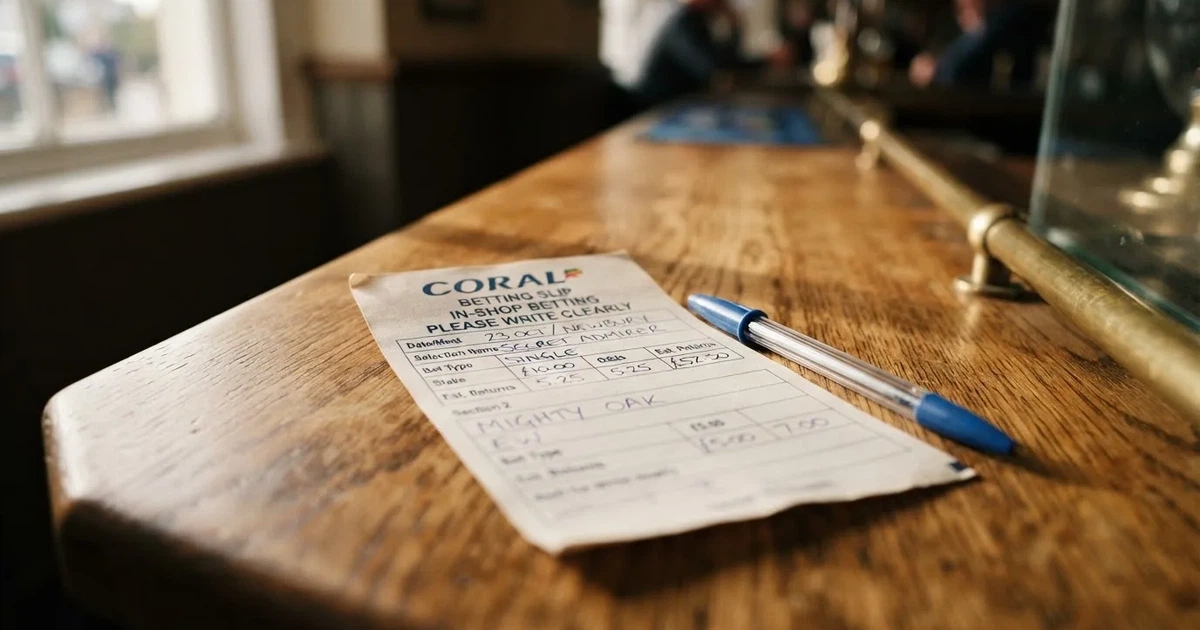
*Current as of 27 October 2026 and checked against the Gambling Commission’s public register.*
How best odds guaranteed works on UK horse racing
Best odds guaranteed — the racing world usually shortens it to BOG — covers a narrow but high-stakes case. A punter takes a fixed price on a horse before the race begins. The starting price, the SP the horse returns at when the race goes off, ends up larger than the price taken. In that case, the winning bet is settled at the higher SP rather than at the price the punter locked in. If the SP is shorter, the punter keeps the bigger of the two, which means the price they took.
This is the mechanism in plain terms, and it is the same across the industry: BOG protects the punter against a horse drifting in the market, never against one shortening. From the bookmaker’s standpoint, the offer concedes the upside of a market move in one direction while keeping the upside in the other direction. That asymmetry is the whole economics of the promotion, and it explains both why the offer exists and why it is capped.

The starting price itself is set by an industry rule that has nothing to do with any single bookmaker. For British horse races, the SP is the median of a sampled field of bookmakers’ prices — specifically, the shortest price in the longer-priced half of the sample. The arithmetic is dull but worth knowing: at least half of the sampled bookmakers offered that SP or longer when the race went off. That rule is what makes an SP comparable across firms, and it is what BOG settles against.
Where BOG applies and where it stops
BOG in its usual form applies to UK and Irish horse racing, on win and each-way singles, and increasingly on multiples. Whether it also applies to ante-post bets — those taken before the final declarations — varies by bookmaker, and so does whether the offer runs on selected meetings only, on all races, or only on certain bet types. A punter who assumes it applies everywhere will be wrong somewhere.

Then there are the edge cases. Rule 4 is a deduction bookmakers apply when a horse withdraws from a race after the market has formed: the deduction is taken from the winnings of any horse that finishes ahead of the withdrawn runner, to compensate for the changed probabilities. BOG and Rule 4 interact in a way that catches punters out. At Sky Bet, for instance, if the price taken on a horse is subject to a Rule 4 deduction, the deduction still applies unless the horse returns at a bigger SP, in which case the bet is paid at SP with no deduction at all. That is, Rule 4 is waived only when the SP itself is the bigger number. In every other case, Rule 4 still bites, on top of the SP uplift.
A second edge worth flagging is the each-way bet. An each-way bet is in effect two equal-stake bets: one on the horse to win, one on it to finish in a paying place. BOG on an each-way bet typically applies to both halves, meaning the punter secures the SP on the win part and on the place part alike, but only at operators that extend the offer that far. Some firms run BOG on the win part only.
The cap the marketing rarely mentions
The larger picture is that BOG is rarely unlimited. The published headline that a brand offers best odds guaranteed says nothing about how high the offer can pay. A punter who places a £1,000 single on a 20/1 shot and sees the horse drift to 33/1 before the off is looking at a thirteen-thousand-pound difference in the return — and most bookmakers will not pay it. At Sky Bet, the BOG uplift is capped at £50,000 per bet or per race for horse racing, whichever bites first. That ceiling sits alongside the smaller caps used by other firms, and it shows up only on the terms page rather than in the marketing. A punter staking more than the cap should treat the offer as a partial hedge rather than a full one.
What BOG does not cover
It is worth naming what is outside the promotion entirely. BOG does not match prices from rival bookmakers — if Betfair has the horse at a bigger price than Sky Bet, Sky Bet will not top up to Betfair’s number. It does not apply to enhanced-place terms, price boosts or special offers on named horses, because those are a different promotion. It does not apply to bets taken after the race has started, because in-play prices are not fixed prices for SP comparison purposes. And it does not guarantee the punter the best price in the market — it guarantees them the better of the price they took and the SP of the race, nothing more.
The cumulative effect of these edges is that BOG sounds straightforward and pays that way on most bets, with the surprise sitting on the outliers. A punter who reads only the marketing copy has the wrong picture.
Who offers best odds guaranteed in Great Britain
Best odds guaranteed in the British market is a conventional product, not a statutory one. There is no list of bookmakers that must offer it, no rule that it has to apply to any particular race, and no obligation on a firm to keep it in place. Whether a bookmaker runs BOG, and on what terms, is a commercial decision each firm makes and revises from time to time. Among the larger licensed bookmakers with a racing product, BOG is widespread enough to count as the default for UK and Irish racing, and most named firms in this guide run it on win and each-way singles at minimum.
A punter looking for BOG today should expect to find it on most of the major UK-licensed bookmakers’ horse racing pages, with the details — meeting coverage, ante-post treatment, the cap — sitting in each firm’s terms. The promotion is not exclusive to any one operator and never has been, despite the marketing tone that sometimes implies otherwise. The choice for a punter is not whether BOG exists in the market, it is which bookmaker runs it on the right terms for the bets they actually place.
The Gambling Commission licence frame
Every brand discussed in this guide operates in Great Britain under a remote operating licence issued by the Gambling Commission. A British customer opens an account, deposits and places a bet with a firm that is, or is not, on the Commission’s public register. The Commission’s register is the test of who holds a licence — not a magazine ranking, not a reviews page, not a marketing claim. The register can be searched by business name, trading name, domain or account number, and it is freely accessible.
The framework sits on the Gambling Act 2005, the Gambling (Licensing and Advertising) Act 2014 and the Licence Conditions and Codes of Practice the Commission issues. Since the 2014 Act, an operator whose remote facilities are used in Great Britain needs a Commission licence wherever it is based. A Curaçao, Maltese or Gibraltar licence is not a substitute. Several brands in this guide are run by companies based outside the United Kingdom — in Gibraltar, Malta, the Isle of Man and elsewhere — and they hold a GB remote licence on top of their home licence. The point of the rules is the location of the customer, not the location of the company.
Licence categories matter for what a firm can offer. Remote general betting standard (real events) covers ordinary sports and racing betting. Remote betting intermediary is the licence category used by betting exchanges. Pool betting, where the punter backs into a pool rather than against the firm, is a third category. A firm that runs BOG does so under the real-events licence. The same firm may hold additional categories — pool, intermediary, casino — on the same or a different licence, but each category is checked separately on the register.
What the register does not tell a punter
Two limits of the register deserve flagging. First, the register lists who holds a licence, not what the firm offers on its site. A firm can hold a real-events licence and still choose not to run BOG on every meeting, or to drop BOG altogether. Second, a licence is not a guarantee that a firm will pay out, settle disputes fairly or behave well — it is a permission to operate and a route for the Commission to enforce. If a firm withholds funds unreasonably, the Commission has a complaints route; that route is one of the protections a GB-licensed firm offers, and it does not exist for a firm operating without a licence.
Verified licences for the operators in this guide
The table below lists each operator discussed later in this guide, with the Gambling Commission account number (the register’s stable identifier), the licence holder named on the register, and a note on what that firm’s own terms state about best odds guaranteed.
| Brand | Commission account | Licence holder | Position on best odds guaranteed |
|---|---|---|---|
| Midnite | 101839 | Midnite Limited | Not stated by the firm for horse racing in its published terms |
| Coral | 54743 | LC International Limited | BOG on UK and Irish horse racing |
| Sky Bet | 67370 | SBG Sports Limited | BOG on UK and Irish horse racing, capped per bet and per race |
| Smarkets | 39173 | Smarkets (Malta) Limited | Exchange — BOG not applicable; commission-based pricing |
| Betfair | 39439 | PPB Counterparty Services Limited | Sportsbook offers BOG on selected markets; exchange operates on its own pricing |
| BetVictor | 39576 | BV Gaming Limited | BOG on UK and Irish horse racing |
| Matchbook | 39504 | Triplebet Limited | Exchange — BOG not applicable; BOG sits on the sportsbook layer where offered |
| Fitzdares | 400 | Fitzdares Limited | BOG on selected horse racing markets |
| VBet | 44662 | SCGO Limited | BOG on selected racing and football markets |
| BoyleSports | 39469 | Boylesports Enterprise | BOG on UK and Irish horse racing |
The note for each firm is drawn from what its own terms state, not from any third-party ranking. Where a firm does not publish a BOG policy, or where the policy is unclear, that uncertainty is itself the answer.
How a punter can verify a licence in three minutes
A punter who wants to verify a firm themselves should look up the Commission’s public register and search on the firm’s business name, trading name or domain. Two checks matter: the licence should be in force, not suspended or surrendered, and the category on the licence should cover what the punter wants to bet on (real events for sports and racing). If the search on the trading name returns nothing, the firm may be operating under a different named entity, and the punter should search on the parent company instead — Ladbrokes, Coral and several other brands sit under LC International Limited, for instance. The account number on the register is the firm; the trading name is the wrapper.
Responsible gambling around a racing promotion
BOG is a settlement rule rather than a casino bonus, and the safer-gambling controls around it are the ones that cover the rest of the account. Three of those controls are worth knowing about, because they shape what a punter can and cannot do once they have an account open.
GAMSTOP is the national multi-operator online self-exclusion scheme, mandatory for every online operator licensed by the Commission since March 2020. A punter who signs up to GAMSTOP is excluded from every GB-licensed online operator for the period they choose — six months, one year, five years, or five years with auto-renewal — and after the minimum period the exclusion runs for a further seven years unless the punter asks GAMSTOP to remove it. GAMSTOP covers online sites and apps; a punter who also wants to exclude from betting shops uses a separate service. The point is that GAMSTOP is one scheme, not a list to be added to. A self-exclusion through one operator does not exempt a punter from the others.
A second control is the financial vulnerability check. Under the Commission’s LCCP, when a customer’s deposits minus withdrawals exceed £150 in a rolling 30-day window — since February 2025 — the firm runs a public-record check for markers of financial distress (bankruptcy, county court judgments) and may take further steps. This is not a credit reference check and not an income check, and a punter who crosses the £150 line should expect a check rather than be surprised by one. The point of the rule is to catch the small group of customers in serious financial trouble, not to gate ordinary betting.
A third control is the deposit-limit regime. Operators must offer a gross deposit limit on a fixed time frame, and the Commission’s RTS 12 has been phasing in deposit-limit rules since late 2025; a second phase has been postponed. What it means in practice is that a punter can set a deposit limit, that the firm has to enforce it, and that the limit is the punter’s own choice rather than something the firm imposes. Outside those controls, there is no statutory cap on stakes in sports betting — operators set their own maximum stakes, may restrict punters individually, and that is the bottom of the framework rather than the top.
Help available to a British punter
A punter who feels gambling is becoming a problem has several routes. GamCare runs the National Gambling Helpline. GambleAware offers information and self-help tools. The NHS runs gambling clinics in several regions. Gamblers Anonymous runs peer-support meetings. None of these routes replaces a self-exclusion if one is needed, but they sit alongside the formal controls. The point of the system is that there are several doors out of betting for a punter who wants one — the Commission’s rules are meant to keep those doors open rather than to force a punter through them.
The credit-card ban and what surrounds it
One specific payment rule is worth knowing because it changes how a punter funds an account. Credit cards have been banned for gambling in Great Britain since April 2020, including credit-card-funded payments through an e-wallet, under LCCP condition 6.1.2. Debit cards and bank-based payments are not covered by that ban. The rule is straightforward on its face: a punter cannot put gambling on a credit card. In practice, the firm’s deposit page rejects the card, the punter sees the message, and the question is closed. The ban is the operator’s responsibility to enforce rather than the customer’s to know in advance, but a punter who has only a credit card in their wallet should have a debit card to hand before trying to deposit.
Identity verification is the next layer. Since May 2019, a licensed operator has to verify the customer’s name, address and date of birth before the customer can deposit or gamble, and that includes placing a free bet or claiming a bonus. The verification can include a photo of a passport or driving licence and a proof of address. A punter who starts an account and cannot complete verification has an unusable account rather than an anonymous one.
Bonuses and welcome offers at the BOG bookmakers
BOG itself is not a bonus — it is a settlement rule. The bonus products at the firms in this guide sit separately from BOG and are largely welcome offers for new customers. They are not the topic of this page, and the working mechanics of free bets and enhanced-odds tokens are covered elsewhere — this section sticks to what each firm’s own terms state at the time of writing, sketched only in enough detail for a punter to know what they would be agreeing to before signing up.
A few patterns recur across the industry. Welcome offers are typically tied to a first deposit and a first bet, often with a minimum odds threshold — prices shorter than a stated floor are excluded. The free-bet tokens that follow are usually credited within a fixed window and expire a fixed period after issue, with the stake of the free bet not returned on a win. The headline figure in the marketing is the gross value of the tokens; the headline does not net out the stake-not-returned rule or the time limit.
The strictest controls on bonuses are the Commission rules rather than the firms’ own. Promotion rules in force since January 2026 cap wagering requirements on bonuses at 10x — meaning a £10 bonus at 50x wagering would be banned, and the cap is the upper bound on how heavy the requirement can be. Mixed-product promotions, where a punter has to bet on more than one product type to claim an offer, are also banned. These rules do not cap the gross value of a free bet; they cap how demanding the promotion is to clear. For a punter comparing welcome offers, the cap is the reason that no welcome offer needs to be phenomenally heavy in its terms — the rules have already done some of that work.
For free bets with no wagering requirement, the question of whether the 10x cap applies is unsettled. The safest framing is that the cap applies to promotions with a wagering condition, not to free bets that pay out as cash or as withdrawable bet credits. The distinction matters: a punter clearing a 5x wagering rule is in a different position from one clearing a 10x rule, and both are in a different position from one with a free bet that has no playthrough at all. The Commission’s published promotion rules are the ceiling, not the floor.
How bets and odds settle at BOG bookmakers
A bet at a BOG bookmaker is settled by a small set of mechanics, most of which are common to every licensed firm. A punter who wants to read a betting slip accurately — or to spot when a price is wrong — needs to know what decimal and fractional odds say, what a stake does on a win, and what an each-way or accumulator does on top.
Decimal odds and fractional odds
British racing uses fractional odds as a tradition and decimal odds as a parallel. The two are interchangeable. A price of 5/1 means a winning stake of £1 returns £5 in profit, plus the £1 stake. The decimal form is the profit-plus-stake per unit stake, so 5/1 is 6.00. A price of 1/1 — evens — is 2.00 decimal. A price shorter than evens, say 4/6, is the stake returning less than double: a £6 stake returns £4 in profit for a total return of £10, or 1.67 in decimal form.
The conversion is one operation: decimal = (a ÷ b) + 1, where a/b is the fractional form. The maths is dull but the result is useful. At 11/4, decimal is (11 ÷ 4) + 1 = 3.75. A £10 stake at 3.75 returns £37.50 — £27.50 in profit, £10 stake returned. The same bet at fractional 11/4 returns £37.50 in total, broken down the same way.
The reason to know the conversion is that the price comparison on the firm’s site is usually shown both ways, but the bet slip, the rule book and the marketing may all use a different one. A punter reading a price in one form should not have to reach for a calculator to check the other.
What a single bet pays back
A single bet is one selection, one stake, one outcome. The return is stake × decimal odds. The net profit is stake × (decimal odds − 1). At 5.50 decimal, a £20 stake returns £110 — £90 profit and the £20 stake. At 1.91, a £20 stake returns £38.20 — £18.20 profit and the £20 stake. The decimal form exists precisely to make this calculation mechanical, and most punters learn to read decimal odds within a few weeks of doing so.
Where the calculation gets less clean is in the SP comparison. A punter takes a fixed price of 5.50 and the SP comes in at 7.00. With BOG in place, the winning bet is settled at 7.00. The return is £140 — £120 profit and £20 stake. Without BOG, the return is the £110 the punter would have had from the fixed price. The difference is the £30 uplift the promotion pays, and that £30 sits between the two prices the same way it does in the cap discussion earlier.
Each-way, accumulators and the rest
An each-way bet is two equal-stake bets, one on the horse to win and one on it to finish in a paying place. The total stake is the unit stake doubled. BOG on an each-way bet typically applies to both halves — at firms that extend it that far — and the SP comparison runs separately on the win part and the place part. The place terms vary by race and operator: at a small field, a place may pay a quarter of the win odds; at larger fields, a fifth or a sixth; at handicaps with sixteen or more runners, a quarter on three places is common. The place dividend is usually shown on the firm’s site next to each horse, and the punter should read it before placing.
An accumulator — usually called an acca in British racing — is a bet on several selections, all of which have to win for the bet to win. The odds of the legs multiply into one overall price. Four selections at 3.00, 4.00, 2.50 and 5.00 give an overall price of 150.00 — a £10 acca returns £1,500. The maths is right but the punter has to land all four, and the bookmaker’s margin compounds across the four prices. An acca insurance offer refunds the stake (as a free bet) if one leg lets the bet down, subject to a minimum number of selections and minimum odds; BoyleSports runs that pattern with a maximum refund of £20 on acca insurance, expiring seven days after issue.
A bet builder — sometimes called a same-game multi — is a market a bookmaker builds from several selections within a single event. The bookmaker prices each selection, multiplies the prices into a combined price and offers it as a single bet. The prices inside a bet builder carry the bookmaker’s margin twice in most cases — once on each selection and again on the combination — and the apparent generosity of the headline price has to be read against that. BOG does not usually apply to bet-builder prices, because the prices are not SP-comparable.
Where the bookmaker’s margin sits
Every price on a bookmaker’s site carries the bookmaker’s margin, the share of every unit staked that the firm expects to keep. The simplest case is a two-way market with decimal odds of 1.90 and 1.90 — the kind of price seen on a balanced tennis match or a 50/50 proposition. The arithmetic is a worked example that runs like this.
The payout share is what the bookmaker returns to punters as a fraction of every unit staked, when one outcome of the market wins and the rest lose. For a two-way market, payout share = 1 ÷ (1/odds₁ + 1/odds₂). At 1.90 and 1.90, that is 1 ÷ (1/1.90 + 1/1.90) = 1 ÷ 1.053 = 0.95, or 95%. The margin is the rest: 1 − 0.95 = 0.05, or 5%. That 5% is the slice the bookmaker keeps on every unit bet on this market, in the long run, after all winning bets have been paid.
The result generalises. On a one-way market — the favourite in a one-horse race — the margin is harder to express but follows the same logic: the price is shorter than the true odds, and the gap is the firm’s take. On a three-way market such as a football 1X2 (home, draw, away) the three reciprocal odds are summed and the margin is 1 minus the result.
A 5% margin in this worked example is in the ordinary band for a balanced market, somewhere between thin and aggressive. A balanced Premier League match sits in similar territory; an outright market on a 24-runner race sits much wider because more outcomes have to be priced in; a bet builder, as detailed in the section on bet types, sits somewhere wider still. A punter reading the prices on the site cannot see the margin directly, but the gap between the prices on the two sides of a two-way market is the most direct clue. Two prices at 1.91 and 1.91 is a margin in the high 4% band; two prices at 1.85 and 1.85 is closer to 8%. Reading the gap is more useful than remembering the percentages.
This is the arithmetic the page’s spec asks for — the worked case at 1.90/1.90 — and the band it produces is the 5% margin around a balanced market. State that figure as a band with its condition: a balanced two-way market priced at 1.90/1.90 carries a margin in the order of 5%, with thinner prices on either side raising the margin and fatter prices lowering it. The condition is part of the conclusion; without the condition the number is just an isolated figure.
The ten licensed bookmakers in this guide
The brands below all hold a Gambling Commission remote licence for real-events betting. Each one is named as the marketing copy names it, and each is described for what makes it different from the next.
Midnite
Midnite runs under account 101839 on the register, with Midnite Limited as the licence holder. The site carries an in-play lobby, an acca builder, popular-accas and price-boosted markets with maximum-stake limits shown next to each boost. A sports welcome offer is published for new customers: a first pre-match bet of £5 or more at EVS (2.0) or greater within 14 days of sign-up unlocks £25 in free bets and 50 free spins, valid for 7 days from issue. BOG is not stated for horse racing in the published terms, so a punter looking for a racing-specific BOG offer should check the firm’s own racing page rather than assume one is in place. The natural fit for Midnite is a punter who likes the in-play and acca-builder products and treats horse racing as one of several sports rather than the focus.
Coral
Coral is part of LC International Limited, the same parent that runs Ladbrokes, with Commission account 54743. Coral’s sports welcome offer is described by the firm as “Get £40 in Free Bets when you bet £20” — a deposit and a first sports bet of £20 or more at minimum odds of 2.0, with £40 in free bets issued within 7 days and expiring 7 days later. BOG on UK and Irish racing sits in the racing terms. The firm provides a clear pathway for those who already use the Ladbrokes Coral combination and appreciate the convenience of managing both under one account.
Sky Bet
Sky Bet, run by SBG Sports Limited under Commission account 67370, is the firm whose published BOG terms describe the cap most explicitly. The cap of £50,000 per bet or per race is the ceiling on the SP uplift on UK and Irish horse racing. The welcome offer for new customers is £30 in free bets, issued as three £10 free bet tokens after a deposit of at least £5 and a first single or each-way bet of at least 5p at odds of 1/1 or greater. BOG runs on UK and Irish horse racing and the Rule 4 interaction is stated in the firm’s own terms, which is unusually clear for the market. This is a strong option for racing enthusiasts who value transparency in their betting terms and appreciate having a firm cap on their exposure.
Smarkets
Smarkets is a betting exchange running under Commission account 39173 with Smarkets (Malta) Limited as the licence holder. The pricing model is different from a sportsbook — customers bet against one another and the firm takes a commission on net winnings. The published commission is 2% on eligible exchange bets, with new customers having been offered 0% commission for 60 days against a minimum first deposit of £10. BOG does not apply to an exchange in the usual sense, because the exchange does not set SP-equivalent fixed prices the way a sportsbook does. This platform serves those who prefer the active engagement of betting against other users rather than traditional sportsbook odds.
Betfair
Betfair runs as a betting exchange under account 39439 with PPB Counterparty Services Limited as the licence holder, alongside a sportsbook arm. The sportsbook offers in-play betting, Bet Builder, free live streaming of UK and Irish racing and football within the app, and a 90-Minute Payout market on selected football bets. BOG on the sportsbook layer operates on selected markets; the exchange layer operates on its own pricing. It caters to those who need the versatility of both exchange and sportsbook markets integrated into a single account experience.
BetVictor
BetVictor runs under Commission account 39576 with BV Gaming Limited as the licence holder. The firm offers BOG on UK and Irish horse racing, enhanced live race streaming and a BetFinder feature for finding racing bets, alongside Smart Stats. The product mix leans towards the racing and football markets. This operator is likely to appeal to punters who prioritise the horse racing product as their primary focus.
Matchbook
Matchbook is a betting exchange under Commission account 39504 with Triplebet Limited as the licence holder. Customers bet against other users, with Bet Builder, multiples, in-play betting and live streaming of horse racing and greyhounds within the app. BOG on an exchange runs only where the firm operates a sportsbook layer with fixed prices; the exchange layer itself does not offer BOG in the usual sense. Matchbook is a logical choice for punters seeking deep liquidity on major horse racing and football events.
Fitzdares
Fitzdares is run by Fitzdares Limited under Commission account 400, a long-standing racing-focused account number on the register. The app offers cash out, accumulators, Lucky 15s, specials and antepost markets across horse racing, football, tennis, rugby, cricket, golf and American football, with in-play live odds. BOG on selected horse racing markets sits within the racing terms. This is an appealing choice for dedicated racing fans who value a curated, specialised betting catalogue.
VBet
VBet, run by SCGO Limited under Commission account 44662, runs a sportsbook and casino app with Bet Builder, pre-match and in-play betting, live streaming and a live calendar with results and stats. BOG applies on selected racing and football markets; the specifics — which meetings, which bet types — sit in the firm’s terms. The site is well-suited to punters who enjoy combining sportsbook markets with casino play and who prefer to verify meeting-specific terms beforehand.
BoyleSports
BoyleSports runs under Commission account 39469 with Boylesports Enterprise as the licence holder. BOG on UK and Irish horse racing runs in the usual pattern, and the firm also runs an Acca Insurance offer: opt-in required, minimum stake of £5, minimum odds of 1/2, maximum refund of £20 as a free bet that expires 7 days after issue, with bets placed and settled on the same day. The combination is a BOG settlement rule plus an accumulator safety net rather than a free-bet welcome offer in the usual sense. The natural fit is a punter whose racing interest lines up with BOG and who plays accumulators enough to care about acca insurance.
How a punter verifies a licence and settles in dispute
Two practical routines complete the picture for the punter choosing between these firms.
Checking the Gambling Commission’s public register
The Commission’s register is at the regulator’s published web address and is searchable by business name, trading name, domain or account number. A punter who has the firm’s name should type it into the search box, look for an entry that has the firm’s business name against a real-events remote licence, and check that the licence status is “in force”. A licence that is “surrendered”, “lapsed” or under review does not entitle the firm to take bets on a new account. A punter who cannot find the firm by trading name should search by parent company — LC International Limited covers Coral and Ladbrokes, BV Gaming Limited covers BetVictor and the related brands, and so on. The account number is the firm; the trading name is a wrapper.
The route to escalation when something goes wrong
A licensed firm that refuses to pay out reasonably — or holds funds without explanation — gives the punter a complaints route. The first step is the firm’s own internal complaints process; the second is an approved alternative dispute resolution (ADR) provider; the third is the Commission itself. The Commission does not adjudicate individual disputes, but it does track patterns and can take action against the firm if there is reason to. A punter who needs to escalate should keep records of every transaction, every chat or email with the firm’s customer service, and the dates. The ADR route is free to the punter; the Commission does not charge for complaints either, but it can take months.
An unlicensed firm offers none of these routes. A punter who deposits with a firm that has no GB licence cannot use the Commission’s complaints process, is not protected by GAMSTOP, and has no British redress if funds are withheld. The Commission has powers to disrupt unlicensed sites, but the protections in place for licensed sites do not exist for them. A punter who cannot find the firm on the register should treat that as a red flag rather than a reason to test the firm anyway.
Frequently asked questions
Which bookmakers do best odds guaranteed?
The licensed UK bookmakers with the larger racing products — Coral, Sky Bet, BetVictor, Fitzdares, BoyleSports and others — run BOG on UK and Irish horse racing as a default, with the cap and the meeting coverage sitting in each firm’s terms. Exchanges like Smarkets and Matchbook run a different pricing model where BOG does not apply in the usual sense; a sportsbook layer may run BOG where the firm operates one.
Which operators offer best odds guaranteed today?
Among the firms in this guide, Coral, Sky Bet, BetVictor, Fitzdares, VBet and BoyleSports offer best odds guaranteed on selected racing markets under their own terms. Midnite does not state BOG for horse racing in its published terms and should be checked directly. Smarkets, Matchbook and the exchange layer of Betfair run on exchange pricing where the standard BOG mechanism does not apply.
What operators offer best odds guaranteed in Great Britain?
The set is not fixed. Operators can add or remove BOG at any time, and the Commission does not require it to be offered. A punter looking for a current list should check each firm’s horse racing page rather than rely on a third-party ranking, because the terms can change meeting-by-meeting. The Commission’s public register confirms a firm holds a licence to offer betting on real events, not that it offers BOG.
How can a punter check that a bookmaker holds a Gambling Commission licence?
The Commission’s public register is the test. A punter enters the firm’s name, trading name, domain or the Commission’s account number, and checks that the licence is in force and covers real-events betting. Where the firm is part of a larger group, searching on the parent company — BV Gaming Limited for BetVictor, LC International Limited for Coral, PPB Counterparty Services Limited for Betfair — will find the licence. A firm not on the register does not hold a GB licence, however complete the marketing may look.
How is the return on a bet calculated from the stake and the odds?
Decimal odds give the return per unit stake as stake × odds, with profit as stake × (odds − 1). A £10 stake at 5.50 returns £55 — £45 profit and the £10 stake. Fractional odds give the profit per unit stake directly: at 5/1, a £10 stake returns £50 profit plus the £10 stake. With BOG applied, the higher of the price taken and the SP replaces the original price in the same calculation.
What is the bookmaker’s margin and how does it show in the odds?
The margin is the slice of every unit bet the firm keeps on average, after all winning bets have been paid. For a two-way market at 1.90 and 1.90, the payout share is 95%, the margin is 5%. The margin shows in the gap between the prices on the two sides of a market: tighter gaps mean thinner margins, wider gaps mean thicker margins. A punter cannot see the margin directly, but reading the gaps between prices — and looking at how those gaps change between bookmakers — is the visible part of the price.
Free bets & offers – Free bets
Content created by the «Free bets» team
