
Betting on corners in the UK: a bookmaker-by-bookmaker comparison for 2026
 Available in US
Last verified: 27 October 2026 · Cross-checked against the Gambling Commission’s public register of remote licence holders. The shape of the corner market moves fast — both the prices and which bookmakers keep them in their lists — so a comparison is only honest with the day it was checked.
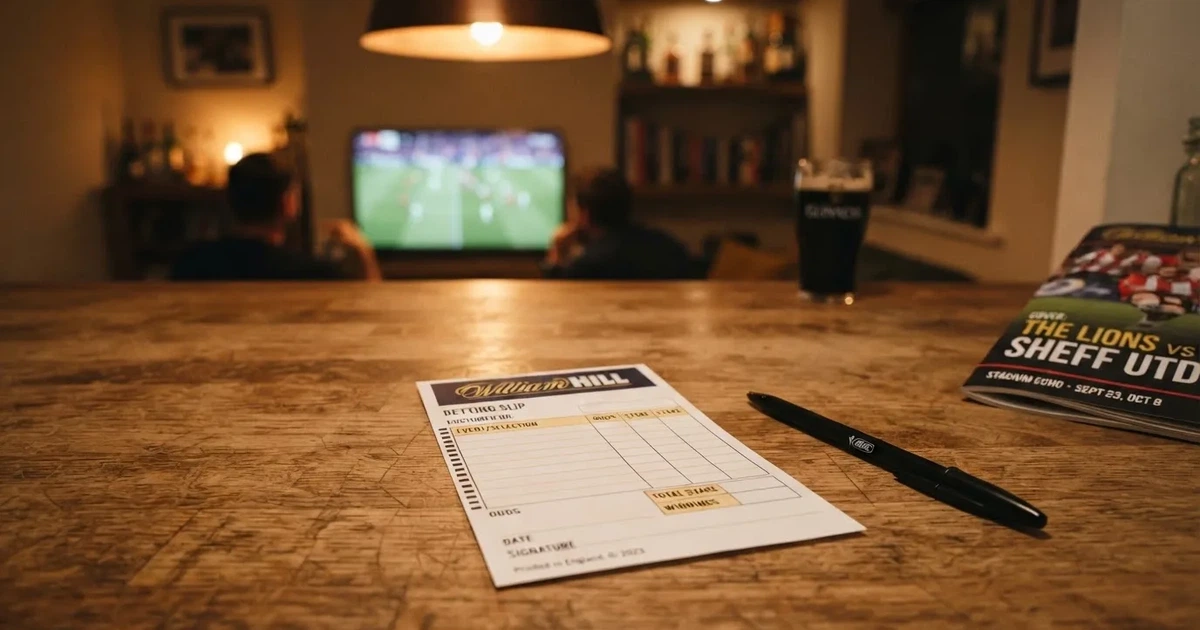
The corner market in football is the part of the betting offer that lives outside the scoreboard. A corner does not change who leads; it just keeps showing up in sequences that, on the face of it, are predictable. That is why it has its own shelf at every GB-licensed bookmaker and why “best corner betting sites” is a search a punter actually runs. The shelf runs from the simplest line — how many corners in total — to the same-game multi where a corner outcome is stitched to a goalscorer. The list below compares ten bookmakers that hold a Gambling Commission remote licence for Great Britain; the question it answers is which one suits the kind of corner punter you are.
The ten reviewed bookmakers at a glance
A corner punter comparing bookmakers is not really comparing brands — they are comparing the small differences that change how a corner bet is priced, settled and paid out. How wide the over/under ladder runs, whether corners count at a replay, the speed of cash out on a corner next goal, the maximum stake on a price boost: these are the margins that separate one bookmaker from another in this market.

| Bookmaker | Gambling Commission licence (account) | Position on corners shown in their own terms |
|---|---|---|
| Dabble | 065677-R-340363-005 (65677) | Pre-match corner lines and bet-builder inclusion on selected football fixtures; new-customer free bet for first-deposit bettors |
| Coral | 054743-R-330863-014 (54743) | Deep corner menu on Premier League and Championship; live in-play corner prices during matches |
| 10bet | 043173-R-322899-023 (43173) | Football corner lines alongside tennis and horse racing; cash out, bet builder and live streaming as part of the wider sportsbook |
| Geoff Banks | 054095-R-330366-010 (59554) | Smaller menu than the majors, with in-play corner prices and ante-post football coupons |
| Paddy Power | 039439-R-319330-013 (39439) | Bet Builder+ with corners as one of the selections, plus expanded win-and-place-by-margin markets |
| Bet Ahoy | 100094-R-341742-003 (100094) | Football-focused coupon with a free-bet welcome offer split across a single and an accumulator |
| LiveScore Bet | 056859-R-332720-005 (56859) | Bet Builder covers corners alongside match result, both teams to score, total goals, player scoring and cards |
| BetTom | 064959-R-339314-003 (64959) | Football-led offer with a sports-and-casino matched welcome package |
| Betfred | 039544-R-319290-010 (39544) | Full bet-builder suite with Racing Post data and Extra Places; corners are one of the builder legs |
| DragonBet | 064908-R-339041-003 (64908) | Welsh football, rugby and racing as the brand’s identity; corners sit inside the football fixture list and the in-play tab |
Two things to read into this list. The first is that every one of the ten names a Gambling Commission account on the licence, not a brand name — that is how the Commission’s public register is built, and how a punter actually checks a licence. The second is that none of the ten names “the best bookmaker for corners” — the corner offer is part of a wider football menu, and the size of that menu, the speed of the in-play tab and the terms of the free bet are where the comparison actually lives.
The shape of corner betting in Great Britain
A corner is a part of football that the law of the game settled on a long time ago. The corner kick was introduced into the Football Association’s code in 1872 by the Sheffield Association, awarded when the ball wholly crosses the goal line outside the goal frame after last touching a defending player — the touch does not have to be deliberate. The kick is taken from the corner of the field nearer to the point where the ball crossed the goal line, with the ball stationary within a quarter circle of one yard at the corner flag. Opposing players must stay at least ten yards from the ball until a corner kick is in play, and an attacker receiving the ball directly from a corner cannot be penalised for offside. A goal scored directly from a corner is allowed — the so-called Olimpico — legalised by the IFAB on 14 June 1924; an own goal scored directly from a corner is not allowed.

That last rule matters for the bettor, because the corner market settles on what the referee awards, not on what happens next. The market is layered: how many corners in total, how many in each half, who takes the next corner, over/under a band, handicap on the count, and the corners-and-cards same-game multi. Each layer is its own price and its own margin, and the difference between a bookmaker with a deep corner shelf and one with a thin one shows up in how many of these layers the punter can actually place.
A reader who has not seen a corner market before will recognise it from the football tab. The simplest version is match corners over/under: the bookmaker sets a line — 9.5 corners is common — and the punter takes over or under. The same shape runs at half-corner bands, half-time/full-time corners and the next-corner market during in-play. The corners match bet is the team-to-race-to-X version, where the question is which side hits a threshold before the other. Asian corners strip the line into two half-point lines so the stake can be split — a 9.5 over and a 9 under, say — and a push on one half leaves the other to settle. None of these markets are statutorily defined: the Commission does not publish a list of permitted markets, and a bookmaker offers what its licence category and its own commercial judgement allow.
How a corner bet is settled and paid out
The mechanics of a corner bet are the same as the mechanics of any other single selection: the punter stakes a pound amount, the bookmaker prices the selection in fractional or decimal form, and the bet settles on the outcome the bookmaker’s rules name. A return on a winning single is the stake multiplied by the decimal odds; profit is stake multiplied by decimal odds minus one. The same bookmaker’s terms cover corner-specific questions — does a corner awarded after the final whistle count, does a corner retaken after the referee stops play count, does a corner in stoppage time of one half count towards the half-time line — and the punter who wants the edge reads those before the match kicks off.
A combination bet multiplies the prices of the legs into one. A same-game multi on a football match might combine total corners, both teams to score and a goalscorer into a single bet, and the price is the product of the three legs. The attraction is obvious; the cost is that every leg has to win, and each leg carries its own margin. The punter who builds a same-game multi from corner lines should know that the margin inside a multi is wider than the margin on the same selections priced as singles — that is the cost of the convenience.
The corner market is also where the bookmaker’s overround is most visible. Take an illustrative two-way corner line priced at 1.90 / 1.90 in decimal (9/10 fractional): the implied probability of each side is 1 ÷ 1.90 = 52.63%, and the two sides add to 105.26%. The 5.26% above 100% is the bookmaker’s margin on that market — the slice of every pound staked the bookmaker keeps on average. The same margin at evens (2.00 / 2.00) is 0% on a perfect book and around 4% on a real one; at 1.85 / 1.85 it sits nearer 8%. The corner market is rarely priced at perfect book, because the bookmaker’s job is to make a margin, and the punter who knows the margin sees the price as the offer it actually is.
The legal frame: Gambling Commission, the Act and what a licence actually covers
The market for betting on football corners in Great Britain is regulated by the Gambling Commission, a non-departmental public body sponsored by the Department for Culture, Media and Sport. The Commission’s powers come from the Gambling Act 2005, which covers England, Scotland and Wales — Northern Ireland sits outside the Act and runs its own older law, so a “Great Britain licence” never regulates Northern Ireland. Since the Gambling (Licensing and Advertising) Act 2014, an operator whose remote facilities are used in Great Britain needs a Commission licence wherever the operator is based; sections 33 and 36 of the 2005 Act, as amended, are the operative provisions. A Curaçao, Maltese or Gibraltar licence is not a substitute.
The Commission’s public register is the whole test of who holds a licence. The register can be searched by business name, trading name, domain or account number, and the licence record lists the licence categories the operator is allowed to operate under. The categories relevant to a corner punter are remote general betting standard (real events) — the standard online sportsbook licence — and remote betting intermediary, the licence for betting exchanges. There is no statutory list of permitted markets, so a bookmaker offers what its licence category and its own commercial judgement allow. A licence is not a recommendation: it is a permission to operate within the framework the Act sets.
The minimum age is 18. Identity, address and date of birth are verified before a customer can deposit or gamble — since 7 May 2019 this verification covers free bets and bonuses, so a punter cannot use a new-account offer without passing the check. Licensed operators use .com as well as .co.uk domains, so the address proves nothing. The test is the register, not the URL.
What a corner punter is paying for when they pay UKGC-licensed
The licence buys a set of customer protections the offshore alternative does not have. The credit-card ban has been in force since 14 April 2020 and covers any credit-card-funded payment, including through an e-wallet — debit cards and bank-based payments are not covered by it. GAMSTOP is the national multi-operator online self-exclusion scheme and a mandatory licence condition for online operators since 31 March 2020; the periods are six months, one year, five years, or five years with auto-renewal, and after the minimum period the exclusion stays in place for a further seven years unless the customer asks GAMSTOP to remove it. The financial vulnerability check (LCCP condition 3.4.4, in force since 30 August 2024) applies to licensed remote betting when a customer’s deposits minus withdrawals exceed £150 in a rolling 30 days — a public-record check, not an income check and not a credit reference check. Financial risk assessments — the affordability checks that appear in the press — have been announced in a staged plan (Commission article of 7 July 2026), with no start date. There is no state-set deposit or loss ceiling for betting; the ceiling is the customer’s own choice. The first changes to a mandatory gross deposit limit have applied since 31 October 2025, with a second phase postponed to 30 September 2026, and whether that phase is live is not established. Help is at GamCare (National Gambling Helpline), GambleAware, NHS gambling clinics and Gamblers Anonymous.
What a corner punter is paying for when they don’t
The unlicensed alternative is not “the safe choice”. There is no British named-account rule, no GAMSTOP coverage, no Commission complaints route, no approved dispute-resolution body, no British consumer redress if funds are withheld. The 10x bonus cap does not bind; the £150 vulnerability check does not apply; the credit-card ban does not apply. The Commission has disruption powers — cease-and-desist notices, search-engine referrals, work with registrars, hosts and payment providers — and has been given, or is about to receive, court-order DNS blocking powers; ISP blocking is not yet in operation. There is no statutory offence aimed at the customer who merely bets on an unlicensed site: the loss is the protection, not a charge. The honest framing is the one that names both: licensed means checks, limits, GAMSTOP, the bonus cap and verification before the first bet; unlicensed means none of those and the risk of funds that cannot be retrieved.
Safeguards, safer gambling and where help sits
A page on corner betting in the UK is a page on a market that moves with form, fixtures and the in-play clock, and the safeguards are about the punter, not the price. GAMSTOP is the front door of the self-exclusion side, with the seven-year tail after the minimum period built in. The financial vulnerability check is the second: a £150 rolling 30-day deposit-minus-withdrawal trigger does not stop play, but it pulls a public-record check on the customer and may lead to a conversation with the operator. The financial risk assessment is the announced third step, staged and with no start date.
The help lines sit outside the licence regime. GamCare runs the National Gambling Helpline; GambleAware funds treatment and education; the NHS runs gambling clinics in several regions; Gamblers Anonymous runs the meetings network. A punter who has decided to step back from the corner market — or any other market — does not need to have hit a crisis to use them, and a corner bet that never gets placed is the cheapest lesson in the book.
The customer-facing tools the operator has to offer are not optional. A licensed bookmaker has to offer a deposit limit on a fixed time frame, has to honour GAMSTOP, has to provide a reality check and a time-out, and has to direct customers at the help network when a financial vulnerability flag is raised. None of these tools win a corner bet. They are what a punter who decides they should not be punting any more leans on, and they exist because the Act forces them to exist.
Live betting, in-play corners and cash out
In-play corners are the part of the market where the bookmaker’s technology shows. The corner count has been reset at half-time, the next-corner market is live, and the bet builder is open on the next goal, the next corner and the next card. A punter who watches the match and lays a bet on the next corner sees the price move with the player taking the throw-in, with the scoreboard, with the minutes left on the clock. The punter who is not on the match is reading a price that is moving for reasons the screen does not show.
Cash out is the part of the in-play corner market where the bookmaker sets the rules. The cash-out value is the bookmaker’s live price for the position the bet is in, less a spread the bookmaker holds. A bet on over 9.5 corners that is six corners in with thirty-five minutes left is a bet the bookmaker will offer to settle early at a value that reflects the chance the bet wins — and a value that reflects the bookmaker’s margin. The punter who cashes out is selling the bet back to the bookmaker at the price on the screen; the punter who holds is keeping the position and the bookmaker’s margin.
The shape of an in-play corner bet is the same as the shape of any in-play bet: an edge in information, a spread the bookmaker keeps, a clock that runs against the punter’s attention. A corner punter who treats in-play as a different market from pre-match is closer to the truth than a corner punter who treats it as the same market on a faster clock. The bookmaker’s technology is faster; the punter’s edge is the same.
The in-play corner market is also where the bet builder is most useful and most expensive. The Bet Builder+ offer at Paddy Power takes up to a generous number of legs and the corner line sits alongside goalscorer, total goals and cards. The LiveScore Bet builder allows up to ten selections and covers match result, both teams to score, corners, total goals, player scoring and cards. The margin inside a builder is wider than the margin on the same selections priced as singles — that is the cost of the convenience, and a punter who builds a corner into a multi should know it.
Corner predictions, tips and the strategy a corner bet actually rewards
A corner is a thing that happens, not a thing that wins. A punter who tips corners is doing the same job as a punter who tips goals: looking at the form, the fixture, the team-sheet and the live state of the match, and putting a price on how many corners the next ninety minutes will produce. The corner tipster’s job is easier in one sense — corners happen on average ten to fourteen times a match, so the variance is lower than a 1X2 tip — and harder in another, because the price on offer is narrower and the bookmaker’s margin is harder to beat.
The honest frame for a corner punter is the same as the honest frame for any other punter: there is no system that wins. A model that prices corners from shots, crosses and territorial dominance is a model that prices a market the bookmaker also prices; the punter’s edge is the residual between the model’s price and the bookmaker’s price. Where the model’s price is higher than the bookmaker’s, the bet has value; where it is lower, it does not. A punter who runs the model without the bankroll discipline to back the bets it picks is running the model for entertainment, not edge.
The bankroll side is the other side of the strategy. A corner bet is a small-edge, frequent-bet market; the staking should reflect that. A flat stake as a fraction of bankroll — a half per cent, a per cent — is the staking that lets a small edge compound and a small edge turn into a session. A punter who chases a corner bet with a stake that is too large is paying the bookmaker’s margin with their own volatility, not theirs. The bookmaker keeps the same 5% whether the stake is £5 or £500; the punter’s volatility scales with the stake.
The fixture list is the third leg. A match between two sides that press high and clear long gives more corners than a match between two sides that keep the ball; a match between two sides that defend deep and break gives more corners to the side that breaks. The corner market is not a single market across all matches; it is a different market for every fixture, and the punter who treats it as one market is the punter who pays the margin on the matches they should not be on. The course that separates a corner punter who wins from a corner punter who pays the bills is the course that picks the fixture first and the line second.
The shapes a corner bet takes
A corner bet is a bet on a number, a sequence or a sequence-and-number combination. The shapes the bookmaker offers are these.
The single is the simplest: over or under a corner line, team corners or total corners, pre-match or in-play. A £10 single at decimal odds 1.85 returns £18.50 if it wins, with £8.50 of profit; a £10 single at 2.50 returns £25, with £15 of profit. The single is the bet that the punter learns the corner market on.
The corners match bet is the race: which team reaches the corner count first, or which team has more corners at the end. The shape is the same as the 1X2 in football, but the count is corners, not goals. A draw at the end of normal time is a third outcome; an Asian corners match bet strips the draw so the stake returns on a tie at the line.
The Asian corner bet is the half-point line. A 9.5 over / 9 under splits a £10 stake into £5 over 9.5 and £5 under 9 — a push on the under half returns £5, and the over half goes through the line as usual. The mechanic is the same as Asian handicap, with corners as the count.
The bet builder is the multi-leg same-game bet. The builder takes legs from the same match and multiplies their prices; a corner leg combined with a goalscorer and a both-teams-to-score leg multiplies into a single price. The bet builder is where the corner market meets the goalscoring market, and the margin inside the builder is wider than the margin on the same legs as singles.
The accumulator is the multi-match bet. The accumulator takes legs from different matches and multiplies them. The corner accumulator is less common than the goalscorer accumulator because corners are quieter than goals, but a corner line in an accumulator is a corner line with the same compounding. The bettor’s cost is the same: every leg has to win.
The each-way corner bet is the two-bet version: one bet on the line, one bet on a place condition. The each-way bet is rare in the corner market — most bookmakers price each-way on horse racing and not on football — and a punter who sees an each-way corner option should read the place terms before laying the bet.
The free bet is the bet paid for by the bookmaker. A free bet on a corner line is a £10 stake paid back as winnings only if it wins — the stake is not returned. The price is the bookmaker’s, the bet is the punter’s, and the value is what the free bet would have won at the bookmaker’s price and the bookmaker’s payout share on that market. The free bet is the offer the punter reads the terms of first.
Football, MMA, the World Cup and where corners show up
Football is the sport the corner market lives in. The fixture list runs from the Premier League to the National League, and the bookmaker’s corner menu tracks the fixture list — the deeper the league on the bookmaker’s tab, the deeper the corner menu. The Championship and the Premier League are the two leagues a corner punter prices seriously; the leagues below that are the leagues a corner punter prices with the bookmaker’s margin on top of the league’s variance.
The World Cup is the corner market’s outlier. The tournament brings together teams whose domestic football is different in style from the Premier League, and the corner count is different in shape. A tournament that runs two matches a week on a tight schedule changes the corner count for the second match, and the bookmaker’s price on the second match has the first match’s price in it. A corner punter who treats the World Cup as the same market as the Premier League is paying the bookmaker’s margin on a market the punter has not done the work on.
The other sports that touch a corner market are the ones that have corners. MMA has its own corner — the corner of the cage where the seconds sit — and the corner market in MMA is on the round the corner stops in, not on the football kick. The MMA corner is a different market entirely; the football corner is the market this page is about.
The competition a corner punter prices is the competition the punter has a price for. A league the bookmaker does not price is a league the punter does not bet on, and a corner punter who follows a league the bookmaker has dropped is following a market the bookmaker has priced out of. The bookmaker’s tab is the league list, and the league list is the corner market.
How a corner bet actually works, step by step
A punter’s first corner bet runs through the same path as any other sportsbook bet. The punter opens an account at a GB-licensed bookmaker, passes the identity check, makes a deposit, opens the football tab, picks a fixture, opens the corner market, picks a line, sets a stake, places the bet. The match is played; the corner count is settled from the referee’s record; the bet is settled by the bookmaker’s system; the payout goes back to the deposit method.
The verification step is the one a new punter meets first. Since 7 May 2019 a GB-licensed bookmaker verifies name, address and date of birth before a customer can deposit or gamble, and the verification covers free bets and bonuses. A new punter cannot place a corner bet — or any other bet — before the verification has gone through, and the punter who fails the check is the punter who does not have an account.
The deposit step is the one a punter meets second. The deposit is the punter’s stake source; the credit-card ban has been in force since 14 April 2020 and the bookmaker will not accept a credit card for a deposit. A debit card, a bank transfer, an e-wallet — these are the deposits a GB-licensed bookmaker takes. A punter who sets a deposit limit at the deposit step is the punter who does not have to argue with the deposit limit at the bet step.
The line and stake step is the one a punter meets third. The bookmaker sets a corner line — 9.5 over / under is a typical Premier League line — and the punter picks the side and sets the stake. The stake is the punter’s risk; the price is the bookmaker’s; the implied probability is 1 divided by the decimal odds. A £10 stake at decimal 1.85 has an implied probability of 54.05% on the over side, and the punter who lays the bet has accepted the bookmaker’s view of the corner count.
The settle step is the one the bookmaker runs. The corner count comes from the referee’s match record — corners awarded, not corners taken — and the bet settles on the count. A corner awarded but not taken is a corner for settling purposes; a corner taken twice after a retake is one corner. The bookmaker’s terms name the edge cases, and the punter who reads the terms before the match is the punter who is not surprised at the settlement.
The payout step is the last. A winning single returns the stake plus the winnings — a £10 stake at 1.85 returns £18.50 — and the bookmaker credits the payout back to the deposit method. A winning free bet returns the winnings only; a £10 free bet at 1.85 returns £8.50. The credit-card ban does not cover a payout to a debit card, and the punter who paid by debit card is paid back to the same debit card.
The bookmakers reviewed
Dabble — the social-led newcomer with a first-deposit free bet
Dabble’s licence is Gambling Commission remote licence 065677-R-340363-005, under account 65677, held by Dabble Sports UK Ltd. The brand operates under the remote betting standard for real events. The welcome offer is a £10 free bet for a first-deposit £10 sports bet at minimum odds, with a 7-day free bet expiry and the stake not returned. The corner menu sits inside the football fixture list, with pre-match corner lines and bet-builder inclusion on selected matches; the in-play tab has live corner prices during matches, with the usual price-boost shape.
For whom: a punter who wants a smaller social bookmaker with a free bet that does not chain to a turnover requirement. The £10 stake-not-returned free bet is the offer’s centre of gravity; checking the minimum odds before claiming is the best way to ensure the settlement is as expected.
Coral — the high-street legacy with a deep Premier League corner menu
Coral’s licence is Gambling Commission remote licence 054743-R-330863-014, under account 54743, held by LC International Limited for the categories remote general betting standard (real events) and remote betting intermediary. The sports welcome offer is a £40 free bet bundle on a £20 qualifying sports bet at minimum odds of 2.0 (1/1), with the bundle issued within 7 days and expiring 7 days after issue for new GB customers who opt in. The corner menu is one of the deepest on the high street, with Premier League and Championship corner lines, in-play corner prices, bet builder and price boosts on selected corner markets.
For whom: a Premier League and Championship corner punter who wants a deep menu and a quick in-play tab. The £40 free bet bundle is the largest welcome offer in the reviewed set, and the punter who lays it on a single corner selection at 2.0 or longer is the punter who keeps the full bundle.
10bet — the wide sportsbook with cash out, bet builder and live streaming
10bet’s licence is Gambling Commission remote licence 043173-R-322899-023, under account 43173, held by Blue Star Planet Limited. This operator holds a general betting standard remote licence. The sportsbook covers football, tennis and horse racing, with cash out, bet builder and live streaming as part of the wider sportsbook. The corner menu sits inside the football fixture list, with pre-match corner lines, in-play corner prices and a bet-builder leg available on selected matches.
Ideally suited to corner enthusiasts seeking an expansive sportsbook with cash-out functionality integrated near the corner markets. Reviewing the free bet terms before claiming is advisable; the bet builder exclusions are listed clearly in the interface for every user to examine.
Geoff Banks — the smaller bookmaker with ante-post football and in-play corners
Geoff Banks’ licence is Gambling Commission remote licence 054095-R-330366-010, under account 54095, held by GB Sports Advisors Limited. The licence covers remote general betting standard for real events. The app offers live in-play prices and ante-post prices on future events; the corner menu is smaller than the majors, with in-play corner prices during matches and an ante-post football coupon. The app is published by GB Sports Advisors Ltd.
For whom: a corner punter who wants a smaller bookmaker with an ante-post football menu and an in-play tab that runs in-play corner lines. The app is the smaller end of the reviewed set; reviewing the specific ante-post terms before laying a bet is the safest approach.
Paddy Power — the major with Bet Builder+ and the corner leg
Paddy Power’s licence is Gambling Commission remote licence 039439-R-319330-013, under account 39439, held by PPB Counterparty Services Limited. The operator holds a general betting standard remote licence. The app offers Bet Builder+, popular bet builders, Super Sub (a bet rolls over to the replacement if a selected player is substituted), expanded win-more markets and player and acca stats. The corner market is the corner leg in the builder — a same-game multi where the corner line sits alongside a goalscorer, a total-goals line and a both-teams-to-score line.
For whom: a corner punter who builds a same-game multi around a corner leg. The Bet Builder+ exclusions are easy to find; Super Sub provides a safety net that should be understood before relying on it.
Bet Ahoy — the football-focused bookmaker with a split free bet
Bet Ahoy’s licence is Gambling Commission remote licence 100094-R-341742-003, under account 100094, held by Bet Ahoy Ltd. This brand is licensed for remote general betting standard real events. The welcome offer is a £10 free bet bundle split into a £5 sports bet and a £5 acca on a first-deposit qualifying bet. The corner menu sits inside the football fixture list, with pre-match corner lines on selected matches.
For whom: a corner punter who wants a football-focused bookmaker with a free bet that splits across a single and an accumulator. The split shape is the offer’s centre of gravity; the punter who lays the single leg on a corner line and the acca leg on a corner-heavy fixture is the punter who uses the offer’s two halves.
LiveScore Bet — the bet builder with corners as one of up to ten legs
LiveScore Bet’s licence is Gambling Commission remote licence 056859-R-332720-005, under account 56859, held by LiveScore Betting and Gaming (Gibraltar) Limited. The firm is licensed for remote general betting on real events. The Bet Builder allows up to ten selections and covers match result, both teams to score, corners, total goals, player scoring and card markets. The corner market is one of the ten builder legs, with pre-match corner lines and in-play corner prices during matches.
For whom: a corner punter who builds a ten-leg multi and wants corners as one of the legs. The bet builder’s width is the main draw; understanding the leg exclusions ensures the settlement is as expected.
BetTom — the matched sports-and-casino welcome package
BetTom’s licence is Gambling Commission remote licence 064959-R-339314-003, under account 64959, held by Bet Tom Limited, and it is licensed for remote general betting on real events. The sports welcome offer is 50% back as a free bet of up to £50, with a matching 50% back up to £50 as free slot funds for casino play; full terms apply. The corner menu sits inside the football-led offer, with pre-match corner lines on selected matches.
For whom: a punter who wants a sports-and-casino matched welcome package with a corner line inside the football menu. The sports half terms should be reviewed first; the casino half is an additional feature that can be ignored if the focus is purely on corners.
Betfred — the high-street legacy with Racing Post data and Extra Places
Betfred’s licence is Gambling Commission remote licence 039544-R-319290-010, under account 39544, held by Petfre (Gibraltar) Limited for the category remote general betting standard (real events). The app features bet builder, Sub Switch, Racing Post data, Extra Places, live casino and bingo. The corner market is one of the bet-builder legs, with pre-match corner lines and in-play corner prices during matches.
For whom: a corner punter who wants a high-street legacy bookmaker with Racing Post data and Extra Places as part of the wider sportsbook. The bet builder exclusions should be checked first; the Extra Places are primarily a racing feature that corner punters can simply overlook.
DragonBet — the Welsh-identity bookmaker with rugby, racing and football corners
DragonBet’s licence is Gambling Commission remote licence 064908-R-339041-003, under account 64908, held by DragonBet Ltd for the category remote general betting standard (real events). The app features Welsh football and rugby markets, racing, American football, in-play betting and bet-builder markets. The corner market sits inside the football fixture list and the in-play tab, with pre-match corner lines on selected matches.
For whom: a corner punter who wants a Welsh-identity bookmaker with a rugby, racing and football menu and an in-play tab that covers the corner market. The DragonBet angle is the rugby angle the corner punter does not touch; the football corner is the part this punter does.
The arithmetic the corner market actually pays for
The corner market’s price is the bookmaker’s margin and the bookmaker’s margin is what the punter pays on every bet. The arithmetic that shows this is the same arithmetic that shows it on every other market: take a two-way price, convert each side to 1 ÷ decimal odds, sum the two sides, and the figure above 100% is the margin. The punter who knows the margin sees the price as the offer it actually is.
Take an illustrative two-way corner line at decimal odds 1.90 / 1.90 — an example, not a quoted price. Each side has an implied probability of 1 ÷ 1.90 = 52.63%, and the two sides add to 105.26%. The 5.26% above 100% is the bookmaker’s margin on this market — the slice of every pound staked the bookmaker keeps on average. The same arithmetic at evens (2.00 / 2.00) gives 100% margin on a perfect book and around 104% on a real one — about 4% margin. At 1.85 / 1.85 the implied probabilities are 54.05% each, sum to 108.10% — about 8.10% margin. The corner market is rarely priced at perfect book, and the punter who reads the margin before reading the price is the punter who sees the offer as it is.
The margin on a same-game multi is wider than the margin on the same legs as singles. A builder that combines a corner line at 1.85 with a goalscorer at 3.00 and a both-teams-to-score at 1.70 is a builder whose margin is the sum of the three markets’ margins, less the saving the bookmaker makes on the correlated legs. The punter who builds a corner into a multi pays the wider margin for the convenience of the single bet; the punter who lays the legs as three singles pays the narrower margin for the inconvenience of three bets.
A free bet on a corner line is worth what the free bet would have won at the bookmaker’s price and the bookmaker’s payout share on that market. A £10 free bet at 1.85 on a corner line whose payout share is 95% is worth £10 × (1.85 − 1) ÷ 1.85 × 0.95 = £4.36 on average — never what it wins on a single bet, always what it is worth on average across many bets. The punter who reads the free bet as a stake-not-returned token sees the offer as it is; the punter who reads the free bet as a £10 stake sees the offer as the marketing wants it seen.
The corner punter’s reading list
A corner punter who wants the edge reads three things before placing the bet. The first is the bookmaker’s corner rules — does a corner retaken after a stoppage count, does a corner in stoppage time count for the half-time line, does a corner awarded after the final whistle count. The second is the bookmaker’s margin on the corner market — implied probabilities added together, the figure above 100% is the slice. The fourth is the betting logic itself — the fixture, the team-sheet, the live state of the match.
The punter who treats the corner market as a single market across all matches is paying the bookmaker’s margin on the matches the punter has not done the work on. The punter who treats the corner market as a different market for every fixture is reading the offer as it is. The bookmaker’s tab is the league list; the league list is the corner market; the corner market is the fixture-by-fixture price the bookmaker sets and the punter takes or leaves.
Frequently asked questions about betting on corners in the UK
How do I bet on corners in football?
A corner bet is a single selection on a corner line at a GB-licensed bookmaker. Open an account, pass the identity check, deposit by debit card or bank transfer, open the football tab, pick a fixture, open the corner market, pick a line — over or under a corner count, who takes the next corner, who has more corners at the end — set a stake, and place the bet. The bet settles on the referee’s record at full time.
How does an Asian corner bet work?
An Asian corner bet splits the stake across two half-point lines so the punter can have a push on one half. A 9.5 over / 9 under on a £10 stake is a £5 stake over 9.5 corners and a £5 stake under 10 — a final corner count of 10 returns £5 on the under half and settles the over half as a loser. The mechanic is the same as Asian handicap, with corners as the count.
What is a corners match bet?
A corners match bet is a race to a corner count between two teams — which team reaches the corner count first, or which team has more corners at full time. A draw at full time is a third outcome on the standard version; the Asian version strips the draw so the stake returns on a tie at the line.
How can I check a bookmaker’s Gambling Commission licence?
The Commission’s public register is the whole test of who holds a licence. Search by business name, trading name, domain or account number; the licence record lists the categories the operator is allowed to operate under. A licence is a permission to operate within the framework the Act sets, not a recommendation.
How is the return on a bet worked out from the stake and the odds?
A return on a winning single is stake multiplied by the decimal odds; profit is stake multiplied by decimal odds minus one. A £10 stake at decimal odds 1.85 returns £18.50, with £8.50 of profit. A combination bet multiplies the prices of the legs into one; a £10 stake at combined decimal odds 6.00 returns £60, with £50 of profit.
What is the bookmaker’s margin and how does it show in the odds?
The bookmaker’s margin is the slice of every pound staked the bookmaker keeps on average. Take a two-way price, convert each side to 1 ÷ decimal odds, sum the two sides, and the figure above 100% is the margin. A 1.90 / 1.90 line has implied probabilities of 52.63% each, summing to 105.26% — a 5.26% margin. The margin is the bookmaker’s edge; the punter who reads the margin before reading the price sees the offer as it is.
Bet types & in-play – Free bets
Content created by the «Free bets» team
