
Cycling betting tips 2026: how to read the peloton and price the race
 Available in US
Cycling is a sport of small advantages that compound. A rider who saves a watt on a climb, a team that rides the crosswinds at the right moment, a sprint lead-out that arrives one position too far back — every result is built from choices made in the previous hour. Betting on it works the same way. Most punters lose not because their tips are wildly wrong but because the structure around them is. They bet without reading the form, without checking the course, without understanding what a price is actually saying once the bookmaker’s margin is stripped out, and without naming the limits the bonus they claimed puts on their own bankroll. This guide is for the reader who wants to fix that. It walks through how a cycling tip is built, what a value bet actually means in this sport, how the margin hides inside odds that look generous, and how the welcome offers at UK-licensed bookmakers are wired — and what they cost in turnover.
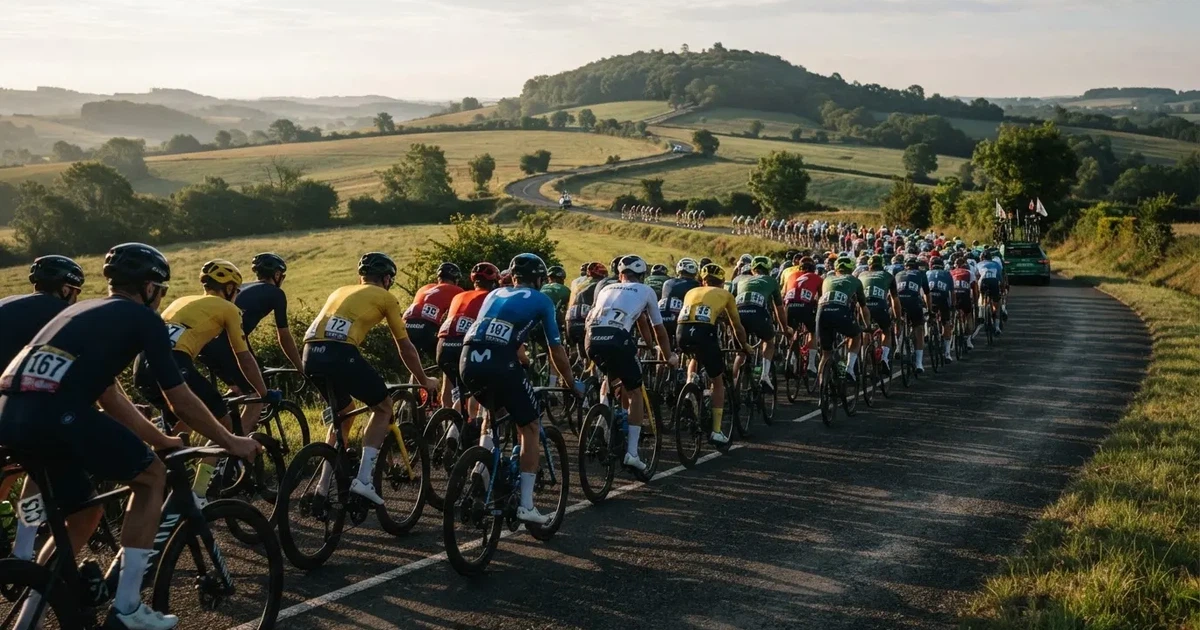
It is not a tip sheet. Nobody can name the rider who wins the Tour de France a week before the peloton reaches the Alps. The page is a guide: a way to make better-informed bets, not a list of selections.
Data current as of 27 October 2026, verified against the Gambling Commission’s public register of remote betting licences.
Stay in control before you place the first stake
Cycling markets run from January to October with barely a quiet week. Stage races, one-day Classics, the Grand Tours, the World Championships: there is always a race to bet on, and that is the first danger. A punter who treats every day of the calendar as a betting day ends the season poorer and more tired than the one who treats betting as a part-time activity with a budget and a stop. The framework below is the British one: it is what a UK-licensed bookmaker has to offer by law, and what every reader here can use regardless of which brand they eventually pick.

GAMSTOP is the national self-exclusion scheme. Every operator licensed for remote betting in Great Britain is a member, and joining one of them excludes you from all of them for the period you choose — six months, one year, five years, or five years with auto-renewal. After the minimum period the exclusion continues for a further seven years unless you ask GAMSTOP to remove it. A self-exclusion is not a pause; it is a block that survives across brands and across devices.
Deposit limits are the operator’s first line of defence. Since the end of October 2025 the first phase of a new regime has applied, and a second phase was announced for 30 September 2026 — at the time of writing the live picture should be checked on the operator’s site. The shape of the regime is the same throughout: the customer sets a gross deposit limit over a fixed period, and the operator cannot let the customer deposit more than that. There is no state-set ceiling. A punter who wants to keep this sport a hobby sets a limit they can comfortably lose; the operator’s job is to make the limit sticky enough that an in-the-moment decision cannot undo it.
The financial vulnerability check is the newer layer. When deposits minus withdrawals cross £150 in a rolling 30 days, a licensed remote operator runs a public-record check — bankruptcy or county court judgments are the kind of thing that surfaces — and asks follow-up questions where the picture is unclear. This is not an income check and it is not a credit reference check. A separate, staged “financial risk assessment” was announced by the Commission on 7 July 2026 with no published start date, and is not yet in force.
Help exists in three forms. GamCare runs the National Gambling Helpline. GambleAware funds treatment and publishes guidance. The NHS runs gambling clinics in several regions, and Gamblers Anonymous runs meetings. These are free. A punter who feels the sport slipping from entertainment into something else should use them early — not after a losing run, when the decision is hardest.
Identity is verified before the first deposit at a UK-licensed site: name, address, date of birth. No anonymous play, no betting with a borrowed card. Credit cards have been banned for gambling in Great Britain since 14 April 2020, including credit-card-funded e-wallet top-ups. Debit cards and bank transfers are not affected. That ban is one of the quiet reasons a credit card from a partner bank no longer works at the betting slip.
The shape of the cycling year
The professional road season runs roughly from January to October. Within that window there are races at every distance, every terrain and every competitive level, and each one is priced differently by the bookmakers. A reader who knows the calendar knows what kind of racing is on the menu, and which markets are about to open.

The UCI — the Union Cycliste Internationale, based in Aigle, Switzerland — has governed road cycling since 1900 and runs the annual men’s and women’s road world championships. Its top-tier men’s road series, the UCI WorldTour, was created in 2005 as the ProTour and renamed the WorldTour in 2011, and brings together the Grand Tours and the other major stage races, plus the most prestigious one-day Classics. A separate UCI Women’s World Tour runs the parallel women’s calendar.
The three Grand Tours are the Giro d’Italia (first held 1909), the Tour de France (1903) and the Vuelta a España (1935). UCI rules let a Grand Tour run for 15 to 23 days, with two rest days in the typical edition. The leaders’ jerseys are part of the brand of each race — pink (maglia rosa) in the Giro, yellow (maillot jaune) in the Tour, red (maillot rojo) in the Vuelta — and the markets for overall winner, each stage, the points classification, the mountains classification and the young rider classification sit alongside them.
The 2026 Tour de France ran from 4 to 26 July 2026, starting in Barcelona with a team time trial and finishing on the Champs-Élysées in Paris. It covered 21 stages and 3,245 km with 23 teams. Tadej Pogačar of UAE Team Emirates won his fifth Tour. The next major men’s stage race calendar after this edition of the Tour opens with the Vuelta a España, then the World Championships and the autumn Classics; readers planning bets around the rest of the season should mark those windows on the calendar before the bookmaker’s prices move.
One-day Classics are the sport’s other pillar. The cobbled Classics of northern Europe in March and April — the Tour of Flanders, Paris–Roubaix and their kin — are short, attritional, weather-dependent races where form, team tactics and even the specific bike a rider chooses change the picture from year to year. Bookmakers price these aggressively because the field is small and the favourites are well known; the value tends to sit in the match-up markets (head-to-head, top-three, group finishes) rather than in the outright winner.
The spring Classics suit form readers. The Grand Tours suit readers with patience and a notebook. A punter who bets on both with the same approach — picking a name and hoping — loses differently in each: in the Classics the line is thin and the favourite often wins, in the Grand Tours a mid-race abandon or a domestique’s heroic ride can wipe a ticket in a kilometre.
Markets that matter in cycling betting
The outright winner is the headline market on every stage race. It pays well when it lands because it asks the punter to predict the cumulative effect of three weeks of decisions. The bookmaker’s margin on outright winners is wider than on stage markets — the field is long and the favourites are priced conservatively to protect the book — so a reader who insists on the outright should be looking at odds of 6.00 (5/1) or bigger on a rider they have an independent reason to back, and should expect to lose outright winners more often than stage markets.
Each-stage winner is the working market of a Grand Tour. The bookmakers price a new stage every evening, sometimes twice in 24 hours during a tough mountain weekend, and the margin is tighter than on the outright. Most Grand Tour stage betting volume goes through these markets.
Match-ups and group finishes ask the punter to choose between named riders or named groups. The bookmaker names a price on each side; the punter backs the rider or group they think will finish higher. The margin is the lowest in this family of markets because each side is short and the prices are close to evens. A reader with strong views on team tactics tends to do better here than on outright markets.
General classification (GC) top three, top five and top ten are the spread of bets that pay out for a podium or a top-ten finish. These markets soften the variance of the outright: a punter who backs a strong stage racer for top five at a generous price often gets a run for their money across all three weeks. The bookmakers price these with the same logic as the outright, and the margin is similar.
King of the Mountains, points classification and young rider classification are the side competitions. Their prices move with the parcours and the field: a punchy, climbing-heavy route pulls the points classification market toward the GC favourites and pushes the KoM market toward breakaway specialists. A reader with a sense of the route tends to find value in these before the bookmakers settle on a line.
What a tip is actually built from
A cycling tip is not a name in a column. It is the answer to four questions, in this order. Who is fit. Who is in form. What is the course asking. What does the price actually say, once the margin is taken out.
Form is the previous month’s results, read against the kind of effort that produced them. A rider who podiumed in a one-week stage race the week before a Classic is in form; a rider who has not raced in three weeks may be either fresh or stale, and only the start list tells you which. Power data — published by some teams, leaked by others — is a useful but imperfect proxy, because the course it was measured on is rarely the course the rider will ride next.
The start list is the next thing to read. A team that sends a domestique to a race it normally sends a protected leader to has told you what it thinks the race is for. A field missing one or two favourites because of illness reshapes the price of the third. A late withdrawal a few hours before the start can move the outright market by several points of decimal odds.
The course is the third question. Five flat kilometres into a headwind call for a different rider than five flat kilometres into a crosswind; a steep climb at altitude calls for a different rider than a steep climb in the Ardennes; a 30-kilometre time trial favours a specialist, a short prologue favours an opportunist. Bookmakers adjust their prices to the course, but slowly, and the first hour after the route is published is often when the value sits.
The price is the fourth question, and it is where most punters lose discipline. A 4.00 (3/1) shot looks generous because the number is round; it is generous only if the true probability of the rider winning is greater than 1 ÷ 4.00, which is 25%. If the bookmaker’s margin is 8% and the rider is the second favourite, the true probability the price implies after stripping out the margin may be 22%, and the bet is a loser at fair value.
Reading form without a power meter
A reader without a power meter reads the race. A rider who finished fourth in Strade Bianche and then won a one-day race the following weekend is in form; a rider who crashed in the former and DNS’d the latter is unknown. A team that posts a sprint lead-out in a low-priority mid-week race is rehearsing for the weekend, and the weekend’s odds are already leaking information. A rider who pulls out of a race the day before with “fatigue” may simply be ill, and the bookmakers often do not catch that until the start list refreshes.
Form is a probability, not a promise. Even a hot favourite at 2.00 (1/1) loses more often than the price implies because the margin is sitting inside the line, and a spin of bad luck — a puncture in the final three kilometres of a Classic, a crash in a descent — wipes a tip in a moment the form chart cannot see.
Reading the start list
The start list tells you who is racing, who is fit, and what each team is trying to do. A team that sends its climbing domestiques to a flat Classics week is protecting them for the next Ardennes race. A team that sends a sprinter to a mountainous week-end stage race is aiming for stage wins, not the GC. A protected leader in a small team is the whole team’s reason for being at the race, and the team will ride for that leader at the cost of any other outcome.
A start list is also where injuries surface. A name missing from the start list the day before the race is rarely a tactical decision; it is almost always a medical one. Bookmakers adjust their prices on the morning of the race, but they do so gradually, and the first hour after the start list is final is often the best time to bet, before the market has fully priced in the change.
Reading the course
The course is the race. A flat stage is a sprinters’ stage unless the wind blows; a rolling stage is a breakaway stage unless the finish is uphill; a mountain stage is a GC stage unless the breakaway survives. The bookmaker’s prices move with the course, but they move slowly, and the first hour after the route and the start list are confirmed is where the value often sits.
Crosswinds are the single most underrated course feature. A crosswind on a flat stage turns the race into a tactical event, and the team with the strongest squad wins it. A punter who reads the forecast the morning of the stage and sees 40 km/h crosswinds can sometimes back the favourite’s team leader at a generous price before the bookmakers adjust.
What a value bet actually is
A value bet is a bet whose price is greater than the true probability of the outcome, once the bookmaker’s margin is taken out. The arithmetic is straightforward. A 4.00 shot is value if the true probability is greater than 25%. A 2.50 shot is value if the true probability is greater than 40%. The catch is that the true probability is not knowable, and the bookmaker’s margin is sitting inside the price, so the punter’s job is to estimate one and strip out the other.
The margin is the bookmaker’s commission on a market. It is built into every price on every outcome of that market, and the sum of the implied probabilities across all outcomes is greater than 100%. The gap between the sum and 100% is the margin. On a one-day Classic the margin is typically 5% to 8% on the outright winner; on a Grand Tour stage market it is closer to 4% to 6%; on match-ups and group finishes it is closer to 3% to 4%. A punter who ignores the margin pays it on every bet.
To see the margin on a market, convert each decimal price into its implied probability (1 ÷ price) and add them up. A two-way match-up priced at 1.90 and 1.90 implies 1 ÷ 1.90 + 1 ÷ 1.90 = 52.63% + 52.63% = 105.26%; the overround is 5.26%, the margin is 5.0%, and the payout share (the fraction of every pound wagered that is returned to winning punters in the long run) is 95.0%. The difference between the sum and 100% — the overround — is the book’s commission, and it is sitting on every bet the punter places on that market.
A worked example, drawn from the kind of stage market a Grand Tour punt will see most evenings: a two-way match-up between two named riders, priced at 1.90 and 1.90. The implied probabilities sum to 105.26%, the overround is 5.26%, the margin is 5.0%, and the payout share is 95.0%. The margin varies by market and by bookmaker; the calculation above is for one specific pair of prices, not for the sport as a whole, and a reader who sees tighter prices (1.85 / 1.85) gets a smaller margin (7.5% — 1 ÷ 1.85 + 1 ÷ 1.85 = 54.05% + 54.05% = 108.11%, overround 8.11%, payout share 92.5%) while wider prices (1.95 / 1.95) give a larger margin (2.5% — 1 ÷ 1.95 + 1 ÷ 1.95 = 51.28% + 51.28% = 102.56%, overround 2.56%, payout share 97.5%). Two prices that look identical at a glance carry materially different margins.
In practical terms: a punter who backs both sides of a 1.90 / 1.90 match-up at £100 each, with one side winning, gets back £190 (the winning side) on a £200 total stake — a guaranteed loss of £10, which is the margin at work. A punter who backs the right side of the same match-up gets back £190 on a £100 stake, with the long-run expected return on a £100 stake over many such bets being £94.74 — a steady erosion of £5.26 per cycle, again the bookmaker’s commission.
That erosion is the cost of betting, and the only way to beat it is to estimate the true probabilities better than the bookmaker’s traders do. Most punters do not. The minority who do — and who back only when their estimate exceeds the implied probability by enough to cover the margin — turn a profit over a season. The discipline is not the model; it is the willingness to walk away from bets the price does not support.
Staking and bankroll: the boring part that wins seasons
Bankroll management is the part of cycling betting that nobody talks about because it is dull. The arithmetic is: pick a unit (1% to 2% of the bankroll is the working range), bet that unit on every selection whose price exceeds the true probability by enough to cover the margin, never bet more on a “certainty” because there are no certainties, and stop when the day’s unit is spent. A punter who follows this for a season loses less than a punter who doubles the stake after every loss, and wins less than a punter who backs every favourite, but ends the season with a bankroll that is still alive.
The doubling-up scheme is the most common ruin in cycling betting. A reader who has lost three bets in a row feels the fourth one “has to come in” and bets the cumulative loss on it. The fourth one loses too, because the probability of the fourth one was no higher than the probability of the first, and the bankroll is now gone. The unit scheme avoids this because the unit is fixed, the bets are independent, and the bankroll survives a run of bad luck.
Staking plans that scale with confidence — bigger stakes on stronger tips, smaller stakes on weaker ones — work in principle, but only if the confidence is real. A punter who rates every tip as “strong” has not actually rated them, and the staking plan collapses into the same doubling-up behaviour in a softer form. A simpler rule: same unit on every value bet, walk away when the day’s unit is spent, and do not chase.
The each-way bet is a British quirk worth understanding. An each-way bet is two bets of equal stake: one on the win, one on the place. The place terms vary by race and by bookmaker — a Grand Tour stage might pay a quarter of the win odds for the top three places, a Classic might pay a third for the top four, an each-way bookmaker’s own terms will state. A punter who backs a rider each-way at 8.00 (7/1) for a stage where the place terms are a quarter the odds for the top three gets a return of 4 × stake if the rider wins (because the place bet pays 8.00 ÷ 4 = 2.00 plus the stake, plus the win bet pays the full 8.00 plus the stake, totaling 4 × stake + 2 × stake — wait, more carefully: the win bet returns stake × 8.00 = 8 × stake if it wins; the place bet returns stake × (1 + 8.00/4) = stake × 3 if the rider places; total if the rider wins is 8 × stake from the win leg plus 3 × stake from the place leg = 11 × stake on a 2 × stake total outlay, net 9 × stake profit; if the rider only places, the win leg is lost and the place leg returns 3 × stake on a 2 × stake outlay, net 1 × stake profit; if the rider is outside the places, both bets lose). The arithmetic is fiddly but the practical effect is that an each-way bet hedges a long-shot outright at the cost of halving the win payout, which is often worth it on a one-day race.
The bookmaker’s welcome offer, decoded
Every UK-licensed bookmaker runs a welcome offer for new customers. The offers look generous because that is the marketing department’s job; they cost the punter real money because the wagering conditions, minimum odds, deadlines and stake rules are the price. Reading the small print is not optional. It is the difference between an offer worth claiming and an offer that costs more than it returns.
A “free bet” is a token the bookmaker credits to a new customer’s account after a qualifying bet. The stake is usually not returned with a win — a £10 free bet at 3.00 returns £20, not £30 — and the offer’s value is therefore the winning portion of the bet. The expected value of a £10 free bet at 3.00 on a market with a 95% payout share is £10 × (3.00 − 1) ÷ 3.00 × 0.95 = £10 × 0.667 × 0.95 = £6.33. That is the offer’s worth in the long run; the offer’s headline number (£10) is not.
A “matched free bet” is the same shape, but it is triggered by a first bet at the bookmaker’s own site — often of a specified minimum stake and minimum number of selections. A 100% matched free bet of up to £25 means the bookmaker credits a free bet of up to £25, equal to the stake of the first qualifying bet (capped at £25). The free bet itself cannot usually be split or withdrawn; it must be wagered at the bookmaker’s minimum odds within the offer’s deadline.
A “risk-free” or “money-back” offer is a first bet whose stake is refunded as a free bet (not as cash) if it loses. A £25 first bet at 2.00 that loses gets back a £25 free bet, whose value is £25 × (odds − 1) ÷ odds × payout share of the market — say 95% payout share at 2.00, that’s £25 × 0.5 × 0.95 = £11.88 in expected value. The marketing word “risk-free” describes a structure, not a result: a punter who takes the offer still needs the free-bet leg to clear at a price that covers the wagering conditions, and a punt on a 1.20 shot at minimum odds does not clear at most bookmakers.
Wagering requirements are the multiplier that turns a bonus into a liability. A £10 bonus with a 10x wagering requirement on bonuses means £100 of qualifying bets must be placed before the bonus — and any winnings from those bets — can be withdrawn. The cap on this is 10x under the Commission’s promotion rules in force since 19 January 2026, down from the 50x or higher multiples common in the past. A punter who sees a bonus with a 50x requirement is looking at a pre-2026 offer, or at an unlicensed brand not bound by the cap.
Minimum odds are the floor below which a qualifying bet does not count toward wagering. A typical floor is 1.50 (1/2) or 1.60 (3/5). A bet at 1.40 does not count, and the punter must either raise the stake or pick a different selection. Minimum odds exist to stop a punter from wagering the bonus on a near-certainty and walking away with the winnings.
Mixed-product promotions — an offer that asks the punter to gamble on two product types, for instance a sports bet to unlock casino free spins — have been banned for licensed operators since 19 January 2026. A punter who sees a “bet on cycling to get free spins” offer from a UK-licensed brand is looking at a non-compliant offer, and the brand should be reported to the Commission.
Deadlines are the last clause most punters read, and the one that costs them the offer. A 7-day deadline from sign-up is common; a 14-day deadline is generous. A punter who deposits, places the qualifying bet, and forgets the deadline loses the free bet, the bonus and the winnings attached to them.
The ten reviewed bookmakers
Every brand below holds a Gambling Commission remote licence and is listed on the Commission’s public register. The review covers what the operator’s own terms state on the subjects that matter to cycling punters — licence number and holder, the welcome offer’s structure, the markets and features the operator is known for, and the limits or conditions that shape the day-to-day experience. The reviews are descriptive, not endorsements: a place on a list is not a licence to skip the small print.
The table that follows shows the comparison at a glance.
| Bookmaker | Licence (GC remote account) and licence holder | What the operator’s own terms state |
|---|---|---|
| Spreadex | 008835-R-104580-022 — Spreadex Limited | Combines fixed-odds and spread betting in one app; one-click, auto and partial cash out; Bet Builder across fixed odds and spreads; live streaming of UK and Irish horse racing, greyhounds, tennis, NFL and selected football. Spread betting is FCA-regulated and losses can exceed the deposit. |
| Bar One Racing | 056516-R-332750-007 — Bar-One Racing Limited | Rebranded as BAR 1 Betting; an Irish independent bookmaker with shops across Ireland and horse racing sponsorships at Dundalk, Fairyhouse, Navan, The Curragh, Curraheen Park and Cork. |
| Smarkets | 039173-R-319366-011 — Smarkets (Malta) Limited | Open bank transfer deposits are instant from £10 up to £10,000 and withdrawals are processed within 6 hours from £10 up to £100,000; UK debit card deposits are instant from £10 up to £15,000. |
| William Hill | 039225-R-319373-015 — WHG (International) Limited | Best Odds Guaranteed on UK and Irish horse racing from 8 AM on the day of the race, on both single and multiple bets; does not apply to ante-post, tote or pari-mutuel bets. |
| BetMGM | 039198-R-319450-029 — LeoVegas Gaming PLC | Sports welcome offer for new UK customers who deposit £10 or more and place a sports bet within 7 days: four £10 free bets (two football accumulators of 4+ selections, two sports multiples of 2+), valid for 7 days with minimum odds and opt-in required. |
| Midnite | 101839-R-342850-001 — Midnite Limited | Sports welcome offer: new customers who bet £5 or more on pre-match odds of EVS (2.0) or greater within 14 days of sign-up receive £25 in free bets and 50 free spins, valid for 7 days. |
| Paddy Power | 039439-R-319330-013 — PPB Counterparty Services Limited | The Paddy Power app covers football, horse racing, boxing, rugby, tennis, golf, darts, snooker and F1. |
| Betboro | 044181-R-324363-007 — Webmedia Development N.V. | Sports welcome offer: 100% matched free bet of up to £25 on the first qualifying wager; requires a debit card deposit of at least £10 and a first bet of £5 to £25 with at least three selections each at 3/5 (1.60) or higher. |
| Octobet | 062545-R-337248-006 — Octopus Game Limited | Sportsbook welcome offer: 50% back as a free bet up to £50, plus a £10 casino bonus for new customers. |
| BetVictor | 039576-R-319370-028 — BV Gaming Limited | Best Odds Guaranteed on UK and Irish horse racing, enhanced live race streaming and a BetFinder feature for finding racing bets, alongside Smart Stats. |
Spreadex — fixed odds and spread betting under one roof
Spreadex is unusual on this list because it offers both fixed-odds betting and financial spread betting on the same app. The fixed-odds side is regulated by the Gambling Commission; the spread-betting side is regulated by the Financial Conduct Authority. The two have different mechanics: a fixed-odds bet pays a stated return if the selection wins, a spread bet pays the difference between the result and a stated spread, and on financial spread markets losses can exceed the original deposit. A punter who wants the simplicity of fixed odds can ignore the spread-betting side, but the spread-betting side is part of the offer and should not be a surprise. The app carries one-click, auto and partial cash out, a Bet Builder that spans fixed odds and spreads, and live streaming of UK and Irish horse racing, greyhounds, tennis, NFL and selected football. For cycling punters the streaming coverage is limited, but the cash-out flexibility and the Bet Builder across both products make it a worth-a-look option for the reader who likes to manage positions actively.
The verdict: a hybrid product for a reader who wants fixed-odds betting and the option of spread betting on the same app. The cycling coverage is mainstream — outrights, stages, match-ups — and the cash-out flexibility is broader than most. The catch is the FCA-regulated spread side, which is genuinely different from fixed odds and not for every reader.
Bar One Racing — an Irish independent with a UK-licensed app
Bar One Racing rebranded as BAR 1 Betting and operates as an Irish independent bookmaker with shops across Ireland and sponsorships at Dundalk, Fairyhouse, Navan, The Curragh, Curraheen Park and Cork. The UK-facing app is licensed by the Gambling Commission under a remote general betting standard (real events) licence held by Bar-One Racing Limited. The brand’s centre of gravity is horse racing — its sponsorship footprint tells the story — and the cycling offer is a mainstream one. A reader who uses the brand for racing and wants a single account for both racing and cycling will find what they need; a reader whose betting is cycling-only will probably do better elsewhere.
The verdict: a solid Irish independent for racing-led accounts, with a usable cycling section attached. Not a cycling-first bookmaker, and a reader should compare the cycling outright and stage margins to dedicated competitors before settling.
Smarkets — the exchange-shaped bookmaker
Smarkets is a betting exchange, which is a different shape from a traditional bookmaker. On an exchange, punters back and lay against each other; the operator takes a commission on net winnings rather than building a margin into every price. For cycling punters the implication is that exchange prices on outrights and match-ups are typically tighter than traditional bookmaker prices, because the exchange’s commission is small and the punter-versus-punter model does not need to embed a margin. The Commission-licensed intermediary licence sits with Smarkets (Malta) Limited; the operator is regulated for remote betting intermediation in Great Britain, which is the licence class for exchanges. The payments side is fast: open bank transfer deposits are instant from £10 to £10,000 and withdrawals are processed within 6 hours from £10 to £100,000; UK debit card deposits are instant from £10 to £15,000. A reader who can use open banking will find the deposit and withdrawal experience among the fastest in the market.
The verdict: the best fit on this list for a cycling punter who is comfortable betting on an exchange and who values tight prices over welcome offers. The welcome offer is less generous than the high-street brands because the model is different. For outrights and match-ups on Grand Tour stages the exchange is often where the best prices sit, and a serious cycling punter usually keeps an exchange account alongside a traditional bookmaker.
William Hill — Best Odds Guaranteed and a long racing history
William Hill is one of the longest-established names on the high street and runs a full UK-licensed remote operation under WHG (International) Limited. The headline feature for racing punters is Best Odds Guaranteed: if the starting price is bigger than the price the punter took, the bet is paid at the starting price. The offer runs from 8 AM on the day of UK and Irish horse racing on both single and multiple bets, and does not apply to ante-post, tote or pari-mutuel bets. BOG is racing-specific and does not extend to cycling, but it is the reason racing-led accounts stay with the brand. For cycling the offer is a mainstream one across outrights, stages, match-ups and the side classifications, and the mobile app is among the most-used in the UK.
The verdict: a heavyweight brand for the racing-first reader, with a strong cycling offer attached. The cycling section is competitive on outrights and stage markets; the smaller markets (KoM, young rider) are usually present but with wider margins. A reader who wants a single account for racing and cycling, and who values Best Odds Guaranteed on racing days, will find William Hill hard to leave.
BetMGM — LeoVegas Gaming’s UK sportsbook
BetMGM’s UK sportsbook runs under a Gambling Commission remote licence held by LeoVegas Gaming PLC, the listed Swedish operator. The sports welcome offer for new UK customers is four £10 free bets — two on football accumulators with 4+ selections and two on sports multiples with 2+ — triggered by a £10 deposit and a sports bet within 7 days, with minimum odds and opt-in required, and valid for 7 days. The structure is unusual: the free bets are tied to specific bet types (football accas, sports multiples), not to any selection the punter chooses, and a cycling punter who only backs outrights and stages will find the football accumulator free bet unusable. The sports multiples free bet, by contrast, can be used on cycling multiples and is the relevant part of the offer for a cycling-led reader.
The verdict: a UK sportsbook with a parent group that has casino depth and a sportsbook welcome offer that is generous in headline value but split across bet types. The cycling offer is mainstream; a cycling punter should read the bet-type rules before counting the free bets as usable.
Midnite — the newer brand with a focused offer
Midnite is a newer UK-licensed brand, operating under Gambling Commission account 101839 with Midnite Limited as the licence holder. The sports welcome offer for new customers is simple: a £5+ bet at pre-match odds of EVS (2.0) or greater within 14 days of sign-up returns £25 in free bets and 50 free spins, valid for 7 days. The structure is closer to a “matched free bet” in shape — a small qualifying bet, a free-bet return — and the EVS minimum odds keeps the offer away from certainty-chasing. The site carries in-play events, an acca builder, popular accas and price boosts with maximum-stake limits, and the brand’s centre of gravity is football and racing; cycling is covered across outrights, stages and match-ups but is not the headline sport. The free-spins portion is a casino product and is governed by its own wagering rules; under the 19 January 2026 rules, the offer does not require a casino bet to unlock the sports free bets, so the structure is compliant.
The verdict: a focused welcome offer for a reader who wants the small qualifying bet and the 14-day qualifying window. The free-spins portion is a casino product and should be read on its own merits. The cycling coverage is mainstream; a serious cycling punter should compare outright and stage margins to the dedicated competitors before settling.
Paddy Power — the high-street heavyweight
Paddy Power runs under PPB Counterparty Services Limited on a remote general betting standard (real events) licence, and the app covers football, horse racing, boxing, rugby, tennis, golf, darts, snooker and F1. The brand is part of the Flutter group alongside Betfair; a reader who opens one Flutter account may find the two brands’ offers cross-referenced in marketing, but the accounts themselves are separate. The cycling offer sits within the mainstream menu: outrights, each stage, match-ups, top three and top five GC, and the side classifications. Price boosts on cycling are common around the Grand Tours, and the brand’s Money-Back specials (a stake refunded as a free bet if a named condition is missed) appear on selected markets. The catch is that the welcome offer’s headline number is often higher than its effective value: a “money-back” leg is a free-bet refund, not a cash refund, and the punter still needs to clear the free bet at the offer’s terms.
The verdict: a high-street brand with broad market coverage, regular price boosts around Grand Tours, and a money-back-shaped welcome offer that requires the punter to read the small print. The cycling coverage is competitive on outrights and stage markets; a reader who likes price boosts and acca insurance will find the brand worth a look.
Betboro — a smaller brand with a focused free bet
Betboro is a smaller UK-licensed brand, with the remote licence under Webmedia Development N.V. The sports welcome offer is a 100% matched free bet of up to £25 on the first qualifying wager, requiring a debit card deposit of at least £10 and a first bet of £5 to £25 with at least three selections each at 3/5 (1.60) or higher. The structure is unusual: the qualifying bet must be a multiple of three or more selections, which excludes the outright single bet a cycling punter might prefer. A punter who backs a stage-race multiple — three stage winners, say, or an each-way combination — meets the requirement; a punter who backs a single outright does not. The matched free bet can be used on cycling at the bookmaker’s minimum odds, but the qualifying bet’s structure shapes who the offer suits.
The verdict: a smaller welcome offer with a clear structure, best for a punter who already plans to back a cycling multiple in their first bet. A reader who prefers outright singles should pick a different brand’s welcome offer; a reader who was going to back a multiple anyway will find the matched free bet a clean addition.
Octobet — a free-bet-back welcome offer
Octobet runs under Octopus Game Limited on a remote general betting standard (real events) licence. The sportsbook welcome offer is 50% back as a free bet up to £50, plus a £10 casino bonus for new customers. The “50% back” structure is a money-back-if-you-lose shape: a first bet that loses returns 50% of its stake as a free bet, capped at £50. A £100 first bet that loses returns a £50 free bet; a £25 first bet that loses returns a £12.50 free bet. The free bet’s value depends on the price the punter backs it at and the market’s payout share. The casino bonus is a separate product with its own wagering conditions; under the 19 January 2026 rules, an offer that requires a sports bet to unlock a casino bonus is a mixed-product promotion, but the offer’s structure here is the reverse (a casino bonus added to a sports free-bet-back offer), and the sports-bet trigger is sufficient on its own.
The verdict: a money-back-shaped welcome offer for the punter who backs a single selection on the first bet. A reader who would have bet anyway will find the free-bet-back a useful hedge; the casino bonus is small and should be read on its own terms. The cycling coverage is mainstream; a serious cycling punter should compare outright margins.
BetVictor — Best Odds Guaranteed and racing depth
BetVictor runs under BV Gaming Limited on a remote general betting standard (real events) licence, and the offer covers Best Odds Guaranteed on UK and Irish horse racing, enhanced live race streaming and a BetFinder feature for finding racing bets, alongside Smart Stats. Like William Hill, the headline feature is racing-shaped; for cycling the offer is mainstream across outrights, stages and match-ups, with the same caveat that BOG does not extend to cycling. The brand has a long history on the high street and a long-running mobile app; the racing focus is real and the cycling section is competitive but secondary.
The verdict: another racing-first heavyweight for the reader who wants a single racing-and-cycling account. The cycling offer is competitive on the mainstream markets; the smaller classifications sometimes carry wider margins. A reader who likes BetFinder for racing and Smart Stats for form will find the same tools usable on the cycling section, with limits.
What the law says, and what it means for the punter
The legal frame around UK-licensed betting is the Gambling Act 2005 and the Gambling (Licensing and Advertising) Act 2014, run by the Gambling Commission. The licensing point is the load-bearing one: an operator whose remote facilities are used in Great Britain needs a Commission licence wherever it is based, and a Curaçao, Maltese or Gibraltar licence is not a substitute. The Commission’s public register is the whole test of who holds a licence; a reader can search by business name, trading name, domain, or account number. The ten brands reviewed above are all on the register; a brand not on the register is offering to customers in Great Britain without the licence the Act requires, and is committing an offence under section 33 of the 2005 Act. No offence aimed at a customer who merely bets on an unlicensed site was found, but the protections are gone.
The licence class matters. The remote general betting standard (real events) licence covers outrights, stages, match-ups, accumulators and the usual menu; the remote betting intermediary licence covers betting exchanges; the remote pool betting licence covers pool products; the remote general betting standard (virtual events) covers computer-simulated events. Cycling sits under real events. A licence that does not include real events cannot offer cycling markets to customers in Great Britain.
The operator’s licence conditions — the Licence Conditions and Codes of Practice (LCCP) — sit on top of the Act. The LCCP covers social responsibility, marketing, identity verification and the technical standards. A punter who uses a licensed operator gets the LCCP’s protections: identity verification before the first deposit, GAMSTOP coverage, the 10x bonus wagering cap, the £150 financial vulnerability check threshold, and the complaints route to an approved dispute-resolution body. A punter who uses an unlicensed operator gets none of those.
General Betting Duty is the operator’s tax on gross profits, currently 15%. From 1 April 2027 a new remote betting rate of 25% applies within it, while remote bets on UK horse racing, bets on self-service betting terminals in licensed premises, pool betting and in-person betting stay at 15%. The player pays no tax on betting winnings in Great Britain — general information, not tax advice; a professional gambler should ask HMRC or an adviser. Operators may pass duty on through odds; whether they do is not established, and a punter should not assume the headline price is post-duty.
The advertising frame is the CAP Code (non-broadcast) and BCAP Code (broadcast), enforced by the ASA. The CAP Code section 16 covers social responsibility, strong appeal to under-18s, and the rule that no one who is or seems to be under 25 may feature gambling or play a significant role in an advertisement. “Whistle-to-whistle” — no betting ads five minutes before to five minutes after a live sporting event on TV, before the 9 pm watershed — is an industry code that has been in force since 1 August 2019, with horse and greyhound racing excluded. The Premier League clubs’ withdrawal of gambling sponsorship from the front of matchday shirts (from 2026/27; sleeves and hoardings remain) is voluntary, not law.
The offshore frame is the final piece. A GB-licensed brand must verify identity, offer GAMSTOP, run the financial vulnerability check and stay inside the bonus cap; an offshore brand operating without a GB licence does none of those. The Commission’s enforcement is disruption — cease-and-desist notices, search-engine referrals, work with registrars, hosts and payment providers — and the Commission has been given, or is about to receive, court-order DNS blocking powers, but ISP blocking is not yet in operation. A reader who values the British protections — the dispute-resolution route, the GAMSTOP block, the bonus cap, the £150 threshold — should bet with a licensed brand. A reader who bets on an unlicensed site has none of those protections and may find that funds are withheld with no British consumer redress. Honest framing: licensed = checks, limits, GAMSTOP, bonus cap, but also verification before the first bet; unlicensed = none of those protections and possible loss of funds. Neither is the safe choice by default.
Reading the welcome offers in practice
The reviews above describe each brand’s welcome offer qualitatively; the arithmetic below shows what those offers are worth in expected value. The headline numbers are not the answer, because the wagering conditions, minimum odds and stake rules eat into them.
A £10 free bet at 3.00 on a market with a 95% payout share is worth £10 × (3.00 − 1) ÷ 3.00 × 0.95 = £6.33 in expected value. The £10 in the marketing copy is the offer’s headline; £6.33 is its expected worth over many bets, and the punter’s job is to use the free bet at a price that clears the wagering conditions without sacrificing all the edge to the margin.
A £25 free-bet-back on a £50 first bet at 2.00 that loses is worth £25 × (2.00 − 1) ÷ 2.00 × 0.95 = £11.88 in expected value, conditional on the first bet losing. The punter’s first bet still needs to be at a price the punter would have taken without the offer; a “money-back” structure does not justify a bet the punter would not otherwise have made.
A £100 bonus with a 10x wagering requirement on bonuses at minimum odds 1.50 is worth £100 in expected bonus, but requires £1,000 of qualifying bets. The qualifying bets cost the punter the margin on each market, and a punter backing only favourites at 1.50 on a market with an 8% margin loses £1,000 × 0.08 = £80 of the £100 bonus to the margin, ending with a £20 net gain on the bonus before considering any winnings. A punter backing value bets at minimum odds 1.60 on markets with a 5% margin fares better, but the discipline is the same: the bonus is not free money, and the punter’s expected cost of clearing it is the turnover multiplied by the margin of the market chosen.
The deadline is the silent killer. A punter who places the qualifying bet on day 13 of a 14-day window has a working offer; a punter who places it on day 15 has nothing. A punter who places a £5 qualifying bet on the last day and forgets to place the next qualifying bet inside the same window has triggered the offer without completing it, and the free bet is gone.
A punter who plans to bet anyway — who already has a cycling tip they would back this week — should claim the welcome offer that fits the bet they would have placed. A punter who places a bet only to unlock an offer they would not otherwise have made is paying the offer’s marketing bill with their own stake, and the offer is not free.
The arithmetic of a single bet
For a single bet of stake S at decimal odds D, the return on a win is S × D and the net profit is S × (D − 1). A £10 bet at 3.00 returns £30 and profits £20. A £10 bet at 1.50 returns £15 and profits £5. The decimal odds already include the stake; the profit is the return minus the stake.
For a combination bet, the odds of the legs multiply. Two legs at 2.00 and 3.00 combine into 6.00, and a £10 combination returns £60 on a win. The total stake is still £10, but the punter needs both legs to win, and the bookmaker’s margin compounds across the legs. A combination of two legs at 2.00 and 2.00 is 4.00; if the underlying markets each carry a 5% margin, the combined market’s margin is wider, and the punter is paying it twice.
The each-way bet is two equal-stake bets. A £10 each-way bet is £10 on the win and £10 on the place, total outlay £20. The place terms (a quarter of the win odds for the top three, a fifth for the top four, a third for the top four, depending on the race and the bookmaker) determine the place payout. A £10 each-way bet at 8.00 (7/1) with place terms of a quarter the odds for the top three returns £80 from the win leg and £30 from the place leg (because the place pays 8.00 ÷ 4 = 2.00 decimal, so £10 × 2.00 = £20 return plus the £10 stake — wait, the place bet returns stake × (1 + place odds), so £10 × (1 + 2.00) = £30) if the rider wins, and £30 from the place leg only if the rider only places. Net profit on a win is £90; net profit on a place only is £10; net loss if the rider misses the places is £20.
The margin on a two-way market at 1.90 / 1.90 is 5.26%, as calculated above. A two-way market at 1.85 / 1.85 carries a margin of 8.11%; at 1.95 / 1.95 the margin is 2.56%. The narrower the prices (closer to 1.01 / 100.00 in extreme cases), the wider the margin in percentage terms. A punter who sees a “tight” market is often looking at a market with a wider margin, not a market with better value.
How to check a licence
Every brand on this list is on the Gambling Commission’s public register, and the register is the only place a reader needs to look. The search page accepts a business name, a trading name, a domain or an account number; the result shows the licence classes, the licence holder, the registered address and the status. A brand whose name appears with a current licence status is licensed; a brand whose name does not appear, or whose status is suspended or revoked, is not.
The search takes a few minutes and is worth doing once per brand, before the first deposit. A punter who has not checked should not have deposited, and a punter who has deposited at a brand that turns out to be unlicensed should withdraw funds and switch to a licensed brand before placing another bet. The register is updated by the Commission as licences change, and the access date is part of any quote drawn from it.
A licence number is a number, not a credential. A brand may print a licence number on its site that does not match the register; the register is the test, not the brand’s own claim. The ten brands reviewed above carry the licence numbers given in the table; each can be verified by searching the register.
The discipline of betting on cycling
Cycling markets are wide enough to be interesting and small enough to be exploitable. The outright market on a Grand Tour lists 30 to 60 riders, and the long tail carries prices that are not based on detailed form analysis but on market sentiment. A reader who does their own form work — and who bets only when their estimate of a rider’s chance exceeds the price’s implied probability by enough to cover the margin — has a structural edge over the average punter, who backs names rather than probabilities.
The discipline is the edge. A punter who bets every day is paying the margin every day and losing the edge by sheer volume. A punter who bets on the ten races a season where the value is clear, and skips the other fifty, keeps the edge for those ten races and lets the others go. The bankroll survives the skipped races because the punter did not wager on them; the bankroll survives the bet races because the value was real.
A punter who reads the start list, the course and the form — and who reads the price before betting, and walks away when the price does not support the bet — is the punter who finishes a cycling season with a bankroll that is alive. That is the whole of the guide.
Frequently asked questions
How do you bet on cycling?
The first step is reading the start list, the course and the recent form. The second is checking the price: convert each decimal price into its implied probability (1 ÷ price), and only back a selection whose implied probability is below your own estimate by enough to cover the bookmaker’s margin. The third is staking, with a fixed unit of 1% to 2% of the bankroll. Markets include outright winner, each-stage winner, match-ups, top-three and top-five GC, and the side classifications (KoM, points, young rider). Welcome offers at UK-licensed bookmakers are wired to small qualifying bets with deadlines; read the terms before claiming.
Can you bet on cycling in the UK?
Yes, at any operator licensed by the Gambling Commission for remote general betting standard (real events). All ten brands reviewed in this guide hold that licence; the public register is the test. Spread betting on cycling outcomes is also available at Spreadex under the FCA-regulated side of the business. Credit cards are banned for gambling in Great Britain (since 14 April 2020); debit cards and bank transfers are not covered. Identity is verified before the first deposit at a licensed site.
What is a value bet and why is no tip ever certain?
A value bet is a bet whose price is greater than the true probability of the outcome, once the bookmaker’s margin is taken out. A 4.00 shot is value if the true probability is greater than 25%. No tip is certain because cycling outcomes depend on form, crashes, mechanicals, weather, team tactics and a hundred other factors that no model can capture. Even a strong favourite at 1.50 loses more often than the price implies because the margin is sitting inside the line, and a puncture in the final three kilometres of a Classic wipes a tip in a way the form chart cannot see.
What is the bookmaker’s margin and how can it be seen in the odds?
The margin is the bookmaker’s commission on a market, built into every price. To see it, convert each decimal price into its implied probability (1 ÷ price) and add the probabilities across all outcomes. On a two-way match-up priced at 1.90 / 1.90, the probabilities sum to 105.26%; the overround is 5.26%, the margin is 5.0%, and the payout share is 95.0%. Tighter prices (1.85 / 1.85) carry a wider margin (7.5%); wider prices (1.95 / 1.95) carry a smaller margin (2.5%). The margin varies by market and by bookmaker; the calculation above is for one specific pair of prices.
How is the return on a bet worked out from the stake and the odds?
For a single bet, the return is stake × decimal odds and the net profit is stake × (odds − 1). A £10 bet at 3.00 returns £30 and profits £20. For a combination bet, the odds of the legs multiply into one combined price, and the total stake is the unit stake. For an each-way bet, the punter places two equal-stake bets (one on the win, one on the place); the place pays a fraction of the win odds for the named places, and the place terms vary by race and by bookmaker.
How can it be checked that a bookmaker holds a Gambling Commission licence?
Search the Commission’s public register by business name, trading name, domain or account number. The register shows the licence classes (remote general betting standard (real events), remote betting intermediary, and so on), the licence holder, the registered address and the status. A brand whose name appears with a current status is licensed; a brand whose name does not appear, or whose status is suspended or revoked, is not. The register is the only test.
Combat & motorsport – Free bets
Content created by the «Free bets» team
