
Where high stakes betting really lives in Great Britain — and what the price is for it
 Available in US
27 October 2026 · Licence claims checked against the Gambling Commission’s public register
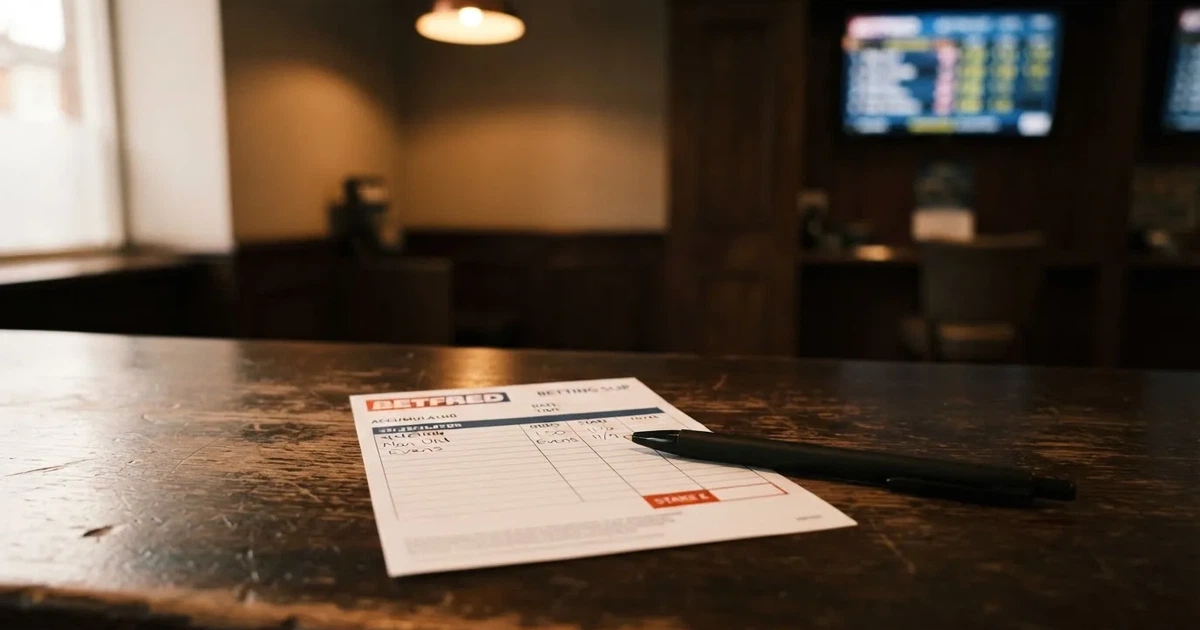
A bettor who wants to place a serious wager in Great Britain runs into a market that is, on paper, completely open. The Gambling Commission does not set a maximum stake; the Gambling Act 2005 names no level above which a bet becomes “high stakes”. What stands in the way of a large punt are the bookmakers’ own controls, set against a backdrop of mandatory affordability, identity checks and a bonus cap. The article is a cost ledger for that market: what it actually takes to bet big in Great Britain, which bookmakers will take a big bet, and what each one quietly claws back while saying yes.
Safer play before anything else: what rules apply at every licensed bookmaker
Before the ranked comparison, the guardrails. Every site on this page is licensed by the Gambling Commission for Great Britain and is therefore bound by the same licence conditions and codes of practice. The rules are not optional and they bite hardest at the top of the betting range, which is the precise territory this article covers.

GAMSTOP is mandatory. Since 31 March 2020, every online bookmaker licensed for Great Britain has to be a member of the national multi-operator self-exclusion scheme. Exclusion periods run for six months, one year, five years, or five years with auto-renewal, and after the minimum period the customer can only come off the register by asking GAMSTOP to do so — and even then the exclusion stays in force for a further seven years unless the customer lifts it. Betting shops use a separate land-based scheme; the rule here covers online sites and apps. A high-stakes bettor is, by definition, exactly the kind of customer this scheme is built to interrupt, and a period of exclusion cuts the market down to the few operators it does not yet cover.
Verification is built in. Name, address and date of birth are checked before the first deposit or first bet, even on a free bet or bonus (a rule in force since 7 May 2019). Anonymous play is gone. For a high-spend customer the process is not a single form but a continuing one: source-of-funds questions at higher spend are normal under the money-laundering rules, and the Commission’s financial vulnerability check (LCCP 3.4.4, in force since 30 August 2024) fires once a customer’s net deposits — deposits minus withdrawals — exceed £150 across a rolling 30 days. That check is a public-record search (bankruptcy, county court judgments and similar), not an income test, but it can pause withdrawals while it is open. A separate, lighter customer-checks regime has been announced in stages with no live start date as of this writing; it is “announced, staged, no start date”, not in force.
Deposit limits are the customer’s to set, and from late 2025 the operator’s to invite. There is no state-set ceiling on what a bettor may deposit or lose with a licensed bookmaker. The customer chooses. Since 31 October 2025 the first phase of a new Remote Technical Standard (RTS 12) on gross deposit limits has been applied; a second phase was postponed to 30 September 2026. A practical high-stakes bettor should expect an operator to invite — and at very high spend, to require — a deposit ceiling, and to check that ceiling against actual net spend on a regular basis.
Bonuses are capped, and mixed offers are out. Wagering requirements on any bonus at a GB-licensed operator cannot exceed 10x the bonus amount — a £10 bonus with a 50x turnover is not legal at all under the cap, since the resulting £500 of required play is more than ten times the bonus. Mixed-product promotions, anything that requires the customer to bet on two or more product types to claim (a sports bet to unlock casino free spins, for instance) are banned. These rules do not touch the size of the odds offered or the stake you can place; they quietly shrink the value of “welcome” promotions to a sportsbook high-stakes customer who would have wagered the bonus anyway.
Credit cards are out, e-wallets included. Gambling on credit has been illegal in Great Britain since 14 April 2020, and the ban extends to credit-funded payments through an e-wallet, not just to direct card use. For a high-stakes bettor this often means moving money via debit card or bank transfer and accepting whatever Faster Payments limits the bank applies.
Help exists, and it is independent of the bookmaker. GamCare runs the National Gambling Helpline. GambleAware funds treatment and education. NHS gambling clinics sit in several regions. Gamblers Anonymous runs peer meetings. None of these is an operator; a high-stakes punter in trouble does not have to go through the betting site that holds the wallet.
How a bet is built, priced and paid out at the top of the range
A high-stakes bet is, mechanically, a normal bet paid at a normal price, with the difference being only how much is wagered and how the bookmaker reacts to that size. Three mechanics decide what it really costs.
Single, each-way, accumulator — and how the stake multiplies. A single bet settles on one outcome; the stake is what is risked and returns are the stake plus winnings at the odds taken. An each-way bet splits the stake across two equal bets (one on the win, one on the place), so a £1,000 each-way wager actually costs £2,000 — half at win odds, half at a fraction of the win odds that the operator’s place terms state. An accumulator, often called an acca on these sites, multiplies the odds of two or more legs into one price and pays only if every leg wins. A 1.50 / 1.80 / 2.10 treble pays 5.67, which is just the product, and a £100 stake returns £567 (the £500 is profit). For the bettor, every additional leg is a better potential payout and a worse chance of collecting.
Odds, in two formats, on the same bet. British bookmakers write prices as fractions or decimals. Five-to-one (5/1) is a six-unit return for a one-unit stake, the same number as decimal odds of 6.00. Evens, written 1/1, is decimal 2.00. Eleven-to-four (11/4) is 3.75 in decimal. The conversion is straightforward: divide the first number by the second and add one (a/b → a ÷ b + 1). The bookmaker publishes both, and the slip will usually default to whatever the customer’s account is set to. What matters for a high-stakes punter is that fractional and decimal are the same price; choosing one over the other does not change the return.
The margin is built into every price, and it is the bookmaker’s edge on every market. Take a two-way market priced at 1.90 / 1.90 — the example used throughout this article as a clean illustration, not a quoted price. Add the implied probabilities: each outcome at 1.90 carries 1 ÷ 1.90 = 0.5263, so the two together imply 1.0526. The bookmaker’s margin is the excess over 1.00, which here is roughly 5.3%. For every pound bet on that market, the bookmaker keeps about five pence on average before any other costs. Push the prices to a 1.80 / 1.80 line (each outcome implied at 1 ÷ 1.80 = 0.5556, the bookmaker’s two together imply 1.1111) and the margin rises to about 11.1%. The market, not the headline payout, is what decides what a bettor really keeps.
A worked illustration on the example market at odds of 1.90 / 1.90: a successful £500 single returns £500 × 1.90 = £950, of which £450 is net profit. The other side of the market, a successful bet by the opposing customer, costs the bookmaker exactly the same figure. Across all winning and losing bets on that market the bookmaker keeps roughly 5.3% of total stakes in the long run. A bettor who wants a real edge has to find prices with lower margins than the average, or beat the line in some other way; simply betting larger does not change the percentage the bookmaker holds.
Bookmakers cap stake size, and the cap is rarely on the homepage. Most regulated bookmakers publish no maximum stake, but they keep one on the trading desk and apply it per selection. A £10,000 each-way request on a small-field horse race at 8 AM is commonly limited to a few hundred pounds; the same bet on a Premier League match-result market at 24 hours’ notice may go through unrestricted. High-stakes bettors learn the size of these caps by trying; the customer-protection rules above let an operator refuse or reduce a bet without giving a reason.
The ten licensed bookmakers in the comparison
The ranking below does not say which bookmaker is “best” — that depends on which sport, market, price and feature the reader wants at the size of bet they want to place. It maps what each of ten Gambling Commission remote-licensed bookmakers actually offers to a high-stakes customer, and what each one costs. Every brand listed holds an active remote general betting standard (real events) licence on the Commission’s public register unless the row states otherwise; none is “the only” licensed bookmaker.

The order is not a ranking.
Landscape table: ten GB-licensed bookmakers for high stakes
| Bookmaker | Gambling Commission remote licence | What the operator’s own terms state on the key’s subject |
|---|---|---|
| Betfred | 039544-R-319290-010 — Petfre (Gibraltar) Limited | Bet Builder, Sub Switch, Racing Post data, Extra Places, live casino, bingo in-app |
| Midnite | 101839-R-342850-001 — Midnite Limited | In-play events, acca builder, popular accas, price boosts with maximum-stake limits |
| Sky Bet | 067370-R-341330-005 — SBG Sports Limited | £30 in free bets credited as three £10 tokens after a first qualifying bet of at least 5p at odds of 1/1 or greater |
| Kwiff | 044448-R-323408-017 — Eaton Gate Gaming Limited | Supercharge feature can instantly boost odds on a bet, e.g. 2/1 to 20/1, on single or multi bets on any sport |
| Ladbrokes | 054743-R-330863-014 — LC International Limited | Odds boosts on horse and greyhound bets, Best Odds Guaranteed on UK and Irish horse races, in-play betting, Acca Boosts |
| William Hill | 039225-R-319373-015 — WHG (International) Limited | Best Odds Guaranteed on UK and Irish horse racing from 8 AM on the day, on single and multiple bets; Football Acca Boost up to £10,000 per online bet |
| BetGoodwin | 002927-R-327985-008 — Goodwin Racing Limited | Welcome offer split into three free bets: a £5 sports bet, a £5 acca, a £5 Sub-Cover bet |
| BetVictor | 039576-R-319370-028 — BV Gaming Limited | Best Odds Guaranteed on UK and Irish horse racing, enhanced live race streaming, BetFinder, Smart Stats |
| QuinnBet | 061011-R-335683-004 — QuinnBet (Gibraltar) Limited | Free bets valid for 7 days from credit, usable on any market at minimum odds 1/2 (1.50), maximum odds 50/1; Trixies, Patents and Yankees excluded |
| Swifty Sports | 058957-R-334734-006 — Swifty Global (UK) Ltd | Best Odds Guaranteed, Cash Out on horse racing and football, daily price boosts, live streaming, in-play; Bet Builder listed as coming soon |
The table is what the operator’s own pages say on the date each was checked. None of it is an invitation to claim any specific offer; the free-bet and welcome terms need to be read on the operator’s site before a stake is committed, and most change at short notice.
How “high stakes” actually fits into the British market
A high-stakes bettor is not a category the Gambling Commission recognises; the operator defines them, customer by customer, after the identity and financial checks run. Three structural facts shape what the term means in practice.
The market is competitive at the small end, secretive at the large. The top-tier brands compete heavily on headline odds, price boosts and welcome offers for first-time customers and modest punters. For stakes large enough to move a market by themselves (a five-figure wager on a minor league, for instance) bookmakers will often reduce the stake automatically, sometimes to a level that makes the bet uneconomic. The reader is invisible to a competitor on the maximum stake accepted; the only way to find the real ceiling is to ask the trading desk, which high-stakes customers tend to do by building a relationship with a single bookmaker.
Bonus value is, for a high-spend customer, mostly irrelevant. Wagering caps and the welcome-style mechanics pay out hundreds of pounds for bets that a large punter would have made anyway. The marginal value of a £30 free bet bundle to a bettor already staking four figures per event is small. Operators know it; welcome terms are calibrated for the median first-time customer, not for the high-stakes one. The comparison above marks each book’s welcome-offer headline because the page is a price list, not because it is where a large punter makes their money.
Stakes that cannot be matched are the limit. A betting exchange handles price and stake differently from a bookmaker: the customer bets against other customers, and there is no bookmaker margin beyond the exchange commission. For a horse-racing or Premier League market deep enough to absorb a five-figure wager at full price, an exchange (running under a separate betting-intermediary licence category) can be the cheapest route to a position. For a niche market with thin liquidity, the exchange price will be wider than the bookmaker’s and the bet will be partially matched. A high-stakes bettor typically uses both: a bookmaker for niche events, an exchange for everything liquid enough to take a big single bet.
The betting business and what it costs
The GB betting industry runs on a single commercial motor: the margin built into every market. The customer’s stake and the book’s margin are what fund the welcome offers, the live streams, the iPhone app, the safer-gambling team and the operating licence fees. Three costs to the consumer sit on top of the margin.
The General Betting Duty is paid by the operator, not by the customer. It currently sits at 15% of the operator’s gross profits from general betting, with a higher remote rate of 25% planned for 1 April 2027 for bets that are remote and not on UK horse racing. Until that date the rate is 15% across general betting, and a player in Great Britain pays no tax on winnings. Whether the future rate pushes remote prices wider is unproven and not yet visible in published prices.
The 10x wagering cap protects the customer from a specific old trick, and is silent on stake size. The cap shuts down offers that would have made a £10 bonus require £500 of bets to clear, but it does not raise the maximum stake on any sport. For a high-stakes bettor this rule is mostly background.
Identity and financial checks cost time, and at the top end they cost stake opportunity. A high-net-worth punter who passes the £150-a-month net-deposit threshold can spend a working day answering questions, providing bank statements and waiting for the operator to confirm the account. While the bet is “pending review”, a market price moves. Operators publish no SLA on this.
The ten bookmakers, in detail
The paragraphs below stay with the ten sites the comparison names and the order research gives; one paragraph each, no preamble, no recap, no repeat of the licence across blocks.
Betfred — heavy on racing features, with a long-standing licence
The licence sits under Petfre (Gibraltar) Limited (Commission account 39544), with a remote general betting standard (real events) category. Betfred’s app lists Bet Builder, Sub Switch on racing, Racing Post data, Extra Places on selected meetings, plus a live casino and bingo product. A high-stakes bettor looking for a serious racing book will find the Extra Places feature useful on big meetings, and Sub Switch on a multiple-race request a strong match. The brand has held a GB licence since before the 2014 Act, and that longevity matters to a punter looking for evidence of long-term solvency. The cost is the racing-market margin, which is in line with other high-street brands on UK and Irish meetings; on football the price is competitive on Premier League match-result markets and thinner on lower leagues.
Midnite — a newer licence with stake-limit flags
Midnite Limited holds the licence (account 101839), again remote general betting standard (real events). The site shows in-play, an acca builder, popular accas and price boosts. Crucially for a big punter, the price-boost listings sit alongside published maximum-stake limits, which means the ceilings are visible on the page rather than hidden in the trading desk. That visibility is an asset for a customer who would otherwise have to test the limit by trying. For a bettor whose interest is esports and virtuals the brand is built for them; for a horse-racing purist the racing book is thinner than the longer-established brands.
Sky Bet — a £30 free-bet bundle on a small qualifying bet
SBG Sports Limited is the licence holder (account 67370). The welcome headline on Sky Bet’s own support page is three £10 free bet tokens after a first single or each-way qualifying bet of at least 5p at odds of 1/1 or greater. The qualifying stake is unusual for being so small — the 5p entry point is a marketing artefact, not a high-stakes feature — but the structure is essentially deposit-gated. For a high-stakes bettor the welcome bundle is rounding error against the size of bets typically placed; the operational interest is in the in-play platform and the depth of Premier League and Championship markets.
Kwiff — the Supercharge feature is the headline
Eaton Gate Gaming Limited holds the licence (account 44448). The app’s Supercharge feature can instantly boost the odds on a bet, including from 2/1 to 20/1 on a single leg, and it can apply to single or multi bets across any sport. For a serious punter the value is in the structure, not the welcome: a high-stakes customer who has identified a price edge will sometimes find Supercharge an additional layer of price on top, on selected events. It is not the same as a margin reduction, and a customer weighing two comparable bets should still compare the base price before assessing what the boost adds.
Ladbrokes — odds boosts, BOG and a betting-exchange operation under the same roof
LC International Limited holds the licence (account 54743), covering both remote general betting standard (real events) and the remote betting intermediary (the exchange) category. The bookmaker side offers odds boosts on horse and greyhound bets, Best Odds Guaranteed on UK and Irish horse racing, in-play and acca boosts. For a large punter the BOG is the practical asset: if a horse drifts from 5/1 to 8/1 on the morning of the race, the bet pays at the larger price. The exchange link means the same group offers a deeper-liquidity venue for the same events; the platform is the difference between “book” and “exchange” and is the practical ceiling on how big a single bet can be.
William Hill — BOG from 8 AM, Football Acca Boost, real published caps
WHG (International) Limited holds the licence (account 39225). Best Odds Guaranteed on UK and Irish horse racing from 8 AM on the day of the race applies to both single and multiple bets, excluding ante-post, tote and pari-mutuel bets. The Football Acca Boost covers accas of two or more legs with each selection at 1/5 or bigger, scaling from 3% on a double to 200% on 20 or more legs, with a maximum boost of £10,000 per online bet, in force until 30 May 2027. The acca boost cap is a useful published ceiling; a £50,000 accumulator at the maximum boost pays the max, not more. Cash Out is not available on each-way bets, is not always available on accumulators, and is not guaranteed — three caveats that matter to a punter who relies on it to lock in a position.
BetGoodwin — three-bundle welcome offer with a Sub-Cover token
Goodwin Racing Limited holds the licence (account 2927). The sports welcome offer is split into a £5 sports bet, a £5 acca and a £5 Sub-Cover bet. Sub-Cover is the unusual feature — a free-bet token that pays out when a named substitute scores or assists. For a high-stakes bettor the actual interest is the racing book: Goodwin Racing trades primarily on UK and Irish racing, with a smaller football book. The welcome bundle is small; the size of bets the platform is built around is the product.
BetVictor — Best Odds Guaranteed, live streaming and BetFinder
BV Gaming Limited holds the licence (account 39576). The operator publishes Best Odds Guaranteed on UK and Irish horse racing, plus live streaming of races (including enhanced coverage) and a BetFinder feature for selecting racing bets. Smart Stats is a data overlay useful for football bettors who build accas. For a punter whose focus is racing markets and who wants BOG alongside an in-house race-finder rather than a third-party tipster service, the cost-saving on the equivalent subscription can pay for itself across a year.
QuinnBet — strict free-bet rules and tight windows
QuinnBet (Gibraltar) Limited holds the licence (account 61011). Free bets are valid for 7 days from credit, usable on any market at minimum odds of 1/2 (1.50) and maximum odds of 50/1, with straight accumulators allowed but Trixies, Patents and Yankees excluded. For a high-spend customer the 7-day window is the friction: a £50 free bet token that expires before the right race is worth zero, and the minimum and maximum price rules keep the bet out of certain markets (an odds-on favourite cannot host the free bet, since 1.50 is the floor and many BOG bets sit shorter than that). The exclusions on Trixies, Patents and Yankees tell the reader the operator has decided those bet-types cost too much in free-bet liability.
Swifty Sports — BOG, Cash Out, live streaming; bet builder on the way
Swifty Global (UK) Ltd holds the licence (account 58957). The product list is Best Odds Guaranteed, Cash Out on horse racing and football markets, daily price boosts, live streaming and in-play betting, with Bet Builder listed as coming soon. A newer licence-holder, the platform appears built for racing and a clear in-play book; a punter evaluating this brand is essentially evaluating how the racing book trades relative to the longer-established rivals above, since the welcome headline is small and the betting catalogue outside racing is thinner.
Reading the licence register the right way
The single best test of whether an online bookmaker is licensed for Great Britain is to look the company up on the Gambling Commission’s public register. The register takes a search by business name, trading name, domain or account number, and returns the licence type, the licence holder, the trading names authorised under it and the categories on the licence (remote general betting standard real events, remote general betting standard virtual events, remote general betting limited, remote pool betting, remote betting intermediary). The categories are the test of what the licence actually permits; a casino-only licence does not extend to sports betting, and a pool-betting licence does not extend to fixed-odds wagering.
Operators are not required to publish their account number on a betting page; many do, some bury it deep in their terms. The register is the place to confirm what is on the licence and what is not, and it carries a snapshot date that the reader should note. A licence that is “active” on the register may be under review; the Commission’s enforcement notices list the brands whose licences have been suspended, revoked or made subject to a warning, and a reader placing a serious wager should glance at those notices.
The Commission’s public register also resolves a related question: whether a brand with a Gibraltar, Malta or Curaçao licence can take bets from a customer in Great Britain. Under the Gambling (Licensing and Advertising) Act 2014 an operator whose remote facilities are used in Great Britain needs a Commission licence wherever it is based. An offshore-only licence is not a substitute. A brand may hold a Curaçao or Malta licence for the rest of the world and a Commission licence for Great Britain; the relevant test is the Commission’s own register, not the brand’s marketing claim of “worldwide licensed”.
For spread betting specifically, the relevant regulator in the United Kingdom is the Financial Conduct Authority, not the Gambling Commission. A spread-betting operator may be FCA-regulated but not Gambling Commission-licensed for general betting, in which case spread bets are financial products rather than bets and the FCA’s rules apply. The reverse is also possible: a Commission-licensed general betting bookmaker may not be FCA-authorised for spread betting on financial markets.
What lands in the wallet, and what doesn’t
A high-stakes bettor in Great Britain keeps the full winnings on a successful bet; there is no player-side tax on betting. What comes out of the wallet before a win are the margin built into every price, the difference between the price taken and the starting price or the Best Odds Guaranteed price if the latter is larger, and the verification and withdrawal friction that turns an account freeze into a missed market. Spread betting that is not on a financial market sits inside General Betting Duty, the operator’s tax, not a customer charge.
The most expensive mistake is misreading a “boosted” price as a discount on the underlying market. A price boost on a horse from 6/1 (7.00) to 10/1 (11.00) is the bookmaker paying a larger multiple when the horse wins; it does not change the chance of the horse winning, and it does not lower the margin on the rest of the market. Compare the boosted price to the price the same horse is at on the exchange or at two other bookmakers, and pick the larger price as a normal bettor would.
Pricing the line: what 5.3% margin means in money
The example market at 1.90 / 1.90 carries a payout share of 95.0%, with the bookmaker keeping 5.0% of all stakes on that market across all outcomes. On a single bet of £1,000 at 1.90, a winning customer returns £1,900 (£1,000 profit), and the losing customer loses the £1,000 stake. Across thousands of bets on the same market the bookmaker nets £50 of every £1,000 of total stakes wagered. For a customer betting large, finding a market with a margin closer to 2–3% on a major football line versus a typical 6–8% margin on a niche tennis event is exactly the kind of edge that justifies the cost of opening multiple accounts.
That margin is not the bookmaker’s house edge in any single bet; it is the edge across the whole market of bets. A punter who is right at 55% on a 1.90 line beats the market even with a 5.3% margin, and a punter who is right at 50% loses to the market by 5.3% on average. The headline “best odds” framing in marketing can hide a 7% margin on a small league; the headline “% boost” can boost a price from 6/1 to 10/1, which is a much larger price improvement than the percentages suggest. Reading the price, not the marketing, is the only way to know what the bet costs.
When odds, market and verification get in the way
Three practical frictions keep the price-list view honest.
The bookmaker’s price is set against a limit. A larger stake does not get a price discount the way a wholesale customer would expect; it gets a stake reduction. The price stays on the page; the bet, when placed, comes back partially accepted. The bigger the bet, the more the operator is willing to risk on its own book, and the more likely a stake is to be limited. The “limits” tab in the trading screen or the maximum stake shown next to a price boost is the published version of that ceiling.
The market moves while verification runs. A high-net-worth customer’s withdrawal can pause for a financial-vulnerability check after the £150 rolling-30-days net-deposit threshold is hit. While the check is open, the punter cannot move money, and the bet they wanted is at yesterday’s price on a market that is today already gone.
Credit is not an option. The credit-card ban (since 14 April 2020) means a high-stakes bettor cannot put a deposit on a credit card or fund an e-wallet from one and deposit from the e-wallet. Bank transfer, debit card and certain e-wallets (funded from a debit card) are the practical routes. That sharply limits a punter who would otherwise have used a 0% credit-card balance to fund the stake.
Limitations a reader should know about
This page is built on the public statements of the operators themselves and on the Gambling Commission’s public register, checked on the date noted below the lead. Three caveats follow.
Snapshots age fast. Welcome offers change at the operators’ discretion; the licensing register updates continuously; market margins on a specific match vary from the day before the match to kick-off. A serious reader will confirm the price at the betting slip and the licence at the Commission’s register before a meaningful wager.
Some licence categories are narrower than “general betting”. A remote general betting limited licence does not cover the same range of bets as a remote general betting standard (real events) licence; a remote pool betting licence covers pool bets only. Where the comparison above lists each licence, the category names the scope.
No brand is the only licensed one. The Commission’s register lists a much larger set of online bookmakers than any single comparison can feature, and many licensed brands do not run a major consumer marketing campaign. The licence is not a recommendation of any one brand. The ranking is not a recommendation either: it is a sequence for the comparison.
Offshore, the protection cost, and the alternative
A brand without a Gambling Commission licence for Great Britain can still take bets from a customer physically in Great Britain via its offshore base, and there is no published customer-side offence for using one. The cost is the loss of every British protection listed above: no GAMSTOP coverage, no Commission complaints route, no approved alternative dispute resolution, no British consumer protection if funds are withheld, and no application of either the 10x bonus cap or the £150 vulnerability check. The Commission’s enforcement is operational — cease-and-desist notices, search-engine referrals, work with registrars, hosts and payment providers — rather than a customer-side block. A reader considering an offshore brand should weigh that loss of protection against any perceived advantage on price or stake size.
Betting exchanges run under the Commission’s betting intermediary licence. A bettor can name an exchange side-by-side with a bookmaker as a route to a high-stakes position; the exchange price is often better on a deep market and worse on a thin one, and commission on winnings is the cost. Treating an exchange as just another bookmaker in a price comparison misreads both venues.
What a careful high-stakes bettor does
The mechanics and the law do most of the work; what is left is mostly diligence.
The first move is reading each operator’s terms on free bets, stake caps, BOG rules and what counts as a “real money” bet for any promotion. The second is checking the licensing register on the Commission’s own site, not on the operator’s marketing page, since the operator’s own licence claims are not the same as the register’s record. The third is treating any “boosted price” as a price comparison against the price that would have been available without the boost and against the price offered by a competing bookmaker on the same selection. The fourth is testing the maximum-stake ceiling on a meaningful selection before committing a regular betting volume; many operators will adjust a stake-reduction policy for a customer whose betting activity is welcome, and a customer who never tries will never see that adjustment.
A high-stakes punter who reads the prices and the licence, who registers with multiple bookmakers, who uses a betting exchange on the deep markets, who treats bonuses as rounding error and who keeps deposit and loss limits tight enough that the rest of the math stops mattering is not a peculiar customer. The shape of the British market is built for them: no state ceiling, no special licence category, no segregated high-stakes desk, just a margin on every price and a regulator on every licence.
Worked example: what a £500 acca at 1.50, 1.80, 2.10 actually pays
A 1.50 / 1.80 / 2.10 treble multiplies into odds of 1.50 × 1.80 × 2.10 = 5.67. A successful £500 single-stake acca at those odds returns £500 × 5.67 = £2,835 (£2,335 net profit). The same three legs as singles would return the stake and profit leg-by-leg, with £500 × 1.50 = £750 (or a £250 profit) on the first, then a fresh stake on the second and so on. The acca rolls the three legs into one bigger price and one bigger risk. A price-leg of 1.50 is the shortest a typical acca will tolerate without the operator pushing back, and 2.10 is on the higher side for an event in normal pricing; a 5.67 acca on three legs is not unusual for a Premier League weekend.
The market margin on each leg sits at, say, 5% to 7%, and across three legs the implied margin on the combined price is higher than any single leg. That is why bookmakers encourage accas; the customer is taking on more uncertainty for the apparent headline. A high-stakes bettor who wants the cheapest exposure on three separate convictions places three singles, not an acca.
Price formation, in one example market
Two bookmakers’ views of the same football match produce different prices. Bookmaker A puts the home win at 1.90, the draw at 3.50, the away win at 4.50. Sum of implied probabilities: 1 ÷ 1.90 + 1 ÷ 3.50 + 1 ÷ 4.50 = 0.5263 + 0.2857 + 0.2222 = 1.0342. Margin = 0.0342, or 3.42%. Bookmaker B puts the match at 1.85, 3.40, 4.33. Implied sum: 1 ÷ 1.85 + 1 ÷ 3.40 + 1 ÷ 4.33 = 0.5405 + 0.2941 + 0.2309 = 1.0655. Margin = 6.55%. Bookmaker A is cheaper on this market. The difference looks small — a 6.55% market loses the customer 3.13% more of stake on average than a 3.42% market — but at high volume, and especially on a market the customer wants to back repeatedly, the cheaper book is exactly where the money goes.
What this article does not cover
A few adjacent topics sit on the desk and are out of scope for this price list.
Casino, bingo and poker. These are separate products on separate licences (casino, bingo, pool betting). The terms, the bonus cap and the player-protection regime all treat them differently; a casino limit is not a betting limit. The article covers sports betting only.
eSports and virtual events. Both are covered by the same Commission categories, with virtual events on a separate sub-licence; this article’s mechanics apply to them equally, but the specific price-and-margin discussion here is built for real events.
Poker rooms, daily fantasy sports and other adjacent verticals. All are licensed separately and operate to their own terms. None of them is a “high-stakes betting site” in the sense this article uses.
Northern Ireland. The Gambling Act 2005 covers Great Britain (England, Scotland and Wales) only. Northern Ireland has its own older law and a different regime; a GB-licensed bookmaker that takes bets from a customer in Northern Ireland is taking them outside the Commission’s remit. A reader in Northern Ireland should check both regimes before placing a stake.
The clock: the 2027 general betting duty change
The general betting duty is the operator’s tax on gross profits, currently 15% across most general betting. From 1 April 2027 a remote-betting duty of 25% applies within general betting duty on remote bets that are not on UK horse racing. Whether the new rate will be absorbed by operators, partly passed to customers via wider margins, or some mix is not established. There is no published plan to compensate for the change in price; a reader who places large remote bets after 1 April 2027 should assume the rate change has reached the market and compare prices against the previous month’s snapshot rather than against historical odds.
What a sharp reader does next
Two checks close the gap between this article and a real-world decision.
The first is the licence check at the Commission’s public register. The second is the price check at the operator’s betting slip, with a head-to-head against an exchange on any market large enough to attract both venues. Between those two checks sits the rest of the math: a margin band of 3-6% on a major football line; a stake ceiling the operator will publish only on request; a free-bet window of 7 days with a floor of 1/2 and a ceiling of 50/1; a BOG clock at 8 AM on the day of the race. With those numbers on the page, the comparison is no longer about which brand to choose; it is about which combination of brand, market and venue pays the lowest cost per pound of stake, day in, day out.
Frequently asked questions about high stakes betting sites
How can a bookmaker’s Gambling Commission licence be checked?
Open the Commission’s public register and search by business name, trading name, account number or domain. Confirm the licence is active, confirm the categories on the licence include “remote general betting standard (real events)” for sports betting, and note the snapshot date. The register is the only definitive source; marketing pages and licence numbers quoted in app-store listings are not the register itself.
How is the return on a bet worked out from the stake and the odds?
A successful single returns the stake multiplied by the decimal odds. Profit is the stake multiplied by (decimal odds minus 1). At decimal odds of 4.50 a £100 stake returns £450 (£350 profit); at fractional odds of 7/2 the same stake returns £450 in total. The same formula applies to an each-way bet, except that the stake is split across two equal bets (win and place) and the place terms pay a fraction of the win odds set by the operator.
What is the bookmaker’s margin and how is it visible in the odds?
The margin is the bookmaker’s long-run share of stakes on a market. Add the implied probabilities of every outcome (each is 1 ÷ decimal odds) and subtract 1 from the sum; the rest is the overround, while the margin is 1 – (1 / (1 + overround)). On a two-way market priced at 1.90 / 1.90 the implied sum is 1.0526, so the overround is 5.26% and the margin is 5.0%. Tighter prices mean lower margins and a cheaper market for the customer.
How do fractional odds such as 5/1 convert to decimal odds such as 6.00?
Divide the first number by the second and add one. 5 ÷ 1 + 1 = 6.00. Evens (1/1) is decimal 2.00. 11/4 is 11 ÷ 4 + 1 = 3.75. The two formats describe the same price; the slip will usually default to whichever the customer’s account is set to.
Which safer-gambling tools does a licensed bookmaker have to offer?
GAMSTOP self-exclusion (six months, one year, five years, or five years with auto-renewal, with a further seven-year minimum after the chosen period) is mandatory for online operators and must be honoured across every licensed brand. Identity and age verification run before the first deposit or first bet. Deposit limits are the customer’s to choose. A financial vulnerability check fires once net deposits exceed £150 across a rolling 30 days. GamCare, GambleAware, NHS gambling clinics and Gamblers Anonymous run outside the bookmaker.
Betting sites & exchanges – Free bets
Content created by the «Free bets» team
