
Horse racing betting tips 2026: choosing the price, not the horse
 Available in US
27 October 2026 · Licensing data cross-checked against the UK Gambling Commission’s public register.
A horse racing tip is, at heart, somebody’s read of a race wedged into a single word or phrase — the name of the horse. The racing press sells tips the way the financial press sells forecasts, as a confident call on what comes next. What gets called a tip and what it actually rests on are different things: form, the going, the trainer’s record at the course, the jockey’s strike rate, the draw, the pace map, the market’s own price. A tip without that scaffolding is a guess. The job below is the scaffolding — the parts the tip rests on, the maths the price carries, and the legal frame a British punter is betting inside.

The angle running through this piece is choice. A tip is one choice of many: the horse, the type of bet, the price taken, the bookmaker with whom the bet is placed, and the way the bankroll is sized. Each choice has its own cost, and there is no single right answer that fits every punter. The chapter order matches that — the live and in-play route first, because momentum is what draws most searchers here, then the strategy and analysis layer, then bet types and odds, then the sport itself, then the ranking of the ten bookmakers the Gambling Commission register shows holding a remote licence for horse racing in Great Britain. Legality, safer gambling, payment mechanics, bonus mechanics and mobile close the subject. Each chapter ends where the next one opens: not by recapping, but by naming the choice that follows it.
A note before the betting starts. No tip in this guide names a horse, a race or a result. The point is not to crown a winner the reader couldn’t crowning alone; the point is to lay out how a competent read is built, what the price is telling the punter, and what the rules cost. Tips are free; the money is paid on the bet, and the bet only pays if the maths behind the price was right.
Live betting, in-play and cash out on a horse race
Horse racing is a sport built for in-play. The race itself is short, the picture changes by the furlong, and most bookmakers turn in-play betting on or off depending on whether their feed is settled race-by-race or stride-by-stride. Knowing what the live product looks like across the operators on this page is what separates a punt that goes down mid-race from one placed in time.
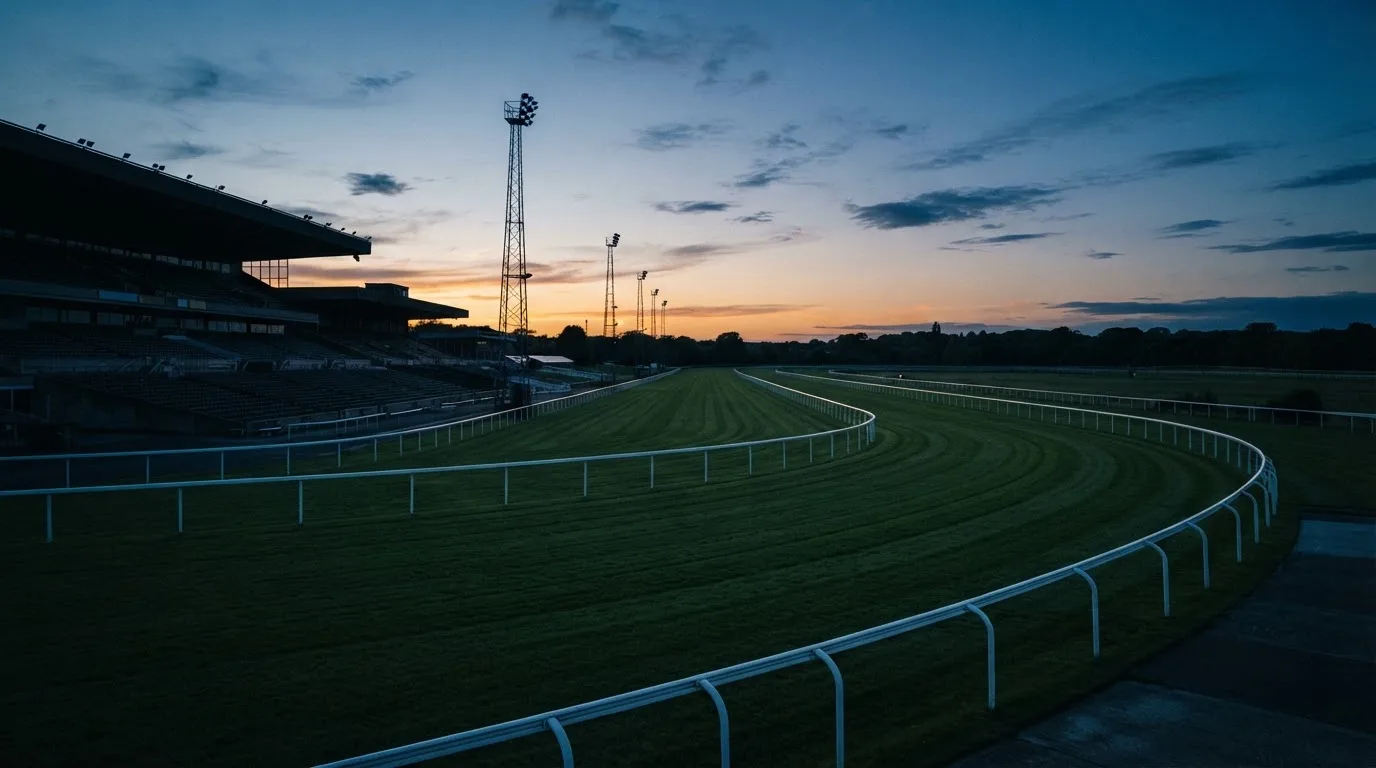
Live betting turns the race from a one-shot decision into a sequence of small ones. A punter who took 8/1 on a horse in the morning might find the same runner 11/4 at the off once the market has read the going. Some books let that stake settle at the bigger number; some hold the price taken; some quote a fresh price every jump. The cheapest version of the trade is the bookmaker who pays Best Odds Guaranteed and accepts in-play bets on the same race, but those two products do not always live together — BOG is by definition about the starting price, which only exists once the race is underway.
Across the ten operators on this page, the in-play horse racing offering varies by what they are willing to stream and how granularly they price mid-race. The biggest books run the deepest in-play product, the smaller ones price a race a few times during the running and call it a day. The punter’s choice is between a deep live book with fewer niche markets and a thin live book paired with a stronger pre-race card. There is no universally better answer.
The cash-out button sits next to in-play as its companion mechanic. Cash out lets the punter close the bet before the race finishes at a price the bookmaker names mid-running. The price the book offers is built on its live model: it has to price the running horse, the place, and the chance of a fall, and it has to allow itself margin for taking the other side of the trade. Cash out on a horse race is rarely generous in absolute terms because the bookmaker’s edge on the live market is wider than on the same market priced before the off, but it serves a real purpose — a punter who is exposed to a horse travelling poorly, or whose original read has been invalidated by a late move in the market, can cut the position rather than sit on it.
In-play and cash out come with the same caveat that runs through every live product: the bookmaker takes the live feed; if the feed stops, the price stops, and the bet is held until the bookmaker can settle it from another source or voids it. Pun ters who trade in-play should know the operator’s rules on voided live bets before the next race.
How a racing tip is actually built — predictions, systems and bankroll
The search term is “tips”, but the underlying job is forecasting. A tip without a method is a guess; a method without the discipline to stake around it is a leak. The mechanics of how a prediction is built and how the bankroll is sized around it are what a serious punter has to own.

The first move is reading the form. Each runner has a line of figures: finishes at recent starts, the class of the races, the going and the distance, the trainer’s record at the course, the jockey’s record on the horse and at the track. Form reads differently for a flat horse than for a National Hunt horse — flat form is short and fast; jump form is slower, with the gear and the fences pulling harder on the model. A figure for a flat horse over six furlongs on good to soft says one thing; the same form on heavy says another.
Statistics sit on top of form. Trainers and jockeys keep public records; sectionals and ratings published by Racing Post and elsewhere put the recent runs in a comparative frame. The betting market itself is a body of evidence: a horse that has drifted from 5/1 to 12/1 through the morning has lost money, and the losers may know more than the winners. The most honest version of a tip is the one that reads the form, knows the trainer and jockey records and has watched the market to the same minute as everyone else.
“Systems” is the word for shortcuts — ratings models, draw biases, pace-based heuristics and combinations of them. A racing system is a filter: keep some horses, drop the rest, bet on what survives. Some filters have a long published history; others are private. The discipline is in testing them on enough runs to know whether they have an edge or are just a way of dressing up a hunch. Most published systems lose once margin is taken into account; a small number survive.
Bankroll discipline is the unglamorous middle of the wheel. The bankroll is the float set aside to back selections through a losing run, and the stake is a small percentage of that float — usually one or two per cent per selection, more on the strongest reads and less on speculative ones. The maths are simple in principle but punishing in practice because betting a fixed unit through real losses is uncomfortable. The bookmakers’ contribution to this is real: most licensed books let the punter set a deposit limit and a stake limit, and a punter who hits those limits early in a run with no way to override them has the bankroll discipline they set themselves.
Value betting is the piece that ties everything together. A value bet is one whose price is bigger than the true probability of the horse winning, after the bookmaker’s margin is removed. The bookmaker’s margin is the cut the book keeps on every market; for a horse race with eight runners it is typically between 15% and 30% of the total stakes, taken out before the punt begins. Finding a value bet means estimating the horse’s true probability more accurately than the market did, which is a hard thing to do for a living and an impossible thing to do reliably by feel. The corollary — and the cleanest line on this whole subject — is that no tip is ever certain. The bookmaker’s edge is structural; the punter’s edge, if there is one, is statistical and tends to be small.
Bet types, odds and what the price actually says
The odds are the price, the price is the contract, and the contract is what the punter is buying. Reading a horse racing market starts with the bet types the book offers and ends with what the price implies about the horse’s chance.
The simplest bet type is the single — a bet on one horse to win. The return is the stake multiplied by the decimal price, or the stake plus the stake times the fractional price. For a £10 single at 5/1 (decimal 6.00) the return is £60, the profit £50. For the same bet at evens (decimal 2.00) the return is £20 and the profit is £10. Decimal odds have the stake baked into the return, so a 6.00 price is a 5/1 fractional; a 2.00 price is evens.
An each-way bet is two bets of equal stake: one on the horse to win, one on the horse to place. A £5 each-way bet costs £10. The place bet pays if the horse finishes in the top positions, with the place positions and the fraction of the win odds paid out set by the place terms. UK place terms run by race shape: handicaps with more than fifteen runners pay 1/4 odds for 4 places; 12 to 15 runners 1/4 for 3 places; other races with more than 7 runners 1/5 for 3 places; 5 to 7 runners 1/4 for 2 places; fewer than 5 runners go win-only. A £10 each-way bet on a 10/1 horse at 1/4 place terms and 3 places costs £20 and returns £110 for the win part and £35 for the place part — £145 in total if the horse wins, £45 in total if it places but does not win. Each-way betting is what most casual British punters use on horse races; the doubled stake catches them out until they get used to it.
The larger bet types are combinations. A double is two selections, both must win; a treble three; an accumulator (“acca”) four or more. The odds of the legs multiply into one price, and the stake is paid once — the catch is that every leg has to win for the bet to pay. The named variants — Trixie (4 bets), Patent (7), Yankee (11), Lucky 15, Canadian (26), Heinz (57), Goliath (247) — bundle combinations with singles so that not every leg has to win for the bet to return something. A Lucky 15 at a £1 unit stake costs £15 and covers 4 singles, 6 doubles, 4 trebles and 1 fourfold: a single leg wins return its single payout, a treble returns its treble, and so on. The structure is mechanical; the cost is steeper than a straight acca, the consolation is that one winner pays the stake back and a good day pays many times over.
A bet builder or same-game multi is a single bookmaker feature that lets the punter combine selections from the same race — for example, a horse to win, to be the only leader at a given point and to finish ahead of the favourite — into one price. The legs are correlated by design, so the margin is larger than on a single and the price is built to compensate. Some books run a horse racing bet builder, others run it only on football; the punter compares the prices in the same way they compare singles, knowing the price carries the bookmaker’s wider cut.
A spread bet on a horse race is a different animal. The punter buys or sells a number of points — the horse’s finishing distance, the winning distance, the total field size — at a price the book quotes, and the profit or loss is the difference between the quote and the result multiplied by the stake. The book offering spread bets on horse races is FCA-regulated for that product line and states that losses can exceed the deposit. The product is not for the casual punter; it is structured to look like a known bet type and to behave like a leveraged position.
Spreadex is regulated for spread betting by the FCA and for fixed-odds betting by the Gambling Commission, and it states that spread betting losses can exceed the deposit.
The bookmaker’s margin is the cut taken on every market. For a two-horse market at 1.90 / 1.90 (fractional 9/10, decimal 1.90 each), the payout share the book returns on a winning stake is 1 ÷ (1/1.90 + 1/1.90), which works out to about 0.95 — a 95% payout share and a 5% margin. As a band, once a market drifts away from the symmetric example the margin widens: an average horse racing book on a six-runner field sits between a roughly 80% payout share and a 90% one depending on the market and the shape of the field, so the punter loses between roughly 10p and 20p of every pound staked to margin before a ball is struck. That margin is why the price is never fair and why no tip is ever certain — even an accurate read on the race has to beat the bookmaker’s edge before it makes money.
The condition that controls the price for an in-play bet is whether the book offers the market at all and at what granularity, which is what the previous chapter covered. The condition that controls the price for an ante-post bet is whether the horse runs at all — a non-runner voids the bet at most books on standard terms, and a Rule 4 deduction cuts the price when another horse is withdrawn.
The sport: horse racing in Britain and the meets that set the calendar
Horse racing in Great Britain falls into two branches: flat racing and jump racing. Flat racing is run on a straight or oval track between two points, distances from 440 yards (400 metres) at the shortest end up to more than four miles (6.4 kilometres) at the longest, with five to twelve furlongs (1.0 to 2.4 kilometres) the most common span. Jump racing — steeplechase and hurdles, called National Hunt in Britain and Ireland — runs over fences and hurdles on longer distances, generally from two miles up, and through the winter. The two branches do not share a calendar: the flat season runs roughly April to November; the jumps run roughly October to April.
Race types split further by weight and class. In handicap races each horse carries a weight assigned by the handicapper to level the field; conditions races give horses the same weight with allowances for younger horses and for fillies and mares. The handicapper’s job is to set weights so that, on paper, every horse in the race runs to the same ability on the day — the punter’s job is to spot where the handicapper got it wrong. Class levels split races by quality: Group 1 is the top of the flat, with the Classics — the 2000 Guineas, the Derby and the St Leger — making up the British Triple Crown. National Hunt has its own grading system, with Grade 1 the top and the Cheltenham Festival the headline meeting of the season.
The British racing calendar is built around the major meetings. The flat runs through the spring Classics, the Royal Ascot festival in June, the July meeting at Newmarket, the Goodwood festival, the St Leger meeting at Doncaster in September and Champions Day at Ascot in October. The jumps run through the Cheltenham Festival in March, the Grand National meeting at Aintree in April, the Punchestown Festival in Ireland in late April, and a winter schedule of major trials through to Christmas. The punter’s choice is whether to follow the meetings — which pays a premium in form, information and market depth — or to play the working man’s midweek card with thinner fields, thinner markets and thinner information.
The British Horseracing Authority runs the regulatory side of the sport: race planning, the handicapper, the integrity and the rules of racing. The Gambling Commission regulates the betting side: the bookmakers, the markets they offer, the protection of customers and the obligations on operators. A punt on a British race touches both regulators at once.
The ten licensed bookmakers, ranked and compared
The ten operators below all appear on the Gambling Commission’s public register with a remote betting licence for Great Britain, which is the test the regulator sets for any bookmaker serving British customers online. The licence number is the licence holder’s identifier in the register, not a quality mark — every GB-licensed operator is in the same pool, and the ranking below is a working ranking from the perspective of a punt on British and Irish horse racing. Multiple brands run under one licensee — Ladbrokes and Coral share a parent, Paddy Power and Betfair share a parent — and the ranking treats the trading name only.
For each operator below, the comparison looks at what the brand itself states about its horse racing product: the markets it runs, the in-play and streaming coverage, the bet types that go beyond the win and each-way, the safer gambling tools and the operator’s own bones of contention. Every operator in the pool takes part in GAMSTOP and runs identity checks before the first deposit. The point of the ranking is to compare on horse racing, not on casino or gaming sides, which are separate licences and separate products.
| Brand | Gambling Commission remote licence number and licence holder | What the operator’s own terms state on the key’s subject |
|---|---|---|
| Tote | 054779-R-331321-008 — TDCO Limited | Pool betting product tied to British and Irish racing; tote.co.uk listed against the licence |
| Bar One Racing | 056516-R-332750-007 — Bar-One Racing Limited | Irish independent bookmaker with shops across Ireland and racing sponsorships at Dundalk, Fairyhouse, Navan, The Curragh, Curraheen Park and Cork |
| Fitzdares | 000400-R-103839-030 — Fitzdares Limited | Cash out, accumulators, Lucky 15s, specials and ante-post horse racing markets with in-play live odds |
| bet365 | 055148-R-331498-002 — Hillside (UK Sports) ENC | In-play betting and live streaming of events worldwide, plus Bet Track, Match Live and a Live Golf Tracker |
| Dabble | 065677-R-340363-005 — Dabble Sports UK Ltd | Welcome offer: first deposit, minimum odds, a 7-day free bet expiry, stake not returned |
| BetMGM | 039198-R-319450-029 — LeoVegas Gaming PLC | Welcome offer: deposit and place first sports bet within 7 days for four £10 free bets, valid 7 days, minimum odds, opt-in |
| BoyleSports | 039469-R-319383-025 — Boylesports Enterprise | Acca Insurance with opt-in, minimum stake £5, minimum odds 1/2, £20 free bet refund cap, 7-day expiry, settle same day |
| Ladbrokes | 054743-R-330863-014 — LC International Limited | Odds boosts on horse and greyhound bets, Best Odds Guaranteed on UK and Irish racing, in-play betting, Acca Boosts |
| Fafabet | 057385-R-333191-006 — Taichi Tech Limited | Best Odds Guaranteed on UK and Irish racing win and each-way bets from 9am on race days |
| Fitzwilliam Sports | 048760-R-335434-009 — SBKI Limited | Phone and live chat support, office open 09:00 to 21:00 Monday to Sunday, messenger replies within 90 seconds |
The table is a snapshot of who is on the register and what each brand itself states about its horse racing product. It is not a head-to-head; the chapter that follows gives a verdict on each brand on its own terms.
Tote
Tote runs the pool-betting product historically tied to British and Irish racing — bets on the win pool, place pool, exacta, trifecta and the swinger that the Tote built a name on. Pool betting does not fix an odds line the way a fixed-odds book does; the dividend is whatever the pool pays after the operator’s take. The horse racing side of Tote is closer to the old tote-on-course tradition than to the modern fixed-odds sportsbook, and the operator’s appeal is the depth of the pool products rather than the depth of the fixed-odds card.
A punter looking for a fixed-odds singles-and-accas product on a British meeting is not buying what Tote is selling. The punter who wants to back a horse into a place pool or chase a trifecta on a competitive handicap is in Tote’s wheelhouse.
Bar One Racing
Bar One Racing is an Irish independent bookmaker with shops across Ireland and a stable of racing sponsorships at Dundalk, Fairyhouse, Navan, The Curragh, Curraheen Park and Cork. The shops mean the firm has a counter presence at the racecourse that an online-only operator cannot replicate, and the sponsorship calendar means the brand is welded to Irish racing in a way a British-focused book is not. The brand rebranded to BAR 1 Betting and traded under its shop counter and online with the same racing focus.
For a punter whose calendar is built on Irish racing — the Irish 2000 Guineas, the Irish Derby, Galway, the Punchestown festival — the offer sits closer to the racing culture than a British-focused book. The book is smaller than the British pairs on this page; the in-play coverage is thinner and the streaming rights smaller. The trade is depth of feel against breadth of product.
Fitzdares
Fitzdares is a long-running British book with a reputation for higher-stakes service and a fixed-odds book that runs horse racing, football, tennis, rugby, cricket, golf and American football, with cash out, accumulators, Lucky 15s, ante-post markets and in-play live odds. The product sits somewhere between the mass-market books and the boutique firms: enough breadth that the punt covers more than racing, enough service to handle a high-stakes customer, and a horse racing book that runs the standard meetings with ante-post depth.
Fitzdares suits a punter who values a more personal book and is happy to accept a thinner card than the biggest operators offer.
bet365
bet365 is the deepest horse racing product in this pool and one of the deepest in the British market. The product covers in-play betting and live streaming of events worldwide, with supplementary tools like Bet Track, Match Live and a Live Golf Tracker that follow bets in play across sports. The horse racing card runs the major British and Irish meetings, ante-post markets for the Classics and the Festivals, and a full in-play product during the running.
The trade-off for the depth is the size of the book — bet365 is large enough that the punter is a small account and the in-play margin is wider than the firm would quote on a price-boosted ante-post market. The punter who wants every market, every stream and a high in-play ceiling picks bet365; the punter who wants a leaner book and a more personal service finds it elsewhere.
Dabble
Dabble is a sports and casino brand running on the UK Gambling Commission’s remote licence held by Dabble Sports UK Ltd. The welcome offer is a deposit-led one: deposit and place a first sports bet at minimum odds for a free bet return, with the free bet expiring in seven days and the stake not returned. The rest of the book runs the standard horse racing card.
For a punter whose cycle begins with a welcome package the terms are worth reading in full — the minimum odds, the seven-day expiry, the opt-in and the stake-not-returned clause all matter to the actual value. The underlying product is a competent book rather than a stand-out one.
BetMGM
BetMGM runs on the UK Gambling Commission’s remote licence held by LeoVegas Gaming PLC. The welcome offer is a deposit-led offer of four £10 free bets, split between two football accumulators of four selections or more and two sports multiples of two or more, with minimum odds, an opt-in and a seven-day validity. Horse racing sits inside the sports multiples half of the welcome bundle rather than the football-specific half.
For a punter focused on horse racing, the welcome offer is one that may or may not suit the way they want to back the opening card — the value of a welcome package is the value of the bets the punter would have placed anyway, returned as a free bet. BetMGM’s underlying book is a deep one; the punter focused on racing ignores the football-specific free bets and uses the multiples-only leg.
BoyleSports
BoyleSports is an Irish bookmaker running on the UK Gambling Commission’s remote licence held by Boylesports Enterprise. The product runs the standard horse racing card and pairs it with an acca insurance product that returns a free bet on a losing accumulator when one leg lets the bet down. The acca insurance comes with an opt-in, a minimum stake, a minimum odds line on each leg and a maximum free bet refund.
For the punter who builds accumulators across multiple meetings, the acca insurance is one of the more useful products on this page. For the punter whose book is singles and doubles, the product does not move the picture.
Ladbrokes
Ladbrokes, operated by LC International Limited, holds a UK Gambling Commission remote licence. The brand’s horse racing product pairs odds boosts on horse and greyhound bets with Best Odds Guaranteed on UK and Irish racing, in-play betting and acca boosts. The pairing covers the casual punter’s full horse racing cycle: back the horse, take the bigger SP at the off, and chase a boosted multiple.
The brand suits the high-volume recreational punter — the customer who backs a horse most days, watches the meeting on a stream and wants a tight book with all the conveniences. The punter looking for a different shape (pool bets, deeper ante-post, more personal service) finds it elsewhere on this page.
Fafabet
Fafabet is licensed by the UK Gambling Commission under Taichi Tech Limited. The product pairs the standard horse racing card with Best Odds Guaranteed on UK and Irish racing win and each-way bets from 9am on race days: if the starting price is bigger than the price taken, the bigger odds are paid. The BOG window starts at 9am.
For a punter centred on the win and each-way markets on British and Irish racing, Fafabet is a competitive BOG book. For the punter whose card runs beyond horse racing, the underlying book is thinner than the big four on this list.
Fitzwilliam Sports
Fitzwilliam Sports, operated by SBKI Limited, holds a UK Gambling Commission remote licence. The product is built around a phone and live-chat service with the office open 09:00 to 21:00 Monday to Sunday and messenger replies typically within 90 seconds. The book is a personal-service one with a horse racing card that runs the major meetings.
The punter who wants to talk to a person before placing a bet has the right book in Fitzwilliam. The punter who never picks up the phone and never opens chat has no use for what Fitzwilliam sells.
What the page is built on: a guide, not a tip sheet
The starting position is that the subject is a guide to how a tip is built, not a tip sheet of named picks. The racing press publishes named picks every morning of a meeting, and the betting market publishes a price on every runner; this page is built on neither of those. The reason is the framing the search carries: a tipster who names a winner without a method is a guess, a method without the discipline to stake around it is a leak, and a bookmaker offering “100% bonus” without showing the wagering requirement is a marketing line dressed as value. Reporting the sources faithfully and concluding nothing is reading, not writing.
The page therefore centres on the structure that supports a tip — form, class, going, trainer-and-jockey records, the market’s own price, the bookmaker’s margin — and on the bookmaker product choices that let the punter act on the read. The legal chapter that follows describes the frame a British punter bets inside, and the safer gambling chapter describes the tools the operators and the regulator put around the activity.
Law, regulation and the British betting frame
The Gambling Commission is the regulator for commercial gambling in Great Britain under the Gambling Act 2005. The Act covers England, Scotland and Wales; Northern Ireland is outside it and runs on older law, so any reference to a “Great Britain licence” or a “GB-licensed” operator applies to England, Scotland and Wales only. The Commission’s public register is searchable by business name, trading name, domain or account number, and is the test of who holds a licence — there is no other route, since a GB licence is required at the point of consumption. Since the Gambling (Licensing and Advertising) Act 2014 an operator whose remote facilities are used in Great Britain has to hold a Commission licence wherever it is based, which means a Curaçao, Maltese or Gibraltar licence is not a substitute.
Five betting licence categories cover the bulk of commercial remote betting: remote general betting standard (real events), remote general betting standard (virtual events), remote general betting limited, remote pool betting and remote betting intermediary (the licence for betting exchanges). Some operators run on more than one — Tote runs pool betting and general betting on the same licence. Multiple brands run on one licence; Ladbrokes and Coral run under LC International Limited; Paddy Power and Betfair run under the Flutter group. The licensed operator as a legal entity and the trading names the public meets can be very different.
Minimum age is 18. The customer identity check before the first deposit has been in force since 7 May 2019, and the check applies even when the bet is a free or bonus stake. The names, addresses and dates of birth are checked against public records before the first deposit is allowed. There is no anonymous play at a GB-licensed operator.
Player protection runs along four lines. GAMSTOP is the national multi-operator online self-exclusion scheme, mandatory for online operators since 31 March 2020, with self-exclusion periods of six months, one year, five years, and five years with auto-renewal. The exclusion stays in place for a further seven years after the minimum period unless the customer asks GAMSTOP to remove it. The financial vulnerability check (LCCP condition 3.4.4, in force since 30 August 2024) applies to licensed remote betting when a customer’s deposits minus withdrawals exceed £150 in a rolling 30 days (since 28 February 2025): it is a public-record check (bankruptcy, county court judgments), not an income check and not a credit reference check. Financial risk assessments — the press’s “affordability checks” — are part of a staged plan the Commission has announced but not yet started, with no start date. Deposit limits (RTS 12) require operators to offer a gross deposit limit on a fixed time frame; the first changes have applied since 31 October 2025, a second phase was postponed to 30 September 2026, and whether it is in force is not established.
Marketing runs through the CAP Code (non-broadcast) and BCAP Code (broadcast), enforced by the ASA, alongside the LCCP marketing conditions on operators. CAP Code section 16 says marketing must be socially responsible, must not be of strong appeal to under-18s, and no one who is or seems to be under 25 may feature gambling or play a significant role (with an exception for marketing placed where a bet can be made directly). The rule concerns who appears in the ad, not who may bet. Promotion rules in force since 19 January 2026 cap wagering requirements on bonuses at 10x — a £10 bonus at 50x wagering would need £500 of bets; under the cap no more than £100 — and ban mixed-product promotions (an offer that requires gambling on two or more product types such as betting, casino, bingo and lottery — “bet on football to get free spins” is the example).
Bonuses themselves are described in their own chapter further down. The point for this section is that offers on horse racing are inside the same promotional framework that covers the rest of the bookmaker’s sportsbook, with a small set of allowed shapes: a free bet whose stake is not returned, a fixed-odds price boost, an acca insurance and a deposit-gated welcome package. A cash bonus, a stake-returned free bet, a hybrid offer and a no-stake refund would each run into either the wagering cap or the mixed-product rule depending on how they were constructed.
The player pays no tax on betting winnings in Great Britain, which is general information, not tax advice and not a rule specific to horse racing. General Betting Duty is the operator’s tax on gross profits, currently 15%; from 1 April 2027 a new remote betting rate of 25% applies within it, while remote bets on UK horse racing, bets on self-service betting terminals, pool betting and in-person betting stay at 15%. Spread betting has its own rates — 3% on financial spread bets and 10% on the rest. Whether operators pass duty on through odds is not established; the punter is never charged duty directly. The Commission’s statutory levy is a separate charge, not a tax.
Offshore: a GB licence is compulsory at the point of consumption. Providing gambling facilities in Great Britain without the licence the Act requires is an offence under section 33 of the Gambling Act 2005, aimed at the operator (on summary conviction up to 51 weeks’ imprisonment, a fine up to level 5, or both; six months in Scotland). No offence aimed at a customer who merely bets on an unlicensed site was found — and that is the honest framing: an unlicensed site means no GAMSTOP, no Commission complaints route, no approved dispute-resolution body and no British consumer redress if funds are withheld. Enforcement is disruption, not blocking: cease-and-desist notices, search-engine referrals, work with registrars, hosts and payment providers. ISP blocking of unlicensed sites has been authorised or is about to be authorised by court order; the network-level blocking of unlicensed gambling sites is the direction of travel, not a settled present.
The licensed-versus-unlicensed split is not a clean safety line. Licensed means checks, limits, GAMSTOP coverage, the bonus cap, the named-account rule. It also means identity verification before the first bet, a public-record financial vulnerability check above £150 in a rolling 30 days and a one-horse market where the bookmaker has the price. Unlicensed means none of the protections and the risk of withheld funds. Neither setup is “the safe choice” by default; the punter’s choice is between the regulator’s framework and the absence of one.
Spread betting is regulated by the Financial Conduct Authority, not the Commission. Spreadex is regulated by the FCA for spread betting and by the Gambling Commission for fixed-odds betting, and the firm states that spread betting losses can exceed the deposit.
Safer gambling: the tools and the bodies that surround betting
The safer gambling tools built into the licensed operators are the practical side of the protection framework, and they run along five lines — deposit limits, timeouts, product restrictions, reality checks and self-exclusion. Each is a switch in the customer’s account settings rather than something the customer has to ask for, and each is enforced at the operator’s level even where the regulator mandates it.
Deposit limits are gross limits on the time frame the customer picks — daily, weekly or monthly. The first changes to the deposit limit regime have applied since 31 October 2025, with a second phase postponed to 30 September 2026, and whether the second phase is live is not established. The deposit limit is a customer-set value rather than a state-set ceiling, and the operator may apply extra limits on top of the customer’s chosen cap. A time limit caps the time spent in a session; a reality check is a pop-up reminder every 30, 60 or 120 minutes; product restrictions let the customer block sports betting, casino, bingo or lottery separately. Self-exclusion through GAMSTOP is the multi-operator route: six months, one year, five years or five years with auto-renewal, with a further seven years after the minimum unless the customer asks GAMSTOP to remove it.
Unibet’s safer gambling tools cover deposit limits, a Player Profile test, product restrictions and self-exclusion, with live chat support and links to BeGambleAware, GamCare, GAMSTOP, Gambling Therapy and the BGC.
The help bodies sit outside the operator. GamCare runs the National Gambling Helpline, with trained counsellors on the phone and a live chat channel. GambleAware funds education, prevention and treatment. The NHS runs gambling clinics in several regions. Gamblers Anonymous is the peer-support model with meetings across the country. The Commission itself is the regulator, not a counselling body.
The financial vulnerability check is the change most punters will meet first. A licensed operator runs a public-record check when the customer’s deposits-minus-withdrawals exceed £150 in a rolling 30 days. The check looks at bankruptcies, county court judgments and similar public records. It is not an income check and not a credit reference check, and it is run automatically, not by an agent phoning the customer. The check covers the licensed operator’s full customer base, which is the regulator’s reason for setting the threshold at £150 — high enough to miss the once-a-month punter, low enough to catch a working weekly punter early.
The bankroll discipline chapter earlier in this piece — a 1% to 2% stake as a percentage of the float — is the punter’s side of the same conversation. The licensed operator’s deposit limit is the ceiling; the punter’s stake-sizing is the floor that keeps the punter inside it.
Crypto, anonymous play and the limits of a licensed operator
Crypto is the payment method the search traffic around horse racing carries a steady undercurrent of — “crypto horse racing betting”, “horse racing crypto betting”, “horse racing betting crypto” — and the British frame is not built for it. A GB-licensed operator takes the customer’s identity check before the first deposit: name, address and date of birth verified against public records, with a free bet or bonus stake subject to the same check. There is no anonymous play at a GB-licensed operator, and there is no path to a crypto-funded anonymous play that bypasses the check — the operator’s payment side runs through the same identity and source-of-funds framework as the rest of the customer’s account.
A British named-account rule, a state list of permitted payment methods and any rule for or against cryptocurrency deposits at licensed operators are not established. The honest description of a GB-licensed book on this point is that the operator’s payment product is set by the operator’s terms, not by a regulator’s list, and the regulated side of the product is the identity check that runs before the first deposit.
The route that does not run through that check is offshore — operators whose licences sit outside the UK and whose own terms govern the deposit. The licensed-versus-unlicensed trade-off above goes deeper on this kind of operator than on any other: the unlicensed book does not require the identity check before the first deposit, which is what the search for “anonymous horse racing betting” tends to want; the same operator is outside the Commission’s complaints route, outside GAMSTOP, outside the £150 vulnerability check and outside the 10x wagering cap. The honest framing on the unregulated book is the loss of protection rather than the loss of law — no offence aimed at a customer who bets on an unlicensed site was found in this pack’s research, but the protections the customer loses when they do are the bulk of the value the page is built on.
This is the choice the search around crypto and anonymity carries: a licensed book with a verified account, an account-bound payment method and the regulator’s protective frame; or an unlicensed book with a fresh deposit and no protection if the book disappears with the float.
Bonuses, free bets and what a “100% bonus” actually pays
The bonus product in horse racing is the same as the bonus product in the rest of the sportsbook, with a small set of allowed shapes. The marketing shapes the search carries are deposit-gated welcome offers, free bets, price boosts, acca insurance and cashback on a losing day. The marketing line on each is rarely the same line the terms carry.
A cash bonus doubles the punter’s first deposit up to a cap, with the bonus amount itself and the bonus plus deposit the turnover base. A free bet is a stake the punter gets without paying for it, with the stake usually not returned — the punter gets the winnings, not the stake plus winnings. A “risk-free” bet marketed as a refund on a losing first bet is rarely a refund in cash; it is a free bet of the same value, with the same stake-not-returned rule. A price boost is a single price offered by the bookmaker at a higher number than the public market, on a fixed list of selections and for a fixed stake window. An accumulator insurance pays a free bet on a losing accumulator when one leg lets the bet down, with a minimum stake, a minimum odds line and a maximum free bet refund. A cashback is a percentage of net losses on a defined period returned as cash or as a free bet.
Dabble’s welcome offer is a “Bet £10, Get £10 in Free Bets” structure on a first deposit for new customers, with minimum odds applying, a 7-day free bet expiry and the stake not returned.
BetMGM’s sports welcome offer for new UK customers who deposit £10 or more and place a sports bet within 7 days is four £10 free bets (two football accumulators of 4+ selections and two sports multiples of 2+), valid for 7 days with minimum odds, the stake not returned on any of the four bets, and opt-in required.
The wagering cap is the figure that changes the comparison most. Promotion rules in force since 19 January 2026 cap wagering requirements on bonuses at 10x. A £10 bonus at 50x wagering would need £500 of bets; the cap means no more than £100 of wagering on a £10 bonus. The cap is one of the most material changes to the British bonus market in the past ten years, and the books that ran heavy wagering on cash bonuses have re-priced or pulled offers. The punter reading a bonus page from before 2026 finds much higher wagering on the same shapes.
The mixed-product ban runs alongside the cap. A bonus that requires gambling on two or more product types — betting plus casino, betting plus bingo, betting plus lottery, the “bet on football to get free spins” example — is banned. The cap and the ban together mean the bonus product on a GB-licensed book sits inside a much narrower shape than the same product five years ago.
The free bet value is the figure the offer carries underneath the marketing line. For a free bet whose stake is not returned, the value of the free bet is the free-bet amount multiplied by odds minus 1, divided by the odds, multiplied by the payout share of the market the bet sits on. A £10 free bet at 5/1 (decimal 6.00) on a 95%-payout-share market is worth £10 × (6.00 – 1) ÷ 6.00 × 0.95, or about £7.92 on average — the punter does not expect to win every free bet, and the value is the average win across many such bets, not the headline stake. A cap on free-bet winnings, a minimum odds line on the selection and a deadline are the three clauses that move the value down from this average.
A worked example for the bonus-turnover calculation: take a £50 cash bonus with a 5x wagering requirement on the bonus amount, at minimum odds of 1/2 (decimal 1.50), with a £5 stake per qualifying bet. The required turnover is £50 × 5 = £250 in qualifying bets. The number of qualifying bets, at £5 each, is 250 ÷ 5 = 50 bets. The expected cost of clearing the offer, at a 5% margin on each bet, is £250 × 0.05 = £12.50 of the punter’s money on average across the 50 bets. The bonus pays £50; the clearing costs £12.50; the net is £37.50 of value before any punter’s edge on the underlying bets. That net is the actual cost of the “free” bonus, and the cost of any offer is the dead net between the offer’s headline and the punter’s clearing cost.
A second worked example using the same shape with a higher wagering requirement: a £50 bonus at 10x — the cap under the 2026 rules — on the bonus amount, minimum odds 1/2, £5 stake per qualifying bet. Turnover is £500, number of bets is 100, expected cost at 5% margin is £25. The offer’s headline is unchanged at £50; the value is cut by half because the wagering rose and the clearing cost rose with it. The cap exists precisely to keep this number from being worse than £25 on a £50 headline.
A third point on the structure: the wagering requirement may apply to the bonus alone, the deposit alone, or the bonus plus deposit. The base changes the calculation directly — wagering on the bonus plus deposit doubles the base relative to wagering on the bonus alone — and the promotion rules in force since 19 January 2026 do not standardise the base. The punter checks the term on the bonus page rather than the marketing line for the answer.
Mobile apps, browsers and the live experience
Horse racing on a phone is the dominant way the bet is placed, and the experience varies by operating system and by bookmaker product depth. The app is the full-feature surface — single taps to back a horse, acca builders, in-play toggles, cash out, the streaming feed. The mobile browser is the fallback for punters who do not have the app installed or who want to avoid the storage cost. Both routes run through the same licensed-operator check on the first deposit.
bet365’s in-play product runs in the app with the live streaming, Bet Track and Match Live, and the same product runs in the browser at the bookmaker’s site. Ladbrokes’ BOG and in-play feed sit inside the app; the browser version has the same prices and the same BOG. BetMGM’s welcome offer runs through the app rather than the browser in most marketing. The pattern across the pool is that the app is feature-complete and the browser is feature-shallow — the live stream, the bet builder, the in-play feed all live in the app.
The Fitzdares app offers cash out, accumulators, Lucky 15s, specials and ante-post markets on horse racing, football, tennis, rugby, cricket, golf and American football, with in-play live odds.
Fitzdares’ horse racing product pairs the standard fixed-odds book with a cash-out button on every market, ante-post depth and an in-play feed.
The pitfall with the mobile path is verification. The identity check before the first deposit runs in the app and in the browser; the customer who has not uploaded a photo of an ID document and a recent proof of address will be blocked at the deposit step until the documents are in. The punter signs up on a Tuesday and tries to back a horse on a Saturday morning without uploading anything in between finds a stalled onboarding rather than a stall on the bet itself. The faster path is to verify when the account is opened rather than when the bet is ready.
A second pitfall is the live stream. The live stream rights are bookmaker-specific; a stream on the bet365 feed is not on the Ladbrokes feed, and the stream that shows in the app is different from the broadcast rights on the racing broadcaster’s own app. The punter who watches a race with one book and bets it with another finds the streams run on different products.
The youngest of the books on this page are mobile-first. Dabble’s product runs in the app; the browser version is a thin layer over the same backend. The newest operator in the pool is built for a screen the size of a hand rather than a desktop. The page on this point for the older, deeper book is the opposite: feature depth first, mobile consistency second.
The shape of the choice
The page is built so that the punter reading it makes one choice at a time and is shown what each choice costs. The live route, the in-play route, the cash-out route and the ante-post route are different bets on the same race, and the punter’s choice between them is what this page opens with. The strategy layer underneath the bet is the choice of how the tip is read, the system that filters the runners, the bankroll that is set around the bet and the stake that is set inside the bankroll. The odds and bet-type layer is the choice of how the price is read, what the bet type carries in stake and what the price implies about the horse’s chance. The sport itself is the choice of which branch to follow, which meeting to back and which race inside the meeting. The ranking is the choice of which bookmaker to back with — the licensed operator whose product, terms and service fit the punter.
The legal chapter closes the frame with what a British punter works inside. The safer gambling chapter closes the protection side. The crypto chapter closes the payment question. The bonus chapter closes the offer question. The mobile chapter closes the device question.
The honest single line at the foot of all that is the line the page opened with. No tip in this pack names a horse. The price on the next race is what it is, the bookmaker’s margin is what it is, and the punter’s edge — if they have one — is a small edge over many bets, never a confident call on one. The choice is the price, the punter and the bookmaker. The rest is the bet.
Frequently asked questions
How do I bet on horse racing for the first time?
Open an account with a bookmaker on the Gambling Commission’s public register, verify your name, address and date of birth before depositing, set a deposit limit in the account settings and place a single win or each-way bet on a race meeting rather than a combination. Each-way doubles the stake because it is two bets, a win bet and a place bet. The bookmaker’s margin sits inside every price.
How are horse racing bets worked out?
Worked out stake by stake. The decimal return on a winning single is the stake multiplied by the decimal price; the profit is the stake multiplied by the decimal price minus one. An each-way bet pays the win part on the win odds and the place part on the win odds multiplied by the place fraction (1/4 or 1/5 depending on the race). An accumulator’s price is the product of the legs.
How do betting odds work in horse racing?
Decimal odds have the stake in the price; a 6.00 price pays £60 on a £10 stake and returns a £50 profit. Fractional odds (5/1) say the same thing in a different form: £5 profit for every £1 staked. A horse at evens (1/1, decimal 2.00) returns £20 on a £10 stake. Odds-on means shorter than evens.
What is a value bet and why is no tip ever certain?
A value bet is one whose price is bigger than the horse’s true probability after the bookmaker’s margin is removed. The bookmaker’s margin is between roughly 10% and 20% on a horse racing market, so the punter must beat the bookmaker’s edge with a better read on the race than the market had. No tip is ever certain because the bookmaker’s edge is structural, the punter’s edge tends to be small, and the variance is high over short sample sizes.
What is the bookmaker’s margin and how can it be seen in the odds?
The margin is the cut the book keeps on every market. For a two-runner market at 1.90 / 1.90 the payout share is 1 ÷ (1/1.90 + 1/1.90), or about 0.95 — a 95% payout share and a 5% margin. As a band, an average horse racing book on a six-runner field sits between a roughly 80% and 90% payout share, so the punter loses between roughly 10p and 20p of every pound staked to margin before the race.
Horse racing & greyhounds – Free bets
Content created by the «Free bets» team
