
American football betting tips: how to read the market and pick a bookmaker
 Available in US
The promise in “betting tips” is rarely the tip itself. It is the quieter work behind it: a price checked against form, a line-up read before kick-off, a stake sized to a bankroll rather than a hunch. This guide walks through that work, the markets it operates on and the bookmakers that quote them, so a bettor can decide which path suits the kind of punter they actually are.
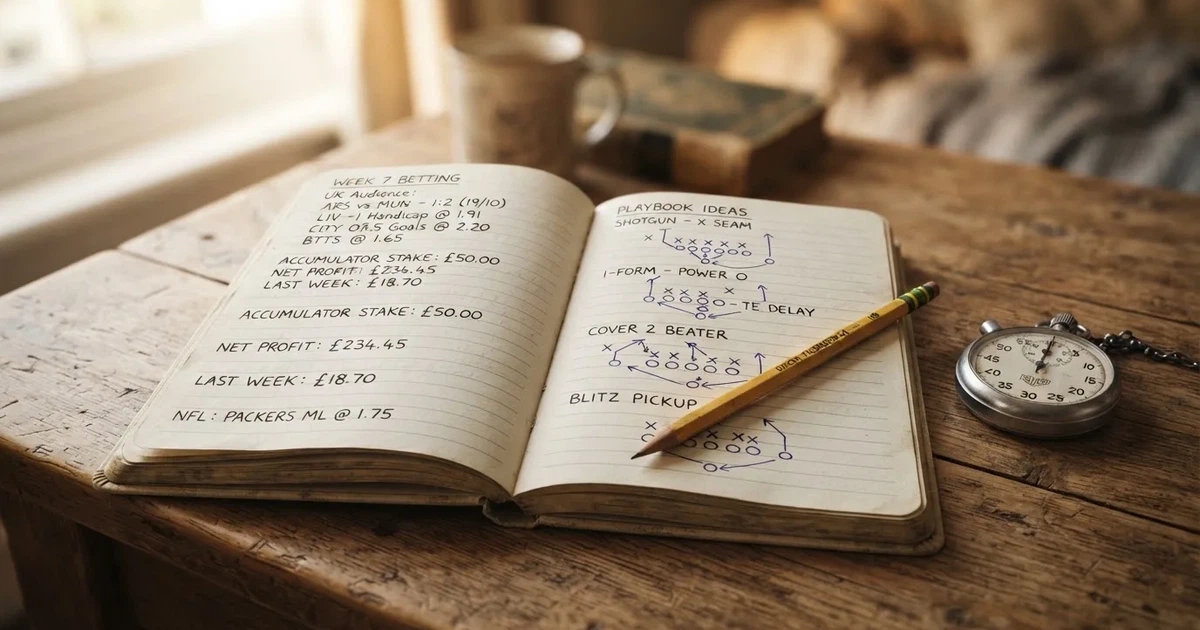
Data current as of 27 October 2026, verified against the UK Gambling Commission’s public register of remote operating licences.
American football bet types and how odds settle
A tip is only as good as the market it lands on. American football has a handful of markets that recur at every bookmaker, each with its own way of settling and its own traps.
The moneyline
The simplest market. Pick the team that wins. In the NFL, the favourite carries short odds and the underdog long ones, and the spread between them tells a story of its own: a 1.20 / 4.50 pair signals a heavy favourite, a 1.85 / 1.95 pair signals a close match. Moneyline bets settle on the final score, including overtime, so a tie at the end of regulation does not save the stake.
The spread and the total
The handicap, or point spread, is where NFL betting finds most of its volume. The bookmaker gives the underdog a head start in points; a -6.5 favourite must win by seven or more, a +3.5 underdog loses by three or fewer. A line that lands exactly on the number is a push and the stake is returned — Sky Betting & Gaming’s American football rules state this clearly, and the convention holds across the industry unless a tie selection is offered.

The total, also called the over/under, is a separate bet on the combined score of both teams. A line of 47.5 means over 48+ points or under 47 or fewer, and a dead-on 47 is again a push. Game flow matters here more than form: a strong defensive matchup drives unders, a high-tempo offence drives overs, and weather — wind, particularly — can move a line in the closing minutes before kick-off.
Props, futures and player markets
Player props cover anything from passing yards to the first touchdown scorer. Futures are season-long: Super Bowl outright, division winner, regular-season win total. Both are settled by the league’s official statistics, and both come with a margin that is often wider than the main lines, because fewer pounds are bet on them and the bookmaker’s overround is harder to compress.
Parlays and the same-game multi
A parlay, or accumulator, multiplies the odds of each leg into one price. A four-leg acca at 1.90, 1.90, 1.80, 2.00 returns roughly 12.9 times the stake. The catch is that one losing leg voids the whole bet, and bookmakers price the legs knowing the bettor’s appetite for the long shot. The same-game multi, sometimes called a bet builder, lets a punter combine outcomes from one match — a team to win, a player to score, the total to go over — into a single price. Convenience costs margin, and the assembled price is rarely as generous as backing each leg separately.
The competitions and the season
American football is not one tournament. It is a layered calendar, and the markets a bookmaker offers depend on which competitions it bothers to price.
The NFL sits at the top: 32 teams split across the AFC and the NFC, each playing 17 games over an 18-week regular season, with seven teams per conference reaching the single-elimination playoffs. The Super Bowl is the season’s end-point. The college game, the NCAA, runs a separate schedule with its own postseason, and the Canadian Football League (CFL) plays under different rules on a larger field. Some bookmakers also price the UFL, the XFL successor league, and the occasional international fixture, but volume lives with the NFL.
A bookmaker’s American football programme is rarely a single switch. It opens with futures weeks before kick-off, swells through the regular season, peaks at the playoffs and the Super Bowl, and contracts sharply until the draft. A bettor looking for the deepest menu prices the early regular season against the late one, because lines get sharper as injuries and form are priced in.
The last completed Super Bowl, LX, was played on 8 February 2026 at Levi’s Stadium in Santa Clara, California; Seattle beat New England 29-13 and Kenneth Walker III took the MVP award. The next NFL season runs from September 2026 into February 2026, with the schedule released in May.
The shortlist of ten bookmakers and how they compare
Every name below holds a Gambling Commission remote licence and appears on the public register against a named licence holder. That is the floor, not the ceiling: a licence entitles the brand to take bets from Great Britain and binds it to the Commission’s social responsibility code, GAMSTOP and the bonus rules that took effect in January 2026. What sits on top of that floor varies from one operator to the next.
The table below shows what the operator’s own site and app state about the sport and the licence behind it. The right-hand column is qualitative for a reason: the terms each brand publishes change often enough that a snapshot number is misleading within weeks. The licence numbers and holders are stable, because they sit on the Commission’s register.
| Bookmaker | Gambling Commission remote licence | What the operator’s own terms state on American football |
|---|---|---|
| BetVictor | 039576-R-319370-028, held by BV Gaming Limited | Best Odds Guaranteed on UK and Irish horse racing; Smart Stats and a BetFinder tool for racing; NFL and college markets priced through the regular season. |
| 10bet | 043173-R-322899-023, held by Blue Star Planet Limited | Cash out, Bet Builder and live streaming on a sportsbook built around football, tennis and horse racing; American football listed seasonally. |
| Lottoland | 038991-R-319408-020, held by EU Lotto Limited | Casino, lottery betting, scratchcards and a sportsbook; NFL markets priced when the season is open. |
| Bet600 | 044731-R-323941-016, held by Tyche Tech Limited | Best Odds Guaranteed on horse racing (paid at SP if the starting price is bigger); American football added to the in-play menu in season. |
| Sporting Index | 027343-R-308898-011, held by Sporting Index Limited | Spread-betting markets alongside fixed-odds; American football totals and handicaps available as fixed odds and as sports spreads. |
| BetTom | 064959-R-339314-003, held by Bet Tom Limited | A 50% back-as-free-bet welcome on the sports side, matched 50% on casino; full terms apply. |
| Geoff Banks | 054095-R-330366-010, held by GB Sports Advisors Limited | Ante-post prices on future events and live in-play prices; American football priced at the major fixtures. |
| Star Sports | 009177-R-104555-019, held by Star Racing Limited | Markets on horse racing, virtual sports, casino and live casino; American football listed through the NFL season. |
| Fitzdares | 000400-R-103839-030, held by Fitzdares Limited | Cash out, accumulators, Lucky 15s and antepost markets on horse racing, football, tennis, rugby, cricket, golf and American football, with in-play live odds. |
| DragonBet | 064908-R-339041-003, held by DragonBet Ltd | Cash out pre-match and in-play, with live streaming of racing; American football listed through the season. |
Spread betting and fixed-odds betting live under different regulators. Spreadex, for instance, is regulated by the Financial Conduct Authority for its spread-betting arm and by the Gambling Commission for fixed odds; losses on the spread side can exceed the deposit, and that is a feature of how spread bets are margined, not a bug.
What “American football betting” actually means
Strip the marketing off and American football betting is the act of staking money on the outcome of a match, a series, a player statistic or a season-long market, with the bookmaker holding a margin inside every price. The same shape holds for any sport. What makes American football distinctive is the structure of the game and the menu it produces.
Eleven players per side take the field. Matches last 60 minutes of playing time, divided into four 15-minute quarters, with stoppages that stretch a real-world broadcast to over three hours. The scoring rewards both incremental and explosive plays: a touchdown is six points, with an extra-point kick worth one or a two-point conversion worth two; a field goal adds three; a safety, scored by the defence, adds two. That scoring ladder is why the spread and the total dominate NFL betting, and why a garbage-time touchdown can swing a teaser or a live total without changing the result.
For a UK bettor the season arrives in the small hours. Sunday afternoon kick-offs in the United States start at 9:30pm BST, with the Sunday night and Monday night games running into the early hours of Tuesday morning. Thursday night football is the weekly opener. Time-zone fatigue is real, and a market is sharper when the bettor has had more than a quick look at the line-up.
Licensing, regulation and the test of “licensed in Great Britain”
Any operator that takes bets from customers in Great Britain needs a Gambling Commission licence, no matter where the company is based. The Gambling (Licensing and Advertising) Act 2014 closed the previous loophole that let an operator run from Gibraltar, Malta or the Channel Islands and serve British customers without a British licence. Today, the Commission’s public register is the test: search by the trading name, the domain or the account number, and the licence is either there or it is not.
A GB licence comes with duties, not just permissions. Identity is checked before the first deposit — name, address and date of birth, since May 2019, including where the bettor uses a free bet or bonus. Credit cards have been banned for gambling in Great Britain since April 2020, and the ban extends to credit-card-funded e-wallet payments. Debit cards and bank transfers are not affected. GAMSTOP, the multi-operator self-exclusion scheme, is a licence condition for every online operator; signing up with one brand blocks access to all of them for the period chosen.
The Commission’s marketing rules tightened in January 2026. Wagering requirements on bonuses are capped at 10x the bonus amount, so a £10 bonus at 50x turnover is no longer lawful under the new rules. Mixed-product promotions, those that require the bettor to play on two or more product types such as betting and casino, are banned. Whether the cap applies to free bets with no wagering condition, and any cap on the monetary value of a bonus, are not established as a single rule.
Offshore brands are a different story. A Curaçao-licensed bookmaker is not licensed to take bets in Great Britain, and a customer who plays there gives up the consumer protections a GB licence provides: no GAMSTOP coverage, no Commission complaints route, no approved dispute-resolution body, and no British redress if funds are withheld. The bookmaker is also not bound by the 10x bonus cap or the financial vulnerability check.
A bettor who wants the licensed path will find a list of operators on the Commission’s register. The ten names compared above all sit on it. A bettor who wants an offshore path is on their own.
Safer gambling and the bettor’s own rules
The bookmaker’s safer-gambling tools are mandatory under the licence, and they work better when the bettor uses them. Unibet’s site, for example, sets out deposit limits, a Player Profile test, product restrictions, time-out and self-exclusion, with live chat and links to BeGambleAware, GamCare, GAMSTOP, Gambling Therapy and the Betting and Gaming Council. Other operators carry a similar toolset; the differences sit in the interface and the speed of the response.
Two newer duties sit on top. The financial vulnerability check, in force since 30 August 2024 and live since 28 February 2025, applies to licensed remote betting when a customer’s deposits minus withdrawals exceed £150 in a rolling 30-day window. It is a public-record check, looking at things like bankruptcy or county court judgments, not an income check and not a credit reference. Financial risk assessments, sometimes called affordability checks in the press, were announced in a Commission article of 7 July 2026 in a staged plan, with no start date. A bettor who sees a check trigger should expect a short conversation with the operator, not a refusal.
Help is available outside the bookmaker. GamCare runs the National Gambling Helpline. The NHS runs gambling clinics in several cities. Gamblers Anonymous runs meetings. The deposit limit, the time-out and the self-exclusion are the bettor’s own levers; the helpline is the one for when those levers feel too small.
Crypto, anonymity and the limits of both
The pitch for crypto betting is straightforward: the deposit is faster, the verification thinner, the betting slips held on a public ledger. The reality under a GB licence is narrower.
A bookmaker licensed in Great Britain verifies identity before the first deposit, no matter the payment method. Bitcoin, Ethereum and stablecoins are not on the licensed-operator menu in any structured way; research found no GB-licensed brand that publishes a clear, dedicated crypto deposit route. Where a payment processor offers a crypto on-ramp, the licensed operator still runs a full know-your-customer check on the customer behind it. That is a feature, not a friction: the identity check is what binds the operator to the Commission’s social responsibility code, and it is the reason a customer can complain to the Commission if funds are withheld.
Offshore operators, the Curaçao-licensed set, do run crypto rails. They also run outside the GB consumer protection regime. A bettor who chooses that path trades the verification for the absence of any British redress if the operator decides, fairly or not, to limit the account or hold the withdrawal.
Anonymity is the wrong word for what crypto actually offers. Bitcoin’s ledger is public; every transaction is traceable. What crypto offers, in a licensed context, is a fast deposit and an alternative to a card payment. In an unlicensed context, it offers a payment rail the British regulator cannot reach.
Bonuses, free bets and the price of the headline
Every operator’s headline number deserves a second look. A “100% bonus” or a “£50 free bet” is the easy part. The harder part is what it takes to withdraw.
The general shape is straightforward. A deposit-gated bonus gives a percentage of the deposit as bonus funds, with a wagering requirement that the bettor must clear before withdrawing. A free bet credits the account with a stake that is not returned with the winnings — a £10 free bet at 3.0 returns £30, not £40, and only the £20 profit is the bettor’s. A price boost enhances the odds of a chosen selection for a limited stake, and acca insurance refunds a stake as a free bet if one leg of an accumulator lets the rest down.
The arithmetic behind the offer matters more than the offer. A bonus with a 10x wagering requirement on the bonus amount, the cap that took effect in January 2026, means a £10 bonus needs £100 of qualifying bets before withdrawal. At minimum odds that take only the bigger prices, the cost of clearing that £100 is the bookmaker’s margin on the markets chosen. Spread that across the season and the offer is worth a few pounds, not the £10 headline.
The “free” in free bet is doing work. The stake is not returned, the bet is usually restricted to certain markets, the free bet expires on a deadline the bettor has to remember, and a cap on winnings is common. The reader is the one paying for the headline.
Live betting and the cost of a fast decision
In-play betting has changed American football. A bookmaker’s in-play menu opens with moneyline, spread and total, and a typical Sunday afternoon offers several markets at once. Cash out lets a bettor lock in a profit or a loss before the final whistle; partial cash out, where offered, lets the bettor bank half the position and leave half to run.
The cost sits inside the price. A live market is repriced by an algorithm that reacts to the on-field action, and the bettor’s screen lags the data feed by a fraction of a second. The bookmaker’s margin on in-play markets is wider than on pre-match, because the algorithm prices uncertainty and the bettor pays for the convenience. A bettor who likes live betting should price the same market pre-match and again at the same point in the game to see the difference.
A bookmaker’s in-play menu is a useful proxy for the depth of its programme. DragonBet, for instance, offers cash out both pre-match and in-play, with live streaming of racing; Fitzdares lists cash out, accumulators, Lucky 15s, specials and antepost markets with in-play live odds; Midnite’s site shows in-play events with an acca builder, popular accas and price boosts. A bettor who bets in-play every week will see the menu thin out at the smaller bookmakers during the college season; the price holds at the bigger ones because the volume is there.
Predictions, strategy and the work of a tip
The honest version of a “tip” is a probability estimate, and the bookmaker’s odds are another probability estimate, and the difference between them is the value. If a bettor’s model says the home team is a 60% chance to win and the bookmaker’s price is 1.90 (about 52.6%), there is value. If the bookmaker’s price is 1.50 (66.7%), the bettor is paying for a margin.
Three sources feed a working model. Form is the recent record, adjusted for the strength of the opponents. Statistics cover the deeper cuts: yards per play, third-down conversion, red-zone efficiency, time of possession. Line-ups and injury reports are the third, and often the most important: an injury to a starting quarterback moves the line by three points before the bookmaker has time to reprice.
Bankroll discipline is the fourth leg. A flat unit, 1% to 2% of the bank, keeps a bad week from becoming a bad month. A staking plan that grows after a loss is the bettor’s worst enemy; the line does not know what the bettor did last week. Spreadsheets work; apps work; a notebook works. The discipline is the same.
Above all: no tip is certain. A bookmaker’s margin is the bookmaker’s defence against the bettor’s skill, and the bettor pays it on every bet. The model finds value, the staking plan sizes the value, and the bankroll absorbs the variance. None of that guarantees a profit, and anyone who tells a bettor otherwise is selling something.
The bookmaker reviews
Each block below is a verdict, not a description. The numbers above are the floor; the words are the page’s view of who each operator suits.
BetVictor: a long-standing sportsbook with a racing heart
BetVictor has traded under a Commission licence for years, and its programme is built around horse racing, with Best Odds Guaranteed on UK and Irish racing, enhanced live race streaming, a BetFinder tool and Smart Stats. American football sits inside the seasonal menu and is priced through the NFL regular season and the playoffs. A bettor whose calendar is mostly NFL will find the menu adequate; a bettor who wants the deepest American football props and a full in-play offering on every Thursday night game may find the racing-centric design frustrating.
10bet: a multi-sport sportsbook with a clean in-play product
10bet’s licence is held by Blue Star Planet Limited, and the product is a sportsbook built around football, tennis and horse racing with cash out, Bet Builder and live streaming. American football is priced seasonally. A bettor who likes a single-app, multi-sport product with the standard feature set will be at home; a bettor looking for spread-betting or financial markets will not.
Lottoland: a lottery-led brand with a sports side
Lottoland’s Commission licence is held by EU Lotto Limited. The product is a casino, lottery betting and scratchcards brand with a sportsbook attached. American football is priced when the season is open. The brand is one to keep in mind for a bettor who plays the lottery and the football; a dedicated American football bettor will find the menu light.
Bet600: a newer sportsbook with Best Odds Guaranteed on racing
Bet600’s licence is held by Tyche Tech Limited, and the product is a sportsbook with Best Odds Guaranteed on horse racing, paid at the starting price if the SP is bigger. American football is added to the in-play menu in season. The brand suits a bettor who wants a fresh app with a racing focus and a clean in-play product for the NFL.
Sporting Index: the spread-betting angle
Sporting Index’s licence is held by Sporting Index Limited, and the product is a fixed-odds and spread-betting bookmaker. American football is available as fixed odds on the main markets and as sports spreads on totals and handicaps. A bettor who wants to back a total not at a line but at a range will find the spread format useful; a bettor who has never spread-bet before should read the small print, because losses can exceed the deposit. The fixed-odds arm is a cleaner entry point.
BetTom: a two-product welcome with a 50% match
BetTom’s licence is held by Bet Tom Limited, and the welcome is a 50% back as a free bet of up to £50 on the sports side, matched by 50% back as free slot funds for the casino. Full terms apply. A bettor who plays both sports and casino will see the offer; a sports-only bettor will use the sports half and ignore the rest. The 10x bonus cap that took effect in January 2026 limits how heavy the wagering requirement can be.
Geoff Banks: a smaller bookmaker with ante-post depth
Geoff Banks’ licence is held by GB Sports Advisors Limited, and the product is a sportsbook with ante-post prices on future events and live in-play prices. American football is priced at the major fixtures. A bettor who likes a smaller, sharper book with deep ante-post markets is the target reader; a bettor who needs a full prop menu every Thursday night is not.
Star Sports: the “leading independent” claim
Star Sports’ licence is held by Star Racing Limited, and the product is a sportsbook with horse racing at the centre and virtual sports, casino and live casino on the side. American football is listed through the NFL season. A bettor who likes an independent British bookmaker with a long history and a racing focus will be comfortable; a bettor looking for the deepest American football menu should test the product during the season.
Fitzdares: a premium product with a broad sport set
Fitzdares’ licence is held by Fitzdares Limited, and the product lists cash out, accumulators, Lucky 15s, specials and antepost markets on horse racing, football, tennis, rugby, cricket, golf and American football, with in-play live odds. The menu is broad, and the antepost offering is one of the wider ones. A bettor who wants a single app for a varied weekly betting card will find a fit; a bettor looking for the very deepest American football props may want to compare menus.
DragonBet: a newer Welsh-tinged brand with a clean in-play
DragonBet’s licence is held by DragonBet Ltd, and the product is a sportsbook with cash out both pre-match and in-play and live streaming of racing. American football is listed through the season. A bettor who likes a smaller, racing-anchored brand with a clean in-play product is the target reader; the American football menu is a season add-on rather than a year-round centrepiece.
How to read a bookmaker’s margin in the odds
The margin is what the bookmaker keeps of every pound bet on a market. It is the reason a “fair” coin toss, at 2.00 on both sides, is not on offer: the bookmaker would lose the cost of running the betting shop. A “100% book” is one that returns exactly the stakes; a book above 100% is a margin.
The arithmetic is simple. Take a two-way market at decimal odds 1.90 on each side. The implied probability of each side is 1 ÷ 1.90, or 52.63%. The two probabilities add to 105.26%, and the 5.26% above 100% is the bookmaker’s margin — about 5p in the pound kept across the market.
The same arithmetic on a three-way NFL market, where regulation can end in a tie, looks different. A 1.65 / 4.50 / 4.50 book, for example, sums to 1 ÷ 1.65 + 1 ÷ 4.50 + 1 ÷ 4.50 = 60.61% + 22.22% + 22.22% = 105.05%, a margin of just over 5%. The favourite carries the lower margin per pound bet, and the longshot carries the higher, which is why betting favourites and unders is, on average, cheaper than betting longshots and overs.
The margin varies by market, by bookmaker and by event. Pre-match NFL sides often sit in the 4-5% range; live in-play markets can run to 7-8% on busy events; small-field futures and player props can run higher. A bettor who shops around — checking the same selection at two or three bookmakers before placing the bet — compresses the margin they pay. The 5.26% above is an example, not a quoted price.
Frequently asked questions
How do I bet on American football?
Pick a bookmaker licensed by the Gambling Commission, register an account, verify your identity and deposit with a debit card or a bank-based method. Choose an NFL, college or CFL match from the American football menu, pick a market (moneyline, spread, total or a player prop), enter a stake and confirm. The bet settles when the event finishes, with overtime included on the main markets.
What is American football betting?
It is staking money on the outcome of an American football match, a season-long market or a player statistic. The bookmaker holds a margin inside every price, so the odds do not reflect pure probability. The common markets are the moneyline, the point spread, the total, player props and season-long futures, with same-game multis and accumulators as combinations.
Where do I find the top American football betting odds?
Compare the same selection across two or three bookmakers before placing a bet. The Commission register confirms a licence; the price comparison shows the difference. Markets open the widest in the week before kick-off and tighten as money comes in, so a bettor who checks the lines from Tuesday onwards often finds the best number on a sharp bookmaker before the soft ones move.
What is a value bet and why is no tip ever certain?
A value bet is a price that is higher than the bettor’s own probability estimate. If a bettor’s model says the home team is a 60% chance and the bookmaker’s price is 1.90 (52.6% implied), the bet has a positive expected value. No tip is certain because the bookmaker’s margin is built into every price, the bettor’s model is an estimate and not a fact, and the result is decided by a finite number of plays on a field. Value is an average, not a guarantee.
What is the bookmaker’s margin and how can it be seen in the odds?
The margin is the bookmaker’s built-in edge, calculated as 1 minus the reciprocal of the total implied probabilities. On a two-way market at 1.90 / 1.90, the implied probabilities are 52.63% on each side, summing to 105.26%, which results in a margin of 5.0% and an overround of 5.26%. The lower the sum, the better the payout. A bettor who shops around compresses the margin they pay on every bet.
US & other team sports – Free bets
Content created by the «Free bets» team
